Key Highlights
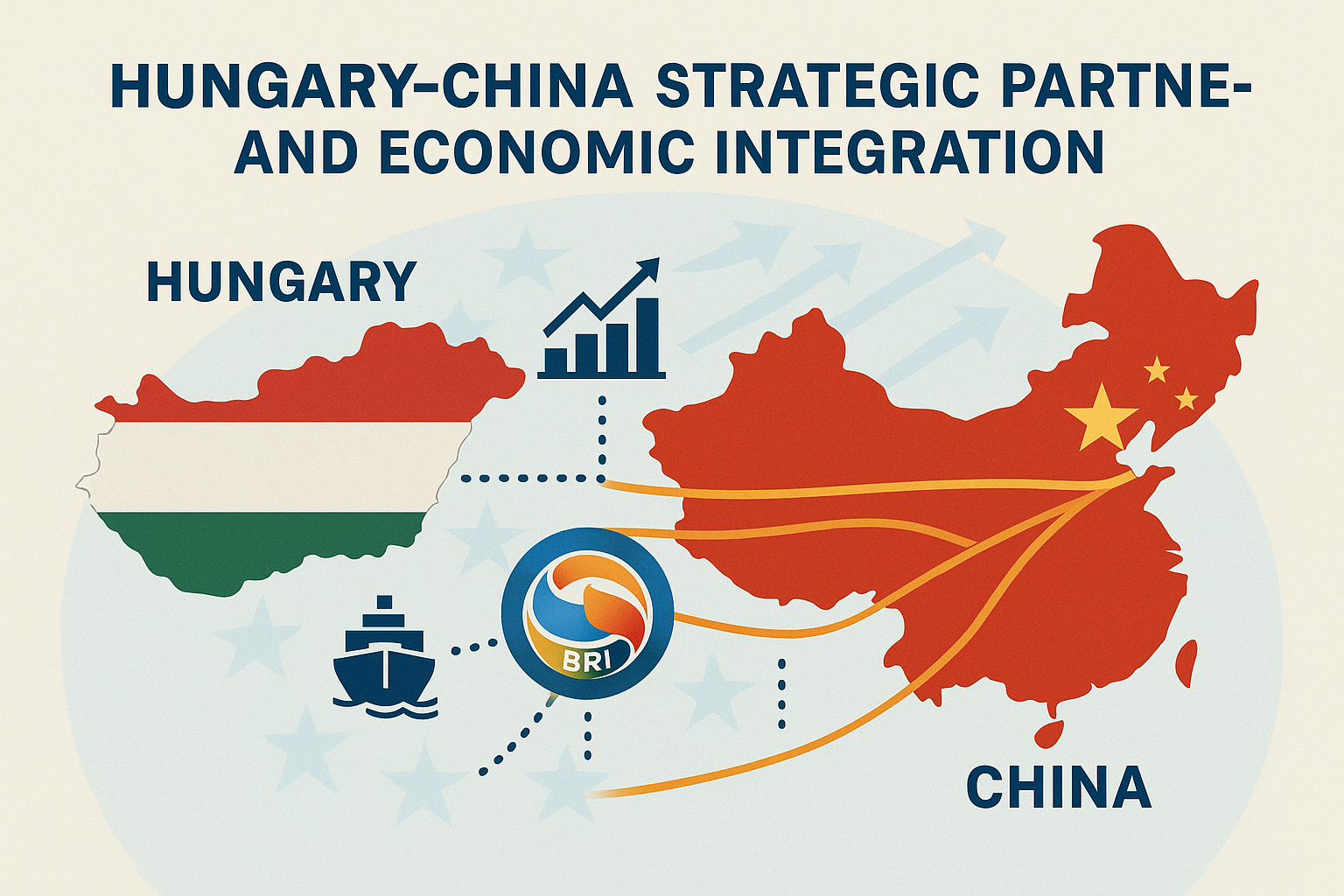
- Hungary established “all-weather comprehensive strategic partnership” with China in May 2024 during Xi Jinping’s visit, signing 18 cooperation agreements and deepening integration
- China became Hungary’s largest foreign investor with €8.12 billion (58% of total FDI) in 2023, making Hungary world’s fourth-largest battery producer
- Major Chinese investments include CATL’s €7.3 billion battery facility, BYD’s €501 million EV factory, and Huawei’s largest center outside China
- Hungary declares decoupling from China a “red line” with Economy Minister stating no comparable US investment potential exists
- Deep economic integration creates vulnerabilities including supply chain dependence, technology reliance, and potential EU policy conflicts
Hungary under Prime Minister Viktor Orbán has positioned itself as China’s most reliable partner in the European Union, culminating in the establishment of an “all-weather comprehensive strategic partnership for the new era” during President Xi Jinping’s historic visit to Budapest in May 2024. This relationship, formalized through 18 new cooperation agreements and representing China’s €8.12 billion investment constituting 58% of Hungary’s total foreign direct investment in 2023, has transformed the small Central European nation into a crucial gateway for Chinese economic penetration into European markets. As Economy Minister Marton Nagy declared Hungary’s firm rejection of US pressure to scale back China ties, stating “We don’t see an investment potential from the US that would be on par with China,” the nation finds itself at the epicenter of a geopolitical struggle where economic survival meets sovereignty concerns in an increasingly multipolar world. china-briefing englishgov.cn english.scio.gov
The Foundation of the All-Weather Partnership
Historical Evolution: From Diplomatic Recognition to Strategic Alliance
The China-Hungary relationship traces back to October 1949, when Hungary became one of the first countries to recognize the People’s Republic of China. However, the transformation into a comprehensive strategic partnership began in earnest during Xi Jinping’s 2017 visit, when both nations elevated their relationship and Hungary became the first European country to join the Belt and Road Initiative (BRI).
Timeline of Strategic Deepening:
- 2012: Hungary joins the 16+1 cooperation framework with China and CEE countries
- 2017: Comprehensive Strategic Partnership established during Xi Jinping’s Beijing visit
- 2024: Relationship elevated to “All-Weather Comprehensive Strategic Partnership for the New Era”
- 2024: 18 new cooperation agreements signed covering multiple sectors
Defining “All-Weather” Partnership
The term “all-weather” carries significant diplomatic weight, typically reserved for China’s closest strategic relationships. President Xi Jinping emphasized that this designation reflects how “China and Hungary have always been good friends that trust and support each other as well as good partners that seek win-win cooperation over the years”.
Partnership Characteristics:
- Mutual political trust and support on core interests
- Economic integration across multiple strategic sectors
- Diplomatic coordination in international forums
- Cultural and people-to-people exchanges
- Long-term strategic alignment beyond government changes
Economic Integration: The Scale of Chinese Investment
Unprecedented Investment Flows
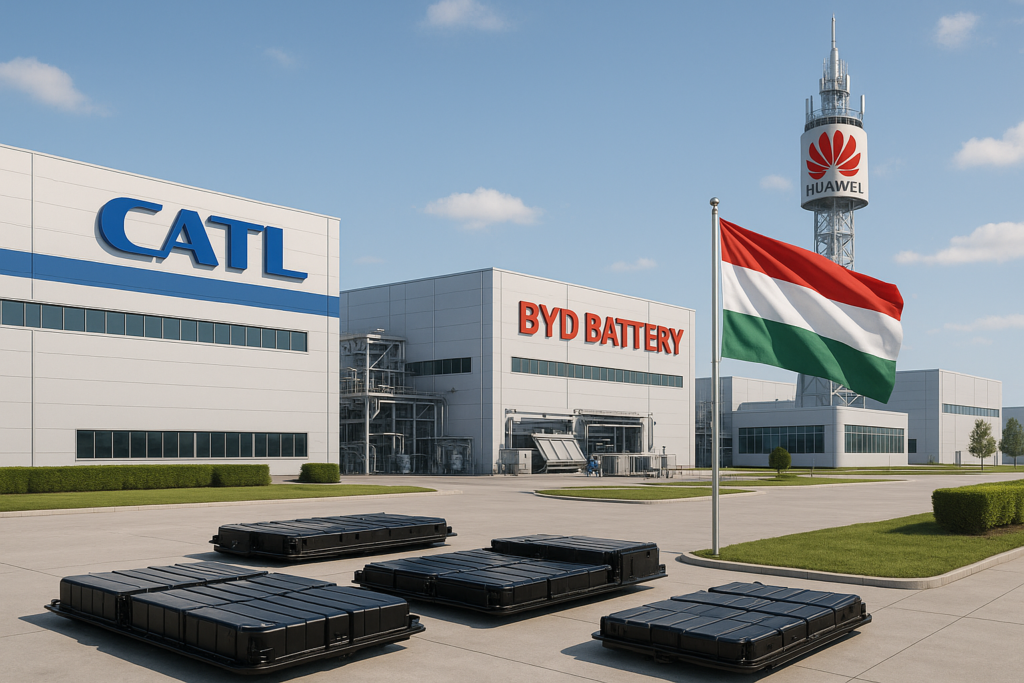
China’s economic footprint in Hungary has reached unprecedented levels, with Chinese direct investment standing at $8.12 billion in 2023, making China the largest foreign investor in the country for four consecutive years.
Investment Breakdown by Sector:
Automotive and Battery Manufacturing:
- CATL (Contemporary Amperex Technology): €7.3 billion battery facility in Debrecen, Hungary’s largest single investment project
- BYD: €501 million electric vehicle factory in Szeged with 300-hectare industrial park
- EVE Energy: $1.2 billion investment to supply batteries to BMW
- XINWANDA: Additional battery manufacturing capacity
Telecommunications and Technology:
- Huawei: Largest supply center outside China operating in Hungary
- 4iG Partnership: Joint cloud services platform development
- Digital infrastructure: 5G network deployment despite US pressure
Infrastructure Projects:
- Budapest-Belgrade Railway: High-speed rail connection under BRI framework
- Budapest Airport Rail Link: High-speed connection from central Budapest to airport
- Belt and Road Center: Establishment of China-Hungary cooperation promotion center
Global Context: Hungary’s Unique Position
Hungary’s ability to attract Chinese investment has surpassed major European economies in specific periods, reflecting the country’s strategic importance to Chinese European strategy.
Comparative Investment Attraction:
- Hungary: €8.12 billion Chinese FDI (58% of total FDI in 2023)
- Combined Germany, France, UK: Lower Chinese investment in certain years
- Battery Production Capacity: 87 GWh annually, making Hungary the world’s fourth-largest battery producer
- Automotive Industry: 21% of Hungary’s total economic output in 2023
The 16+1/17+1 Framework: Regional Strategy
Central and Eastern Europe as Gateway
The China-CEE cooperation mechanism, originally known as 16+1 (expanded to 17+1 with Greece’s inclusion), represents China’s systematic approach to engaging Central and Eastern European countries as an entry point to European markets. cceec swp-berlin
Framework Evolution:
- 2012: Warsaw Summit establishes 16+1 cooperation platform
- 2017: Budapest Guidelines outline deepening cooperation themes
- 2019: Greece joins, expanding to 17+1 format
- 2024: Hungary assumes EU Council Presidency while deepening China ties
Hungary’s Leadership Role:
- Largest trade partner: $14.52 billion bilateral trade in 2023, 73% increase since 2013
- Strategic coordination: Hungary’s “Eastern Opening” policy aligns with China’s Belt and Road Initiative
- Political advocacy: Consistent support for China positions within EU
- Investment hub: Serves as manufacturing base for Chinese companies targeting European markets
Regional Impact and EU Tensions
Hungary’s deepening China relationship creates tensions within EU unity on China policy, particularly as Brussels pursues “de-risking” strategies while Budapest embraces deeper integration.
EU Policy Challenges:
- Unified China strategy: Hungary’s position complicates EU consensus-building
- Strategic autonomy: Questions about Chinese influence on EU decision-making
- Market access: Chinese companies using Hungary as European manufacturing base
- Technology transfer: Concerns about sensitive technology access through Hungarian partnerships
Geopolitical Implications: Sovereignty vs. Alliance Pressure
The Decoupling “Red Line”
Hungary has explicitly declared decoupling from China a “red line”, with Economy Minister Nagy stating that Hungary will not scale back economic ties despite increasing US and EU pressure.
Strategic Rationale:
- Economic dependence: Chinese investment integral to Hungary’s economic model
- Alternative absence: No comparable US investment prospects identified
- Contractual obligations: Long-term commitments with Chinese companies
- Industrial ecosystem: Integrated supply chains difficult to replace
Political Positioning:
Prime Minister Orbán’s approach reflects his “illiberal democracy” model and multipolar foreign policy, seeking to balance relationships with major powers while prioritizing national economic interests. cepa
US-EU Pressure and Hungarian Resistance
Growing External Pressure:
- Trump Administration 2.0: Expected to intensify pressure for China decoupling
- NATO obligations: Questions about alliance loyalty and technology security
- EU cohesion: Brussels’ expectations for unified China approach
- Sanctions coordination: Potential conflicts over China-related restrictions
Hungarian Counter-Arguments:
- Sovereignty principle: Right to choose economic partners based on national interests
- Mutual benefit: Chinese investment creates jobs and economic growth
- Pragmatic approach: Economic cooperation separate from political systems
- Historical precedent: Successful cooperation with different political systems during Cold War
Economic Risks and Dependencies
Vulnerability Assessment
Hungary’s deep economic integration with China creates both opportunities and vulnerabilities that could affect long-term economic stability.
Dependency Risks:
- Supply chain concentration: Over-reliance on Chinese inputs for key industries
- Technology dependence: Huawei infrastructure creating potential security vulnerabilities
- Investment reversal: Potential Chinese divestment in response to geopolitical tensions
- Market access: EU restrictions on Chinese goods could affect Hungarian production
Domestic Industry Impact:
- Crowding out effects: Chinese investment potentially displacing domestic competitors
- Skills mismatch: Technology transfer not always benefiting local workforce
- Environmental concerns: Industrial expansion raising sustainability questions
- Regional imbalance: Investment concentration in specific areas
Economic Resilience Strategies
Diversification Efforts:
- Multiple Chinese partners: Avoiding dependence on single companies
- Value chain integration: Ensuring Hungarian participation in production processes
- Skill development: Training programs for advanced manufacturing sectors
- Innovation promotion: R&D cooperation to build domestic capabilities
Digital Security and Strategic Implications
Huawei and 5G Infrastructure
Hungary’s partnership with Huawei represents one of the most controversial aspects of the China relationship, particularly given US security concerns and alliance pressures.
Huawei Presence in Hungary:
- Largest facility outside China: Major production and R&D center
- 5G network development: Leading role in Hungarian telecommunications infrastructure
- Government partnerships: Collaboration with Hungarian firm 4iG
- Strategic importance: Central role in digital transformation plans
Security Concerns:
- Data sovereignty: Questions about Chinese access to Hungarian communications
- NATO compatibility: Alliance systems security with Chinese technology
- Economic espionage: Potential intelligence gathering through telecommunications
- Critical infrastructure: Dependency on Chinese systems for essential services
Intelligence and Surveillance Issues
The 2024 deployment of Chinese police officers in Budapest during Xi Jinping’s visit highlighted concerns about Chinese security presence in European capitals.
Operational Implications:
- Precedent setting: First Chinese police deployment in EU capital
- Surveillance capabilities: Potential monitoring of Chinese dissidents
- Sovereignty questions: Foreign law enforcement operating on EU territory
- Intelligence risks: Information gathering about Hungarian society and politics
Comparative Analysis: Small State Strategies
Regional Models
Serbia’s Approach:
- Balancing act between EU aspirations and Chinese investment
- Infrastructure focus: Chinese loans for major projects like bridges and highways
- Political alignment: Diplomatic support for Chinese positions without formal alliance
- EU integration: Maintaining accession path while deepening China ties
Greece’s Strategy:
- Pragmatic engagement: Chinese investment in Piraeus Port and other infrastructure
- EU membership: Working within Brussels while maintaining Beijing relationship
- Economic recovery: Chinese capital supporting post-crisis economic stabilization
- Strategic balance: Avoiding explicit confrontation with either side
Czech Evolution:
- Initial enthusiasm: Strong early support for China engagement
- Policy reversal: Gradual distancing due to domestic political changes
- Security concerns: Huawei restrictions and Chinese influence warnings
- Atlanticist shift: Closer alignment with US positions on China
Hungary’s Distinctive Approach
Hungary’s strategy differs from regional peers through its explicit commitment to the China relationship and direct confrontation with US pressure:
Unique Characteristics:
- Ideological alignment: Orbán’s illiberalism compatible with Chinese authoritarianism
- Economic integration depth: Deeper sectoral dependence than regional peers
- Political defiance: Open resistance to Western pressure for decoupling
- Strategic coordination: Active support for Chinese global initiatives
Lessons for India: Strategic Balancing in a Multipolar World
Parallels and Contrasts
Hungary’s experience offers valuable insights for India’s strategic balancing between US and Chinese relationships:
Similar Challenges:
- Economic incentives vs. alliance pressure
- Technology cooperation with security implications
- Domestic development needs vs. geopolitical positioning
- Sovereignty concerns in great power competition
Different Contexts:
- Scale differences: India as major power vs. Hungary as small state
- Strategic autonomy: India’s traditional non-alignment vs. Hungary’s alliance membership
- Economic alternatives: India’s diverse partnership options vs. Hungary’s limited choices
- Domestic consensus: India’s broader political agreement vs. Hungary’s partisan approach
Strategic Lessons
Effective Balancing Strategies:
- Diversified partnerships: Multiple options reduce dependency risks
- Economic pragmatism: Separating commercial from political relationships
- Strategic communication: Clear messaging to all partners about core interests
- Domestic consensus: Building broad agreement on strategic priorities
Future Scenarios and Policy Options
Potential Developments
Scenario 1: Continued Integration
If current trends continue, Hungary could become even more dependent on Chinese investment and technology, potentially creating irreversible dependencies.
Scenario 2: Gradual Rebalancing
EU financial incentives and US pressure might encourage gradual diversification while maintaining existing commitments.
Scenario 3: Crisis-Driven Change
Geopolitical crisis or economic shock could force rapid policy adjustment with significant economic costs.
Policy Recommendations
For Hungary:
- Risk assessment: Comprehensive evaluation of dependency vulnerabilities
- Diversification strategy: Gradual expansion of partner base without abandoning China ties
- Transparency measures: Enhanced oversight of Chinese investments and technology transfers
- EU coordination: Better integration with Brussels on strategic issues
For EU:
- Financial incentives: Alternative investment options for CEE countries
- Technology cooperation: European solutions for digital infrastructure needs
- Diplomatic engagement: Understanding of economic realities facing member states
- Flexible approach: Accommodating different national circumstances within unity framework
Conclusion: The Price of Strategic Autonomy
Hungary’s all-weather partnership with China represents a bold experiment in small-state strategy within the constraints of alliance membership. The relationship has delivered significant economic benefits, transforming Hungary into a major European manufacturing hub while providing Chinese companies with strategic access to EU markets.
However, this economic integration comes with substantial risks, including technological dependencies, security vulnerabilities, and increasing isolation within European decision-making. The sustainability of this model depends on Hungary’s ability to manage these risks while maintaining economic benefits.
The broader implications extend beyond bilateral relations to questions of sovereignty, alliance loyalty, and economic security in an increasingly fragmented global system. Hungary’s experience demonstrates both the opportunities and dangers of deep integration with major powers in a multipolar world.
As geopolitical tensions intensify, Hungary’s strategic choice will test the limits of European unity and the flexibility of alliance systems in accommodating diverse national strategies. The outcome will influence how other small states navigate the complex trade-offs between economic opportunity and strategic alignment in the 21st century.
Mains Practice Qs
- Critically examine how Hungary’s partnership with China affects the EU’s collective China policy.
- What lessons does the Hungary–China engagement offer for India’s strategy in balancing economic opportunities with strategic security concerns?






+ There are no comments
Add yours