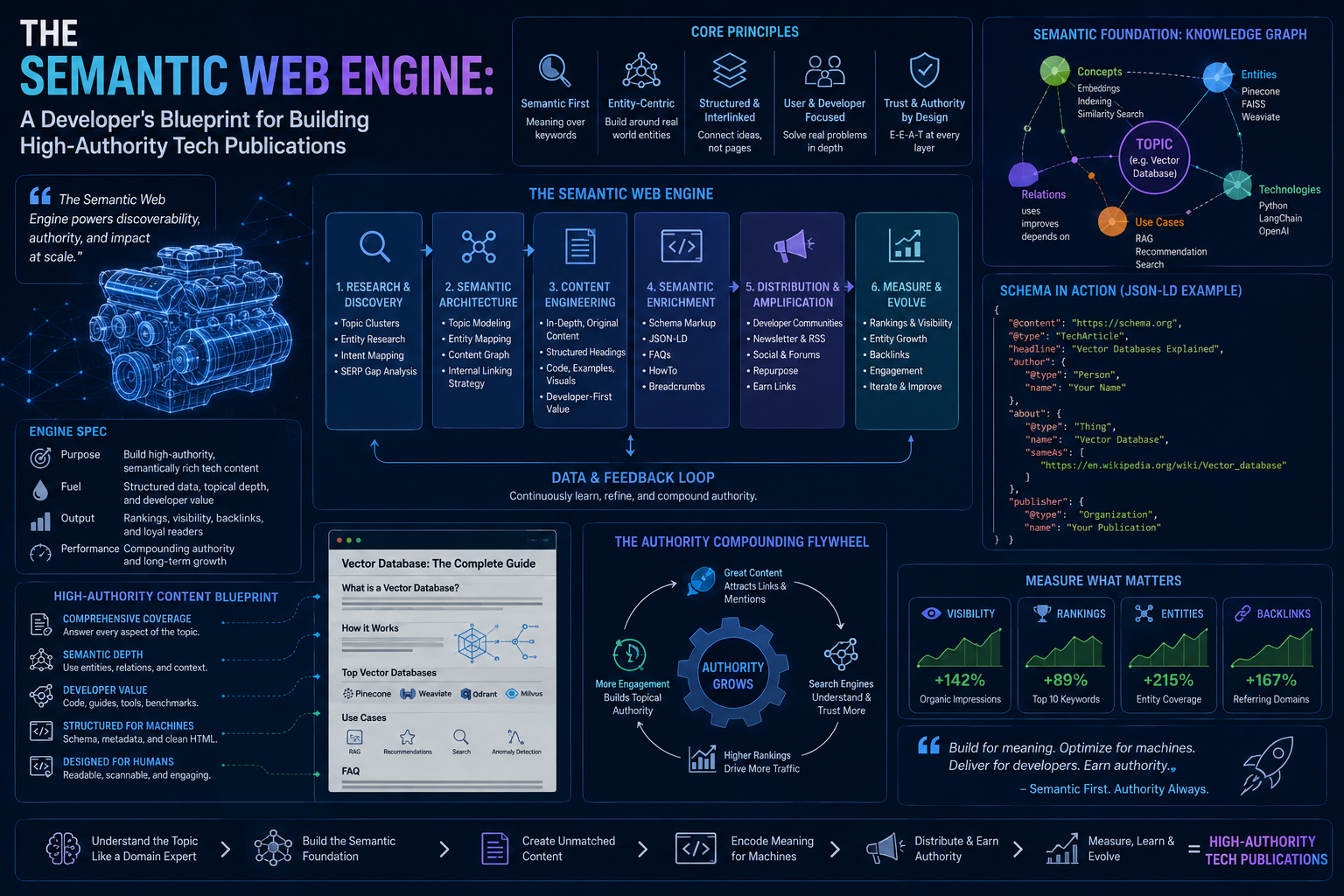
In an era dominated by rapid automated content generation, the landscape of digital media has fundamentally shifted. Search engine crawlers and discovery algorithms have evolved past simple keyword matching. Today, platforms prioritize Information Gain, structural clarity, and semantic depth. For technical publishers, developers, and digital marketers, building a high-traffic destination is no longer just a challenge of writing prose—it is an exercise in data engineering.
To capture high-intent search queries and build sustained audience trust, you need a highly structured, code-first content framework. This blueprint outlines the advanced architecture required to build a modern, programmatic, and semantic tech publication from scratch.
1. Architectural Foundation: The Content-as-Code Stack
To achieve blazing-fast load speeds, absolute data control, and zero reliance on heavy, restrictive content management platforms, high-authority tech publications should be built using a Jamstack (JavaScript, APIs, and Markup) framework.
[ ASSET AUTHORING LAYER ] ──► Programmatic Markdown / MDX Frontend
                                      │
                                      ▼
[ BUILD & PROCESS LAYER ] ──► Static Site Generator (Next.js / Astro)
                                      │
                                      ▼
[ SEMANTIC DATA LAYER   ] ──► Custom JSON-LD / Linked Data Schemas
- The Authoring Layer: Content is authored purely in markdown (
.md) or MDX (.mdx). This treats your articles exactly like application source code, allowing complete version control, automated syntax parsing, and clear tracking of edits via platforms like GitHub. - The Build Engine: A modern static site generator (such as Astro or Next.js) processes the markdown files during compilation. It strips out heavy database queries, rendering clean, semantic HTML5 and CSS3 that loads instantly on any user device.
- The Semantic Schema: Every article automatically generates a custom, nested JSON-LD (JavaScript Object Notation for Linked Data) script. This provides search engine crawlers with clear, explicit metadata mapping out the article’s core entities, authors, and reference documentation.
2. Implementing a Robust Topic Cluster Architecture
Algorithms evaluate authority by looking at how comprehensively a platform covers a specific technical ecosystem. Instead of publishing unrelated articles, high-authority engines rely on a strict Hub-and-Spoke (Topic Cluster) Framework.
The Architecture of a Cluster:
- The Pillar Hub Page: A comprehensive, high-level structural guide covering an entire industry domain (e.g., The Complete Guide to Microservices Architecture).
- The Sub-Topic Spokes: Deep-dive, highly technical articles that expand on specific, high-intent concepts introduced on the pillar page (e.g., Optimizing Database Pools in Microservices).
- Hyper-Targeted Interlinking: Every sub-topic spoked article must link directly back to the main pillar page using exact semantic anchor text, and the pillar page must index the sub-topics. This explicit linking creates a closed loop that signals complete topical coverage to web crawlers.
3. Programmatic SEO: Engineering Custom Schema Markup
To help search engines immediately parse the technical depth of your articles, you can inject a structured TechArticle schema directly into the HTML <head> block of your markdown layout file. Here is a clean, programmatic JSON-LD template:
HTML
<script type="application/ld+json">
{
  "@context": "https://schema.org",
  "@type": "TechArticle",
  "headline": "Building a Lightweight CRM from Scratch Using Python",
  "description": "A comprehensive technical blueprint to build a self-hosted CRM using a Flask backend and an SQLite database.",
  "dependencies": "Python 3.10+, Flask 3.0, SQLite3",
  "proficiencyLevel": "Advanced",
  "author": {
    "@type": "Person",
    "name": "Siddharth",
    "jobTitle": "Software Developer & Content Engineer"
  },
  "inLanguage": "en-US",
  "publisher": {
    "@type": "Organization",
    "name": "Aquartia Technologies"
  }
}
</script>
By providing explicit structural fields like dependencies and proficiencyLevel, you make it incredibly easy for developer tools, semantic search engines, and AI discoverability crawlers to surface your documentation for highly specific, high-intent queries.
4. Maximizing Pipeline Efficiency: The Continuous Publishing Engine
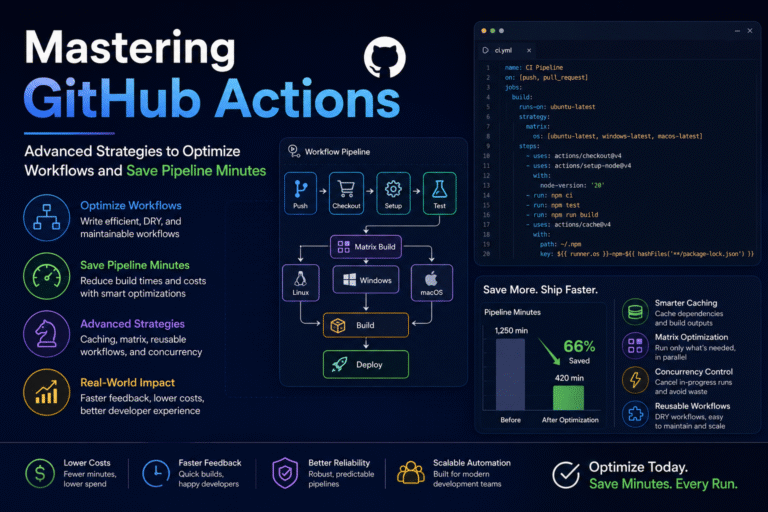
Because our content is treated as code, you can completely automate your publishing, code validation, and link-checking pipelines using tools like GitHub Actions. This keeps your focus entirely on production while automation handles code safety.
YAML
name: Production Deployment Pipeline
on:
  push:
    branches: [ main ]

jobs:
  build-and-validate:
    runs-on: ubuntu-latest
    steps:
      - name: Checkout Source Code
        uses: actions/checkout@v4

      - name: Set Up Node.js Environment
        uses: actions/setup-node@v4
        with:
          node-version: '20'
          cache: 'npm'

      - name: Install & Validate Markdown Syntax
        run: |
          npm ci
          npm run lint:markdown

      - name: Compile Static Production Assets
        run: npm run build
- Automated Linting: Before a single file goes live, the pipeline automatically checks your markdown syntax, verifies that all embedded code snippets are structurally sound, and alerts you if any URLs return broken status codes.
- Instant Edge Deployment: Once validation passes, the compiled static assets are pushed directly to global edge networks (like Vercel, Netlify, or Cloudflare Pages), ensuring your technical documentation is distributed globally with sub-second page delivery times.
5. Conclusion: The Long-Term Authority Strategy
Shifting your publication from a basic blogging setup to a semantic, code-first architecture completely changes your digital distribution strategy. By combining developer-centric markdown workflows, deep topic clustering, programmatic schema execution, and automated validation pipelines, you create a fast, resilient, and highly scalable knowledge base. This foundation ensures your content commands high topical authority and remains perfectly optimized for the next generation of semantic web engines.
Reference Links
- W3C Linked Data Architecture Standards: https://www.w3.org/
- Schema.org Technical Vocabulary Documentation: https://schema.org/
- The Jamstack Official Community Framework: https://jamstack.org/


+ There are no comments
Add yours