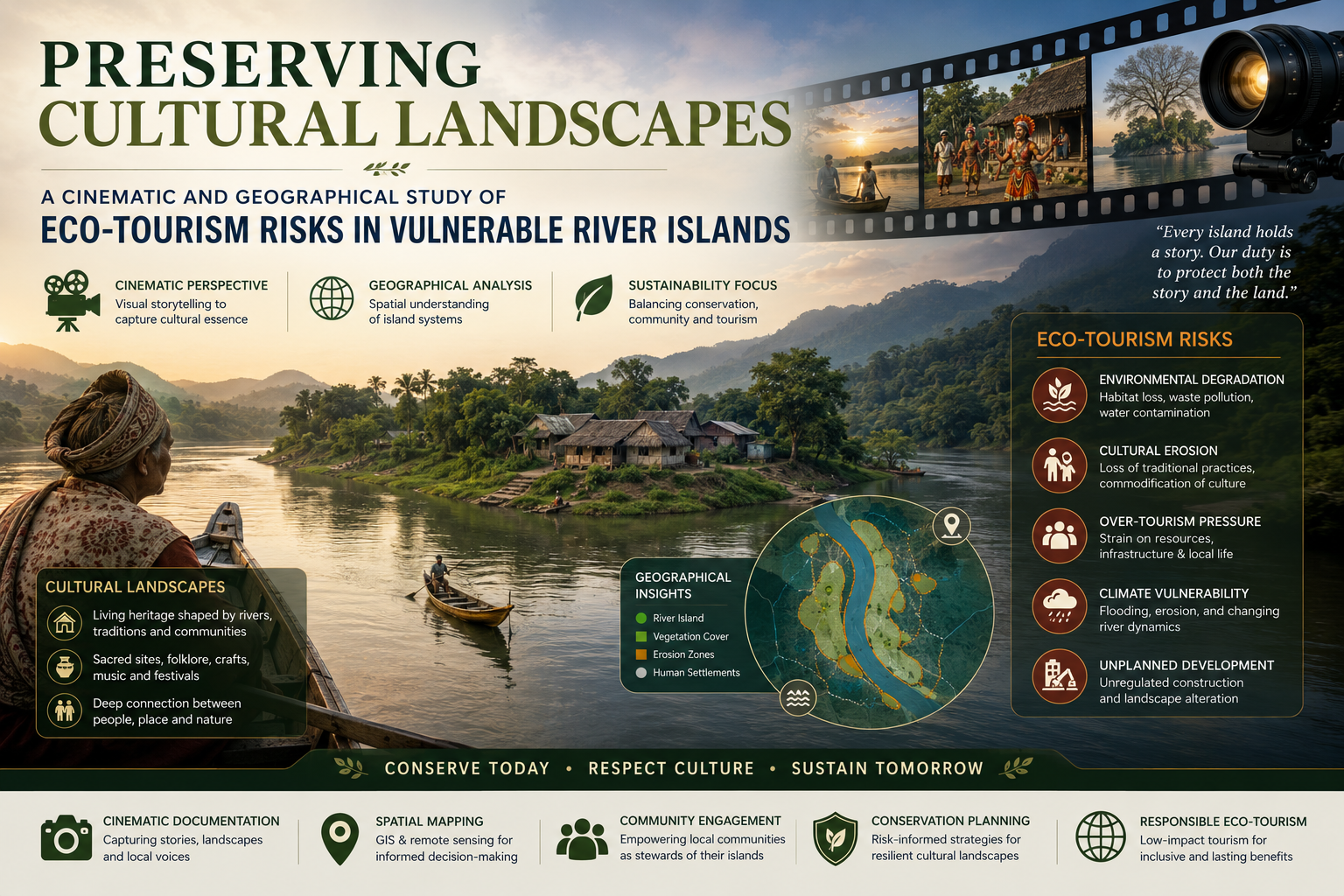
River islands are among the most dynamic, biologically diverse, and culturally rich ecosystems on Earth. Formed by centuries of continuous silt deposition and the shifting pathways of major river channels, these landmasses exist in a perpetual state of flux. However, islands like Majuli—the world’s largest mid-river deltaic island, nestled within the shifting course of the Brahmaputra River—are facing a profound modern paradox.
While they have evolved into international hubs for eco-tourism and cultural preservation, their fragile topographies are highly vulnerable to rapid riverbank erosion and unpredictable seasonal flooding. This geographical case study analyzes the delicate environmental balance of these vulnerable river islands, evaluates the ecological pressures driven by unregulated tourism, and outlines sustainable frameworks required to protect their unique heritage.
1. The Dynamic Geography of Deltaic River Islands
Unlike static continental islands, mid-river islands are living, shifting geographical entities. Their existence depends on a delicate, seasonal cycle of erosion and deposition:
[Monsoon Flood Season] ──► Massive Sediment Load ──► Upstream Erosion
                                                          │
                                                          ▼
[Post-Flood Recess]    ──► Reduced Flow Velocity ──► Downstream Silt Deposition
During heavy monsoon seasons, the river carries massive volumes of sediment, frequently changing its path and cutting deep into the island’s soft alluvial edges. As the floodwaters recede, reduced flow velocity causes the river to drop its silt, creating new sandbars (chaps) downstream.
This continuous cycle means the island’s total surface area is never constant. Over the past century, intensive climate shifts and upstream deforestation have accelerated bank erosion rates, threatening the core structural integrity of these ancient habitats.
2. The Cultural Landscape: A Living Heritage Hub
The true value of these river systems lies in the seamless integration of human culture and natural geography. These islands frequently act as micro-refuges for ancient traditions, isolated from mainstream urban encroachment:
- Socio-Religious Institutions: Islands like Majuli serve as the cradle for distinct spiritual and artistic movements, housing historic Satras (monasteries) that have preserved classical dance, mask-making, and drama for over five centuries.
- Indigenous Harmonization: Local tribal communities have structurally adapted their entire lifestyle to the river’s seasonal ebwegs. Their architecture features Chang Ghar setups—traditional houses built on sturdy bamboo stilts—allowing annual floodwaters to pass harmlessly underneath without destroying the home.
- Agro-Ecological Integration: The islanders practice deep-water rice cultivation and seasonal wetland fishing, utilizing natural ecological cycles rather than attempting to alter the terrain through disruptive engineering.
3. The Eco-Tourism Paradox: Compounding Pressures on a Fragile Terrain
The global push toward eco-tourism has spotlighted these unique river communities, drawing thousands of travelers looking for authentic cultural experiences. However, the sudden influx of tourism infrastructure threatens to upset the island’s ecological balance:
[Unregulated Eco-Tourism] ──► Concrete Infrastructure ──► Heavy Non-Biodegradable Waste
                                                                  │
                                                                  ▼
[Accelerated Soil Runoff] ◄── Soil Compaction ◄── Fragile Alluvial Disruption- The Concrete Intrusion Trap: To accommodate rising tourist traffic, local builders frequently abandon flexible, native materials in favor of rigid brick-and-concrete hotels. These heavy structures compact the loose alluvial topsoil, blocking natural drainage paths and increasing localized bank collapse during heavy rains.
- Solid Waste Management Crisis: Isolated river islands lack the complex waste processing systems found in major mainland cities. Plastic packaging, single-use bottles, and consumer waste generated by tourists frequently end up clogging delicate wetland channels, poisoning aquatic breeding grounds.
- Cultural Disruption: The commodification of local rituals for rapid tourist consumption risk diluting the authentic social framework of indigenous communities, shifting local livelihoods away from sustainable agriculture toward volatile, service-dependent jobs.
4. Frameworks for Resilient, Community-Led Conservation
Protecting these vulnerable river systems requires shifting our approach from standard mass tourism to a strict High-Value, Low-Impact Conservation Model:
| Conservation Strategy | Implementation Metric | Ecological & Social Rationale |
|---|---|---|
| Strict Carrying-Capacity Caps | Daily visitor quotas during peak season. | Limits systemic physical footprint, prevents soil compaction, and minimizes municipal waste generation. |
| Bio-Shield Bank Stabilization | Mass planting of deep-root indigenous vetiver grass. | Binds the loose alluvial silt naturally, drastically lowering topsoil erosion without relying on ugly, disruptive concrete embankments. |
| Decentralized Homestay Models | Direct community-owned eco-lodges using stilt architecture. | Ensures tourist revenue stays entirely within local families while maintaining traditional architectural safety against seasonal floods. |
| Mandatory Circular Waste Rules | “Pack-In, Pack-Out” protocols for all commercial tour operators. | Shifts the logistical burden of single-use plastic waste disposal away from the island’s fragile municipal framework back to the mainland. |
5. Conclusion: Coexisting with a Changing Current
The survival of our planet’s historic river islands depends entirely on our ability to view them not as permanent, unyielding tourist attractions, but as fragile, shifting geographical ecosystems. By prioritizing indigenous architectural knowledge, enforcing strict environmental regulations, and ensuring that local communities remain the primary guardians of their homelands, we can create a sustainable path forward. This approach guarantees that these magnificent cultural landscapes will continue to rise gracefully above the currents for generations to come.
Reference Links
- UNESCO World Heritage Center – Cultural Landscapes: https://whc.unesco.org/
- World Wildlife Fund (WWF) River Basin Management: https://www.worldwildlife.org/
- Ministry of Tourism, Government of India (Sustainable Tourism Blueprints): https://tourism.gov.in/






+ There are no comments
Add yours