
Key Highlights
- AI-powered robots use smart sensors and cameras to inspect the Great Wall, detecting cracks and missing bricks with precision.
- Filamentous cyanobacteria form a protective crust, shielding rammed-earth sections from rain erosion in an eco-friendly way.
- The integration of advanced robotics and biological conservation boosts restoration accuracy and longevity.
- The approach transforms heritage preservation, making it more sustainable, efficient, and responsive to environmental changes.
- These innovations serve as a blueprint for protecting cultural landmarks worldwide.
The awe-inspiring expanse of the Great Wall of China, stretching over 21,000 kilometers, isn’t just a symbol—it’s a living monument of ingenuity, endurance, and cultural pride. Preserving such an ancient marvel is a formidable challenge, especially at sites like Shanhaiguan Pass in Hebei province, where the structure faces threats from weather, erosion, and time itself. Now, leveraging the power of AI robotics and biological conservation, China is setting a global benchmark for heritage restoration—combining cutting-edge technology and nature’s own solutions for a new era of sustainable stewardship.
Heritage at Risk: Why Innovation Is Essential
Centuries of wind, rain, and human activity have left many sections of the Great Wall battered, especially at historic junctures like the Shanhaiguan Pass. Traditional restoration methods often struggle to balance accuracy, efficiency, and environmental impact:
- Manual inspections are slow, prone to human error, and limited by accessibility.
- Chemical sealing or structural repairs can unintentionally damage ancient materials or the local ecosystem.
Preservationists faced a pressing question: could they protect the Wall’s enduring legacy without compromising its authenticity or the surrounding environment? The answer, as China demonstrates, is a fusion of artificial intelligence and nature-based conservation.
AI Robotics: Precision Inspection Meets Ancient Stone
Picture a four-legged robot traversing the rugged terrain of the Great Wall, its smart sensors, LiDAR arrays, and HD cameras tirelessly scanning every nook and cranny. This isn’t science fiction—it’s the new reality at Shanhaiguan Pass.
How it works:
- Smart Sensors & LiDAR: Capture structural data and detect even minute changes in the Wall’s surface.
- HD Cameras: Provide high-resolution imaging, building a digital archive of every brick and crack.
- Automated Analysis: Onboard AI algorithms flag discrepancies, locate missing stones, and generate maintenance reports instantly.
The robot doesn’t just monitor—it enables early intervention, alerting teams before minor cracks escalate into major failures. By reducing reliance on labor-intensive surveys, the technology streamlines restoration and ensures nothing escapes notice.
Nature’s Solution: Cyanobacteria for Eco-Friendly Protection
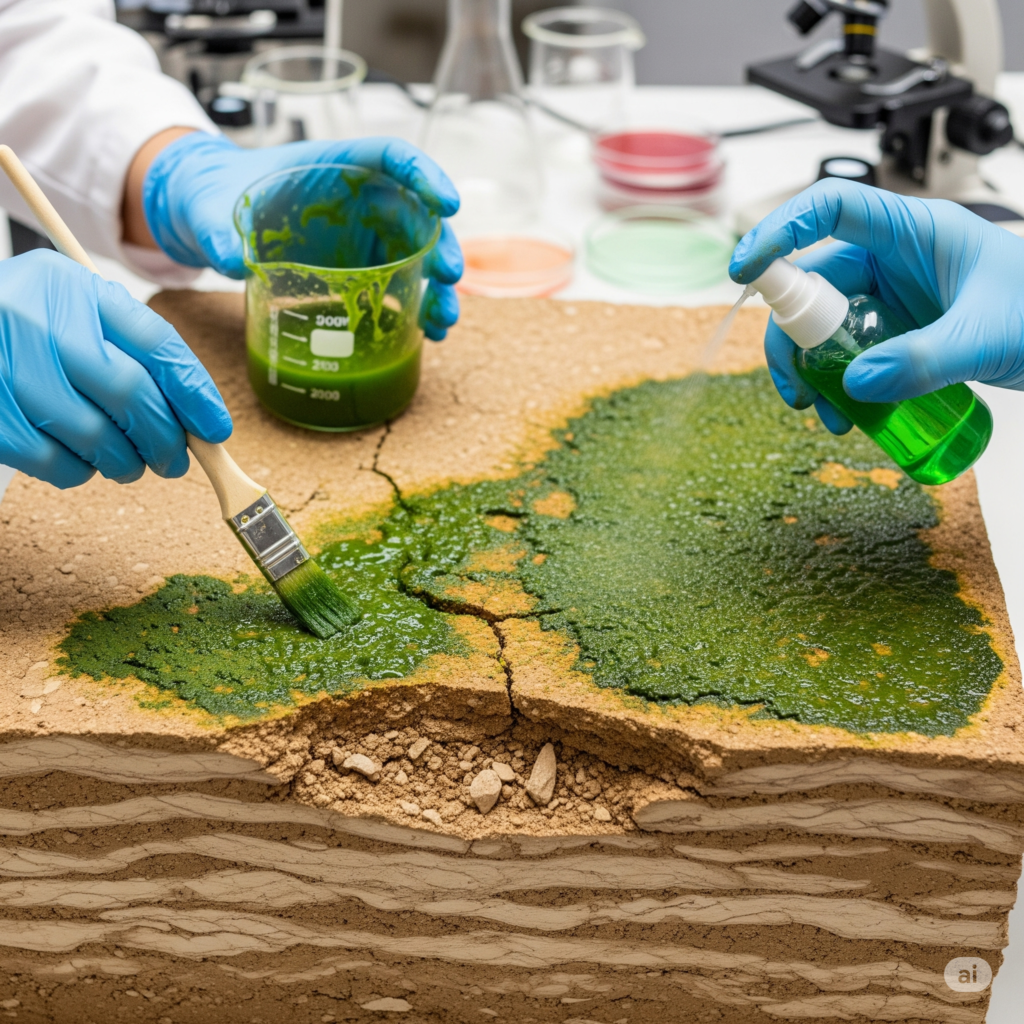
While robots offer precision and consistency, nature lends resilience. Researchers are harnessing filamentous cyanobacteria, a type of algae, to fortify the rammed-earth sections—those especially vulnerable to rainfall and erosion.
Why cyanobacteria?
- They naturally form a biological crust, binding loose soil particles.
- This living shield absorbs moisture and slows down rain erosion—while remaining gentle on ancient materials.
- Unlike synthetic chemicals, cyanobacteria are non-invasive and sustain local biodiversity.
The process involves carefully applying these cultures across exposed surfaces, triggering natural growth that strengthens the Wall’s foundations. This “living membrane” adapts with the environment, providing ongoing protection as weather conditions fluctuate.
Synergy in Conservation: Technology Meets Ecology
The most powerful impact isn’t from robots or algae alone—but from how they work together:
- Data-Driven Restoration: Robots map out problem areas; algae treatments are targeted where they’re most needed.
- Minimal Disruption: AI monitoring means fewer unnecessary repairs, preserving authenticity.
- Scalable Sustainability: Biological protection can be renewed and adjusted over time, unlike one-off chemical barriers.
This integrative model sets a precedent for heritage sites across the world: blending digital innovation with eco-friendly practices for a holistic approach to preservation.
The Future of Heritage Management: Global Implications
China’s experiment at the Great Wall is more than local ingenuity. It’s a template that can inform restoration efforts everywhere:
- Remote Monitoring: Other historic structures—museums, temples, forts—can benefit from AI robotics that bring speed, accuracy, and long-term archiving.
- Nature-Based Solutions: From earthen mounds to aging bridges, biological crusts offer a sustainable guard against erosion and decay.
- Cross-Disciplinary Collaboration: Engineers, biologists, historians, and local communities work together, ensuring every project is technically robust and culturally sensitive.
Takeaways and Action Points
The marriage of robotics and algae at the Great Wall clarifies a path forward for heritage conservation:
- Innovation doesn’t mean compromise. With the right blend of tech and ecology, even ancient wonders can be protected sustainably.
- Efficiency and authenticity go hand in hand. AI ensures precise care; nature-based methods preserve original materials.
- Communities and cultures benefit. By securing landmarks, countries foster pride, knowledge, and tourism.
By uniting cutting-edge robotics with nature’s own solutions, China’s guardians of the Great Wall show us how technology and ecology together can protect the world’s most precious cultural treasures—today and for centuries to come.




+ There are no comments
Add yours