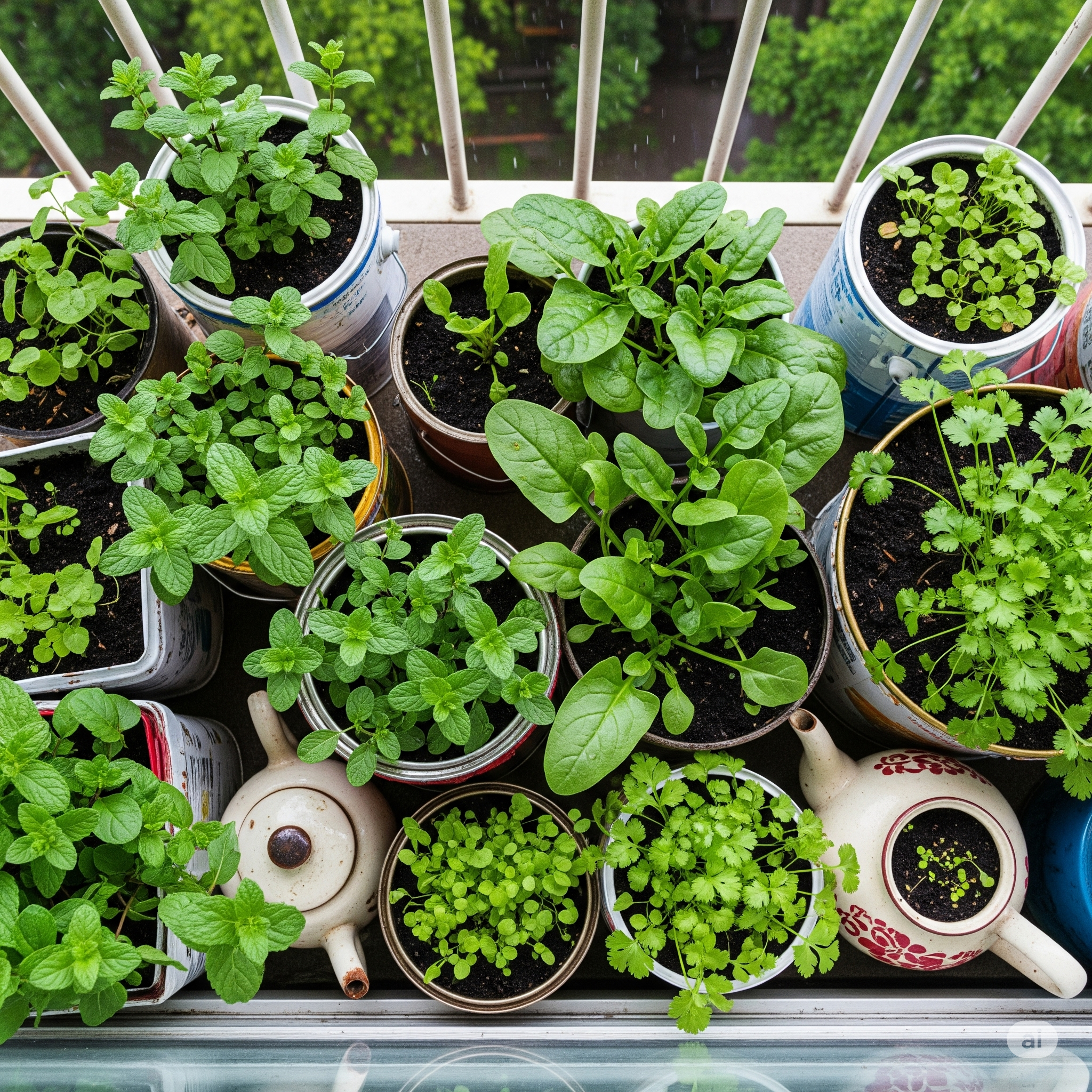
Why Monsoon is a Gardener’s Best Friend
For most Indians, the monsoon season brings a sense of relief, cool breezes, and plenty of rain. But for home gardeners, it brings a golden opportunity to grow fresh, edible greens and herbs, right in their balcony or backyard.
The abundant moisture, combined with humid warmth, creates the ideal environment for many edible plants to thrive. Whether you have a terrace, a window ledge, or just a few pots, this is your chance to grow chemical-free food, save money, and build a deeper connection with nature.
Here are 10 edible plants that flourish during the Indian monsoon, along with tips for planting, care, and harvesting.
🪴 1. Spinach (Palak)
🌱 Why It’s Great:
- Fast-growing leafy green
- Packed with iron and antioxidants
- Thrives in partial sunlight and moist soil
🌧️ Monsoon Tips:
- Sow seeds directly into soil or pots
- Ensure drainage to avoid waterlogging
- Ready to harvest in 25–30 days
🌿 2. Coriander (Dhaniya)
🌱 Why It’s Great:
- Dual-purpose: leaves (herb) + seeds (spice)
- Rich in vitamins A, C, and K
🌧️ Monsoon Tips:
- Soak seeds overnight before planting
- Needs moderate sun and daily watering
- Harvest leaves in 3 weeks, seeds in 45–50 days
🍀 3. Fenugreek (Methi)
🌱 Why It’s Great:
- Easy to grow from kitchen seeds
- Excellent for digestion and blood sugar control
🌧️ Monsoon Tips:
- Grow in shallow containers
- Water every alternate day
- Cut leaves when 3–4 inches tall
🍆 4. Brinjal (Baingan)
🌱 Why It’s Great:
- Rain-loving vegetable
- Rich in fiber, low in calories
🌧️ Monsoon Tips:
- Needs deep pots or garden beds
- Avoid overwatering to prevent fungal rot
- Harvest after 2–3 months
🍅 5. Tomatoes
🌱 Why It’s Great:
- Versatile kitchen staple
- Rich in lycopene, an anti-inflammatory antioxidant
🌧️ Monsoon Tips:
- Choose disease-resistant varieties
- Stake the plant to prevent drooping
- Prune regularly for better yield
🌿 6. Mint (Pudina)
🌱 Why It’s Great:
- Aromatic, fast-growing herb
- Great for digestion and cooling
🌧️ Monsoon Tips:
- Propagate from cuttings in water
- Prefers shady spots and moist soil
- Pinch off top shoots to encourage bushy growth
🍠 7. Taro (Arbi)
🌱 Why It’s Great:
- Thrives in heavy rains
- Grown for both leaves and roots
🌧️ Monsoon Tips:
- Needs loamy soil and good drainage
- Requires at least 2 months of growth
- Cooked leaves rich in iron and calcium
🧄 8. Garlic Greens
🌱 Why It’s Great:
- Quick to grow from garlic cloves
- Adds flavor and nutrients to dishes
🌧️ Monsoon Tips:
- Plant cloves root-down in moist soil
- Ready to harvest greens in 3–4 weeks
- Keep out of direct heavy rain to prevent rot
🌰 9. Turmeric (Haldi)
🌱 Why It’s Great:
- Anti-inflammatory powerhouse
- Grows well in wet, warm climates
🌧️ Monsoon Tips:
- Plant rhizomes in well-drained pots
- Harvest after 8–9 months
- Leaves can also be used in cooking
🫛 10. Beans (Cluster, French, or Long Beans)
🌱 Why It’s Great:
- Fast climbers and nutrient-rich
- Improves soil health through nitrogen fixation
🌧️ Monsoon Tips:
- Sow directly in soil with vertical support
- Water consistently but avoid waterlogging
- Start harvesting in 6–8 weeks
🧠 Benefits of Growing Edible Plants at Home
| Benefit | Description |
|---|---|
| 🌿 Freshness | Eat vegetables minutes after harvesting |
| 💸 Cost-Saving | Cut down on market bills, especially herbs |
| 🍃 Organic Living | Avoid pesticide and chemical exposure |
| 🧘 Mental Wellness | Gardening relieves stress and boosts mindfulness |
| 🌎 Eco-Friendly | Reduces carbon footprint and supports biodiversity |
🧺 Tips to Maximize Monsoon Gardening
- Use coconut coir or compost to improve drainage and avoid soggy roots.
- Watch for pests—slugs and fungal diseases are common in humidity.
- Use neem spray or garlic-chili water as natural pesticides.
- Harvest early mornings for best flavor and nutrient retention.
- Use grow bags or recycled buckets to maximize small spaces.
🏡 No Backyard? No Problem.
Even if you live in an apartment, most of these plants can thrive in:
- Balconies with partial sunlight
- Window ledges with rain protection
- Vertical garden racks or railing pots
Monsoon moisture means less effort and more growth, making this the ideal time to experiment—even for beginners.
🌱 Final Thoughts: A Greener Plate Starts at Home
Monsoon isn’t just a season for chai and pakoras—it’s a gifted window for home-based food cultivation.
By growing just a few edible plants at home, you:
- Reduce dependence on chemical-laced produce
- Build resilience in your food supply
- Connect deeper with the rhythm of nature
So, this rainy season, plant a seed. Let the skies water it. And let your plate overflow with health, freshness, and pride—because nothing tastes better than what you’ve grown yourself.












+ There are no comments
Add yours