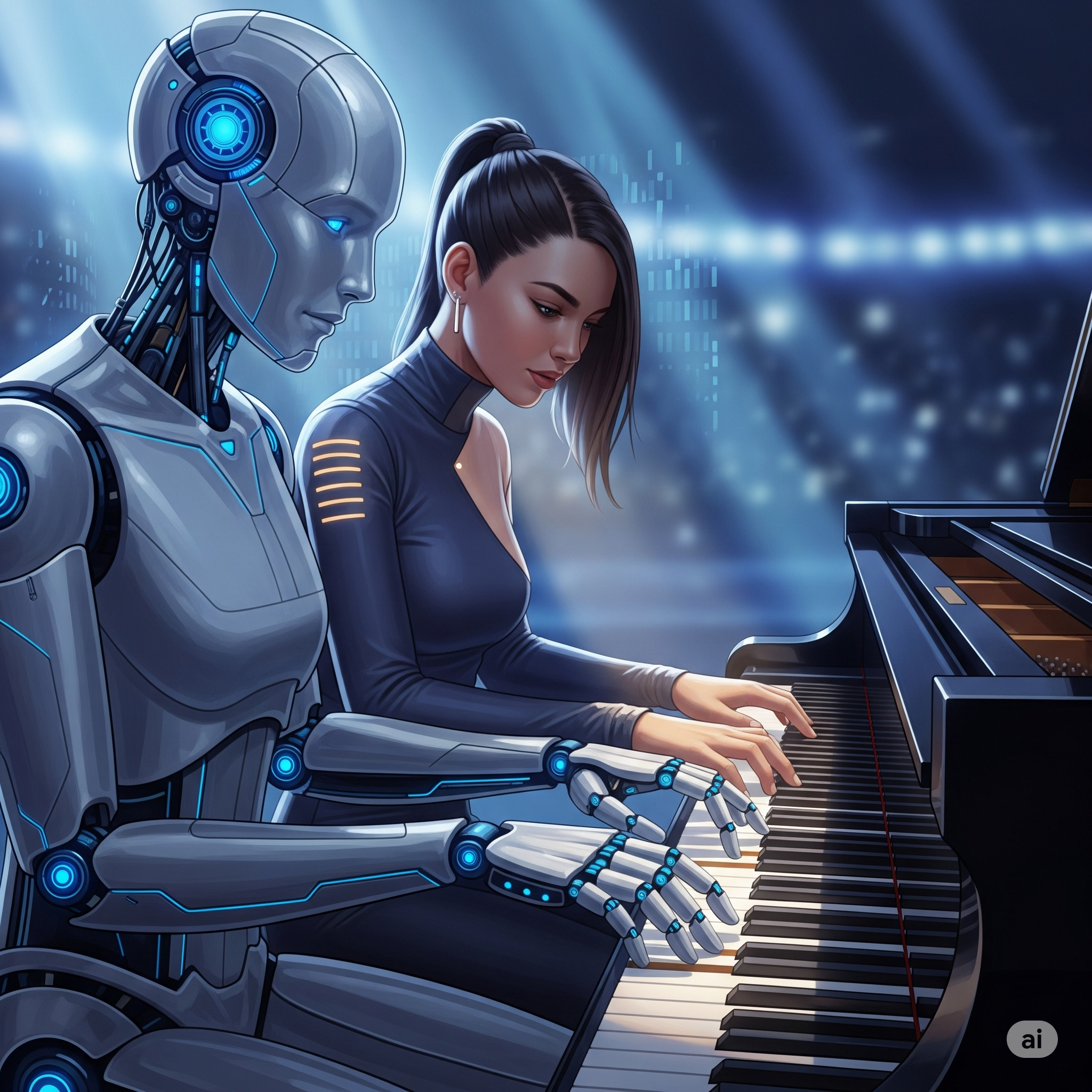
As the soft notes of a nocturne fill the room, a remarkable scene unfolds: a human pianist and a sleek, articulated robot share a piano bench, weaving melodies together in perfect time. What a decade ago might have been confined to science fiction is now live reality—thanks to breakthroughs in AI-powered robotics. No longer just rigid automatons, today’s robots have learned to perform complex, expressive tasks, including piano duets, real-time accompaniment, and intricate solo performances.
This leap raises fascinating questions for music, technology, and what it means for machines and humans to be creative together. Let’s explore how this happened, what’s possible now, and what might come next.
The Evolution: From Basic Automation to Expressive Musicianship
Mechanical music has long enchanted inventors. Early “player pianos” in the 19th century used punch cards and gears to reproduce performances, but offered zero adaptability or feeling. The dream of a robot musician—able to interpret, improvise, and collaborate—remained elusive for generations.
Today’s transformation is powered by three key advances:
- High-Precision Robotics
Modern actuators and sensors allow robots to move fingers with the accuracy and fluidity of a seasoned pianist. Velocity, timing, and even pressure can be finely controlled. - Machine Learning & Real-Time Feedback
AI models now process not only musical scores but live audio, human gestures, and nuanced dynamics—enabling robots to match tempo, anticipate changes, and even improvise. - Human-Robot Collaboration
Rather than solo shows, new systems create ensemble experiences—robots listen and adjust, making music as conversation, not just execution.
How Do Robots Learn to Play Piano?
1. Learning Dexterity
Robots must mimic the complex mechanics of human hands—coordinated fingerings, precise pressure, shifting hand positions—all without the unique feedback of bones, muscles, and nerves. This is achieved via:
- Advanced robotic hands/fingers with many degrees of freedom.
- Force sensors in each key or fingertip, enabling delicate touch or powerful chords.
- Trajectory optimization algorithms that generate natural, efficient motions, learned from hours of recorded human practice.
2. Mastering Expressive Musicality
What separates a memorable performance from mechanical playback? Nuance: phrasing, dynamics, timing. Machine learning models are trained to:
- Analyze thousands of performances to capture variations in tempo, rhythm, and mood.
- Map digital scores to expressive gestures, such as accents, rubato, or crescendo, mimicking how great artists reinterpret written notes.
3. Sensing and Adapting in Real Time
Perhaps most impressively, AI-enabled robots can now collaborate with live musicians:
- Audio and visual input track a human pianist’s timing, style, and dynamics.
- Feedback models adjust robot performance on-the-fly, matching tempo, adding harmonies, or even playing “call-and-response.”
- The result? Duets where robot and human trade melodies, anticipate each other, and jointly explore musical ideas—sometimes indistinguishably from two skilled human performers.
Why AI Robots Matter: Beyond Novelty
Music Education
- Accessibility: Students can now “practice” duets or ensembles at home with robot partners that adapt to their pace and skill level.
- Immediate Feedback: Beginner to advanced players get real-time corrections on tempo, rhythm, or technique.
- Inclusivity: People with physical challenges can compose or perform with robotic assistance, opening music to many more.
Creativity
- New Composing Tools: AI systems can generate accompaniment, suggest harmonies, or improvise counter-melodies—sparking fresh compositional inspiration.
- Cross-Disciplinary Art: Robotic performances can be choreographed with lights, visuals, or other instruments, blending music, robotics, and art in previously impossible ways.
For Research and Industry
- Proving Ground: Robotics on the piano bench serve as a showcase for finer motor control, real-time processing, and human-robot team dynamics—knowledge transferable to other fields like surgery, assembly, or caregiving.
- Entertainment: Concerts with robot musicians are drawing crowds, renewing interest in classical music and technology alike.
Key Developments: Recent Breakthroughs
- Expressive Duets at Carnegie Hall: In 2024, a Yamaha robot played a flawless duet with concert pianist Hiromi Uehara, matching her tempo fluctuations and improvisational flourishes.
- AI Accompanist Systems: Researchers at Tokyo University and MIT have showcased robots generating jazz chords in response to live soloists, even using computer vision to follow conductors’ cues.
- Dexterous Robotic Hands: Projects like DLR’s “HandArm System” and Google DeepMind’s dexterity research have contributed to robots’ newfound ability to play rapid runs, arpeggios, and even tricky cross-hand passages.
Balancing Tech and Soul: Can Robots Truly “Play” Music?
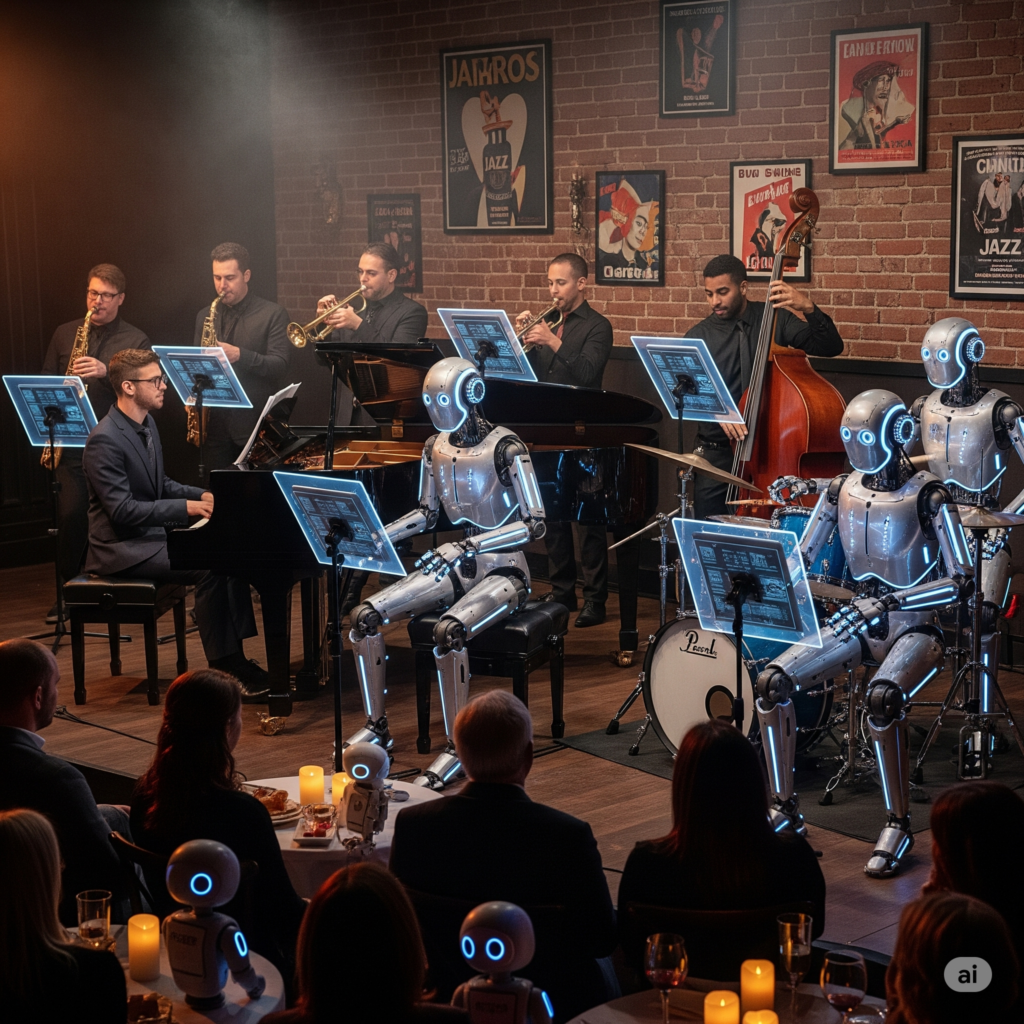
Robot performances challenge our assumptions about creativity and expression. While robots can now control dynamics, timing, and even some emotional cues, human artistry still brings unpredictability, vulnerability, and interpretation. Some critics ask:
- Does music played by a machine lacks“soul”?
- Or does new technology simply expand what’s possible, blending human intent and robotic precision?
The emerging consensus: AI and robots don’t replace musicians—they complement them, creating a broader canvas for expression and exploration.
Ethical and Social Questions
- Job Displacement: As robots play better, will they take gigs from humans? For now, robot performers are novelties or collaborators, but their growing skills may disrupt certain jobs in education or entertainment.
- Authorship & Ownership: Who owns the creative output of robot-involved performances? The programmer, the performer, or the machine itself?
- Algorithmic Bias: Training data shapes how robot musicians “interpret”—diverse musical traditions must be represented to avoid a homogeneous, predictable output.
The Music of Tomorrow
The arrival of AI-driven robotic musicians marks a watershed for both technology and the arts. These systems are not only dazzling feats of engineering—they’re invitations to reimagine music as a partnership between biology and code, intuition and calculation. As robots join us onstage, in classrooms, and at jam sessions, the question is not whether they will replace musicians, but how they’ll expand the boundaries of what’s possible.
The next time you hear a duet at a concert, listen closely. The second performer might be power by silicon, but the music—created together—will belong to all of us.




+ There are no comments
Add yours