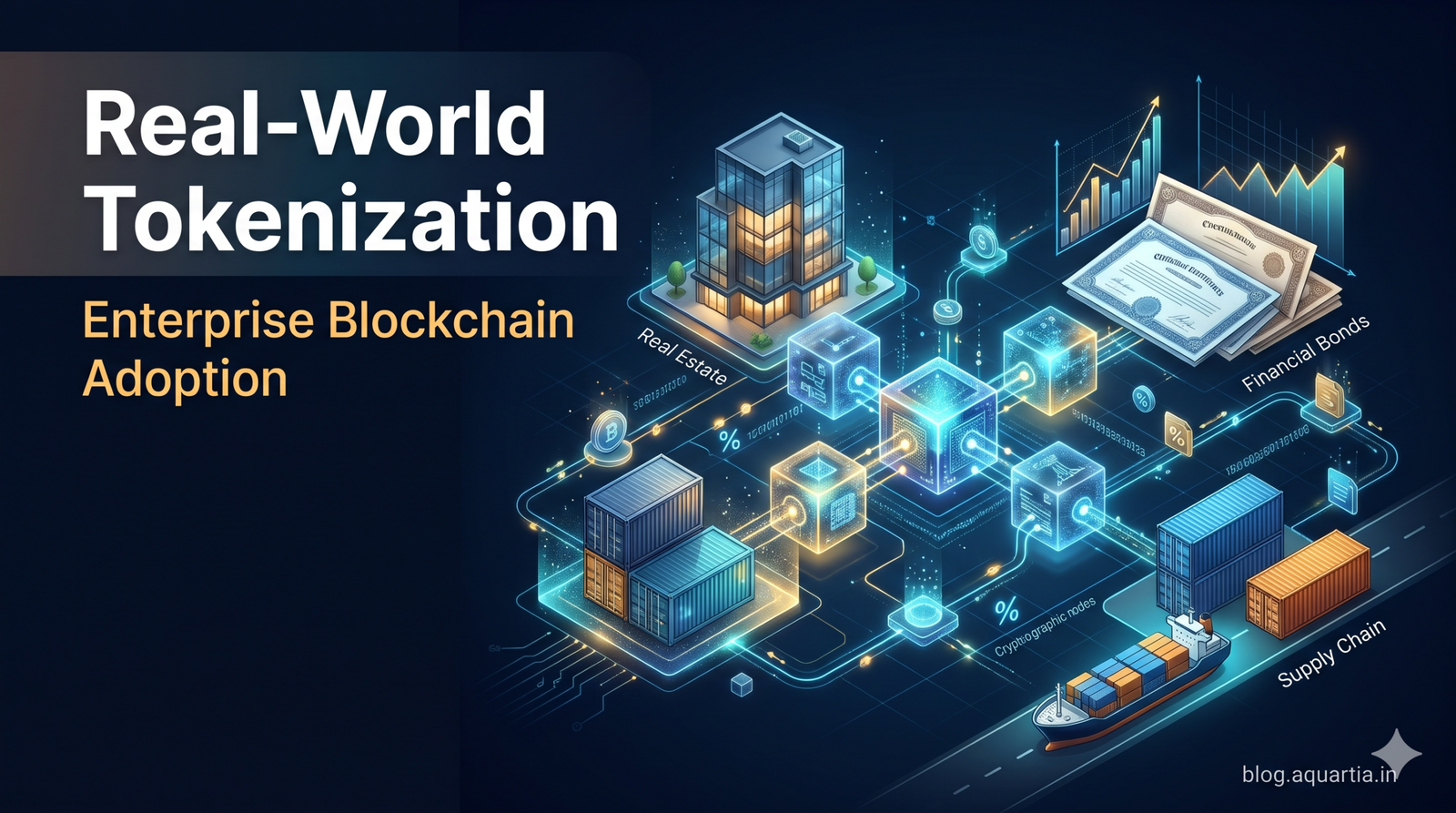
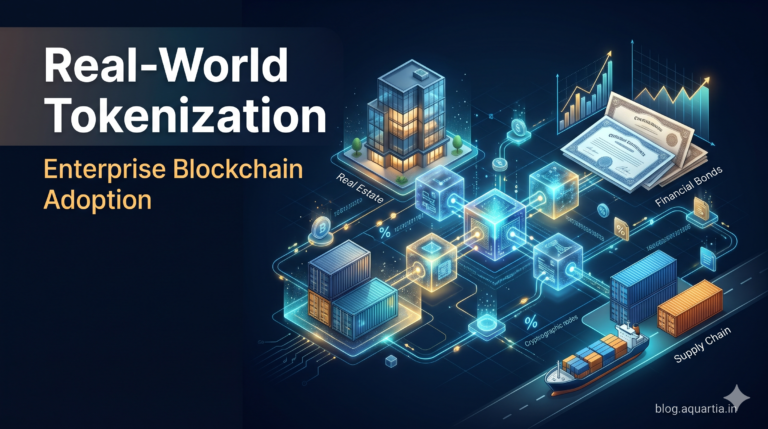
Financial institutions are moving beyond speculative crypto trading toward programmable market infrastructure. At the center of this shift is real-world asset tokenization—representing traditional financial instruments such as government bonds, money market funds, private credit, and fund shares as compliant digital tokens on distributed ledgers.
What Is Real-World Asset (RWA) Tokenization?
Tokenization creates a cryptographic representation of an off-chain asset’s ownership rights, cash flows, and transfer rules on a blockchain. Unlike legacy clearing pipelines where shares move only through transfer agents during business hours, tokenized assets embed compliance checks (such as KYC/AML whitelisting) directly into smart contracts, enabling near-instant peer-to-peer transfers between verified institutions.
Institutional Proof Points: BlackRock BUIDL and MAS Project Guardian
Two flagship initiatives illustrate how institutional tokenization has matured into production infrastructure:
- BlackRock’s BUIDL Fund: Launched on Ethereum in March 2024 with Securitize as transfer agent and BNY Mellon as custodian, the BlackRock USD Institutional Digital Liquidity Fund holds cash, U.S. Treasury bills, and repurchase agreements while issuing shares as tokens across nine blockchains. By late October 2026, market trackers reported roughly $2.19 billion in assets under management, and in November 2026 Securitize and Ethena activated a 24/7 liquidity facility allowing eligible investors to swap BUIDL for USDC outside traditional market hours.
- MAS Project Guardian: Spearheaded by the Monetary Authority of Singapore (MAS) alongside more than 40 global financial institutions and policymakers, Project Guardian tests interoperable tokenized funds, fixed-income Delivery-versus-Payment (DvP) settlement, and standardized frameworks such as the Guardian Funds Framework.
Comparison: Traditional Settlement vs. Tokenized RWA Rails
| Dimension | Traditional Market Infrastructure | Tokenized RWA Blockchain Rails |
|---|---|---|
| Settlement Window | Business hours; T+1 or T+2 clearing cycles | 24/7/365 atomic or near-instant settlement |
| Compliance Enforcement | Manual reconciliation across intermediaries | On-chain allowlists and programmable transfer rules |
| Collateral Mobility | Fragmented across silos and custodians | Composable across approved trading and lending venues |
| Recordkeeping | Multiple siloed ledgers requiring reconciliation | Shared, auditable distributed ledger state |
Key Hurdles Before Universal Scale
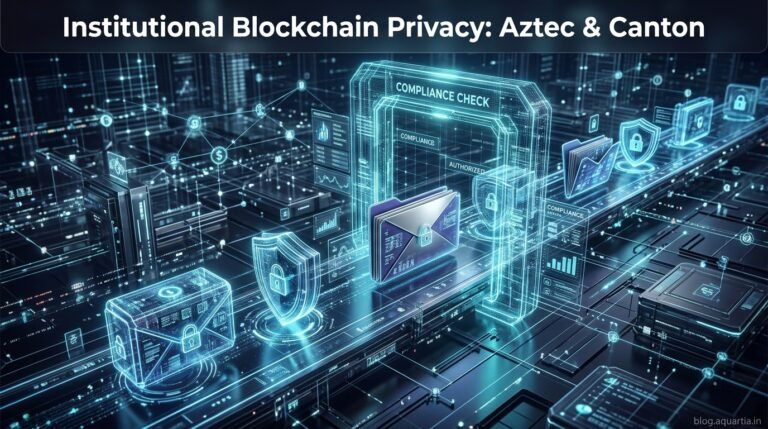
Despite strong momentum in tokenized Treasuries, institutions still navigate three practical constraints: fragmented liquidity across competing Layer 1 and Layer 2 networks, cross-border legal recognition of on-chain share registers, and the need for privacy-preserving transaction rails so institutional positions remain confidential.
Frequently Asked Questions
Is a tokenized Treasury fund the same as a stablecoin?
No. While funds like BUIDL target a $1.00 net asset value per token, they are regulated investment funds restricted to qualified, whitelisted investors and distribute Treasury yield rather than serving as retail payment tokens.
Do enterprise blockchains use public or private networks?
Both. Institutions increasingly issue permissioned, compliance-gated tokens on public networks (like Ethereum, Avalanche, or Arbitrum) or interoperable shared ledgers connected via cross-chain messaging.
What is the biggest operational benefit of RWA tokenization?
Programmable 24/7 collateral mobility—allowing institutions to pledge or swap yield-bearing assets without waiting for banking hours or T+1 settlement.
Explore more distributed ledger and fintech deep dives in our Blockchain and Finance categories on Aquartia Blog.



+ There are no comments
Add yours