Key Highlights
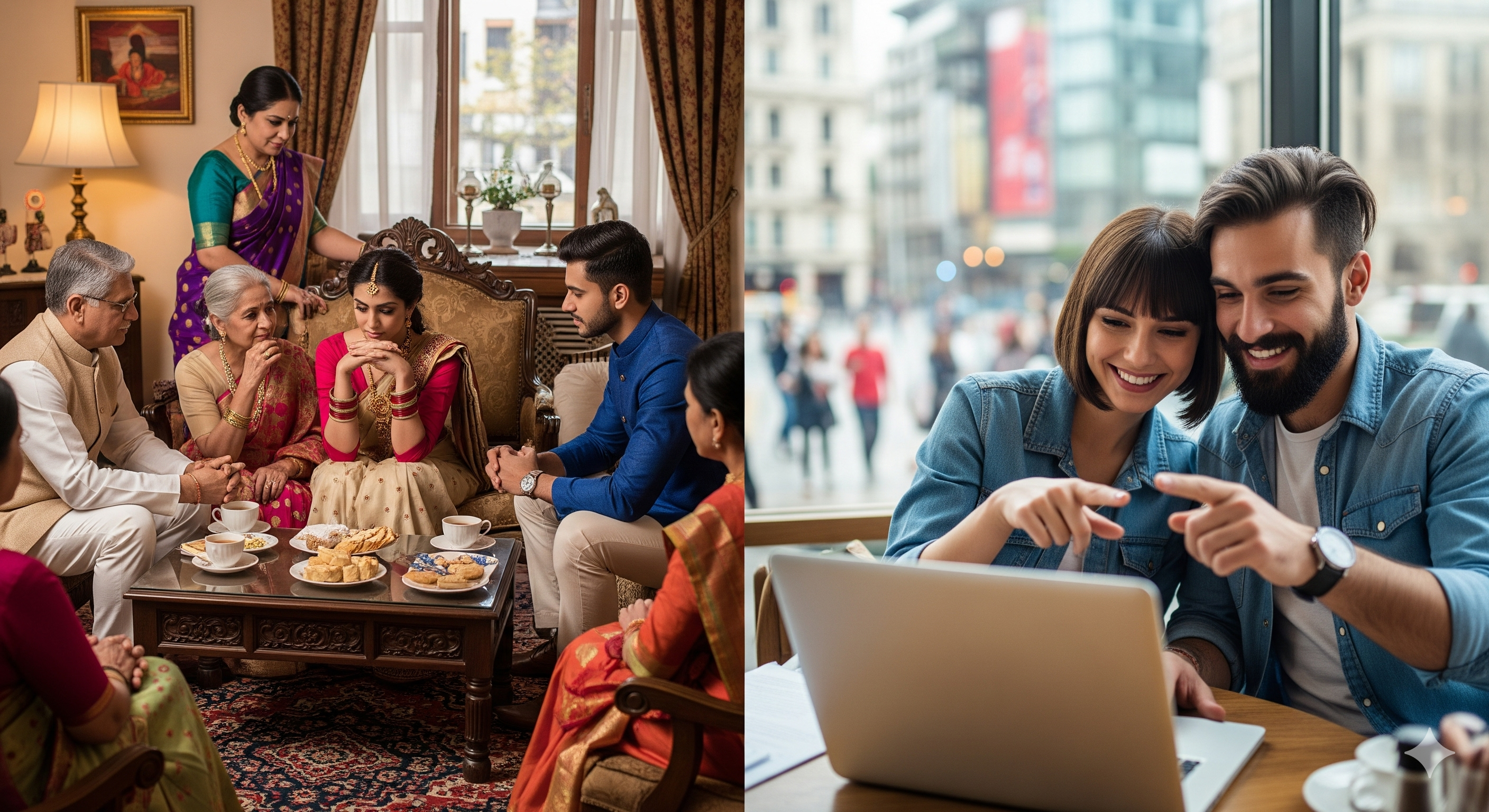
- Dramatic Shift in Marriage Patterns: Arranged marriages declined from 68% in 2020 to 44% in 2023, while love marriages gained acceptance, particularly among educated urban millennials and Gen Z
- Legal Framework Revolution: Special Marriage Act (1954) and Hindu Marriage Act (1955) enabled interfaith and civil marriages, while LGBTQ+ live-in relationships gained legal recognition through Supreme Court’s Deepika Singh judgment (2022)
- Ancient Women’s Agency: Svayamvara tradition in Mahabharata and Ramayana granted limited choice to Kshatriya women, though primarily serving political alliance purposes rather than genuine female autonomy
- Urbanization Impact: Education and economic independence enable 23% higher marriage age for urban women, though dual role expectations and traditional dowry practices persist in metropolitan areas
- Persistent Social Barriers: Despite legal progress, patriarchal structures, caste pressures, and family expectations continue influencing marriage decisions, with over 90% marriages still following arranged patterns in rural India
ncient Foundations: The Svayamvara Legacy
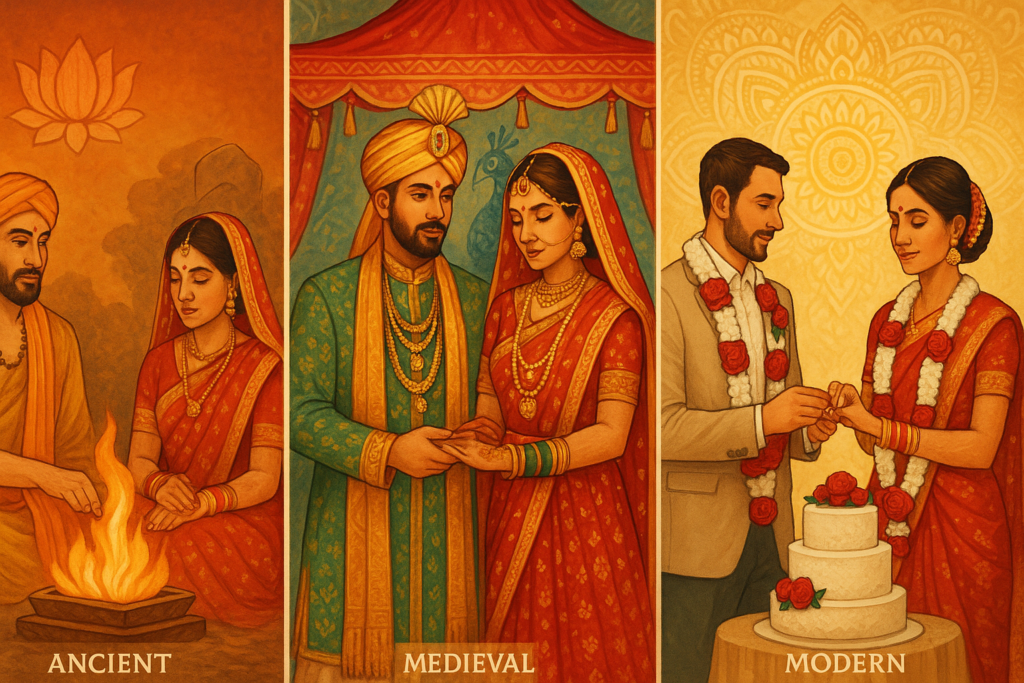
The evolution of marriage in India traces back to ancient practices like svayamvara (Sanskrit: स्वयंवर, meaning “self-choice”), where royal daughters from the Kshatriya caste selected husbands from assembled suitors. This ceremonial tradition, prominent in Mahabharata and Ramayana, represented one of the earliest forms of women’s agency in matrimonial decisions.
Svayamvara structure followed a sophisticated format:
- Invitation and assembly of eligible suitors by the bride’s father
- Public presentation of the bride in ceremonial attire
- Formal introduction of suitors with family credentials
- Contest announcements for valor-based competitions (Vīryaśulka Svayamvaras)
- Bride’s selection through placing ceremonial garland on chosen suitor
However, historical analysis reveals that svayamvara was less about genuine female autonomy and more about political alliance strategy. As scholar Romila Thapar notes, these ceremonies served as status symbols for royal families, legitimizing claims to land, political power, and prestigious connections. ads.timesofindia
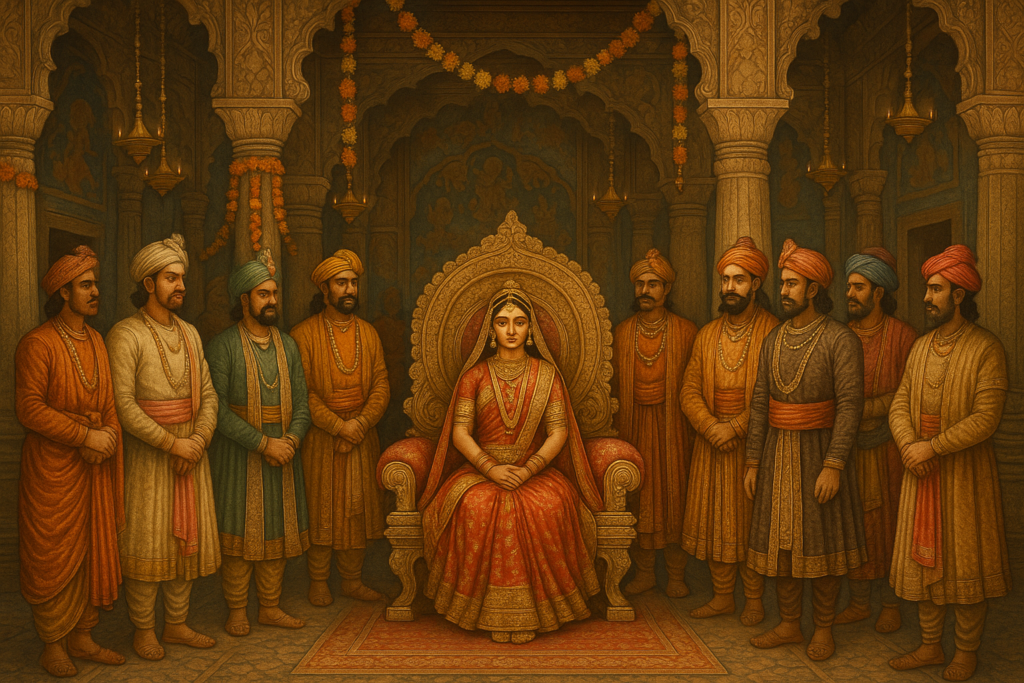
Mythological examples like Draupadi’s swayamvara and Savitri’s self-chosen marriage demonstrate varying degrees of women’s decision-making power. Savitri’s narrative particularly stands out as she actively searched for a suitable husband when no suitors approached, showcasing exceptional female autonomy for that era.
The Dharmashastra influence later regulated svayamvara practices, ensuring matrimonial compliance while maintaining the Kshatriya tradition of valor-centric competition. Despite appearing progressive, these practices were structured within patriarchal frameworks where women were essentially “gifted” in marriage.
Pre-Independence: Traditional Community-Driven Systems
Pre-colonial India emphasized community-driven marriage arrangements prioritizing caste compatibility, family honor, and ritual compliance. Medieval periods witnessed the decline of women’s agency due to rigid caste hierarchies, religious conservatism, and strategic political alliances.
Traditional marriage criteria included:
- Caste and sub-caste alignment
- Economic status matching
- Astrological compatibility
- Family reputation and lineage
- Preservation of property and inheritance rights
Manusmriti and other legal texts codified marital laws governing spousal duties, caste distinctions, and marriage regulations. However, these codes demonstrated inherent flexibility, adapting to socio-cultural changes while maintaining core hierarchical structures.
The colonial encounter marked a significant juncture as British legal frameworks sought to standardize marriage laws across diverse communities. Western education and exposure to global ideas prompted introspection within Hindu society, sparking debates about traditional practices in a rapidly changing world. wedknott
Post-Independence Legal Reforms: Transformative Legislation
The post-independence era witnessed groundbreaking legal reforms that fundamentally altered India’s matrimonial landscape. Two landmark acts established the foundation for modern marriage frameworks.
Special Marriage Act (1954)
The Special Marriage Act (1954) emerged as independent India’s most significant secular initiative, providing legal framework for marriages transcending religious boundaries. Key provisions include:
Universal applicability across all Indian nationals regardless of religion
Civil contract basis requiring no religious ceremonies or conversions
Interfaith and inter-caste marriage legalization
Registration-based validation providing universal evidence of marriage
Divorce provisions under secular law rather than personal law
Eligibility requirements under Section 4 mandate:
- Monogamous status at time of marriage
- Mental fitness for decision-making
- Minimum age: 21 years for men, 18 years for women
- No prohibited kinship relationships
The Act’s 30-day notice period and public objection provisions ensure transparency while protecting individual choice. Registration certificates serve as universal marriage evidence, providing inheritance rights, succession rights, and social security benefits.
Hindu Marriage Act (1955)
The Hindu Marriage Act (1955) codified and reformed Hindu matrimonial customs, introducing monogamy, divorce provisions, and legal marriage age. The Act aligned Hindu practices with constitutional principles of justice, equality, and individual rights.
Significant reforms included:
- Prohibition of polygamy
- Divorce legalization under specific grounds
- Widow remarriage validation
- Inter-caste marriage within Hindu communities
- Gender equality in matrimonial rights
Contemporary Transformation: Data-Driven Social Change
Statistical Revolution in Marriage Patterns
Recent surveys reveal dramatic shifts in Indian marriage preferences, particularly among younger demographics. WeddingWire India’s comprehensive study demonstrates unprecedented changes:
2020 vs 2023 Comparison:
- Arranged marriages: 68% (2020) → 44% (2023) (24% decline)
- Love marriages: Rising acceptance among millennials and Gen Z
- Urban concentration: Tier 1 cities leading transformation
Demographic patterns show:
- Delhi leads with 34% respondents from metropolitan areas
- Female participation: 2:1 ratio compared to male respondents
- Planning periods: 41% couples plan weddings 4-6 months in advance
- Engagement duration: 72% couples engage 6 months or less before marriage
BBC’s extensive survey of 160,000+ households reveals that 93% marriages remain arranged, with only 3% love marriages and 2% love-cum-arranged marriages. However, age-based analysis shows minimal change between generations, with 94% octogenarians having arranged marriages compared to 90%+ young couples.
Educational and Economic Drivers
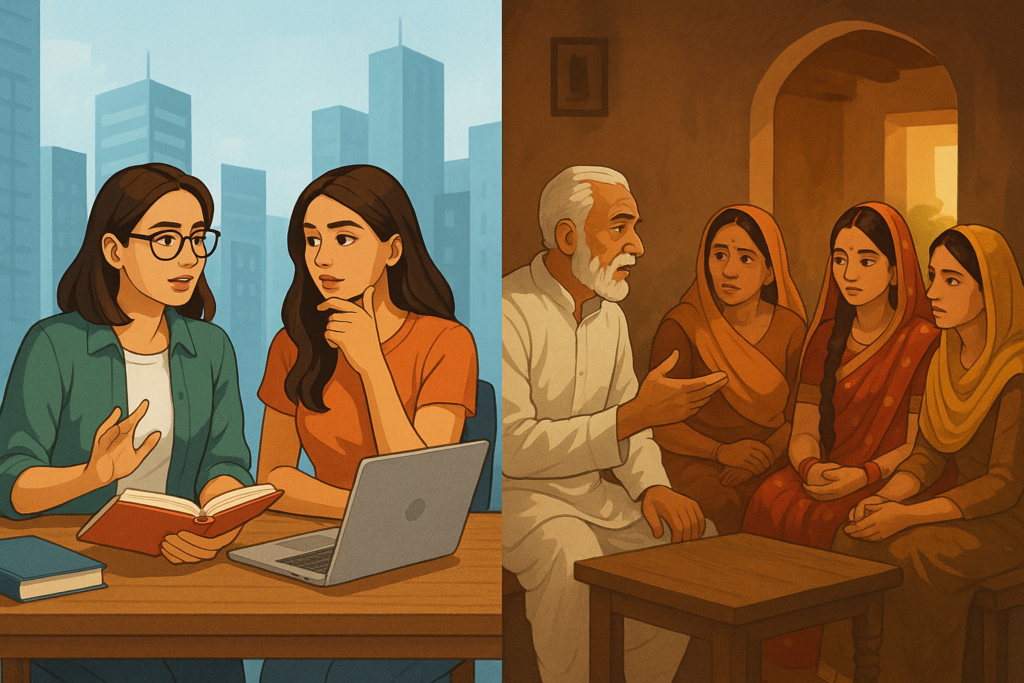
Educational empowerment serves as the primary catalyst for matrimonial choice evolution. Research indicates that higher literacy rates, professional opportunities, and financial independence significantly influence marriage decisions.
Urban empowerment factors include:
- Access to higher education and professional training
- Economic independence through career opportunities
- Exposure to diverse cultures and global perspectives
- Delayed marriage age allowing personal development
Women’s labor market participation in urban areas creates greater autonomy in personal decisions, though traditional expectations of dual roles (professional and domestic) create contemporary challenges.
LGBTQ+ Rights and Alternative Relationships
Legal Recognition Progress
LGBTQ+ marriage rights in India remain legally complex despite significant judicial progress. The Navtej Singh Johar v. Union of India (2018) case decriminalized homosexuality by striking down Section 377.
Live-in relationship protections for LGBTQ+ couples include:
- Cohabitation legality under Article 21 (Right to Life and Personal Liberty)
- Domestic violence protection under PWDVA (2005)
- Family recognition through Deepika Singh v. CAT (2022) judgment
- Medical and financial service access for committed partnerships
However, marriage equality remains unrecognized following the Supreme Court’s October 2023 decision rejecting same-sex marriage petitions. The five-judge bench unanimously agreed that marriage equality requires legislative action rather than judicial intervention.
Alternative Relationship Models
Live-in relationships gain increasing acceptance as legal alternatives to traditional marriage. Supreme Court guidelines recognize valid live-in relationships requiring:
- Voluntary cohabitation by partners
- Significant duration with public recognition as couple
- Mutual commitment without legal marriage formalities
Protection mechanisms include domestic violence laws, child custody rights, and inheritance provisions under specific circumstances, though comprehensive legal parity with marriage remains limited.
Urbanization Impact: Double-Edged Empowerment
Positive Urban Influences
Urbanization creates mixed outcomes for women’s empowerment and marriage choices. Research demonstrates that urban environments provide:
Educational opportunities: Higher literacy rates and professional education access
Economic independence: Employment opportunities in formal and informal sectors
Social mobility: Delayed marriage age allowing career development
Cultural exposure: Diverse community interactions broadening matrimonial perspectives
Quantitative studies show urban women experience greater agency in household decisions, improved mobility, and enhanced access to information. Metropolitan areas demonstrate higher acceptance of love marriages and interfaith unions.
Persistent Urban Challenges
Despite positive changes, urbanization also intensifies certain gender challenges:
Dual role expectations: Professional and domestic responsibility burden
Intimate partner violence: Increased IPV risk in urban settings
Traditional dowry practices: Continuation despite legal prohibitions
Family pressure: Parental expectations for arranged marriages persist
Research findings indicate that urbanization benefits vary significantly across economic classes, with poor women and disadvantaged castes experiencing greater employment opportunities but limited social empowerment.
Regional Variations and Contemporary Challenges
State-Level Differences
Regional disparities in marriage evolution reflect diverse socio-economic contexts. Southern states generally demonstrate higher acceptance of love marriages and women’s autonomy, while northern regions maintain stronger traditional practices.
Urban-rural divides remain substantial, with metropolitan cities showing progressive attitudes while rural areas preserve community-driven arrangements. Economic development levels significantly correlate with matrimonial choice freedom.
Caste and Religious Dynamics
Caste considerations continue influencing marriage decisions despite legal equality. Inter-caste marriages face social resistance, family opposition, and sometimes violent backlash through honor killings. Love jihad narratives in certain regions criminalize interfaith relationships, creating additional barriers for religious minority couples.
Legal protections under Special Marriage Act provide frameworks for interfaith unions, though social acceptance lags behind legal provisions.
Future Trends and Policy Implications
Emerging Patterns
Contemporary trends suggest continued evolution toward individual choice and companionate marriages. Digital platforms, social media, and global cultural exposure accelerate attitude changes, particularly among educated urban populations.
Technology integration in matrimonial processes through online platforms and mobile applications creates hybrid models combining family involvement with personal choice.
Policy Recommendations
Comprehensive reforms needed for marriage equality include:
LGBTQ+ marriage recognition through legislative action
Strengthened anti-dowry enforcement
Enhanced domestic violence protections
Educational programs promoting gender equality
Legal literacy regarding matrimonial rights
International examples of marriage equality and gender empowerment provide policy models for India’s continued evolution.
Conclusion
The evolution of marriage in India represents a complex interplay between ancient traditions and contemporary aspirations. From svayamvara ceremonies granting limited agency to royal women to modern legal frameworks enabling interfaith and same-sex relationships, the journey reflects broader social transformation.
Statistical evidence demonstrates significant shifts in matrimonial preferences, with love marriages gaining unprecedented acceptance among younger, educated populations. Legal reforms through the Special Marriage Act (1954) and Hindu Marriage Act (1955) created foundational frameworks for individual choice and religious equality.
However, persistent challenges including patriarchal structures, caste pressures, and regional disparities continue shaping marriage decisions. Urbanization and women’s education serve as powerful catalysts for change, though traditional expectations and social resistance remain significant barriers.
The future trajectory suggests continued evolution toward individual autonomy and companionate relationships, though comprehensive transformation requires sustained legal, social, and cultural interventions. LGBTQ+ rights, gender equality, and interfaith acceptance remain critical areas for policy attention and social advocacy.
As India navigates between preserving cultural heritage and embracing progressive values, the institution of marriage continues adapting to contemporary realities while honoring its rich historical legacy. The ongoing transformation reflects India’s broader journey toward social justice, individual freedom, and inclusive development.
🔹 Mains Questions
- GS-I (Social Issues):
“Marriage in India has evolved from a religious sacrament to a social contract, reflecting changing social realities.” Discuss with reference to legal reforms, gender dynamics, and urbanization trends. - GS-II (Polity & Governance):
Examine how judicial interpretations and legislative reforms like the Special Marriage Act, 1954 and Hindu Marriage Act, 1955 have influenced interfaith and inter-caste marriages in India. - GS-I (Society):
How are patriarchal norms and caste considerations still shaping marital choices in modern India despite increasing education and urbanization?








+ There are no comments
Add yours