Key Highlights
- Constitutional offices cannot remain vacant, ensuring continuous governance through the Vice President’s dual role
- Single Transferable Vote system ensures democratic legitimacy through sophisticated proportional representation
- Rajya Sabha-centric removal process reflects the office’s primary legislative function as Chairman
- No specific grounds for removal mentioned in Constitution, unlike presidential impeachment provisions
- Recent 2025 election demonstrated both constitutional resilience and ongoing political dynamics in Indian democracy
The Vice President of India stands as the second-highest constitutional office in the country, serving crucial roles in both governance continuity and parliamentary functioning. Recent events, including the 2025 Vice Presidential election following Jagdeep Dhankhar’s resignation, have brought renewed focus to this vital institution and its constitutional underpinnings.
Constitutional Foundation and Legal Framework
Article 63: Establishment of the Office
Article 63 of the Indian Constitution provides the foundational basis for the Vice President’s office, stating simply yet powerfully: “There shall be a Vice-President of India”. This constitutional provision establishes the second-highest office in India’s democratic hierarchy, creating a position of immense constitutional significance. wikipedia
Articles 64-70: Comprehensive Framework
The constitutional framework governing the Vice President spans Articles 64 through 70, each addressing specific aspects:
- Article 64: Establishes the Vice President as ex-officio Chairman of the Rajya Sabha
- Article 65: Defines the role when acting as President during vacancies or absence
- Article 66: Outlines election procedures and qualifications vicepresidentofindia
- Article 67: Specifies term duration and removal procedures
- Article 68: Mandates timely elections to fill vacancies
- Article 69: Prescribes oath-taking procedures
- Article 70: Addresses contingencies in presidential functions
Electoral College and Election Process
Composition of Electoral College
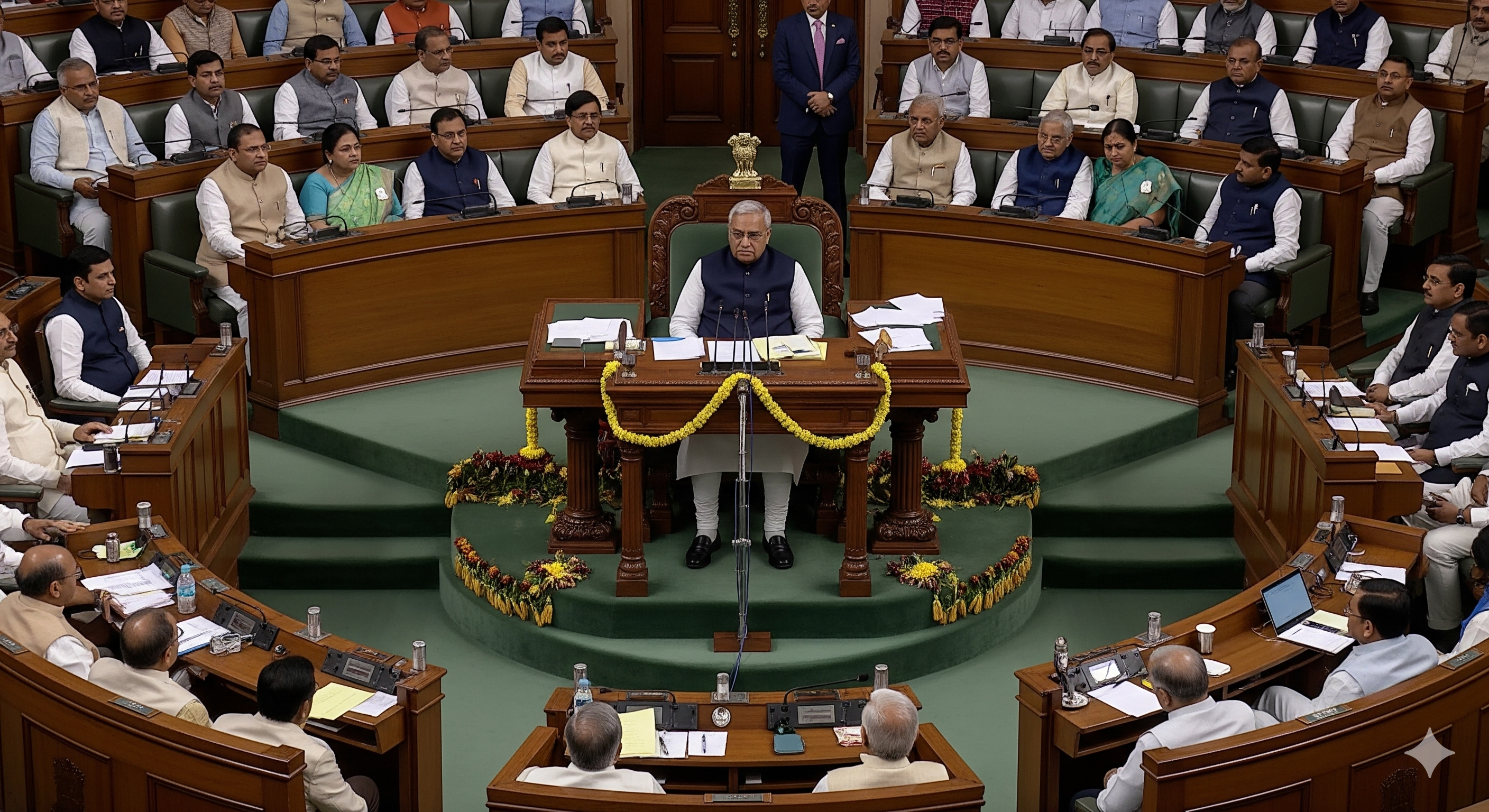
The Vice President is elected by an electoral college consisting of members from both Houses of Parliament, totaling 788 members under normal circumstances:
- 543 elected members of the Lok Sabha
- 233 elected members of the Rajya Sabha
- 12 nominated members of the Rajya Sabha
Unlike presidential elections, state legislative assembly members do not participate in Vice Presidential elections, while nominated Rajya Sabha members retain voting rights.
Single Transferable Vote System
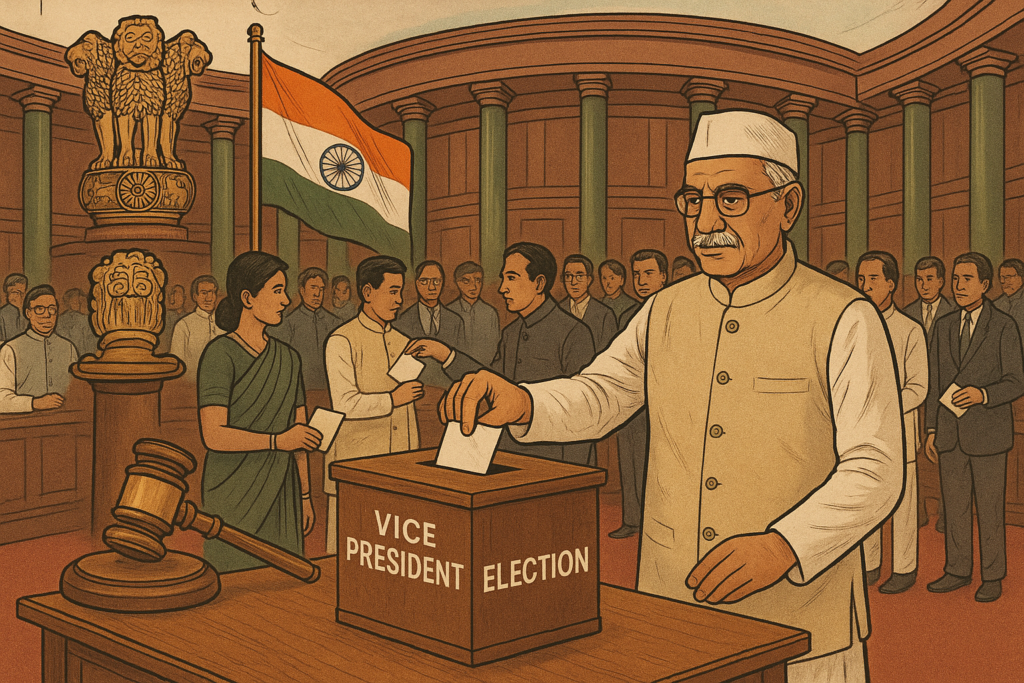
The election employs the Single Transferable Vote (STV) system, a sophisticated form of proportional representation that ensures democratic fairness:
Key Features of STV:
- Voters rank candidates in order of preference (1, 2, 3, etc.)
- Candidates need a specific quota to win, calculated as: Total Valid Votes ÷ 2 + 1
- If no candidate reaches the quota initially, the candidate with fewest votes is eliminated
- Votes are transferred to second preferences until someone achieves the required quota britannica
Advantages of STV System:
- Fewer wasted votes compared to first-past-the-post systems
- Eliminates need for tactical voting
- Prevents most disliked candidates from winning
- Encourages positive campaigning as candidates seek lower-preference votes
Nomination and Procedural Requirements
Candidates must secure nomination from at least 20 members of Parliament as proposers and 20 members as seconders. Each candidate must deposit ₹15,000 as security with the Reserve Bank of India. pib
The Election Commission of India conducts the entire process, with a Returning Officer (typically the Secretary-General of either House) overseeing proceedings.
Qualifications and Eligibility Criteria
Constitutional Requirements (Article 66)
To be eligible for Vice President, a candidate must satisfy specific criteria:
Mandatory Qualifications:
- Must be a citizen of India
- Must have completed 35 years of age
- Must be qualified for election as a member of the Rajya Sabha
- Must not hold any office of profit under Union/State government
Disqualifications:
- Cannot be a sitting member of Parliament or any state legislature
- If elected while holding such positions, deemed to have vacated that seat upon assuming office
Term, Oath, and Functions
Term Duration and Continuity
The Vice President serves a five-year term from the date of entering office. Importantly, they continue in office even after term expiry until a successor takes charge, ensuring uninterrupted constitutional functioning. constitutionofindia
Oath Administration
Unlike the President whose oath is administered by the Chief Justice of India, the Vice President’s oath is administered by the President or their designated representative.
Primary Functions and Powers
As Ex-Officio Chairman of Rajya Sabha:
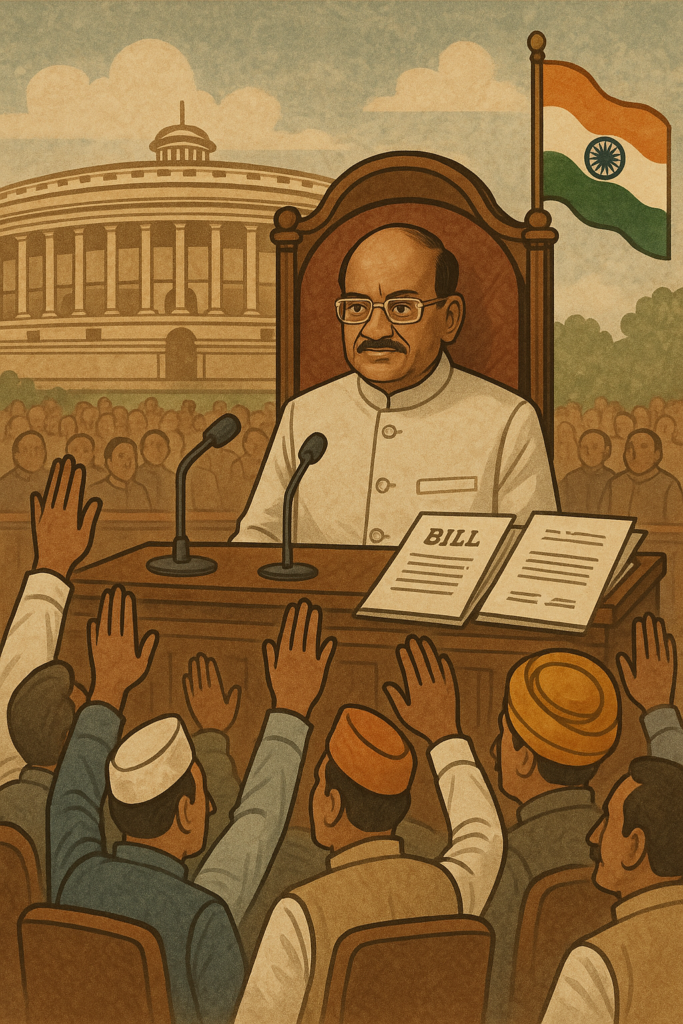
- Presides over Rajya Sabha proceedings and maintains order
- Casts deciding vote in case of ties
- Protects privileges and dignity of the House
- Interprets constitutional provisions related to House proceedings
- Determines questions of disqualification under the Anti-Defection Law sansad
As Acting President (Article 65):
When the President is absent, ill, or the office falls vacant, the Vice President assumes presidential powers and functions until the President resumes duties or a new President is elected.
Constitutional Powers During Presidential Role:
- All powers and immunities of the President
- Entitled to presidential emoluments and privileges
- Cannot simultaneously perform Rajya Sabha Chairman duties
Removal Process and Democratic Accountability
Article 67(b): Removal Procedure
The Vice President can be removed through a specific constitutional process:
Procedural Requirements:
- Resolution must be initiated in Rajya Sabha only
- Requires 14 days advance notice before moving the resolution
- Must be passed by effective majority (majority of all members) in Rajya Sabha
- Must be agreed to by simple majority in Lok Sabha
Notable Aspects:
- Constitution does not specify grounds for removal, unlike presidential impeachment
- Process is less rigorous than presidential removal
- Reflects the relatively limited independent powers of the Vice President
Recent Developments: 2025 Election Context
Jagdeep Dhankhar’s Resignation
The 2025 Vice Presidential election was triggered by Jagdeep Dhankhar’s unexpected resignation on July 21, 2025, citing health reasons. His resignation letter stated: “To prioritise health care and abide by medical advice, I hereby resign as the Vice President of India, effective immediately.”
However, political speculation suggests the resignation may have been influenced by his decision to admit an Opposition-backed notice for judicial impeachment, potentially creating friction with government strategy.
2025 Election Dynamics
The September 9, 2025 election featured:
- NDA Candidate: CP Radhakrishnan (Maharashtra Governor)
- INDIA Bloc Candidate: B. Sudershan Reddy (Former Supreme Court Judge)
With approximately 422 projected votes, the NDA held a commanding numerical advantage, though the margin was expected to be smaller than previous elections ndtv
Constitutional Significance and Democratic Balance
Ensuring Governmental Continuity
The Vice President serves as a crucial constitutional safeguard, ensuring that the highest executive office never remains vacant. This provision maintains stability in governance during transitional periods. kanoongpt
Strengthening Federalism
As Chairman of the Rajya Sabha (the States’ House), the Vice President plays a vital role in federal governance, ensuring state interests are represented in national deliberations.
Legislative-Executive Balance
The office provides important checks and balances between legislative and executive branches, with the Vice President serving as a bridge between Parliament and the executive.
Contemporary Debates and Critical Analysis
Ceremonial vs. Substantial Powers
Critics argue the Vice President’s role remains largely ceremonial except for Rajya Sabha duties, questioning whether the office should be granted more substantial constitutional powers. This debate reflects broader discussions about institutional reform in Indian democracy.
Political Considerations
Vice Presidential elections often reflect ruling party strength in Parliament, leading to concerns about partisan politics influencing what should be a constitutional office above party lines.
Institutional Independence
Recent events, including speculation around Dhankhar’s resignation, raise questions about the independence of constitutional offices and their relationship with the ruling government.
The Vice President of India represents a crucial constitutional institution that balances multiple roles: ensuring executive continuity, facilitating legislative processes, and maintaining democratic governance. Understanding its constitutional framework, electoral processes, and contemporary significance provides essential insights into India’s parliamentary democracy and federal structure.
As India continues its democratic journey, the Vice President’s office remains a vital pillar of constitutional governance, adapting to contemporary challenges while maintaining its foundational principles of democratic representation and governmental stability.
Mains Questions
- “The Vice President of India is often regarded as the most underutilized constitutional office.” Critically analyze this statement in light of his role as Rajya Sabha Chairman and acting President. (10 marks)
- Compare and contrast the election of the President and Vice President of India, highlighting the significance of differences in their electoral colleges. (15 marks)
- Discuss the role of the Vice President in strengthening the federal and democratic fabric of India. (10 marks)










+ There are no comments
Add yours