
Key Highlights
- Indigenous nanotechnology breakthrough enables direct atmospheric energy harvesting through advanced nanogenerators converting air movement into electricity
- Constitutional alignment with Article 21’s right to clean environment and climate change protection as fundamental rights under Indian law
- Strategic energy security benefits include reduced fossil fuel imports, enhanced border surveillance capabilities, and disaster management applications
- Economic transformation potential through Atmanirbhar Bharat initiative targeting 50% cleantech indigenization and 5 million green jobs by 2030
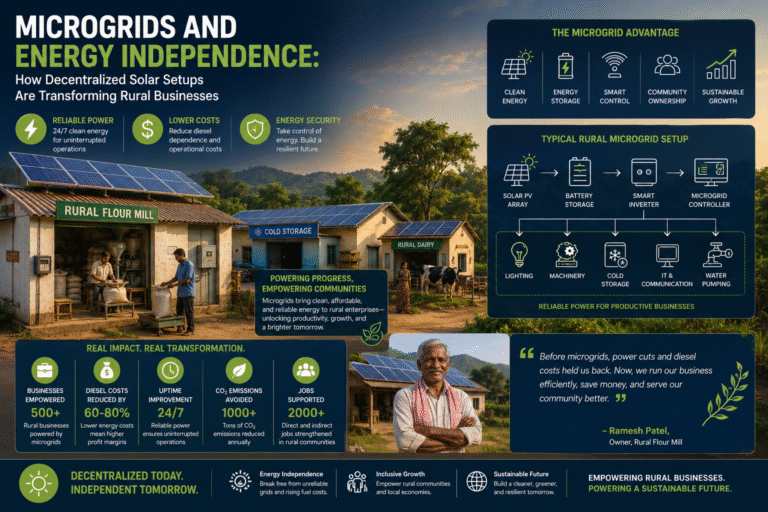
- Social equity advancement by providing affordable, decentralized energy access to rural communities without major infrastructure investment
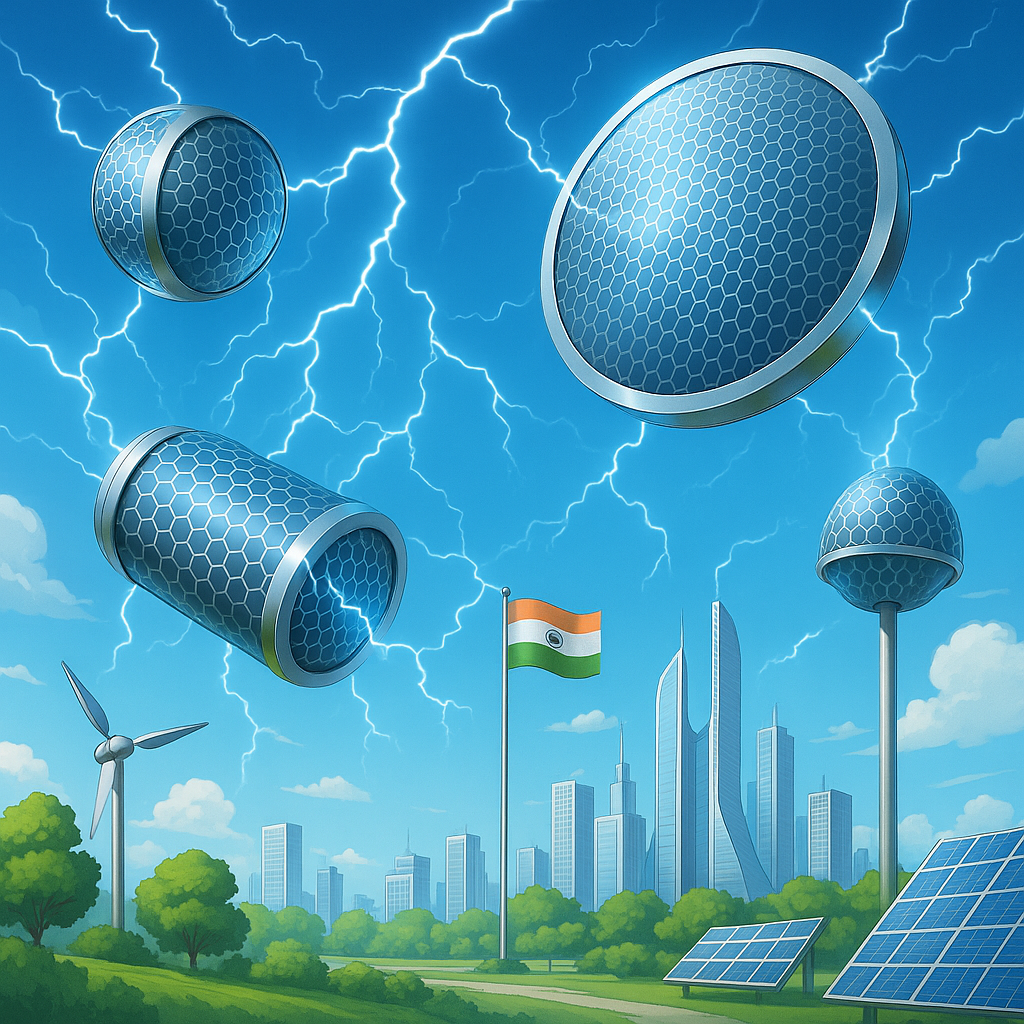
India’s scientific community has achieved a groundbreaking milestone with the development of an innovative “air-powered” device that harnesses energy directly from atmospheric conditions using cutting-edge nanotechnology. This pioneering technology represents a convergence of advanced materials science, environmental sustainability, and energy security, positioning India as a global leader in next-generation clean energy solutions that could fundamentally transform how we approach decentralized power generation. dst.gov
Scientific Foundation: Nanotechnology Meets Atmospheric Energy
Advanced Nanogenerator Technology
The core technology behind India’s air-powered device centers on nanogenerators – sophisticated systems capable of converting ambient mechanical energy into usable electrical power. These devices leverage multiple energy harvesting mechanisms: pcmb.ncbi.nlm.nhi
Piezoelectric Nanogenerators (PENGs):
- Convert mechanical vibrations from air movement into electricity through piezoelectric materials like zinc oxide nanowires and polyvinylidene fluoride (PVDF)
- Generate power from acoustic energy including ambient noise and sound waves
- Demonstrate superior piezoelectric properties with high sensitivity to minimal mechanical disturbances
Triboelectric Nanogenerators (TENGs):
- Utilize contact electrification and electrostatic induction principles
- Harvest energy from friction between different materials in air currents
- Achieve 164 V and 7 μA output in recent Indian research implementations
- Enable self-powered sensing applications for IoT and wearable devices pubs.rsc
IIT Indore’s Water-Air Interface Innovation
Recent breakthrough research at IIT Indore has demonstrated electricity generation from water-air interactions, using microscopic channels to create ion movement during evaporation processes. This innovation showcases India’s capability to develop multiple pathways for atmospheric energy harvesting beyond traditional wind-based approaches.
Key Technical Achievements:
- Electricity generation from natural evaporation processes
- Scalable prototype design suitable for small-scale applications
- Integration potential with existing renewable energy systems
- Low-maintenance operation requiring minimal external intervention
Constitutional and Legal Framework Integration
Article 21: Right to Clean Environment
India’s air-powered device development aligns seamlessly with the constitutional mandate under Article 21, which guarantees the fundamental right to life and has been judicially interpreted to include the right to a clean and healthy environment: pib.gov
Supreme Court Precedents:
- Rural Litigation and Entitlement Kendra vs. State (1988): First recognized right to healthy environment as part of Article 21
- M.C. Mehta vs. Union of India (1987): Established pollution-free environment as fundamental right
- M.K. Ranjitsinh & Ors. v. Union of India (2024): Declared “right to be free from adverse effects of climate change” under Articles 21 and 14
Constitutional Directives:
- Article 48A: State duty to protect and improve environment
- Article 51A(g): Citizen duty to protect natural environment
- Article 47: State responsibility for public health improvement
Renewable Energy Policy Framework
The air-powered device integrates with India’s comprehensive renewable energy legal architecture: lawrbit
Energy Conservation Act (Amendment) 2022:
- Empowers carbon credit trading schemes for clean energy technologies
- Mandates non-fossil energy consumption obligations for designated consumers
- Establishes renewable consumption targets reaching 43.33% by 2030
National Electricity Policy Framework:
- Promotes distributed renewable energy projects under 10 MW capacity
- Supports innovative clean energy technologies development
- Enables grid integration of decentralized energy sources
Environmental and Climate Impact Assessment
Zero-Emission Energy Generation
The atmospheric energy harvesting technology offers substantial environmental advantages over conventional power sources:
Carbon Footprint Reduction:
- Zero greenhouse gas emissions during operation
- Minimal manufacturing footprint compared to solar panels or wind turbines
- No fuel consumption or waste generation
- Contribution to India’s net-zero 2070 commitments
Resource Conservation Benefits:
- Reduced mining pressure for lithium, cobalt, and rare earth elements
- Lower e-waste generation compared to battery-dependent systems
- Minimal land use requirements for installation
- No water consumption for cooling or cleaning processes
SDG Alignment and Global Climate Goals
Sustainable Development Goal 7 (Clean Energy):
- Affordable and reliable energy access for remote communities
- Increased share of renewable energy in global energy mix
- Enhanced energy efficiency through decentralized generation
- Universal access to modern energy services
SDG 13 (Climate Action):
- Strengthened resilience to climate-related hazards
- Integration of climate measures into national policies
- Improved education and awareness on climate change mitigation
Economic and Trade Implications
Import Substitution and Energy Security
India’s atmospheric energy device addresses critical economic vulnerabilities in the energy sector:
Foreign Exchange Savings:
- Reduced dependence on imported fossil fuels worth $150+ billion annually
- Lower battery import requirements from China and other suppliers
- Indigenous technology development reducing technology transfer costs
- Export potential for clean-tech solutions to global markets
Manufacturing Ecosystem Development:
The Bharat Cleantech Manufacturing Platform launched in January 2025 specifically targets indigenous cleantech manufacturing: cieu
Platform Objectives:
- 50% value chain indigenization across cleantech sectors by 2030
- 5 million job creation in climate technology supply chains
- $260-270 billion financing gap reduction for energy transition
- Technology sharing and innovation acceleration
Strategic and Defense Applications
Military and Border Security Enhancement
The portable nature of atmospheric energy devices offers significant strategic advantages:
Defense Applications:
- Self-powered sensors for border surveillance systems
- Remote communication equipment in inaccessible areas
- Emergency power for disaster response operations
- Reduced logistics burden for fuel supply to remote outposts
Disaster Management Integration:
- Rapid deployment capabilities during natural disasters
- Independent operation without grid connectivity
- Weather-resistant design for extreme conditions
- Scalable power output based on deployment requirements
Social Equity and Rural Development
Bridging Energy Access Gaps
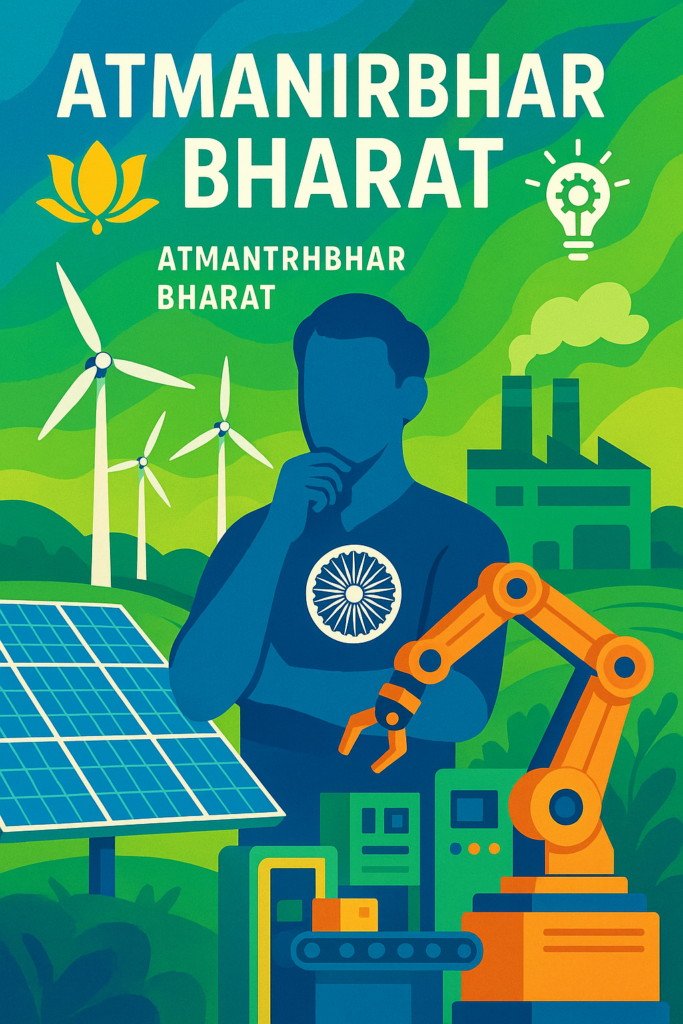
The decentralized nature of atmospheric energy harvesting addresses energy equity concerns:
Rural Electrification Benefits:
- Off-grid power solutions for tribal and remote communities
- Affordable energy access without major infrastructure investment
- Local employment opportunities in manufacturing and maintenance
- Reduced migration from rural to urban areas
Social Justice Considerations:
- Democratic energy production enabling community ownership
- Reduced dependence on centralized utility companies
- Energy sovereignty for marginalized communities
- Climate resilience for vulnerable populations
Technology Innovation and Research Ecosystem
Indigenous R&D Capabilities
India’s atmospheric energy device development showcases advanced indigenous research capabilities:
IASST Breakthrough (2022):
- Organic Pyroelectric Nanogenerator (OPyNG) using polyaniline-rubrene
- 167.12 mA/W responsivity with 51.16% external quantum efficiency
- 157.75 mV voltage generation and 51 mW/cm³ power density
- Fast response time of tens of milliseconds
Framework Materials Innovation:
- Metal-Organic Frameworks (MOFs) and Covalent Organic Frameworks (COFs) for enhanced energy harvesting
- Biocompatible CD-MOFs integration for sustainable energy applications
- ZIF-8 employment in triboelectric nanogenerators achieving 164 V output
Future Technology Roadmap
Next-Generation Developments:
- Hybrid electromagnetic-moisture energy harvesting systems
- 3D-printed energy harvesting devices for flexible applications
- AI-enhanced optimization of energy conversion efficiency
- Integration with IoT networks for smart city applications
Implementation Challenges and Solutions
Technical Optimization Requirements
Current Limitations:
- Power output scalability for large-scale applications
- Weather dependency affecting consistent energy generation
- Energy storage integration for 24/7 power availability
- Manufacturing cost reduction for mass deployment
Research Priorities:
- Material science advancement for higher efficiency nanogenerators
- Hybrid system development combining multiple energy sources
- Grid integration protocols for distributed energy management
- Standardization frameworks for quality assurance
Regulatory and Policy Support
Required Policy Interventions:
- Technology-specific incentives for atmospheric energy systems
- Grid code modifications for micro-generation integration
- Certification standards for safety and performance
- Intellectual property protection for indigenous innovations
Global Context and Competitive Positioning
India’s atmospheric energy device positions the country strategically in the global clean energy technology race:
International Comparison:
- China’s dominance in solar and battery technologies
- European leadership in wind energy systems
- US advancement in grid-scale storage solutions
- India’s unique positioning in atmospheric energy harvesting
Competitive Advantages:
- First-mover advantage in atmospheric energy commercialization
- Cost-effective manufacturing capabilities
- Large domestic market for technology validation
- Export potential to developing nations with similar energy challenges
The Path Forward: Building a Sustainable Energy Ecosystem
India’s air-powered device represents more than a technological breakthrough – it embodies a paradigm shift toward decentralized, democratic, and sustainable energy production. The convergence of constitutional mandate, technological innovation, and economic opportunity creates unprecedented potential for transformative impact.
Success Factors:
- Sustained R&D investment in nanotechnology and materials science
- Collaborative ecosystem between academia, industry, and government
- Regulatory framework adaptation for emerging technologies
- Public-private partnerships for scaled deployment
Long-term Vision:
The atmospheric energy harvesting technology aligns with India’s Viksit Bharat 2047 vision, contributing to energy security, environmental sustainability, and economic self-reliance. As the technology matures and scales, it could fundamentally reshape global energy landscapes while establishing India as a cleantech innovation leader.
The journey from laboratory breakthrough to commercial deployment requires coordinated effort across policy, technology, and market dimensions. Success will depend on maintaining innovation momentum while ensuring equitable access and environmental protection – principles deeply embedded in India’s constitutional framework and developmental aspirations.
This revolutionary technology represents India’s commitment to indigenous innovation in addressing global challenges while building economic prosperity and environmental sustainability for future generations. The air-powered device stands as testament to India’s capacity for transformative technological leadership in the 21st century clean energy transition.
📝 Practice Questions
Mains
- Discuss how decentralized innovations like “air-powered devices” can contribute to India’s energy security and climate commitments.
- Examine the constitutional, environmental, and ethical dimensions of emerging clean-tech solutions in India.





+ There are no comments
Add yours