
India is finalizing the roadmap and financial outlay for its Carbon Capture, Utilization, and Storage (CCUS) Mission, as confirmed by NITI Aayog’s Rajnath Ram. This mission represents a pivotal strategy to combat greenhouse gas emissions and achieve the country’s ambitious net-zero goals by 2070 through technology-driven climate mitigation instruments.
Key Highlights
- Mission finalization underway: NITI Aayog is actively working on the CCUS Mission roadmap and total financial outlay, with discussions progressing on comprehensive policy framework and implementation strategy
- Massive carbon storage potential: India possesses approximately 600 billion tonnes of geological CO₂ storage capacity in depleted oil and gas fields, saline aquifers, and unmineable coal seams
- Employment generation prospects: CCUS deployment could create 8-10 million full-time equivalent jobs by 2050, with the potential to capture 750 million tonnes of CO₂ annually
- Import reduction opportunity: CCU applications could reduce India’s import bill by USD 46 billion annually through synthetic production of jet fuel, urea, methanol, olefins, and natural gas
- Hard-to-abate sector focus: CCUS technology is essential for decarbonizing 56% of emissions from steel and cement sectors that cannot be mitigated through conventional renewable energy approaches
Understanding CCUS: The Technology Framework
Defining Carbon Capture, Utilization, and Storage
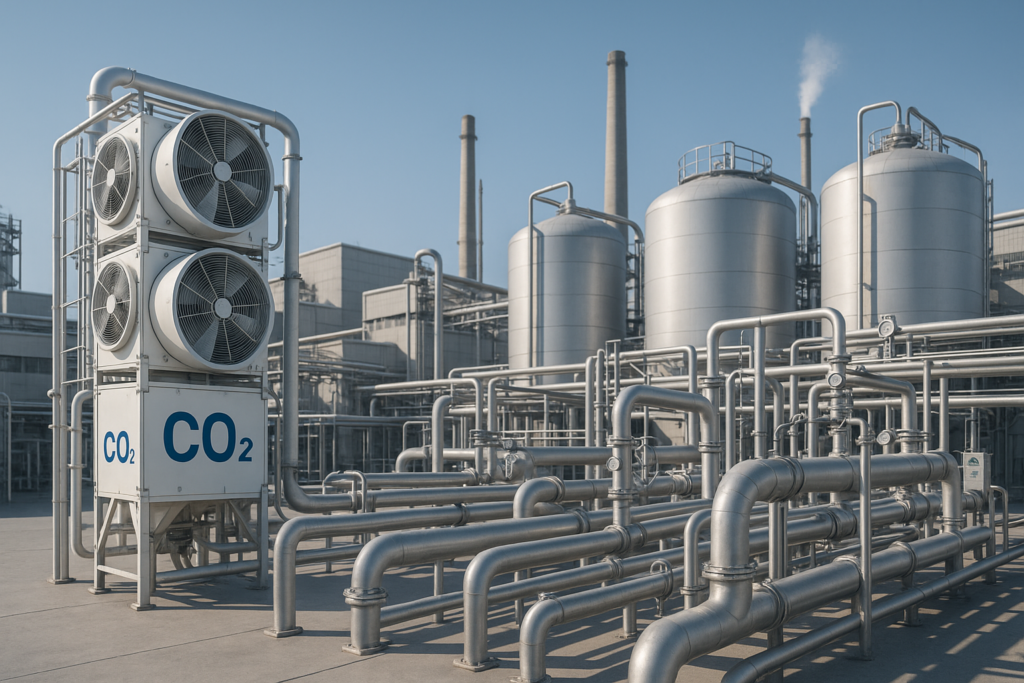
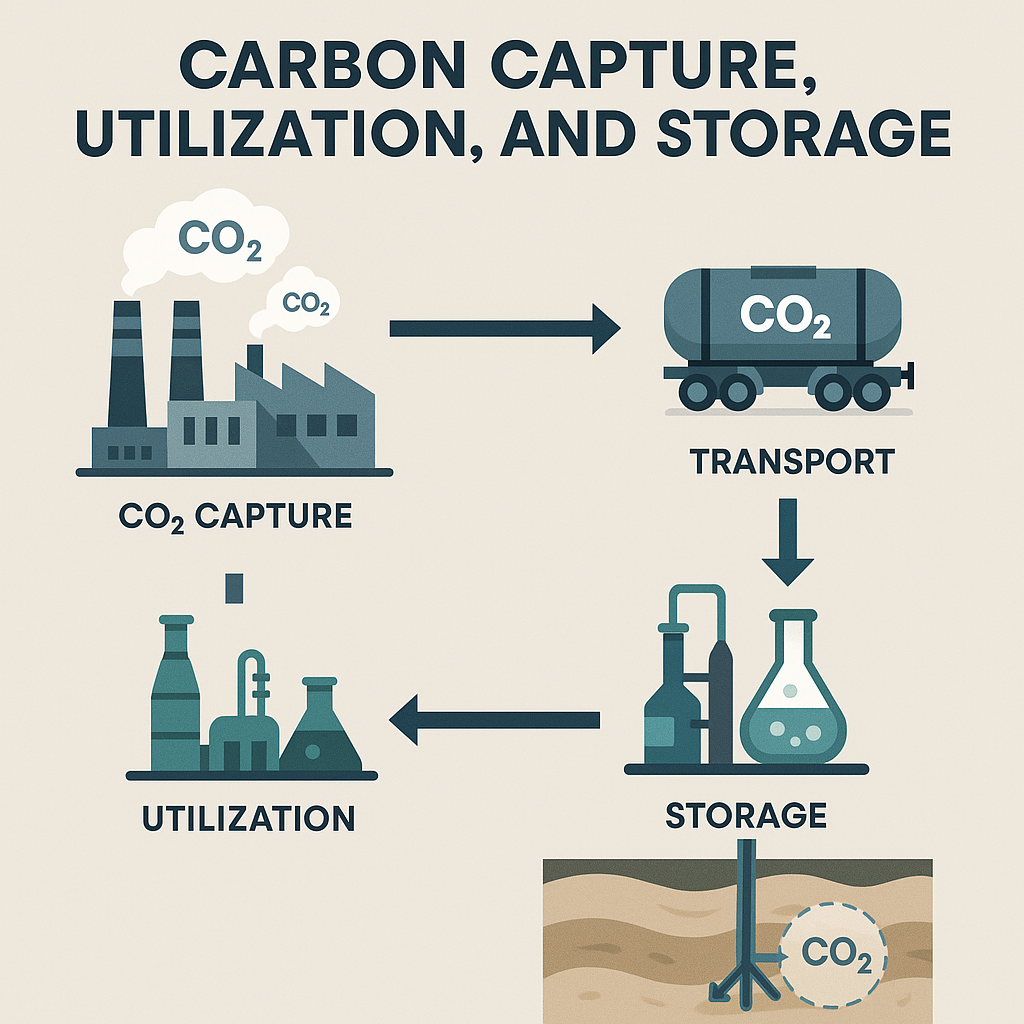
Carbon Capture, Utilization, and Storage (CCUS) represents a comprehensive process that captures carbon dioxide (CO₂) from industrial sources and power plants before atmospheric release. The captured CO₂ undergoes transportation for either utilization in value-added products like chemicals, building materials, and fuels, or permanent storage in underground geological formations.
CCUS technology encompasses three distinct pathways: carbon capture and storage (CCS) for permanent geological sequestration, carbon capture and utilization (CCU) for converting CO₂ into valuable products, and integrated CCUS systems combining both approaches for comprehensive emissions management.
India’s CCUS Policy Framework Evolution
NITI Aayog released a comprehensive policy framework in October 2022 titled “Carbon Capture, Utilisation, and Storage Policy Framework and its Deployment Mechanism in India”. The framework establishes policy and regulatory clarity to attract private sector investment while promoting public-private partnerships in large-scale demonstration projects. pib
Key framework elements include:
- Establishing national inventory of CO₂ sources and potential storage sites
- Leveraging CCUS for blue hydrogen production and industrial decarbonization
- Developing comprehensive safety standards and regulations for the entire CCUS value chain
- Creating collaborative research networks between academia, government institutes, and industry
Strategic Importance for India’s Net-Zero Goals
Addressing Hard-to-Abate Sectors
India’s industrial sector contributes approximately 30-35% of total carbon emissions, making CCUS technology critical for decarbonization efforts. Steel and cement sectors together account for 19% of India’s total emissions and 53% of industrial emissions, requiring specialized approaches beyond conventional renewable energy solutions.
Research by the Council on Energy, Environment and Water (CEEW) demonstrates that approximately 56% of total emissions from steel and cement sectors can only be mitigated using the CCUS pathway. This makes CCUS instrumental in achieving net-zero emissions in these critical industrial sectors.
Geological Storage Potential and Infrastructure
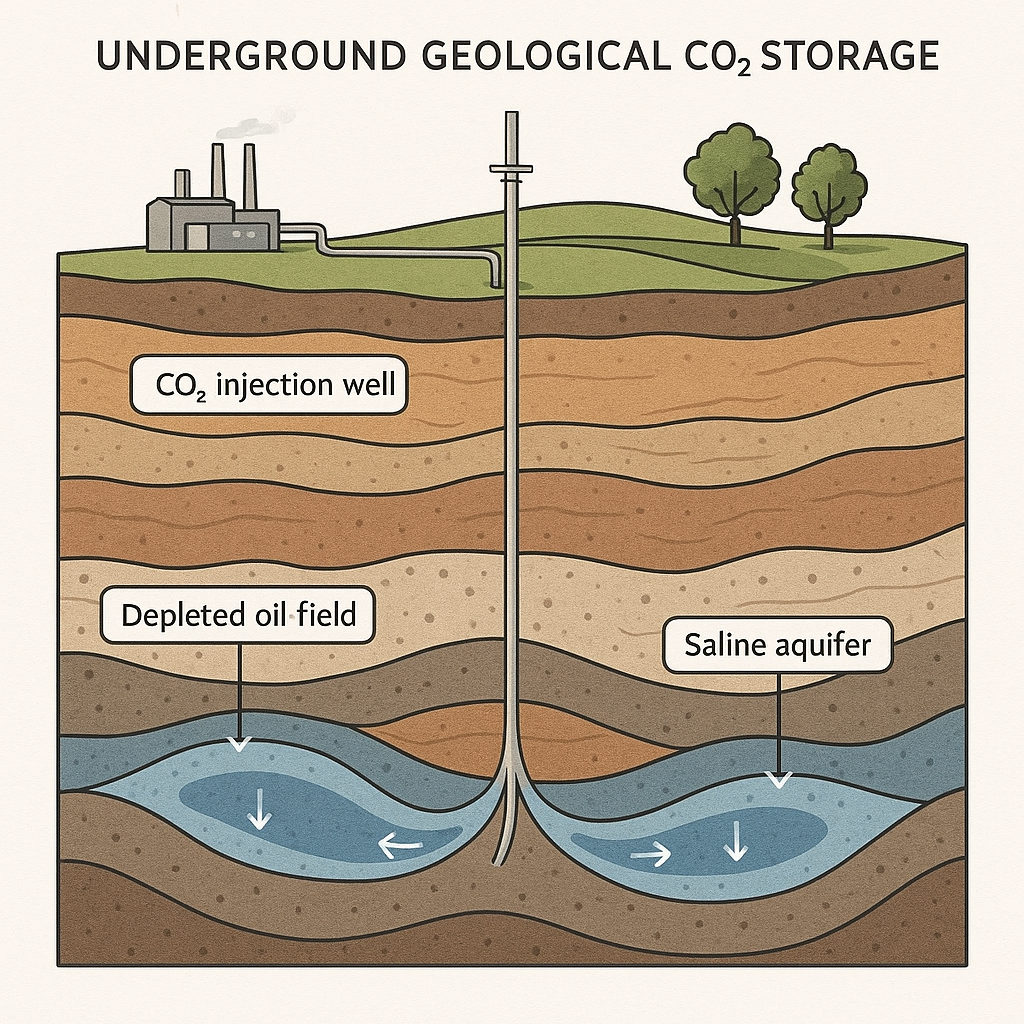
India possesses substantial geological sequestration potential across 26 sedimentary basins with 291 billion tonnes of CO₂ storage capacity. Storage opportunities exist in basaltic rocks, coal seams, depleted oil reserves, deep saline aquifers, and sedimentary basins.
Initial evaluations indicate 600 billion tonnes of geological CO₂ storage capacity located in oil and gas fields, saline aquifers, and unmineable coal seams. This substantial storage potential provides the foundation for large-scale CCUS deployment across India’s industrial landscape. thehindubusinessline
Economic Opportunities and Market Potential
Value-Added Product Development
CCU applications offer significant opportunities to monetize captured CO₂ through manufacturing value-added fuels and chemicals. Primary products include green urea, building materials (concrete and aggregates), chemicals (methanol and ethanol), polymers including bio-plastics, and enhanced oil recovery (EOR).
Economic analysis reveals that utilizing CO₂ to produce synthetic variants of jet fuel, urea, methanol, olefins, and natural gas could reduce India’s import bills by USD 46 billion annually. The 2022 import bill reached USD 209 billion, highlighting substantial economic benefits from domestic CCU production.
Investment Requirements and Market Projections
Achieving India’s CCUS goals requires investment of approximately USD 100-150 billion through 2050. Target sectors include steel, cement, oil and gas, petrochemicals, and fertilizers, which are essential for India’s economy while producing high emission levels.
CCUS capacity projections suggest potential to reach 750 million metric tons per year by 2050. This ambitious target reflects India’s commitment to comprehensive industrial decarbonization and technology-driven climate solutions.
Technology Applications and Sector Integration
Industrial Sector Applications
CCUS deployment targets key industrial sectors including steel production, cement manufacturing, chemical processing, and power generation. Steel and cement industries represent priority sectors due to their high emission intensity and limited alternative decarbonization pathways.
Power sector applications focus on coal-fired power plants that contribute more than 60% of India’s total power generation. Retrofitting existing coal plants for carbon capture and storage alongside biomass co-firing provides pathways for power sector decarbonization.
Integration with Green Hydrogen Production
CCUS applications require significant green hydrogen inputs for converting captured CO₂ into valuable products. Green hydrogen-based CCU products include olefins, synthetic natural gas (SNG), sustainable aviation fuel, methanol, and urea.
Break-even hydrogen prices vary across applications, with ethanol production requiring USD 1.88 per kg, representing the highest break-even price among analyzed products. Integration with the National Green Hydrogen Mission becomes crucial for CCU ecosystem development.
Policy Interventions and Regulatory Framework
Government Support Mechanisms
NITI Aayog’s policy framework emphasizes financial incentives and business models to promote commercial-scale CCUS adoption. Proposed interventions include industry clusters, employment generation programs, and comprehensive regulatory frameworks.
Department of Science and Technology (DST) initiatives focus on building collaborative research networks and facilitating technology development through academic-industry partnerships. Mission Innovation carbon capture innovation challenge aims to enable near-zero CO₂ emissions from power plants and carbon-intensive industries.
International Collaboration and Technology Transfer
India’s Ministry of Science and Technology participates in the Asia CCUS Network, committed to developing and deploying CCUS efforts throughout Asia. International collaborations with major oil firms like ExxonMobil, Petrobras, and BP facilitate technology transfer to exploit India’s CCUS potential.
U.S. Commercial Service identifies opportunities for American companies in CCUS technologies and services, including CO₂ capture systems, transportation infrastructure, storage solutions, and utilization technologies.
Implementation Challenges and Solutions
Technical and Economic Barriers
CCUS implementation faces several challenges including high capital costs for CO₂ capture and compression, need for extensive transportation infrastructure, technology advances for large-scale deployment, and environmental and social acceptance of storage sites.
Current CCUS applications remain significantly more expensive than fossil-based alternatives, with hydrogen costing USD 4.2/kg and CO₂ at USD 45/tonne. Cost reduction strategies require technological advancement, scale economies, and policy support.
Infrastructure Development Requirements
Large-scale CCUS deployment requires comprehensive infrastructure development including capture facilities, transportation networks, storage sites, and utilization plants. Pipeline infrastructure for CO₂ transportation represents critical enabling infrastructure for CCUS ecosystem development.
Safety standards and regulations need development and updating to incorporate CCUS technologies across the entire value chain. Comprehensive assessment of necessary safety standards becomes essential for successful implementation.
Future Outlook and Strategic Priorities
Short-term Development Priorities
Indigenous technology development and piloting represent immediate priorities through research, development, and demonstration (RD&D) funding. National Green Hydrogen Mission should include CCU applications development as priority research areas.
Pilot projects led by NTPC, Oil and Natural Gas Corporation (ONGC), and industrial players like Tata Steel demonstrate growing interest in CCUS deployment. These demonstration projects provide valuable experience for large-scale commercial deployment.
Long-term Strategic Vision
CCUS Mission represents critical technology for India’s ambitious energy transition and net-zero targets. Integration with broader climate policies including National Determined Contributions (NDC) targets and Panchamrit goals ensures comprehensive approach to emissions reduction.
Technology-driven climate mitigation through CCUS deployment reflects India’s commitment to innovative solutions for hard-to-abate sectors. Successful CCUS implementation becomes essential for achieving India’s 2070 net-zero pledge.
Conclusion
India’s CCUS Mission represents a transformative approach to industrial decarbonization and climate action, addressing critical emissions from hard-to-abate sectors through technology-driven solutions. NITI Aayog’s leadership in finalizing the mission roadmap demonstrates government commitment to comprehensive climate mitigation strategies.
The substantial geological storage potential of 600 billion tonnes combined with significant economic opportunities from CCU applications positions India for successful CCUS deployment. Potential import reduction of USD 46 billion annually alongside employment generation of 8-10 million jobs highlights economic benefits beyond environmental gains.
Integration with existing initiatives including the National Green Hydrogen Mission and collaboration with international partners provides foundation for technology development and knowledge transfer. Policy framework development through comprehensive regulations and financial incentives ensures commercial viability of CCUS technologies.
Challenges including high costs, infrastructure requirements, and technology development require coordinated efforts across government, industry, and research institutions. Success in CCUS deployment will be crucial for India’s net-zero 2070 commitment and leadership in global climate action.
The mission’s success depends on sustained political commitment, adequate financial resources, technology innovation, and stakeholder collaboration to transform India’s approach to industrial emissions management and climate mitigation.
Possible Mains Questions
- “Analyse the significance of the National CCUS Mission in India’s effort to decarbonize its economy on the path to net-zero by 2070.”
- “Discuss the challenges and policy mechanisms necessary to operationalize Carbon Capture, Utilisation, and Storage (CCUS) on a commercial scale in India.”










+ There are no comments
Add yours