
Key Highlights
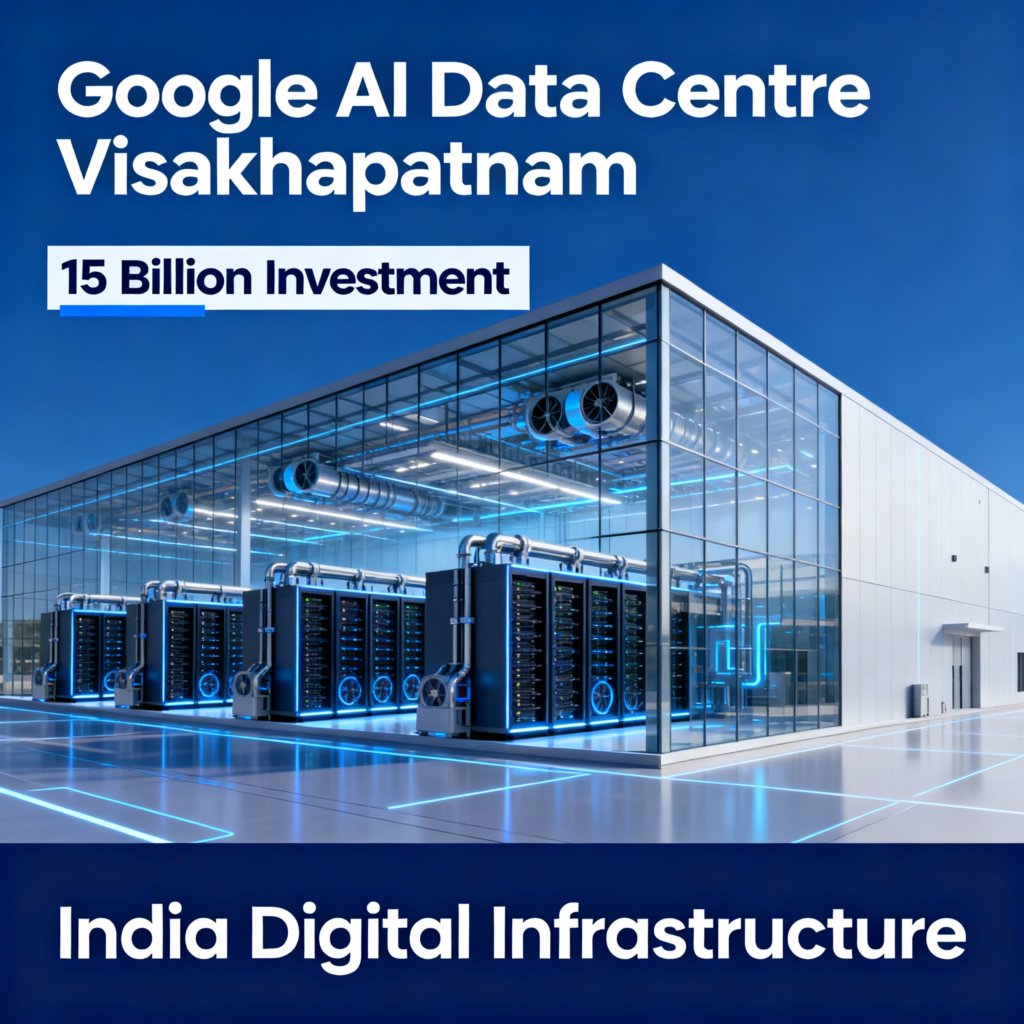
- Historic Investment: Google announced $15 billion AI hub in Visakhapatnam (2026-2030) – largest tech investment in India; gigawatt-scale data centre creating 1 lakh+ jobs
- IndiaAI Mission Scale-Up: 38,000 GPUs deployed (3.8x original 10,000 target) with ₹10,300 crore budget; subsidized access at ₹65/hour versus global $2.5-3/hour rates
- Data Centre Explosion: Capacity doubling from 1,150 MW (Dec 2024) to 2,000-2,100 MW by FY27; investments of ₹40,000-45,000 crore; pipeline of 3-3.5 GW for next decade
- Economic Transformation: Digital economy expected to cross $1 trillion by 2030; AI market tripling to $17 billion by 2027 at 25-35% growth rate
- Strategic Policy Framework: Infrastructure status for data centres unlocking long-tenor debt; Digital Personal Data Protection Act 2023; state incentives; IndiaAI’s 7 pillars driving ecosystem
Visakhapatnam Gambit: Redefining India’s Digital Landscape
On October 14, 2025, Google announced a landmark $15 billion investment to establish its first dedicated AI hub in Visakhapatnam, Andhra Pradesh – the company’s largest commitment outside the United States.
Investment Breakdown and Timeline
Financial Commitment: Approximately $15 billion deployed over five years (2026-2030) pib.gov
- Gigawatt-scale data centre campus – first of its kind in India
- Renewable energy infrastructure at unprecedented scale
- Expanded fiber-optic network enhancing connectivity
- Cable Landing Station for international subsea cables
- AdaniConnex and Airtel as primary partners
- Purpose-built facilities rivaling Google Search, Workspace, YouTube infrastructure
- Robust intra-city and inter-city fiber network creation
Employment and Economic Impact
Job Creation: Over 1 lakh (100,000) direct and indirect jobs expected
Economic Multiplier: Stimulating manufacturing, services, R&D sectors across Andhra Pradesh and nationally
Global Connectivity: Positioning Visakhapatnam as international tech hub integrating India into Google’s global AI infrastructure spanning 12 nations
Policy Alignment: Direct support for Government of India’s Viksit Bharat 2047 vision and US-India tech cooperation
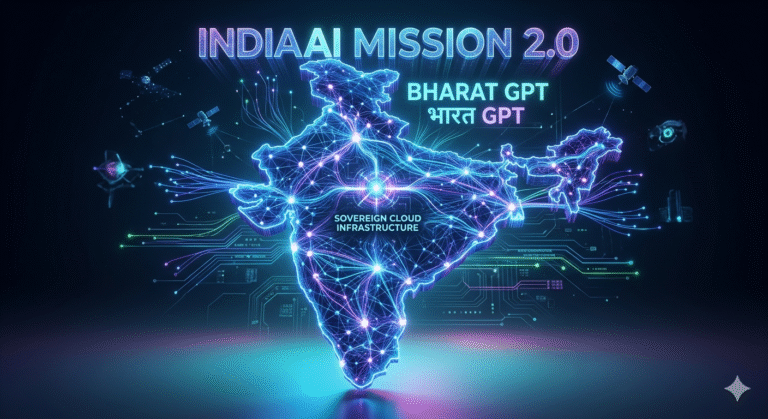
IndiaAI Mission: Democratizing Artificial Intelligence
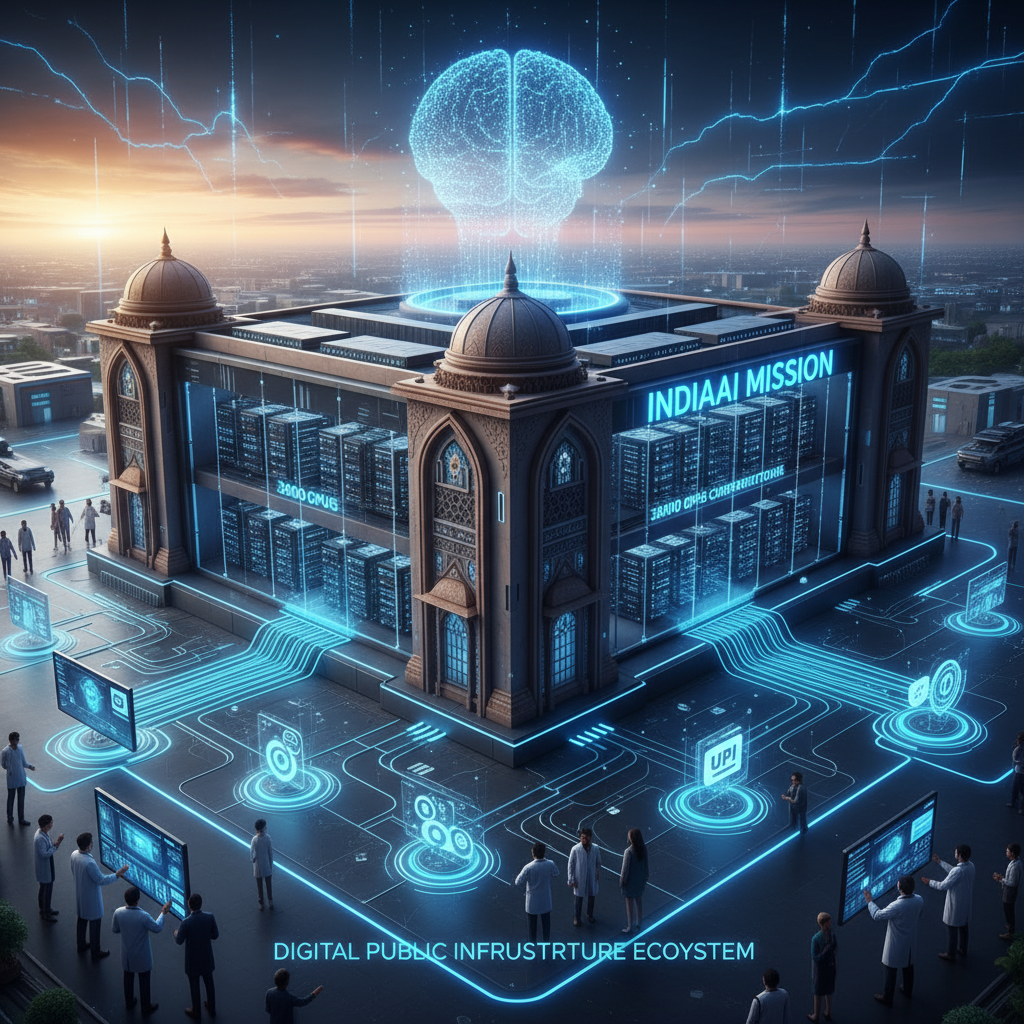
Launched in March 2024 with Cabinet approval, the IndiaAI Mission represents India’s most ambitious AI development initiative – a ₹10,371.92 crore commitment over five years to build comprehensive AI ecosystems. IndiaAI
Mission Architecture: Seven Pillars
1. IndiaAI Compute Pillar:
- 38,000 GPUs deployed (surpassing initial 10,000 target by 280%) worldtradescanner
- Subsidized Access: ₹65/hour versus global rates of $2.5-3/hour (₹200-250)
- Making India’s AI infrastructure 9x larger than DeepSeek and 2/3 of ChatGPT’s compute capacity
2. Application Development Initiative:
- 30+ AI applications approved by July 2025
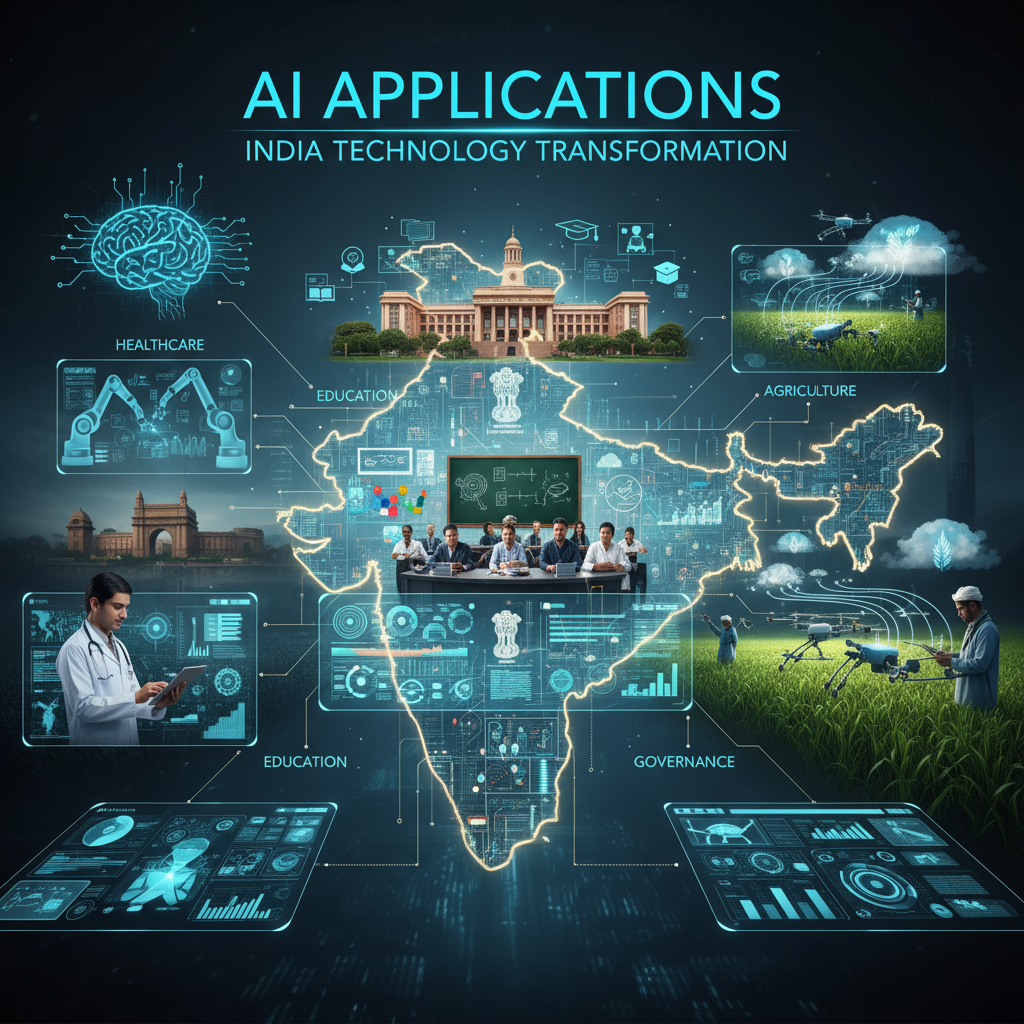
- Sector focus: Healthcare, agriculture, climate change, governance, assistive learning
- CyberGuard AI Hackathon developing cybersecurity solutions
- Collaboration with ministries for sector-specific hackathons
3. AIKosh Dataset Platform:
- 3,000+ datasets and 243 AI models hosted nationally
- Enabling developers to build powerful solutions faster
- Open access democratizing data for startups, researchers, students
4. Indigenous Foundation Models:
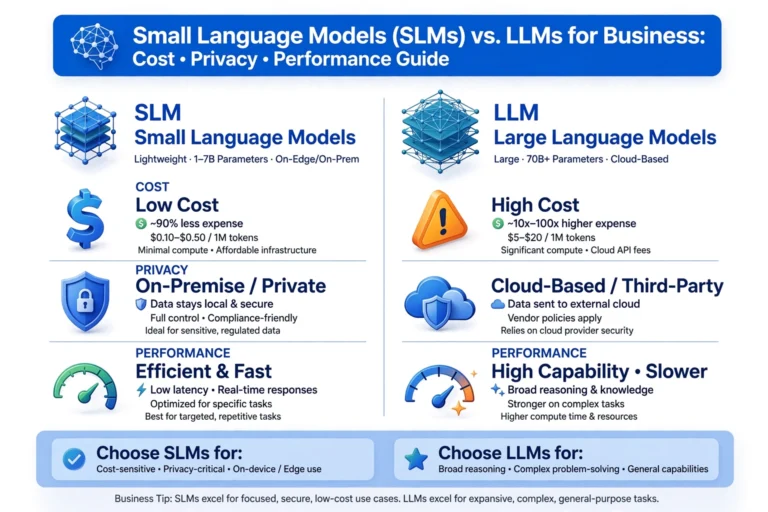
- Developing India-specific Large Language Models (LLMs)
- Training in Indian languages and cultural contexts
- Reducing dependence on foreign AI platforms
5. Future Skills Development:
- Large-scale reskilling/upskilling programs
- AI curriculum integration in education
- Preparing workforce for AI-led economy
6. Startup Financing:
- Deep-tech funds supporting AI entrepreneurs
- Reducing barriers for innovative ventures
- Creating vibrant AI startup ecosystem
7. Responsible AI Governance:
- Ethical AI frameworks and guidelines
- Ensuring fairness, explainability, transparency
- Democratic, inclusive AI development model
Indigenous GPU Development
Strategic Initiative: Develop India’s own GPU within 3-5 years
Supply Chain Diversification: 10 companies selected for GPU supply ensuring resilience
Rationale: Reducing reliance on imported technology while building domestic capabilities
Data Centre Infrastructure: The Digital Backbone

India’s data centre sector is experiencing unprecedented growth, driven by digital transformation, cloud adoption, AI workloads, and supportive policy frameworks.
Capacity Expansion Trajectory
Current Status: 1,150 MW operational capacity (December 2024) jll.com
Near-Term Target: 2,000-2,100 MW by FY27 (March 2027)
Investment Required: ₹40,000-45,000 crore in FY26-FY27
Long-Term Pipeline: 3.0-3.5 GW capacity over next 7-10 years requiring ₹2.0-2.3 lakh crore investments
Growth Rate: 24% CAGR since 2019; 77% surge projected by 2027
Geographic Distribution
Mumbai: 50%+ of existing capacity; strategic connectivity and power reliability advantages
Chennai, Bangalore, Delhi-NCR: Significant concentrations
Emerging Corridors: Hyderabad, Visakhapatnam (boosted by Google investment)
Concentration: 95% of capacity in six cities currently
Demand Drivers
Cloud Service Providers (CSPs): 54% of user demand; hyperscalers leading charge
BFSI Sector: 18% occupancy; regulatory compliance driving uptake
Technology Companies: 12% demand share
AI Workloads: Generative AI presenting new wave of demand requiring massive computing power
5G Rollout: IoT, edge computing, real-time applications proliferating
Infrastructure Status Benefits
Granting “infrastructure” status to data centres unlocked:
- Long-tenor debt access
- Foreign funding eligibility
- State-level incentives (land, power, tax exemptions)
- Special regulatory treatment
The AI-Data Centre Synergy
Artificial intelligence and data centres represent symbiotic technologies – AI applications require massive compute infrastructure, while data centres provide the backbone for AI training and inference.
Computational Requirements
Training Large Language Models:
- Modern LLMs require thousands of GPUs operating concurrently
- India’s 38,000 GPUs enabling indigenous model development
- Training costs running into millions without subsidized infrastructure
Inference at Scale:
- Deployed AI models serving millions of users simultaneously
- Real-time response requiring low-latency data centre infrastructure
- Google’s Visakhapatnam hub addressing both training and inference needs
Edge Computing Integration
5G deployment driving edge data centre proliferation:
- Processing data closer to users reducing latency
- Critical for autonomous vehicles, IoT, augmented reality
- Supporting real-time AI applications
Edge-Cloud Continuum:
- Distributed computing architecture balancing centralized power with edge responsiveness
- India’s geographic diversity requiring multi-location data centre strategy
Economic Impact: From Digital to $1 Trillion Economy
Digital Economy Projections
2030 Target: Digital economy crossing $1 trillion milestone
AI Market Growth: Expected to triple to $17 billion by 2027 at 25-35% annual growth
Technology Employment: 6 million currently employed in tech and AI sectors
Job Creation and Skills
High-Value Employment: AI, data analytics, cybersecurity, cloud architecture, digital infrastructure management roles
Multiplier Effects: MSMEs, R&D institutions, entrepreneurial ventures benefiting from digital infrastructure
Reskilling Imperative: Large-scale workforce transformation needed to capture AI opportunities
Foreign Direct Investment
Google’s $15 billion catalyzing confidence in India’s digital infrastructure potential
Technology Majors: Microsoft, AWS, Oracle investing in cloud and AI infrastructure
Global Value Chains: Integration positioning India as critical node in worldwide digital economy
Societal Benefits
Smarter Governance: AI-driven platforms improving public service delivery, reducing corruption, enhancing efficiency
Healthcare Transformation: Telemedicine, diagnostic AI, predictive analytics expanding access
Education Revolution: Personalized learning, AI tutors, digital education platforms
Financial Inclusion: Digital payments ecosystem expansion through UPI and related innovations
Agricultural Advancement: Climate forecasting, precision agriculture, supply chain optimization
Policy and Regulatory Landscape
Key Government Initiatives
IndiaAI Mission (detailed above): ₹10,300 crore, 38,000 GPUs, 7 pillars
National Data Centre Policy 2020: Framework for accelerating sector growth
Digital Personal Data Protection Act 2023: Robust governance, privacy standards, cross-border data flow regulations
Infrastructure Status: Unlocking funding for data centres
BharatNet Expansion: Rural broadband connectivity supporting digital inclusion
Deep Tech Fund of Funds: Supporting AI, semiconductor, advanced technology ventures
State Incentives: Land allocation, power subsidies, tax exemptions attracting investments
Regulatory Challenges
Power and Cooling: Hyperscale data centres consuming massive electricity; emphasis on renewable energy integration
Skill Shortages: Gap between demand for AI/cloud professionals and available talent
Cybersecurity Threats: Expanded infrastructure increasing attack surface requiring robust defenses
Data Localization vs. Global Operations: Balancing sovereignty with international business requirements
Indigenous Hardware: Semiconductor and server manufacturing ecosystem needs development
Global Position and Competitive Advantage
India’s Unique Value Proposition
Cost Advantages: Lower operational costs compared to developed markets
Talent Pool: Large English-speaking workforce with technical skills
Digital Public Infrastructure: Aadhaar, UPI, DigiLocker providing ready-made platforms for AI integration
Market Size: 1.4+ billion population offering massive domestic market for AI applications
Government Support: Proactive policy frameworks and financial commitments
Comparative Context
China: Larger investments but centralized, state-controlled approach
USA: Technology leader but higher costs, selective access
EU: Strong regulatory frameworks but slower adoption
India’s Differentiation: Democratic, inclusive model with open access at subsidized rates
Exporting Digital Solutions
Digital Public Infrastructure Model: Other nations studying India’s Aadhaar-UPI success
AI Governance Frameworks: Democratic approach offering alternative to authoritarian models
Global South Leadership: Positioned to lead digital economic growth in developing world
Challenges and Mitigation Strategies
Infrastructure Challenges
Power Requirements: Data centres and AI workloads demanding consistent, high-volume electricity
Mitigation: Renewable energy mandates; data centre operators targeting 20-25% green power by 2028
Cooling Solutions: Thermal management in tropical climate requiring innovative approaches
Connectivity: Fiber-optic network expansion continuing through public-private partnerships
Skill Development Gap
Challenge: Explosive demand for AI specialists outpacing educational output
Mitigation: IndiaAI Future Skills pillar; industry-academia partnerships; online learning platforms; reskilling initiatives
Cybersecurity Imperatives
Challenge: Critical infrastructure becoming attractive target for state and non-state actors
Mitigation: CyberGuard AI Hackathon; indigenous cybersecurity solutions; robust regulatory frameworks
Digital Divide
Challenge: Ensuring inclusive digital economy benefiting all regions and demographics
Mitigation: BharatNet expansion; subsidized AI access (₹65/hour); vernacular language AI models
Avoiding “AI Colonialism”
Challenge: Dependence on foreign AI platforms risking technological sovereignty
Mitigation: Indigenous GPU development; foundation model creation; open-source approaches
Roadmap: Opportunities Ahead
Near-Term (2025-2027)
Complete IndiaAI infrastructure: Full 38,000 GPU deployment with expanded access
Google Visakhapatnam Phase I: Initial data centre operations commencing 2026
Data centre capacity doubling: Reaching 2,100 MW milestone
Foundational AI models: India-specific LLMs in healthcare, education, governance
Medium-Term (2027-2030)
Indigenous GPU production: Reducing import dependence on critical components
6G research and deployment: Next-generation connectivity enabling advanced AI applications
Semiconductor manufacturing: Domestic chip production supporting data centre ecosystem
AI export services: Indian companies providing AI solutions globally
Long-Term (2030-2047)
Viksit Bharat 2047 realization: Developed nation status underpinned by digital economy
Global AI leadership: India as top-tier AI research, development, deployment hub
Digital Public Infrastructure 2.0: Next-generation platforms integrating AI across governance
Climate-Neutral Infrastructure: Net-zero data centres and sustainable AI operations
Conclusion: India’s Digital Destiny

The convergence of Google’s unprecedented $15 billion Visakhapatnam investment, IndiaAI Mission’s 38,000 GPU deployment, and doubling data centre capacity to 2,100 MW by FY27 signals India’s irreversible transformation into a global AI and data centre powerhouse.
The numbers tell a compelling story: From ₹10,300 crore IndiaAI budget enabling subsidized GPU access at ₹65/hour (versus global $2.5-3/hour) to projected $1 trillion digital economy by 2030 and $17 billion AI market by 2027. These aren’t mere projections—they represent deliberate policy choices backed by massive investments creating infrastructure for sustained growth.
Strategic government initiatives – infrastructure status for data centres, Digital Personal Data Protection Act 2023, state incentives, IndiaAI’s seven-pillar architecture—provide enabling frameworks that balance innovation with governance, openness with sovereignty, growth with inclusion.
Challenges persist: power and cooling demands requiring green energy transition, skill shortages needing large-scale reskilling, cybersecurity threats mandating robust defenses, digital divides requiring inclusive design. Yet India’s trajectory demonstrates capability to address these through coordinated multi-stakeholder action.
India’s AI and data centre emergence offers crucial lessons: Technology leadership requires not just private investment but strategic public policy; democratic nations can compete in AI without authoritarian controls; inclusive development creates sustainable advantages; Digital Public Infrastructure provides replicable models for Global South.
The ultimate vision: India as AI superpower exporting not just services but governance frameworks, demonstrating that democratic, inclusive, responsible AI development offers superior alternative to centralized, opaque approaches. From Visakhapatnam to every village through BharatNet, from 38,000 GPUs accessible at subsidized rates to indigenous foundation models in Indian languages—India is building digital infrastructure that serves citizens, drives growth, and shapes the 21st-century global economy.





+ There are no comments
Add yours