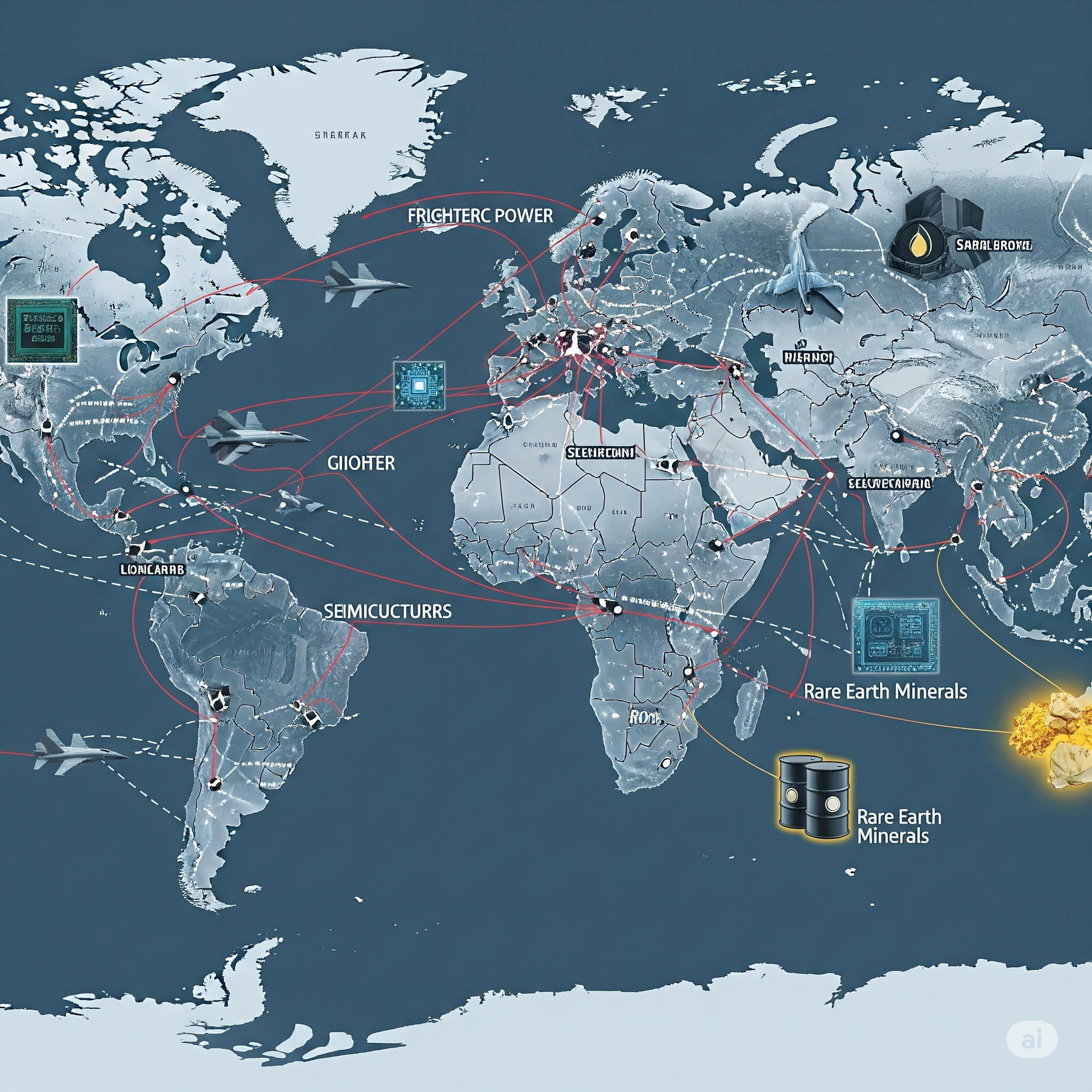
📦 Quick Summary:
- The Trump-era policies triggered a shift in global alliances, especially concerning trade, defense, and multilateralism.
- India found new opportunities in defense, tech, and regional leadership, but also faced risks from protectionism and US-China rivalry.
- Indo-Pacific strategy, QUAD revival, and technology decoupling became central to India–US cooperation.
- Challenges include managing Russia-US-China triangle, securing energy flows, and avoiding overdependence on any one superpower.
- India’s strategic autonomy remains critical amid geopolitical polarization and emerging tech wars.
🌍 A World Rewired
The global geopolitical landscape has experienced tectonic shifts in the past decade, and the Trump administration (2017–2021) was a major catalyst. Known for its “America First” doctrine, Trump’s foreign policy marked a break from traditional US multilateralism, with deep consequences for global alignments—and especially for rising powers like India.
This essay explores how those shifts impacted India across trade, defense, diplomacy, and technology, and how India must navigate the post-Trump global architecture with caution, balance, and vision.
🧭 The Trump Doctrine: Key Global Shifts
1. 🔁 Rise of Protectionism
Trump reversed decades of US support for globalization. He:
- Withdrew from TPP (Trans-Pacific Partnership)
- Imposed tariffs on China, EU, and even allies like India
- Threatened WTO norms, reducing its global arbitration role
2. 🧱 China Confrontation Intensifies
- The US–China trade war escalated into a tech cold war
- Sanctions on Huawei and decoupling of supply chains
- Tighter controls on strategic sectors like semiconductors and AI
3. 🌊 Indo-Pacific Rebalancing
- Rebranded Asia-Pacific as Indo-Pacific to include India
- Strengthened the Quadrilateral Security Dialogue (QUAD) with India, Japan, Australia
- Promoted India as a counterweight to China
4. 🤝 Transactional Diplomacy
- Foreign relations became interest-based, not values-driven
- Allies had to “pay their share”—NATO, South Korea, and even India faced this pressure
- H1-B visa tightening affected Indian skilled labor exports
🇮🇳 Implications for India: Risks and Opportunities
✅ Opportunities
A. Strategic Partnership Deepens
- LEMOA, COMCASA, BECA agreements signed with the US
- Joint military exercises, intelligence sharing, and maritime cooperation increased
- Shared concerns over China (Doklam, Galwan) brought India and US closer
B. Tech and Trade Diversification
- US restrictions on China opened new tech trade space for India
- US firms began seeking “China Plus One” strategies—India benefited marginally
- India’s PLI schemes (Production Linked Incentives) aligned with US efforts to restructure supply chains
C. Indo-Pacific Centrality
- India’s importance grew as the US redefined regional order
- QUAD got revived as a strategic, though not formal, alliance
- India had more leverage in ASEAN, Pacific, and Indian Ocean dialogue
⚠️ Risks and Challenges
A. US Unilateralism
- WTO deadlock and tariff wars affected India’s exports (e.g., steel, pharma)
- India lost GSP (Generalized System of Preferences) trade benefits
- Policy unpredictability in Washington created uncertainty in Indian markets
B. H1-B and Talent Pipeline
- Tightened work visa regulations hit Indian IT professionals
- Return migration and brain-drain trends shifted India’s talent diplomacy equation
C. Russia Sanctions Dilemma
- India’s dependence on Russian defense systems (e.g., S-400) clashed with US sanctions under CAATSA
- Forced India to balance its historical ties with Russia and growing cooperation with the US
🛰️ Technology and Strategic Autonomy
One of the deepest Trump-era shifts was the rise of technology as a strategic tool. With the US–China tech cold war now shaping digital supply chains, India had to rethink its digital sovereignty.
Key Areas:
- 5G and Telecom: India blocked Huawei from 5G trials, aligning subtly with US policy
- Semiconductors: India launched semiconductor missions amid global chip shortages
- Cybersecurity: India joined information-sharing initiatives with QUAD countries
India’s strategy now must focus on digital non-alignment—adopting partnerships that do not compromise long-term sovereignty.
🌐 India’s New Balancing Act
India must:
- Remain non-aligned in tech and geopolitics, but actively engaged
- Forge multi-polar partnerships with EU, ASEAN, Gulf nations, and African states
- Maintain strategic autonomy—the ability to make independent decisions despite global pressure
This includes:
- Securing critical mineral reserves and supply chains
- Investing in R&D, AI, and quantum tech
- Maintaining energy security amid global tensions
🔚 Conclusion: India’s Path in a Fractured World
The Trump administration accelerated global transformations that are still unfolding. For India, it was a period of challenge and calibration—deepening ties with the US, counterbalancing China, and reinforcing sovereignty in trade, tech, and defense.
In the coming decade, India’s power will depend not just on partnerships, but on how well it builds domestic capacity and global leverage in a world driven by strategic autonomy, tech decoupling, and resource security.



+ There are no comments
Add yours