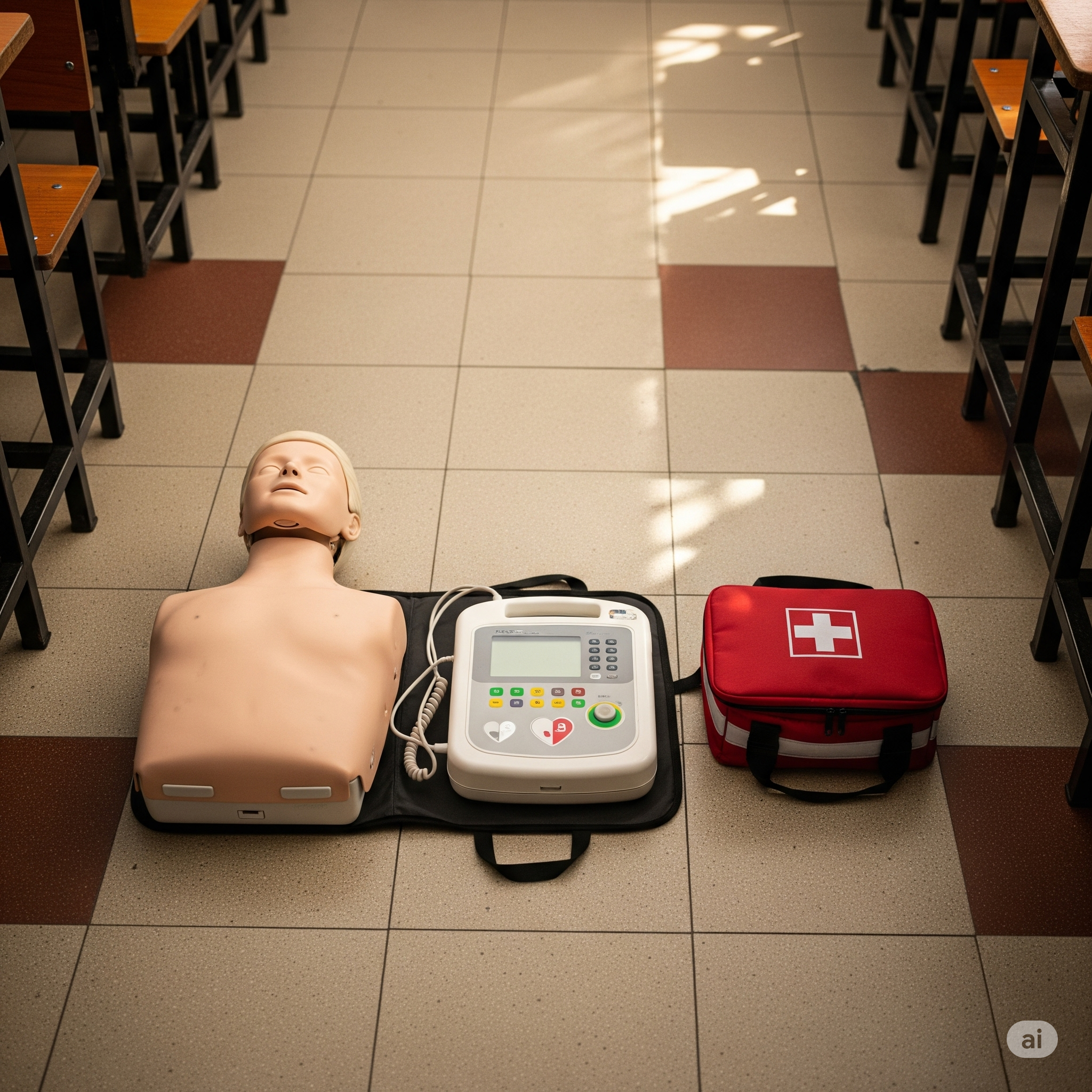
Why This Confusion Matters
People often use the terms “heart attack” and “cardiac arrest” interchangeably, but they are not the same. Knowing the difference is not just medical trivia—it can save a life.
💥 What Is a Heart Attack?
A heart attack (myocardial infarction) occurs when blood flow to the heart muscle is blocked, usually by a clot or plaque buildup in the coronary arteries.
Causes:
- Coronary artery disease
- High cholesterol
- Smoking
- Diabetes
Symptoms:
- Chest pain or pressure
- Pain radiating to arm, jaw, or back
- Sweating, nausea
- Shortness of breath
- May remain conscious
“A heart attack is a plumbing problem—blocked pipes to the heart,” explains Dr. Anita Mehra, cardiologist at Fortis Hospital, Mumbai.
What Happens:
If untreated, parts of the heart muscle begin to die from lack of oxygen. Medical intervention is crucial within the first 60–90 minutes.
⚡ What Is Cardiac Arrest?
A cardiac arrest is an electrical failure in the heart. The heart suddenly stops beating, cutting off blood flow to the brain and other organs.
Causes:
- Abnormal heart rhythm (arrhythmia)
- Ventricular fibrillation
- Severe heart attack
- Congenital conditions or trauma
Symptoms:
- Sudden collapse
- No pulse
- No breathing
- Unconsciousness
“Cardiac arrest is an electrical failure. The heart goes offline, like a power cut,” says Dr. Rajat Sharma, emergency medicine specialist.
What Happens:
Without immediate CPR and defibrillation, death can occur within minutes.
🩺 Key Differences at a Glance
| Feature | Heart Attack | Cardiac Arrest |
|---|---|---|
| Cause | Blocked artery | Electrical failure |
| Heartbeat | Often normal or irregular | Stops completely |
| Symptoms | Pain, nausea, breathing issues | Sudden collapse, no pulse |
| Consciousness | Often conscious | Always unconscious |
| Immediate Action | Hospitalization | CPR + Defibrillation |
🧠 Can a Heart Attack Cause Cardiac Arrest?
Yes. A heart attack can trigger arrhythmias, leading to cardiac arrest. This is why all heart attack symptoms should be treated as medical emergencies.
🚑 First Aid: What You Should Do
For Heart Attack:
- Call emergency services
- Help the person sit and stay calm
- Offer aspirin (if advised by doctor)
- Do not let them eat or drink
For Cardiac Arrest:
- Call for help immediately
- Begin CPR: 30 chest compressions + 2 breaths
- Use an AED (if available)
Only 10% of cardiac arrest victims survive without immediate CPR.
📈 India-Specific Insights
- In India, less than 2% of people know CPR.
- Cardiac arrest can occur in young individuals too—especially in athletes.
- India sees nearly 3 million heart attacks annually.
Public Health Tip:
Government and NGOs are now training teachers and students in basic CPR as part of school health programs.
🧬 Prevention Is Better Than Emergency
Heart Attack Prevention:
- Regular exercise
- Healthy diet (low fat, low sugar)
- Blood pressure and sugar control
Cardiac Arrest Prevention:
- Screening for arrhythmias
- Managing stress and sleep
- Awareness of family history
Smartwatches with ECG features can sometimes detect irregular rhythms early.
🩻 The Role of Technology
Modern Tools:
- Portable AEDs in malls and airports
- AI-based ECG analysis in rural clinics
- Telemedicine connecting remote patients to cardiologists
India’s health-tech sector is increasingly focusing on real-time diagnostics to reduce cardiac emergencies.
🧾 Final Thoughts: Know the Signs, Act Fast
Both cardiac arrest and heart attack are deadly—but only one gives you time to act. Recognizing the signs and responding quickly can be the difference between life and death.
Learn CPR. Know the signs. Spread awareness.










+ There are no comments
Add yours