
Key Highlights
- Statistical Prediction, Not Comprehension: AI models predict likely words based on data probabilities, lacking true understanding or reasoning.
- Pattern Recognition Systems: Trained on massive datasets, AI mimics human-like responses through language fluency rather than genuine thought.
- Misplaced Expectations: Overestimating AI’s capabilities can lead to unrealistic fears or overdependence, while underestimating them may hinder innovation.
- AI as a Tool: Enhances productivity, learning, and creativity but must complement—not replace—human decision-making.
- Ethical Imperatives: Anthropomorphizing AI risks eroding accountability. Robust AI literacy, regulation, and policy frameworks are essential.
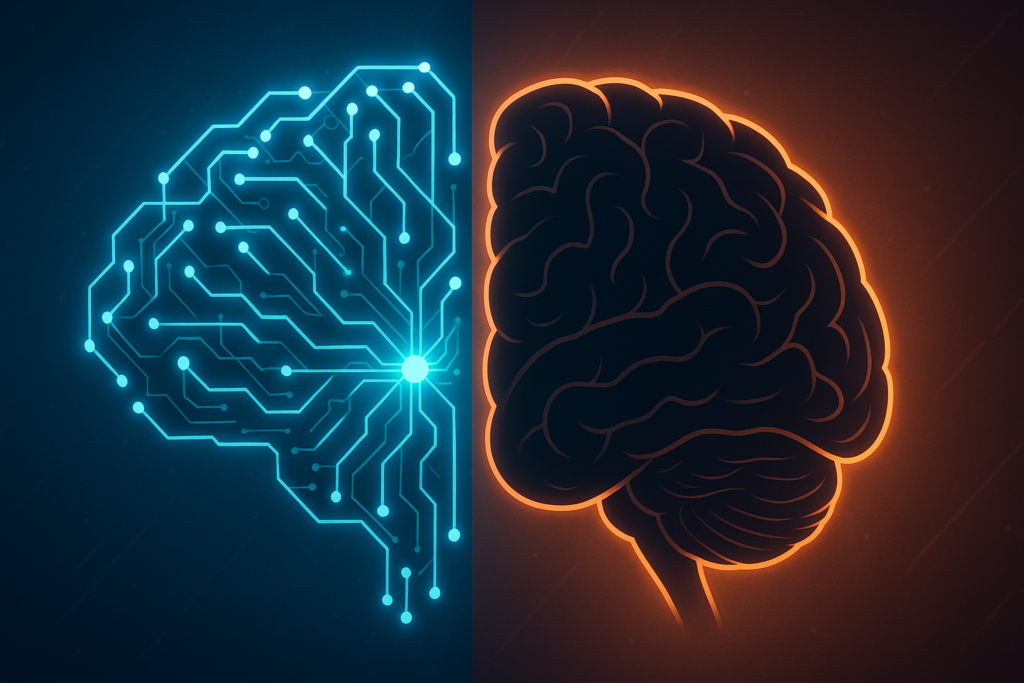
Artificial Intelligence (AI) has captivated public imagination, sparking debates about sentience, autonomy, and ethical dilemmas. Yet at its core, AI remains a sophisticated pattern recognition system driven by statistical prediction, not genuine comprehension. Understanding this distinction is crucial to harness AI’s potential responsibly and avoid both undue alarm and unwarranted skepticism.
Statistical Prediction, Not Understanding
AI language models, such as ChatGPT, leverage probability distributions derived from vast text corpora. Each word prediction reflects the highest likelihood given prior context. This process enables:
- Fluent text generation that appears coherent and human-like.
- Rapid summarization of complex topics.
- Creative content creation, from poems to code snippets.
However, these models do not “understand” content in a human sense; they lack consciousness, reasoning, and intent. AI cannot infer motivations, grasp nuances beyond data patterns, or form original ideas.
Pattern Recognition Systems
At the heart of AI lies deep learning, a subset of machine learning that uses neural networks with millions of parameters. These networks detect and replicate patterns:
- Language fluency through learned grammar and syntax.
- Contextual relevance by mapping input tokens to appropriate responses.
- Multimodal integration in systems combining text, images, and audio.
Despite these advances, AI’s capabilities remain bounded by:
- Training data limitations, including biases and gaps in representation.
- Lack of common-sense reasoning, leading to plausible but incorrect outputs.
- Vulnerability to adversarial inputs, which can manipulate predictions.
Misplaced Expectations
Public perceptions often swing between two extremes:
- Overhyping AI as Sentient: Imagining AI with emotions, self-awareness, or moral agency creates unrealistic fears and dilutes accountability.
- Underestimating AI’s Power: Dismissing AI’s achievements overlooks its real-world impact in education, healthcare, and industry.
A balanced view recognizes AI as a powerful tool with clear strengths—and inherent limitations.
AI as a Tool, Not a Replacement
AI can augment human capabilities:
- Productivity: Automating routine tasks, drafting reports, and data analysis.
- Learning: Personalized tutoring systems and adaptive feedback.
- Creativity: Assisting in brainstorming, design, and content production.
Yet, human oversight is indispensable for:
- Ethical judgment in sensitive contexts.
- Complex decision-making requiring empathy and moral reasoning.
- Accountability when outcomes have real-world consequences.
Ethical Concerns and Policy Imperatives
Anthropomorphizing AI risks:
- Diffuse responsibility, where errors are blamed on “the system” rather than developers or operators.
- Erosion of human agency, if decisions are ceded to opaque algorithms.
- Bias and fairness issues, perpetuated by skewed training data.
Key ethical and policy considerations:
- AI literacy: Educating users about AI’s true capabilities and limitations.
- Regulation: Establishing standards for transparency, safety testing, and accountability.
- Multistakeholder governance involving technologists, ethicists, policymakers, and affected communities.
Building AI Literacy
Promoting AI literacy empowers stakeholders to:
- Interpret AI outputs critically, distinguishing between factual accuracy and plausible-sounding fabrications.
- Engage in informed dialogue about AI’s role in society.
- Advocate for responsible AI development that prioritizes human well-being.
Navigating the Future of AI
Achieving a harmonious integration of AI requires:
- Collaborative frameworks that blend human insight with machine efficiency.
- Continuous research into explainable AI and robust safety mechanisms.
- Adaptive policies that evolve alongside technological advancements.
By demystifying AI, we can leverage its strengths—automation, data-driven insights, and creative assistance—while safeguarding human values and ensuring equitable benefits.
Conclusion
AI’s prowess in pattern recognition and statistical prediction transforms diverse sectors, but it remains fundamentally distinct from human comprehension. Celebrating AI’s achievements without attributing sentience allows us to harness its utility responsibly.
Mains Questions:
- Discuss the statement: “Artificial Intelligence doesn’t think like humans but is a powerful explanatory tool.”
- How does anthropomorphizing AI tools create ethical and governance challenges?
- Evaluate India’s approach to AI regulation in the context of global AI developments.








+ There are no comments
Add yours