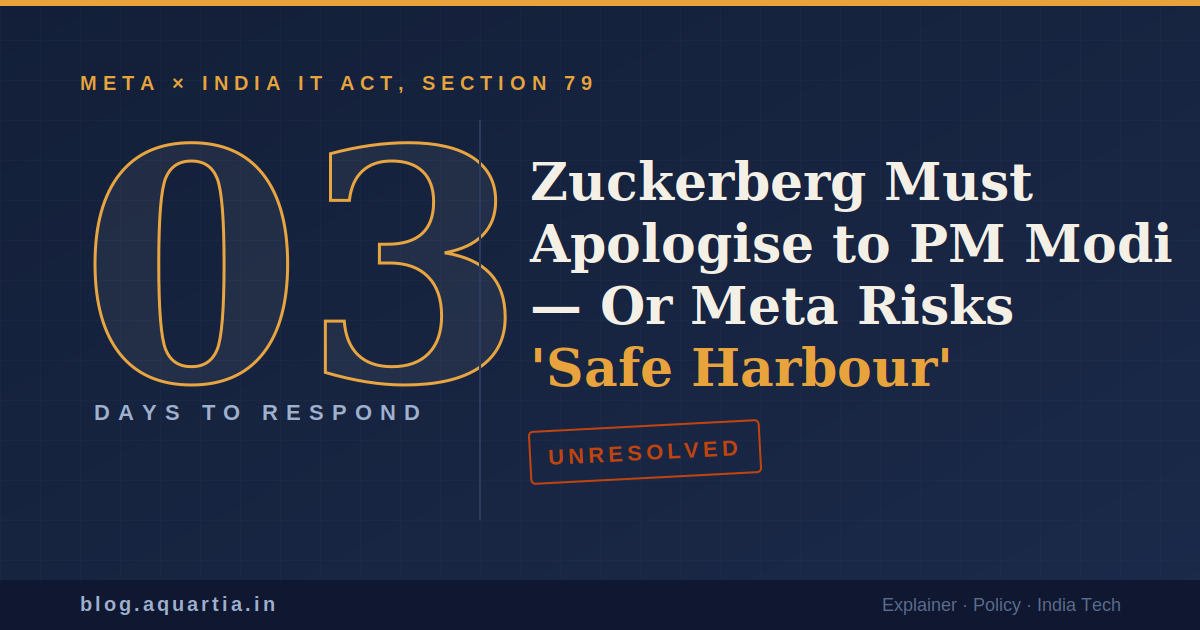
Meta CEO Mark Zuckerberg has been handed a firm three-day deadline by an Indian parliamentary panel: apologise personally to Prime Minister Narendra Modi over the temporary removal of his Facebook video, or risk seeing the company’s legal “safe harbour” protection withdrawn. Here’s the full story, explained simply.
What Actually Happened
On July 23, PM Modi posted a direct video message to Gen Z addressing student protests over the alleged NEET-UG paper leak. The video went up on Instagram and Facebook. On Facebook, however, it disappeared for close to five to six hours before being restored.
Meta told the government the removal was caused by a technical glitch, and it apologised to Indian officials for the error. But that explanation didn’t satisfy lawmakers.
Why the Government Isn’t Convinced
The Parliamentary Standing Committee on Communications and Information Technology, chaired by BJP MP Nishikant Dubey, called Meta’s “technical glitch” excuse inadequate — especially since the video came from the Prime Minister’s own verified account. Officials from the IT Ministry (MeitY) and Home Ministry questioned:
- Whether the removal was purely automated or involved human review
- Why restoration took nearly five hours
- Whether verified government accounts need stronger safeguards going forward
At a meeting with Meta’s Chief Global Affairs Officer Joel Kaplan and policy head Kevin Martin, IT Secretary S. Krishnan reportedly warned that continued non-compliance could cost Meta its protections under Section 79(3) of the IT Act.
The Three-Day Ultimatum
In a formal letter to the IT Secretary, the committee demanded an unconditional, personal apology from Zuckerberg within three days of receiving the communication. If that apology doesn’t arrive, the letter states that Meta’s safe harbour immunity could be withdrawn, and the company could be treated as a “publisher” rather than a neutral intermediary — opening it up to direct legal liability for content on its platforms.
Dubey also pointed to a past incident, referencing Zuckerberg’s 2024 remarks about Indian elections that were later walked back, to argue this isn’t an isolated case.
What Is ‘Safe Harbour’ — and Why Does It Matter?
Under Section 79 of India’s IT Act, platforms like Facebook, Instagram, and YouTube are treated as intermediaries, not publishers. This “safe harbour” shields them from legal liability for content users post — as long as they follow due-diligence rules and remove flagged content when required.
Losing this protection would be a major blow to Meta. It would mean the company could be held directly responsible, as a publisher, for everything hosted on its platforms in India — a far heavier legal and compliance burden.
What Happens Next
The clock is ticking on the three-day window. Meta has already apologised for the technical error, but the committee is specifically asking for a personal statement from Zuckerberg himself. Whether that apology comes — and whether the government considers it “unqualified” enough — will determine if this stays a diplomatic spat or escalates into a genuine regulatory standoff over one of India’s most-used platforms.
FAQs
1. Why did the government give Meta only three days to apologise? The parliamentary committee felt Meta’s initial explanation (a “technical glitch”) was insufficient given that the video belonged to the Prime Minister’s official account, and set a short deadline to force a clear, accountable response.
2. What is “safe harbour” protection under Indian law? It’s the legal immunity given to online platforms under Section 79 of the IT Act, which protects them from liability for user-generated content as long as they meet compliance requirements.
3. Has Meta already apologised for the video removal? Yes, Meta apologised to the Indian government for the error and said the video was removed and restored due to an automated technical issue. The committee wants a separate, personal apology from Zuckerberg himself.
4. What could happen if Meta doesn’t comply within three days? The committee has warned that Meta’s safe harbour protection under Section 79(3) could be withdrawn, and the company could face action as a “publisher” rather than an intermediary.
5. Which video sparked this controversy? A Facebook video of PM Modi addressing Gen Z on the NEET-UG paper leak protests, posted on July 23, which was inaccessible on Facebook for nearly five to six hours before being restored.
6. Who is leading the parliamentary panel behind this demand? The Parliamentary Standing Committee on Communications and Information Technology, chaired by BJP MP Nishikant Dubey.
Sources:
- The Tribune — ‘Apologise in 3 days or lose safe harbour’
- Business Standard — BJP MP’s warning to Meta
- The Logical Indian — Parliament gives Meta 3-day deadline
You may also like (internal links — replace with your live blog.aquartia.in URLs):



+ There are no comments
Add yours