Key Highlights:
- 547,380 DRE installations nationwide impacting 37 million livelihoods across agriculture and textile sectors, with market potential worth ₹4 lakh crore creating substantial opportunities for rural economic transformation
- Odisha leads with 11,000 DRE technologies deployed with potential for 7 lakh products creating 43,577 FTE jobs by 2030, generating ₹10,950 crore market opportunity in single state
- 71% of DRE users reported 35% increase in income post-adoption, demonstrating significant livelihood impact while empowering women through increased participation in entrepreneurial ventures
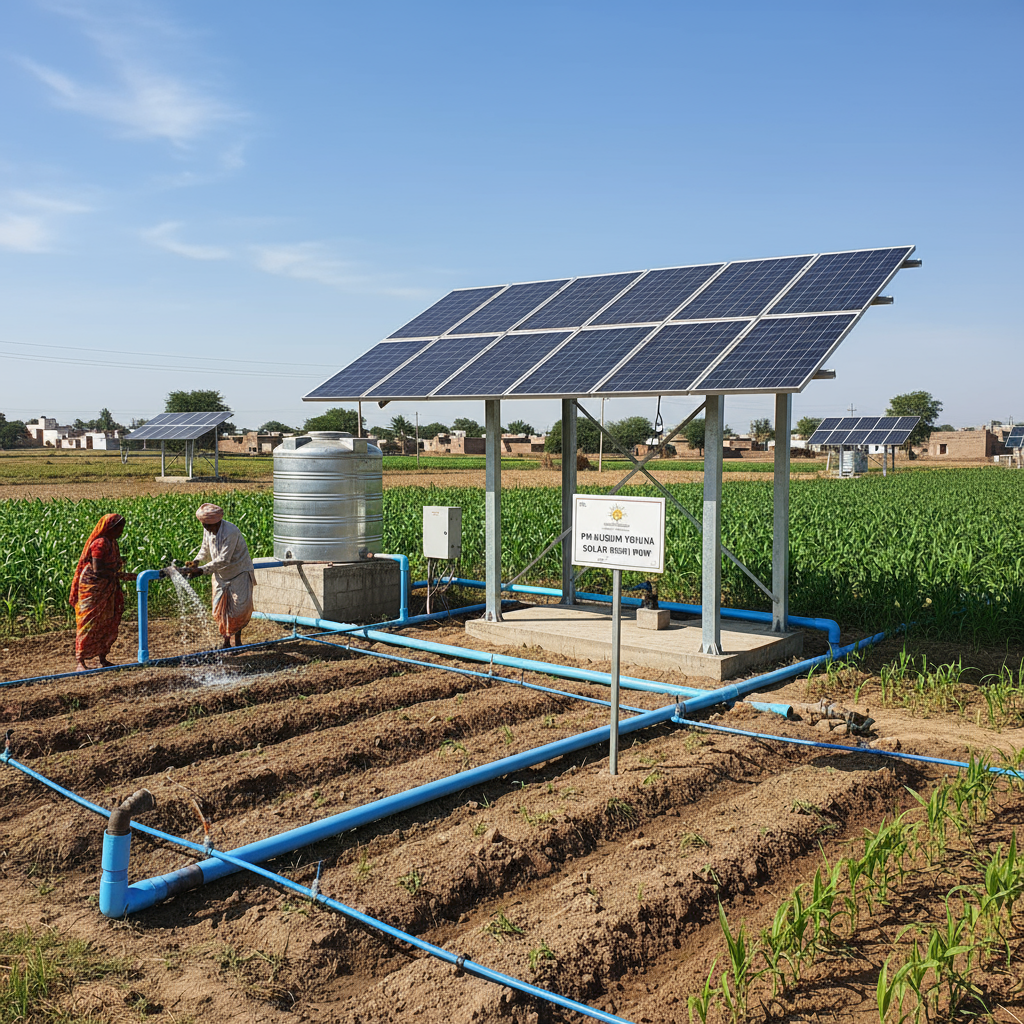
- PM-KUSUM scheme provides 75% total subsidy (30% central + 45% state) for solar water pumps, supporting farmers with 3HP to 10HP capacity systems under component-wise implementation
- CSE’s three-day residential programme at AAETI Rajasthan targets state energy departments, panchayati raj officials, and women candidates with fully sponsored training covering techno-economic feasibility and implementation challenges
The Rural Energy Revolution Takes Center Stage
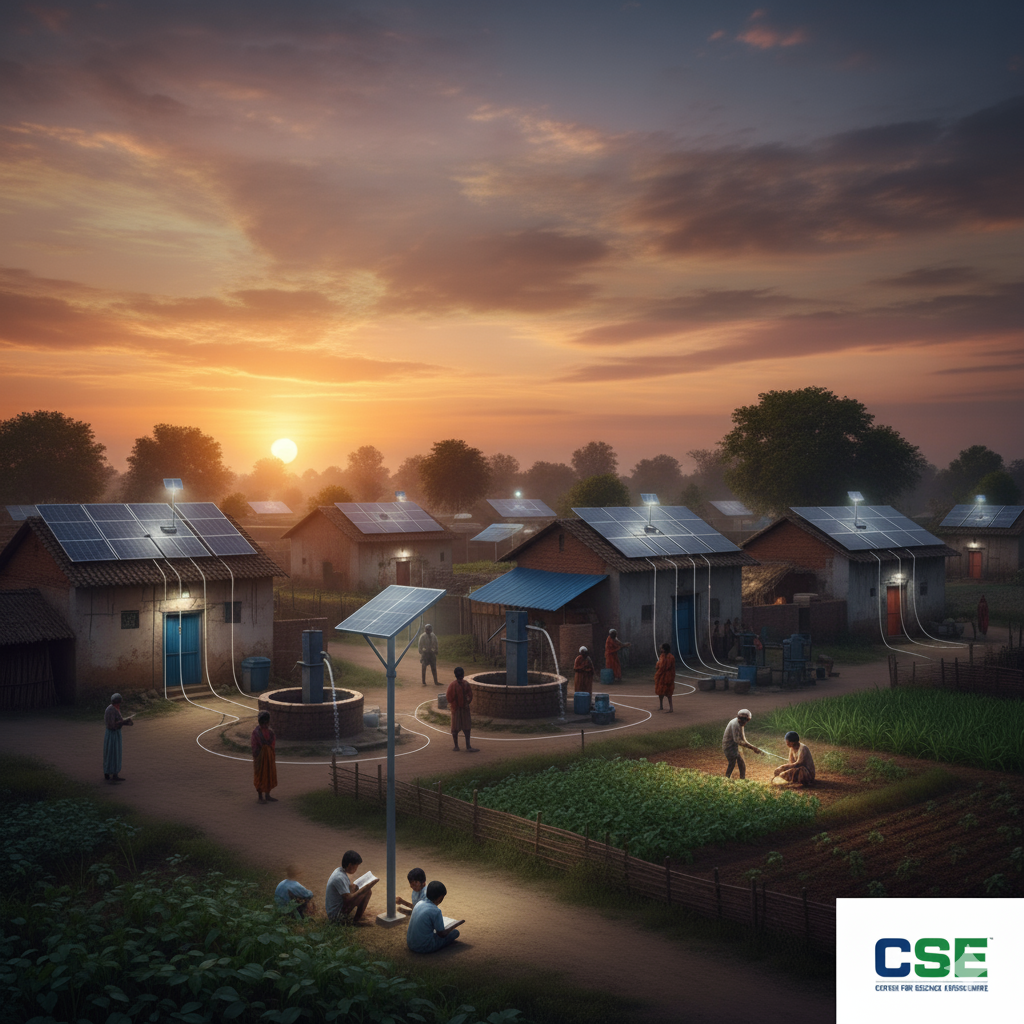
India stands at the crossroads of a renewable energy revolution that promises to transform rural lives and accelerate sustainable development across the country. With 65% of the population residing in rural areas and 47% dependent solely on agriculture for livelihoods, the scope of Decentralised Renewable Energy (DRE) in promoting development services in the rural economy is enormous. Rising electricity demand and infrastructure challenges necessitate innovative decentralized solutions that can leapfrog traditional grid-based electrification constraints.
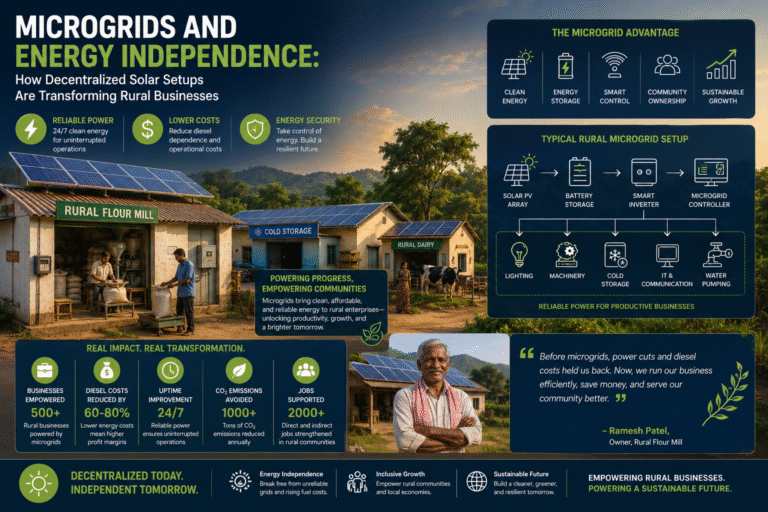
The numbers tell a compelling story: 547,380 DRE installations currently operate across India, impacting 37 million livelihoods across agriculture and textile sectors with a market potential worth ₹4 lakh crore. This represents not just technological deployment but a fundamental transformation of how rural India accesses energy, generates income, and builds sustainable communities.
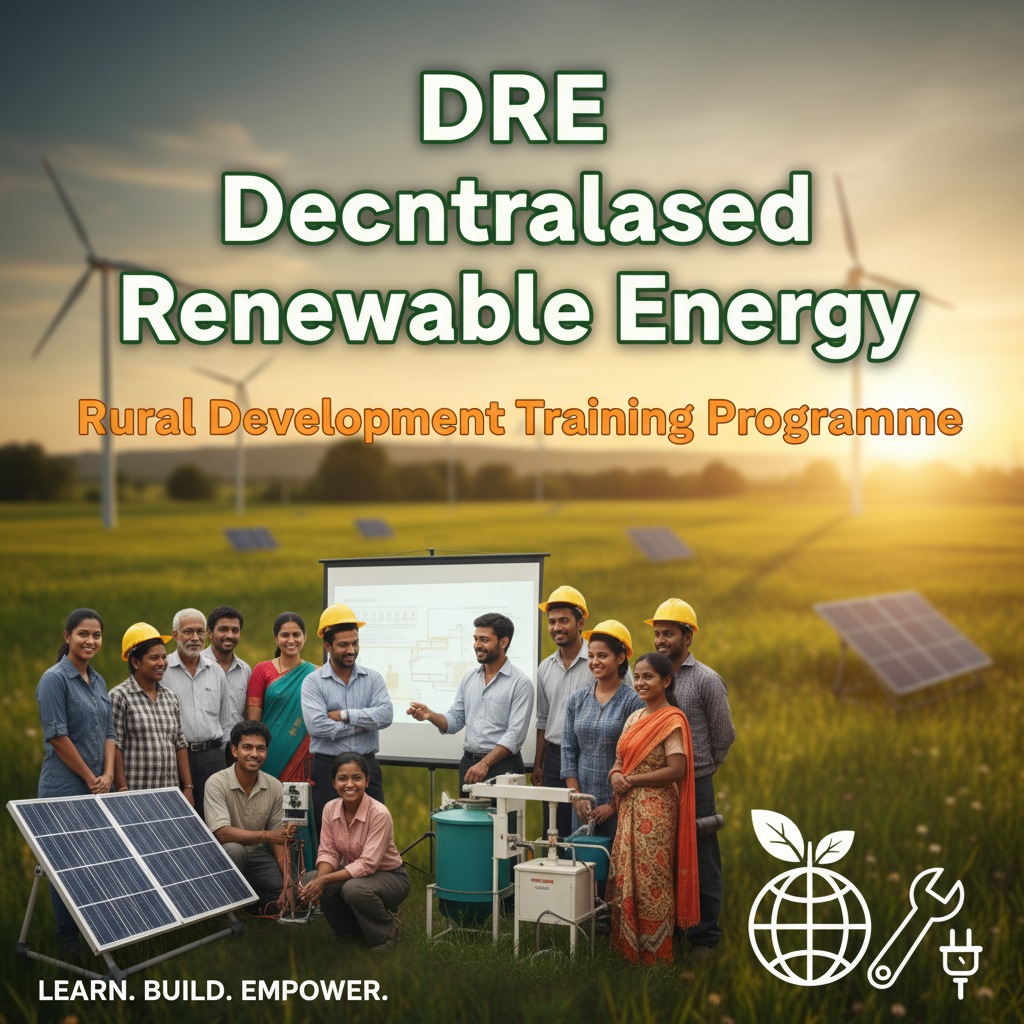
The Centre for Science and Environment (CSE) recognizes this transformative potential through its comprehensive three-day residential training programme on “Decentralised Renewable Energy for Rural Development”. Conducted at the Anil Agarwal Environment Training Institute (AAETI) in Neemli, Rajasthan, this programme equips grassroots organizations with critical skills to understand challenges, techno-economic feasibility, and financial viability of DRE systems.
Understanding DRE’s role in rural development becomes essential as it represents the intersection of energy policy, rural development, climate action, and social empowerment – themes central to contemporary governance challenges in India.
Understanding Decentralised Renewable Energy: Beyond Grid Dependency
Defining DRE and Its Applications
Decentralised Renewable Energy (DRE) refers to electric power sources connected directly to distribution networks or at consumer end using local renewable resources including biomass, water, sunlight, and wind. Unlike centralized grid-based systems, DRE operates through off-grid or mini-grid models that provide energy independence and resilience to rural communities.
Key DRE Technologies Currently Deployed:
- Solar water pumps for irrigation and water lifting
- Micro-grids and mini-grids for community electrification
- Solar-powered silk reeling machines supporting textile livelihoods
- Solar dryers for agricultural produce processing
- Cold storage facilities powered by renewable energy
- Biomass plants utilizing local agricultural waste
The distinction between centralized and decentralized systems is fundamental: while traditional grids require extensive transmission infrastructure and centralized generation, DRE systems operate locally, reducing transmission losses and providing energy security to remote communities beyond grid reach.
Current Deployment Statistics and Geographic Distribution
India currently has 12 mature DRE technologies with significant deployment across multiple states:
National Deployment Overview (as per MNRE data):
- Solar lanterns: 1,01,82,598 units
- Home lights: 17,23,479 units
- Street lights: 9,44,802 units
- Solar pumps: 5,01,673 units
- SPV plants: 217 MWp capacity
- Family-type biogas plants: 50,80,616 units ruralelec
Leading States in DRE Adoption:
- Uttar Pradesh: Highest estimated future adoption potential
- West Bengal, Bihar, Gujarat: Strong deployment in agriculture
- Maharashtra, Madhya Pradesh, Karnataka: Diverse technology applications
- Odisha: 11,000 DRE technologies deployed with 7 lakh products potential
Odisha emerges as a model with 43,577 Full-Time Equivalent (FTE) jobs projected by 2030 and ₹10,950 crore market opportunity demonstrating scalable impact across other states.
Socio-Economic Significance: Transforming Rural Livelihoods
Income Enhancement and Livelihood Impact
DRE adoption delivers measurable economic benefits: 71% of users reported 35% increase in income after adopting DRE technologies. This income enhancement stems from multiple pathways: fairplanet
Direct Income Generation:
- Reduced operational costs through elimination of diesel dependency
- Extended working hours through reliable electricity access
- Value addition to agricultural produce through processing capabilities
- New entrepreneurial opportunities in renewable energy services
Regional Economic Development:
DRE promotes non-farm employment, improved public services, and increased electricity reliability while simultaneously creating jobs in the green economy. Rural electrification with renewable energy aids regional economic development by diversifying income sources beyond traditional agriculture.
Women’s Empowerment Through Energy Access
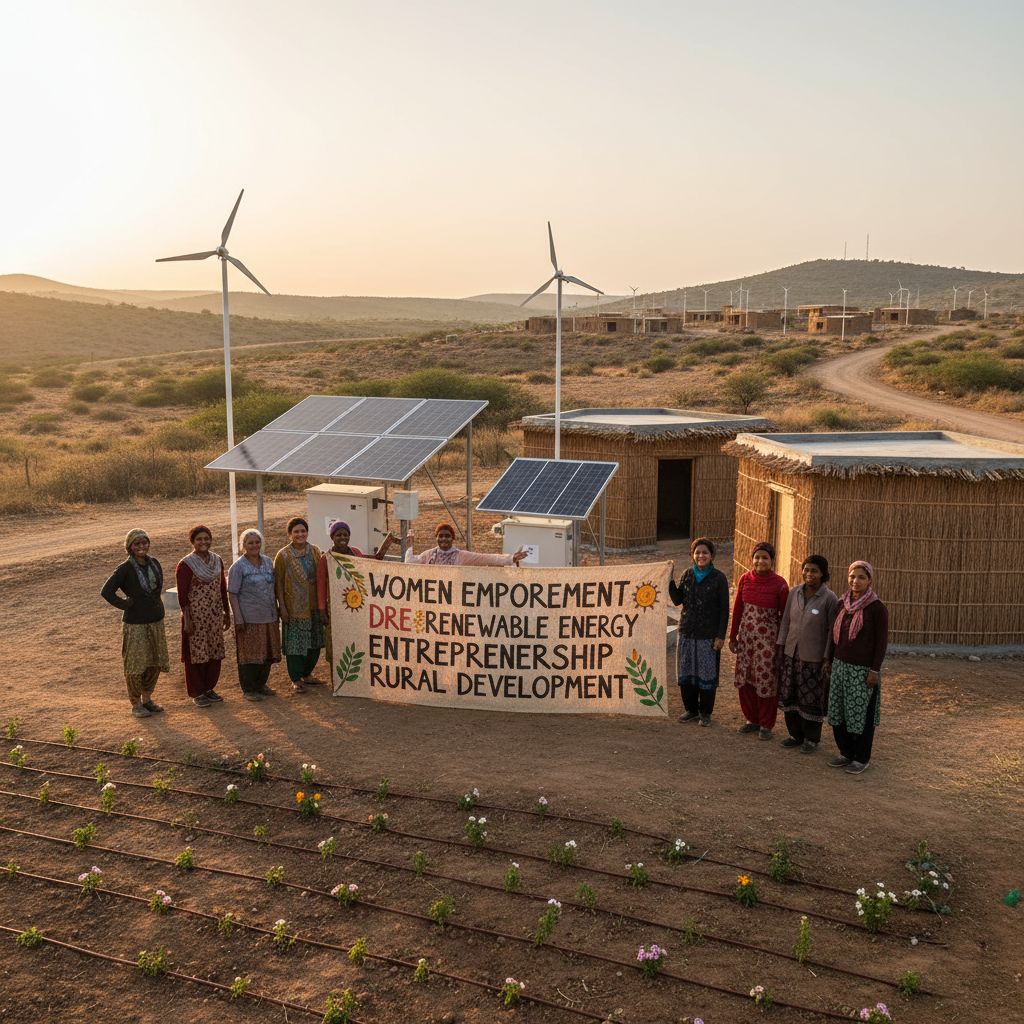
Women’s participation in entrepreneurial ventures has increased significantly with DRE deployment. Energy access removes traditional barriers to women’s economic participation:
Empowerment Pathways:
- Home-based enterprises becoming viable through reliable electricity
- Extended productive hours for income-generating activities
- Reduced drudgery in household tasks freeing time for economic activities
- Technical skills development in renewable energy maintenance and operation
Maharashtra’s women collectives demonstrate successful renewable energy-based income generation with significant economic multiplier effects, creating replicable models for other states.
Agricultural Productivity and Food Security
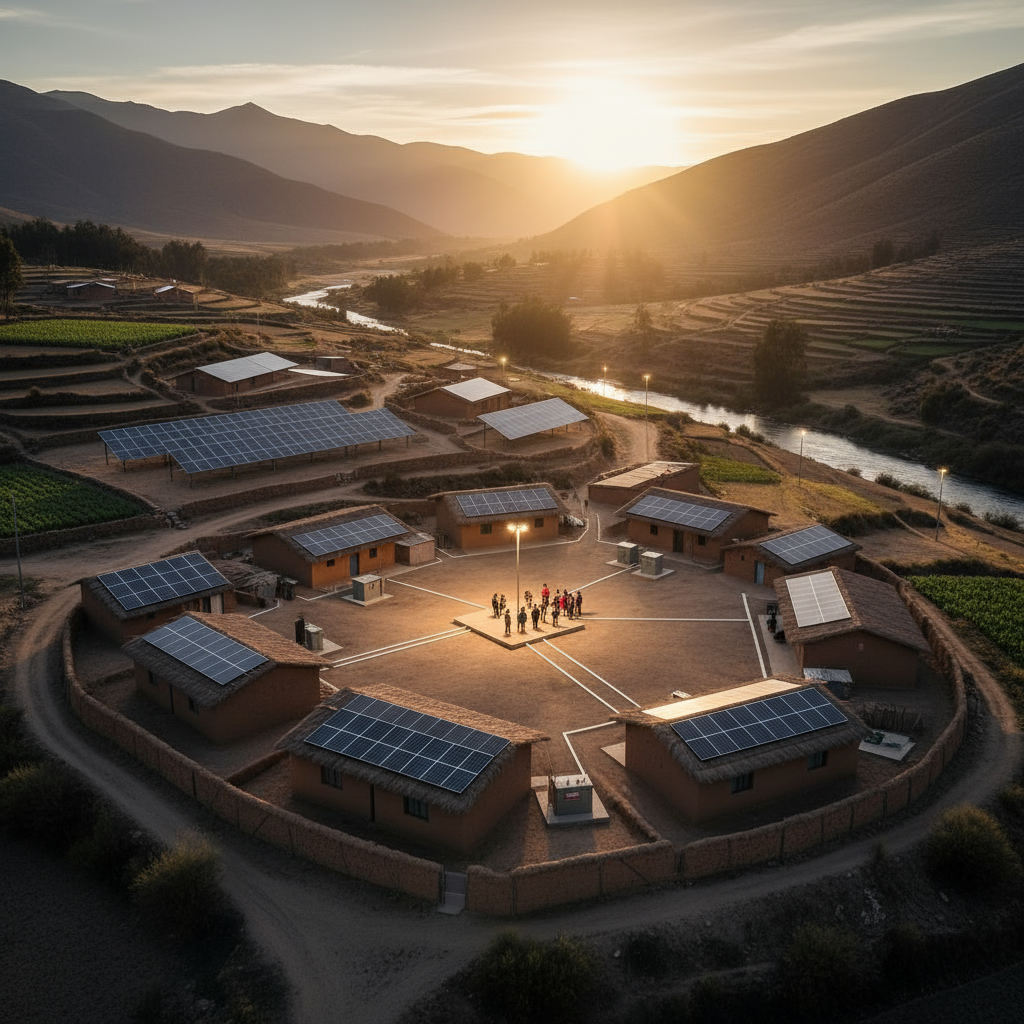
DRE technologies particularly solar water pumps are revolutionizing agricultural productivity:
Productivity Enhancements:
- Reliable irrigation independent of grid availability
- Reduced input costs through elimination of diesel pumps
- Improved crop yields through timely irrigation
- Post-harvest loss reduction through solar-powered cold storage
Food Processing Applications:
- Solar dryers enabling value addition to agricultural produce
- Cold storage facilities extending shelf life and market reach
- Agro-processing units powered by renewable energy
Policy and Regulatory Framework: Government Support Architecture
PM-KUSUM: The Flagship Solar Agriculture Programme
Pradhan Mantri Kisan Urja Suraksha evam Utthaan Mahabhiyan (PM-KUSUM) represents India’s most ambitious solar agriculture initiative:
Component Structure:
- Component-A: 10,000 MW decentralized grid-connected renewable power plants on barren land
- Component-B: 17.50 lakh stand-alone solar agriculture pumps
- Component-C: 10 lakh grid-connected agriculture pump solarization india.gov
Financial Support Framework:
- Central Financial Assistance: 30% of benchmark cost
- State Government subsidy: 30% additional support
- Farmer contribution: 40% with bank loan facility at concessional rates
Haryana demonstrates enhanced support with 75% total subsidy (30% central + 45% state) for 3HP to 10HP solar pumps, making adoption highly attractive for farmers.
Extended Timeline: The scheme has been extended until March 31, 2026 with ₹500 crore allocated budget and over 2.45 lakh farmers already benefited as of 2023.
MNRE’s Comprehensive Policy Framework
Ministry of New and Renewable Energy (MNRE) provides overarching policy support:
Key Schemes:
- Remote Village Electrification (RVE) scheme
- Village Energy Security Programme (VESP)
- DDG Policy by Ministry of Power promoting decentralized distributed generation
National Commitments Alignment:
- 500 GW renewable capacity target by 2030
- Net Zero emissions target by 2070
- 40% non-fossil fuel installed capacity by 2030 under INDCs
Electricity Act 2003: Legal Foundation
The Electricity Act 2003 provides the legal framework promoting renewable energy-based electrification and decentralized generation. This legislative foundation enables states to develop supportive policies for DRE deployment while ensuring regulatory clarity for investors and developers.
CSE Training Programme: Building Capacity for Implementation
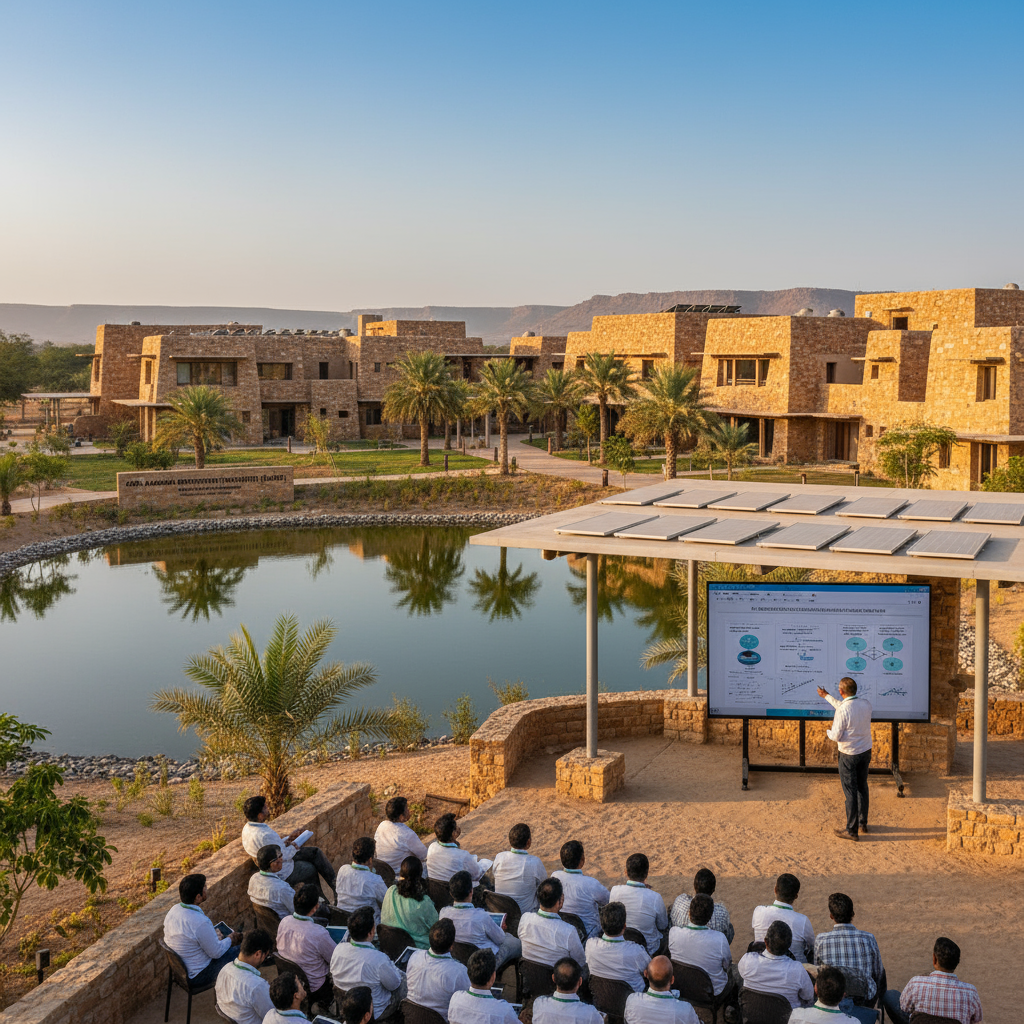
Programme Structure and Methodology
CSE’s three-day residential programme at AAETI, Neemli, Rajasthan employs comprehensive training methodology:
Training Components:
- Classroom lectures on DRE technologies and applications
- Case studies from successful implementations across India
- Group exercises for collaborative learning
- Expert discussions with practitioners and policymakers
- Field exposure visits to operational DRE installations
Course Coverage Areas:
- Techno-economic feasibility assessment methods
- Financial viability analysis and investment planning
- Implementation challenges and mitigation strategies
- Tailored solutions for specific regional contexts
Target Participants and Inclusivity Focus
The programme specifically targets:
- State energy departments and nodal agencies
- Rural development agencies and officials
- Panchayati raj institutions and local governance bodies
- Civil society organizations and grassroots groups
- Entrepreneurs and technology service providers
- Women candidates with special encouragement for participation
Financial Support: Fully sponsored by CSE for government officials, state department representatives, and non-profit research institutes, with scholarships available for other participants. Course fee of ₹28,000 includes tuition, expert sessions, materials, boarding, lodging, site visits, and transport.
Certification and Capacity Building Outcomes
Certificate of Completion awarded by CSE provides formal recognition of skills acquired and knowledge gained. The programme equips participants with practical skills for implementing sustainable DRE solutions in diverse rural contexts.
Capacity Building Focus:
- Understanding regulatory frameworks and policy support mechanisms
- Assessing local energy needs and resource availability
- Designing appropriate technology solutions for specific contexts
- Financial planning and subsidy utilization strategies
Benefits of DRE for Rural Development: Comprehensive Impact Analysis
Energy Access and Grid Independence
DRE technologies address critical energy access challenges in remote areas beyond grid reach:
Access Benefits:
- 24/7 electricity availability independent of grid reliability issues
- Reduced dependence on diesel generators and kerosene lighting
- Energy security for productive uses and household needs
- Scalable deployment based on community requirements
Barapita village in Odisha serves as India’s first 100% solar-powered village, providing lessons on community engagement and sustainable maintenance models.
Climate Mitigation and Green Economy
DRE deployment contributes significantly to climate mitigation while creating green economy jobs:
Environmental Benefits:
- Reduced carbon footprint through elimination of diesel consumption
- Local pollution reduction improving air quality in rural areas
- Sustainable resource utilization through biomass and solar energy
- Decarbonization of agriculture through solar-powered irrigation and processing
Green Job Creation: DRE sector generates employment opportunities in manufacturing, installation, maintenance, and service provision, contributing to India’s green economy transition.
Productivity Enhancement and Economic Multipliers
DRE adoption creates multiple economic multipliers:
Productivity Gains:
- Reduced drudgery through mechanization of agricultural processes
- Improved operational efficiency in farming and rural enterprises
- Extended productive hours through reliable lighting and power access
- Quality improvement in agricultural produce through better processing
Value Chain Development:
- Forward linkages with processing and marketing activities
- Backward linkages with technology manufacturing and service sectors
- Skills development opportunities in renewable energy maintenance
Challenges and Implementation Barriers
Infrastructure and Technical Challenges
Despite significant progress, DRE deployment faces multiple challenges:
Infrastructure Gaps:
- Lack of local infrastructure for mini-grid deployment in remote rural areas
- Limited technical expertise for system design and installation
- Inadequate maintenance facilities and spare parts availability
- Grid connectivity challenges requiring coexistence of islanding and anti-islanding mechanisms
Technical Issues:
- Equipment reliability in harsh rural environments
- Lack of trained personnel for system upkeep and troubleshooting
- Standardization challenges across different technology providers
Financial and Awareness Barriers
Financial Constraints:
- High upfront costs despite government subsidies
- Limited access to lower-interest, longer-term loans
- Working capital requirements for system operation and maintenance
- Dual-tariff issues affecting financial viability
Awareness Deficit: 91% of users received subsidized technologies without prior awareness about technology capabilities and maintenance requirements. This awareness gap affects long-term sustainability and optimal utilization.
Policy and Regulatory Gaps
Policy Challenges:
- Absence of mechanisms to de-link financial viability from high consumer tariffs
- Complex subsidy processes requiring streamlined procedures
- Limited integration between various government schemes
- Inadequate data collection and monitoring systems
Regulatory Issues:
- Grid integration standards for hybrid systems
- Quality certification requirements for imported components
- Environmental clearance processes for biomass projects
Case Studies and Best Practices: Learning from Success
Odisha: The DRE Pioneer State
Odisha emerges as a leader in DRE deployment with comprehensive implementation:
Achievement Metrics:
- 11,000 DRE technologies currently deployed
- 7 lakh products potential by 2030
- 43,577 FTE jobs projected creation
- ₹10,950 crore market opportunity within single state
Success Factors:
- Strong state government support and policy framework
- Effective coordination between various departments
- Community engagement and local ownership models
- Technical capacity building at grassroots level
Solar Silk Reeling: Technology-Livelihood Integration
Chhattisgarh and Odisha demonstrate successful integration of solar-powered silk reeling machines:
Impact Assessment:
- Technology adoption driven by income-generation potential
- Women’s participation in traditional silk production enhanced through modern technology
- Quality improvement in silk products through consistent power supply
- Market linkages strengthened through reliable production capacity
Replication Potential: Solar silk reeling models can be adapted across silk-producing regions in Karnataka, Tamil Nadu, and West Bengal.
Tamil Nadu: Hybrid Renewable Systems
Tamil Nadu’s approach to replacing old wind turbines with hybrid wind-solar plants demonstrates technology modernization strategies:
Modernization Benefits:
- Improved efficiency through technology upgrades
- Enhanced grid stability through hybrid generation
- Reduced maintenance costs with modern equipment
- Extended project life through systematic modernization
Role of Training and Capacity Building: The Human Element
Gandhian Approach to Rural Technology
CSE’s training philosophy draws from Gandhian principles and Nai Talim approach, training villagers as solar engineers for self-reliance. This bottom-up capacity building ensures local ownership and sustainable maintenance of DRE systems.
Community-Centric Training:
- Local language instruction for better comprehension
- Hands-on practical training using actual equipment
- Participatory approaches and need assessment for sustainability
- Gender-inclusive training programs with special focus on women
Digital Literacy and Skill Development
Technology adoption requires complementary skills in digital literacy and system management:
Skill Development Areas:
- Basic electronics and electrical maintenance
- System monitoring and performance optimization
- Financial management for energy enterprises
- Customer service and business development
Grassroots Organizations’ Role: Community-based organizations play crucial roles in last-mile implementation, social mobilization, and sustained operation of DRE systems.
Policy Recommendations
Institutional Framework Strengthening
Coordination Enhancement:
- Better coordination between MNRE, state nodal agencies, and financing institutions
- Single-window clearance for DRE project approvals
- Integrated monitoring systems across various schemes and programmes
- Regular review mechanisms with stakeholder participation
Capacity Building Expansion: Scale up training programmes for officials, CSOs, and rural entrepreneurs following CSE’s comprehensive model with regional adaptation.
Financial and Fiscal Measures
Priority Sector Classification: Classify small DRE projects under priority sector lending for enhanced financial assistance and improved access to institutional credit.
Fiscal Incentives:
- Tax incentives for DRE manufacturing and service provision
- Feed-in tariffs for surplus power sale to grid
- Improved Renewable Energy Certificate (REC) mechanisms
- Direct benefit transfer for subsidy delivery
Hybrid System Support: Include hybrid renewable systems in subsidy frameworks recognizing their enhanced reliability and performance characteristics.
Technology and Innovation Support
Research and Development: Increased investment in DRE technology adaptation for Indian conditions with focus on affordability and durability.
Quality Assurance: Robust quality certification systems ensuring technology reliability and performance standards across different manufacturers and service providers.
Data-Driven Planning: Comprehensive monitoring and evaluation frameworks for impact assessment and course correction in policy implementation.
Integration with Rural Development
Anchor Load Strategy: Link DRE deployment with MSME schemes and agricultural programmes to ensure productive energy use and sustainable demand.
Infrastructure Integration: Coordinate DRE deployment with rural infrastructure development, irrigation modernization, and industrial cluster development.
Market Linkage Support: Strengthen value chains connecting DRE-enabled production with urban markets and export opportunities.
Sustainability and Future Outlook: Long-Term Vision
Financial Sustainability Models
Sustainable DRE deployment requires robust financial models:
Revenue Generation:
- Regular cash flows through productive use of energy
- Community ownership models ensuring local investment and maintenance
- Anchor customer strategies providing stable demand and revenue
- Value-added services including equipment financing and technical support
Participatory Approaches: Community participation in planning, implementation, and operation ensures long-term sustainability and local ownership.
Climate Goals and Energy Security
DRE deployment serves as pathway to multiple national objectives:
Climate Commitments:
- 500 GW renewable capacity target by 2030
- Net Zero emissions goal by 2070
- NDC commitments under Paris Agreement
- SDG 7 (affordable and clean energy) achievement
Energy Security Benefits:
- Reduced import dependence for energy needs
- Distributed generation enhancing grid resilience
- Local resource utilization for energy independence
- Rural energy access supporting inclusive development
Integration with National Development Programs
DRE integration with broader development initiatives:
- Smart Village programmes incorporating renewable energy solutions
- Digital India enabling remote monitoring and management
- Skill India providing technical training for green jobs
- Make in India promoting domestic manufacturing of DRE components
Conclusion: Energizing Rural India’s Sustainable Future
CSE’s residential training programme on Decentralised Renewable Energy represents a critical intervention in India’s rural development landscape, addressing the nexus between energy access, livelihood enhancement, and sustainable development. With 547,380 DRE installations already impacting 37 million livelihoods and a market potential worth ₹4 lakh crore, the transformative potential of this sector is undeniable.
The evidence is compelling: 71% of DRE users reporting 35% income increases demonstrates tangible economic impact while women’s empowerment through energy entrepreneurship showcases social transformation potential. Odisha’s success with 11,000 DRE technologies creating pathways for 43,577 jobs provides a replicable model for other states seeking sustainable rural development.
CSE’s comprehensive training approach at AAETI Rajasthan addresses critical capacity building needs by equipping stakeholders with practical skills for implementing sustainable DRE solutions. The fully sponsored programme targeting government officials, panchayati raj institutions, and women candidates ensures inclusive participation and widespread knowledge dissemination.
However, challenges remain formidable: infrastructure gaps, financial constraints, and awareness deficits require coordinated policy interventions and sustained capacity building efforts. The 91% of users lacking prior awareness about DRE technologies highlights the critical importance of training programmes like CSE’s initiative in building informed communities capable of sustaining technological interventions.
For UPSC aspirants and governance professionals, DRE represents the intersection of multiple policy domains – energy security, rural development, climate action, women’s empowerment, and sustainable livelihoods. Understanding how technologies like solar pumps, micro-grids, and biomass plants can simultaneously address energy access, income generation, and environmental sustainability becomes essential for effective governance in the 21st century.
The PM-KUSUM scheme’s extension until 2026 with ₹500 crore allocation and enhanced state support creating 75% total subsidies demonstrates government commitment to scaling DRE adoption. Success depends on effective implementation through trained human resources capable of bridging technology and community needs.
DRE represents more than technological deployment – it embodies India’s vision of inclusive, sustainable development that empowers rural communities while advancing national climate commitments. The 500 GW renewable capacity target by 2030 and Net Zero by 2070 require massive rural participation that DRE can facilitate through decentralized, community-owned energy systems.
The path forward requires collaboration: government policy support, private sector innovation, civil society capacity building, and community ownership must converge to realize DRE’s transformative potential. CSE’s training programme provides the human foundation for this convergence, building skilled cadres capable of implementing and sustaining rural energy transformation.





+ There are no comments
Add yours