Key Highlights
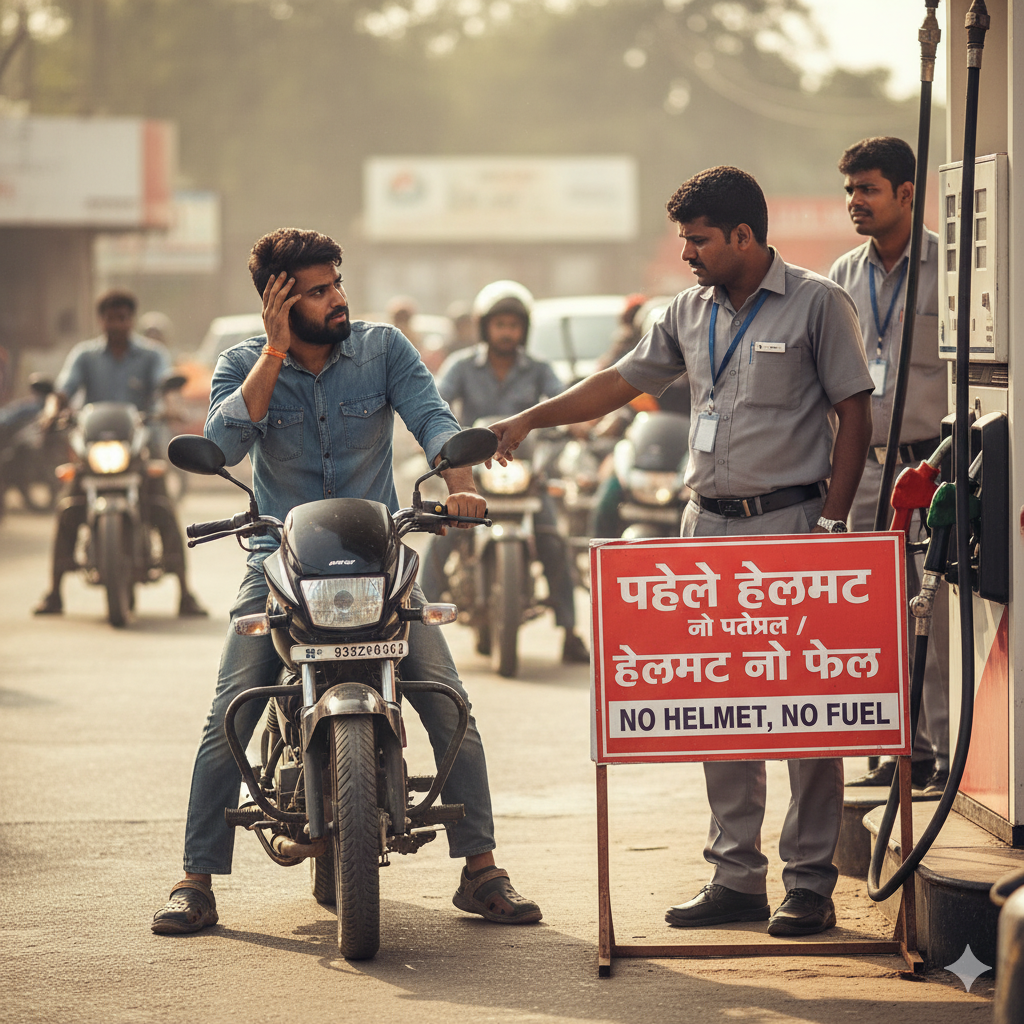
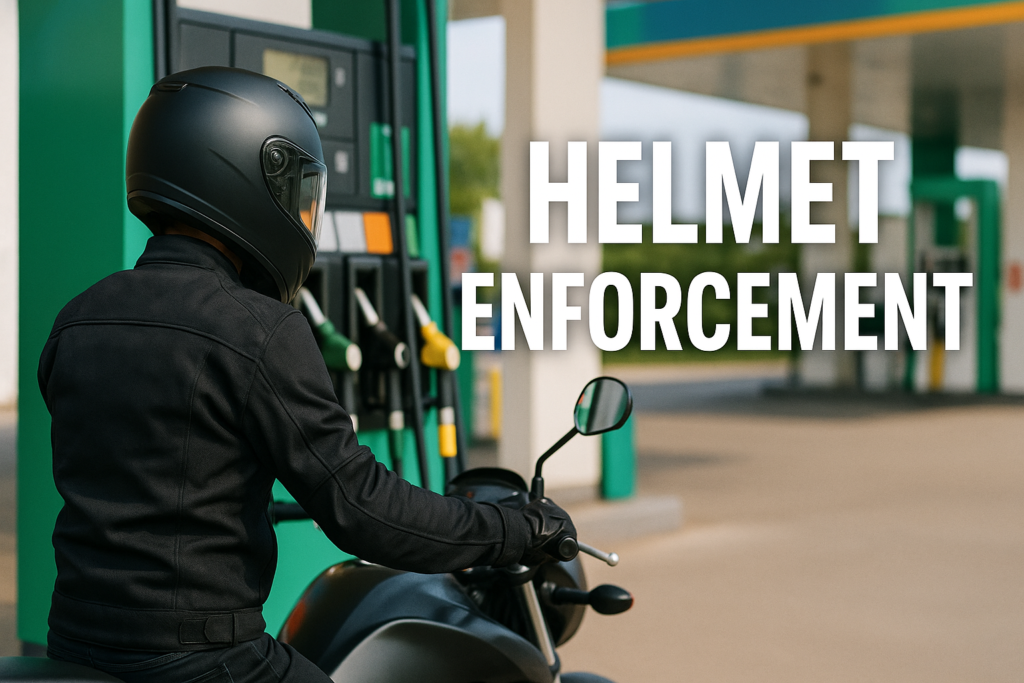
- UP launches month-long ‘No Helmet No Fuel’ campaign targeting 24,118 annual road deaths with petrol pump enforcement
- Campaign builds on Motor Vehicle Act 2019 imposing ₹1,000 fine plus 3-month license suspension for helmet violations
- District Road Safety Committees coordinate enforcement across transport, police, revenue departments with petrol dealers
- BIS crackdown reveals 95% of cheap helmets under ₹110 lack safety certification, contributing to 30,000 annual deaths
- Initiative follows successful pilot programs showing increased helmet usage at fuel stations during refueling stops
Understanding UP’s Road Safety Crisis
Alarming Accident Statistics
Uttar Pradesh faces a catastrophic road safety emergency that demands immediate intervention. The state’s accident data reveals the severity of the crisis:
2024 Road Safety Statistics:
- 46,052 total accidents recorded across the state hindustantimes
- 24,118 fatalities representing massive human loss
- Two-wheeler riders account for 31% of all road deaths
- National highways contribute 36% of fatalities despite being only 2.1% of road length
Demographic Impact:
- 66% of deaths occur in 18-45 age group, affecting prime working population
- Peak accident hours: 3 PM to 6 PM when traffic volume is highest
- Speeding remains leading cause, responsible for nearly half of fatal crashes
National Context of Helmet Non-Compliance
India’s road safety crisis extends beyond UP, with nationwide implications:
National Statistics:
- 1.80 lakh annual road deaths across India udayindia
- 30,000 deaths specifically due to helmet non-compliance pib
- 21 crore two-wheelers on Indian roads
- Only 7 states have 50%+ helmet compliance among riders
Union Minister Nitin Gadkari’s revelation that “nearly 30,000 people died because they were not wearing a helmet” underscores the critical importance of helmet enforcement.
Campaign Design and Implementation Framework
Institutional Coordination Mechanism
District Road Safety Committees (DRSC) serve as the primary coordination body for campaign implementation.
DRSC Composition:
- 14-member committee structure headed by District Magistrate
- Multi-departmental representation: Transport, Police, Revenue, Administration
- Monthly physical meetings plus fortnightly virtual coordination
- Direct reporting to State Road Safety Council
Enforcement Partnership:
- Food and Civil Supplies Department: Monitoring fuel stations
- Information and Public Relations Department: Awareness campaigns
- Petrol Pump Dealers Association: Implementation support
Operational Guidelines and Protocols
Fuel Station Enforcement Procedure:
Refusal Protocol:
- Visual helmet verification by pump attendants before service
- No exceptions policy regardless of journey distance
- Police monitoring through frequent petrol pump visits
- Focus on borrowed helmets to prevent temporary compliance
Administrative Support:
- Chief Minister Yogi Adityanath emphasized non-punitive approach
- Transport Commissioner BN Singh requested public cooperation
- District administration completed necessary preparations
Legal Framework and Penalty Structure
Motor Vehicle Act 2019 Provisions
The campaign operates within strengthened legal framework under amended traffic laws:
Penalty Structure:
- ₹1,000 fine for helmet violation (increased from ₹100)
- 3-month license suspension authority for repeat offenders
- Section 194D specifically addresses helmet compliance
- State-wise variation in implementation and penalties
Legal Mandate:
- Section 129 of Motor Vehicle Act makes helmet mandatory for riders and pillion
- BIS certification requirement under IS 4151:2015 standard
- Quality specifications: 20-25mm thickness with superior foam
Comparative State-wise Penalties
| State | Fine Amount | Additional Penalties |
|---|---|---|
| Uttar Pradesh | ₹1,000 | License suspension possible |
| Delhi | ₹1,000 | 3-month license suspension |
| Karnataka | ₹1,000 | 3-month license suspension |
| Maharashtra | ₹1,000 | 3-month license suspension |
| Telangana | ₹200 | Lower penalty structure |
| Andhra Pradesh | ₹200 | Reduced fine amount |
The Fake Helmet Crisis: A Silent Killer
BIS Certification and Quality Standards
The Bureau of Indian Standards (BIS) has identified a critical quality crisis in India’s helmet market.
Quality Control Findings:
- 95% of helmets under ₹110 may be structurally unsafe
- 176 licensed BIS manufacturers across India as of June 2025
- IS 4151:2015 standard mandatory since Quality Control Order 2021
BIS Enforcement Action:
- 30+ search and seizure operations in 2024-25
- 2,500+ non-compliant helmets seized from Delhi manufacturers
- 500 additional helmets seized from 17 retail locations
Scientific Helmet Design Requirements
Three-Layer Protection System:
- Hard plastic outer shell for penetration resistance
- Protective foam layer for energy absorption
- Comfort padding for proper fit and friction reduction
BIS Testing Standards:
- Impact resistance under controlled conditions
- Retention system strength to prevent detachment
- Temperature and moisture resistance for durability
- Abrasion and corrosion resistance for longevity
Market Dynamics and Consumer Awareness
Helmet Market Statistics:
- USD 2.12 billion market size in 2024
- 7.34% projected CAGR through 2032
- Expected market value: USD 3.08 billion by 2030
Consumer Education Initiatives:
- BIS Care App for manufacturer verification
- Quality Connect campaigns led by Manak Mitras volunteers
- Public roadshows with free certified helmet distribution
Enforcement Challenges and Practical Considerations
Implementation Hurdles
Operational Challenges:
- Confrontations at fuel stations between staff and non-compliant riders
- Training requirements for petrol pump employees
- Coordination complexity across multiple departments
- Rural vs urban compliance disparities
Behavioral Change Barriers:
- Temporary helmet borrowing at fuel stations
- Style preferences over safety considerations
- Cost-conscious purchasing leading to fake helmet adoption
- Enforcement fatigue after campaign period ends
Success Indicators from Pilot Programs
Pilot Project Outcomes:
- Increased helmet usage observed at fuel stations during January trials
- Behavioral modification through repeated exposure
- Positive public response despite initial resistance
Stakeholder Feedback:
- Petrol Pump Dealers Association support for initiative
- Mixed public reactions on social media platforms
- #NoHelmetNoFuel hashtag gaining traction for awareness
District Road Safety Committee Role and Functionality
Institutional Framework
DRSC Mandate under Motor Vehicle Act:
- Section 215(3) requires state-level DRSC constitution
- Supreme Court Committee on Road Safety standardized structure in March 2022
- 33 states/UTs notified DRSC compliance
- 18 states confirmed functional committee operations
Key Responsibilities:
- Periodic accident review in respective districts
- Road safety policy monitoring and implementation oversight
- Accident-prone area identification for preventive measures
- Public crash data publishing through district portals
Meeting and Reporting Structure:
- Monthly physical meetings plus fortnightly virtual sessions
- 48-hour public disclosure of meeting minutes
- MoRTH web portal uploads in approved formats
- State Road Safety Council reporting on quarterly basis
Technology Integration and Modern Solutions
Digital Enforcement Tools
eDAR (Electronic Detail Accident Reporting) System:
- Real-time accident data collection and analysis
- Black spot identification through analytics
- Policy formulation support with data-driven insights
- Accident claim processing efficiency improvement
Consumer Verification Systems:
- BIS Care App for helmet authenticity checks
- Manufacturer license verification through BIS portal
- Consumer complaint mechanisms for fake product reporting
Awareness and Education Campaigns
Multi-channel Approach:
- Social media campaigns with hashtag #RoadSafetyUP
- Traditional media outreach through Information Department
- Community engagement via NGOs and civil society
- School and college programs targeting young riders
Economic and Social Impact Analysis
Economic Implications
Cost-Benefit Analysis:
- Healthcare cost savings from reduced accident injuries
- Productivity preservation by protecting working-age population
- Family financial security through breadwinner protection
- Insurance claim reduction benefiting the sector
Market Development:
- Helmet industry growth driven by compliance demand
- Job creation in manufacturing and retail sectors
- Innovation incentives for safety technology development
Social Transformation Potential
Behavioral Change Mechanisms:
- Habit formation through repeated compliance
- Social norm establishment making helmet use standard
- Peer pressure dynamics encouraging safety adoption
- Cultural shift toward responsible riding practices
Comparative Analysis: Global Best Practices
International Enforcement Models
Successful International Examples:
- Thailand’s helmet laws with strict enforcement protocols
- Vietnam’s mandatory compliance reducing traffic fatalities
- Malaysia’s fuel station model influencing UP’s approach
Adaptation for Indian Context:
- Federal structure consideration allowing state-level innovation
- Cultural sensitivity in enforcement approach
- Economic realities addressing affordability concerns
Future Implications and Scalability
Potential National Rollout
Replication Factors:
- UP’s success metrics will influence other states
- Central government support through MoRTH guidelines
- Industry readiness with established BIS framework
Two-Wheeler Helmet Manufacturers Association (2WHMA) Support:
- Production scale-up capacity to meet increased demand
- Quality assurance commitment from licensed manufacturers
- Distribution network expansion for rural accessibility
Long-term Road Safety Vision
Integration with National Policies:
- Vision Zero initiative alignment for fatality reduction
- UN Decade of Action targets for 2030
- Sustainable Development Goals contribution through safety improvement
Technology Integration:
- Smart helmet development with connectivity features
- AI-powered traffic monitoring for real-time enforcement
- IoT-enabled fuel stations for automated compliance checks
Challenges and Recommendations
Critical Success Factors
Implementation Requirements:
- Sustained political will beyond campaign duration
- Adequate training for enforcement personnel
- Public awareness campaigns addressing benefits
- Quality helmet availability at affordable prices
Monitoring and Evaluation:
- Data-driven assessment of accident reduction
- Compliance rate measurement across districts
- Stakeholder feedback incorporation for improvements
- Long-term behavioral change tracking
Policy Recommendations
Immediate Actions:
- Extend campaign duration beyond one month for habit formation
- Strengthen BIS enforcement against fake helmet manufacturers
- Enhance public awareness about helmet quality standards
- Provide subsidies for BIS-certified helmets to low-income users
Long-term Strategies:
- Integrate with vehicle registration requiring helmet proof
- Develop helmet rental systems at fuel stations
- Create helmet exchange programs for quality upgrades
- Establish state-level helmet quality monitoring units
The ‘No Helmet No Fuel’ campaign represents a bold experiment in behavioral economics applied to road safety. By linking an essential service (fuel) with safety compliance (helmet use), Uttar Pradesh has created an innovative enforcement mechanism that addresses the alarming 24,118 annual road deaths.
Success will depend on sustained implementation beyond the September campaign period, quality helmet accessibility, and multi-departmental coordination through District Road Safety Committees. The campaign’s focus on awareness over punishment aligns with global best practices in traffic safety management.
With 30,000 annual deaths nationwide attributed to helmet non-compliance, UP’s initiative could serve as a template for national road safety transformation. The BIS crackdown on fake helmets and strengthened enforcement framework under Motor Vehicle Act 2019 provide the necessary legal foundation.
The ultimate test lies in whether this month-long campaign translates into permanent behavioral change among UP’s two-wheeler riders, potentially saving thousands of lives and establishing a new paradigm for Indian road safety enforcement.





+ There are no comments
Add yours