For most of the last decade, language models spent roughly the same compute on every prompt—generating the next token in a single forward pass. In 2026, test-time compute scaling (also called inference-time scaling) has changed both AI accuracy and AI unit economics: models now pause to generate internal “thinking tokens,” verify intermediate steps, and backtrack before emitting a final answer (Blocksize, Taskade).
According to InfoQ’s 2026 trends data cited by 360DigitalTransformation, roughly two in three dollars of AI compute spend is shifting toward inference by the end of 2026. For engineering managers and FinOps teams, understanding how thinking tokens are billed is now essential.
Thinking Is a Billing Event, Not a Free Feature Flag
Many teams get surprised by their first reasoning-model invoice because internal thinking tokens are billed as output tokens—even when an API returns only a short summary of the reasoning trace (360DigitalTransformation). A 100-word visible answer can easily carry 3,000+ billed thinking tokens underneath.
| Dimension | Standard LLM (System 1) | Reasoning Model (System 2) |
|---|---|---|
| Inference Pattern | Single forward pass, next-token prediction | Generates internal reasoning trace, then answers (Taskade) |
| Typical Latency | Sub-second to ~2 seconds | 3–15 seconds on modern fast thinkers; up to 60s+ (AIMagicx) |
| Cost Metric | Price per visible output token | Cost per correct answer (including hidden thinking tokens) (360DigitalTransformation) |
| Best Workloads | Summarization, extraction, classification, chat | Algorithmic coding, math proofs, multi-step agent planning (Blocksize) |
Practical Cost-Control Rules for 2026
- Measure Cost per Correct Answer: Per-token pricing hides the multiplier of hidden thinking tokens. Track total spend divided by verified task success.
- Never Enable Reasoning Globally: Classification, entity extraction, and text formatting gain almost nothing from extended deliberation while paying full token cost (360DigitalTransformation).
- Cap Agent Loops: Pair reasoning models with deterministic turn limits and automated verifiers (unit tests, JSON schema checks).
Internal & Further Reading
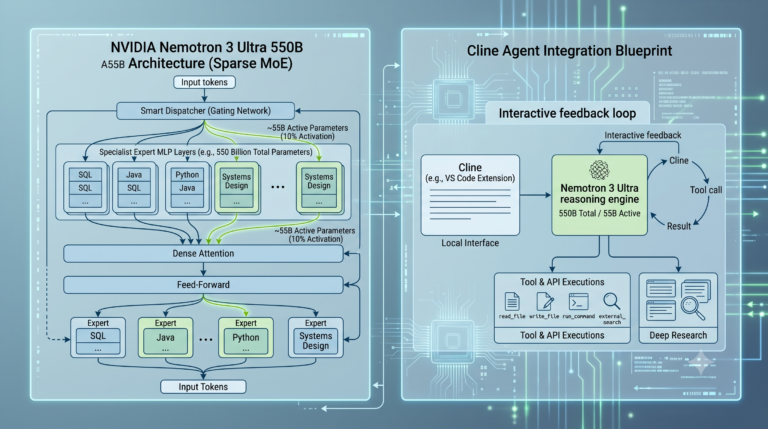
Compare cost-saving deployment strategies in our Small Language Models (SLMs) vs. LLMs for Business Guide and NVIDIA Nemotron 3 Ultra 550B A55B Guide.
Frequently Asked Questions
Are hidden thinking tokens billed in reasoning model APIs?
Yes—major provider APIs bill generated thinking tokens as output tokens even when only a condensed summary is displayed (360DigitalTransformation).
When does test-time compute pay for itself?
It pays off on verifiable multi-step problems—such as debugging, math, and agent planning—where a wrong intermediate step would otherwise waste downstream tool calls (Blocksize).



+ There are no comments
Add yours