Key Highlights:
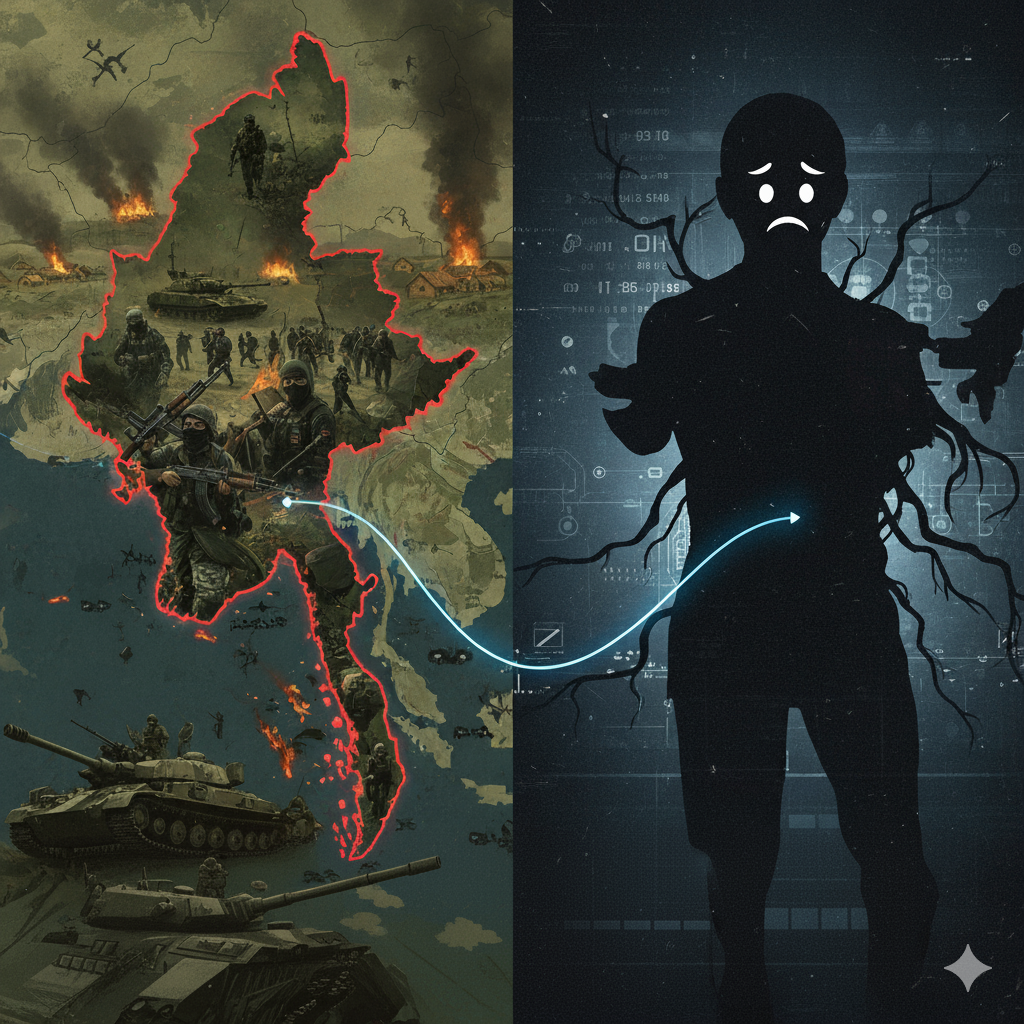
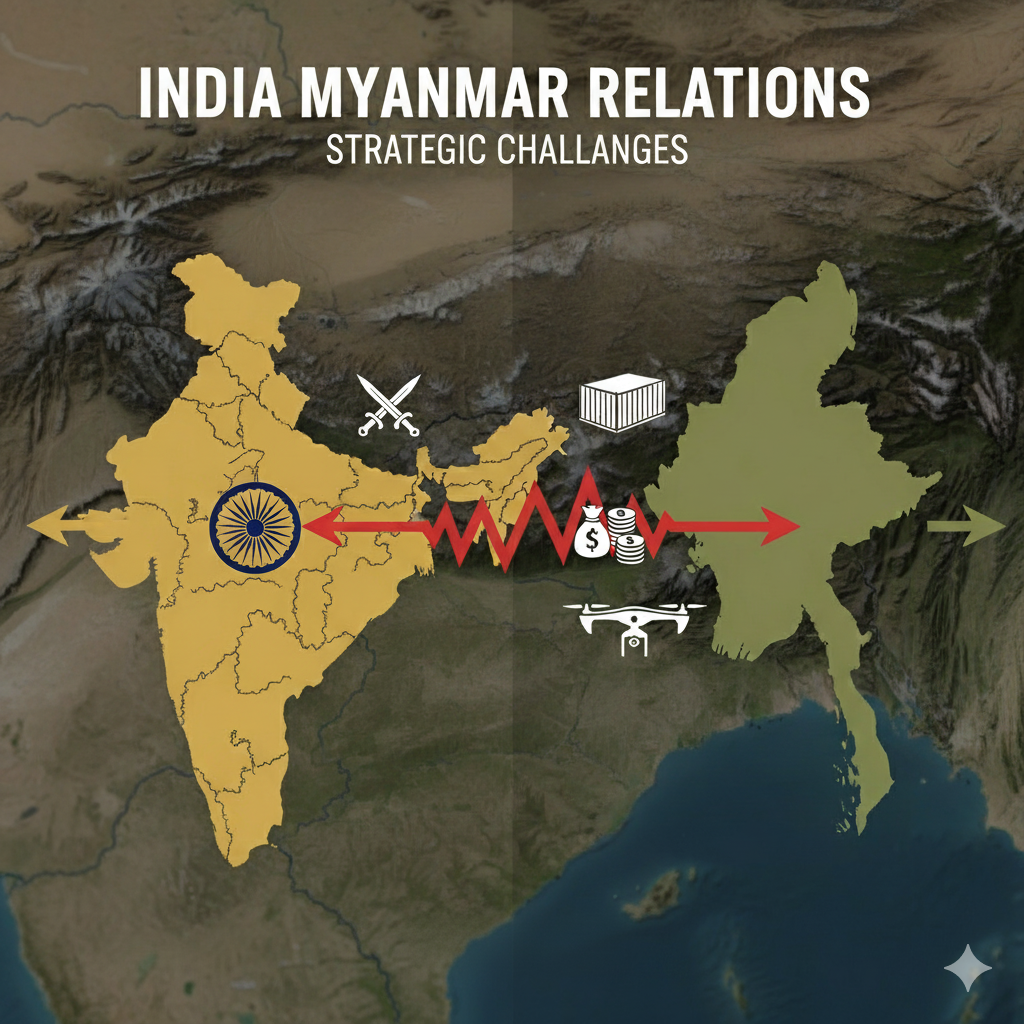
- Myanmar’s 1,643 km shared border with India has become a critical security challenge as armed opposition groups now control most periphery areas including Indian border regions following the February 2021 military coup
- Kaladan Multimodal Transit Transport Project expected operational by 2027 will reduce Kolkata-Aizawl distance by 700 km, offering strategic alternative to vulnerable Siliguri Corridor and reducing dependence on Bangladesh
- Operation Sunrise joint military operations in 2019 successfully targeted insurgent camps of NSCN-K, ULFA, NDFB, and KLO, demonstrating India-Myanmar defense cooperation potential despite current political instability
- China’s Belt Road Initiative through Myanmar includes China-Myanmar Economic Corridor and Kyaukpyu deep-sea port providing Beijing Bay of Bengal access, forcing India to balance strategic competition with pragmatic engagement
- India adopts dual-track policy engaging both Naypyitaw military regime and opposition forces controlling border areas, while implementing restrictive border measures contradicting Act East connectivity goals
Introduction: The Crossroads Crisis
Myanmar stands as India’s critical land bridge to Southeast Asia and the gateway to the ASEAN region, but the February 1, 2021 military coup has transformed this strategic asset into a complex diplomatic and security challenge that tests the limits of India’s neighborhood diplomacy. With a shared border of 1,643 kilometers and maritime boundaries in the Bay of Bengal, Myanmar’s internal fragmentation has profound implications for India’s foreign policy calculus in an era of intensifying great power competition.
The strategic significance cannot be overstated: Myanmar connects India’s landlocked Northeast with the broader Southeast Asian economy, serving as a buffer state between India and China while offering coastal access to the Bay of Bengal in proximity to India’s Nicobar archipelago. However, Myanmar’s post-coup reality has shattered traditional assumptions about state authority and territorial control, forcing India to recalibrate its engagement strategy with both the military regime in Naypyitaw and the armed opposition groups that now control most border areas.
The crisis presents a fundamental dilemma: how to balance strategic interests with democratic values, security imperatives with humanitarian responsibilities, and connectivity goals with border management concerns. India’s response through a “dual-track policy” of engaging both regime and opposition while implementing restrictive border controls reflects the complexity of managing a fragmented neighbor in a contested regional order.
Myanmar represents a critical test case for understanding how geography, history, and geopolitics intersect in contemporary international relations, particularly in the context of India’s Act East Policy and broader strategic competition with China in the Indo-Pacific region.
Historical Context: From Idealism to Pragmatic Engagement
The Golden Age of India-Myanmar Relations (Pre-1960s)
The foundational period of India-Myanmar relations was characterized by strong personal bonds between leaders and shared anti-colonial experiences. U Nu’s friendship with Jawaharlal Nehru established cordial bilateral relations marked by political solidarity and economic cooperation rooted in Buddhist cultural connections and common democratic aspirations.
Key Characteristics of Early Relations:
- Political alignment on non-alignment and Afro-Asian solidarity
- Economic cooperation through trade agreements and technical assistance
- Cultural exchanges emphasizing Buddhist heritage and shared values
- Mutual support in international forums and UN deliberations
This period established the template for India’s idealistic approach to Myanmar, prioritizing democratic values and people-to-people connections over narrow strategic calculations.
The Disruption Period (1988-1993): Principled Opposition
India’s response to Myanmar’s 1988 military coup reflected a values-based foreign policy that prioritized democratic principles over strategic pragmatism. New Delhi strongly criticized the State Law and Order Restoration Council (SLORC) military junta, supported pro-democracy activists, and hosted the National Coalition Government of the Union of Burma (NCGUB) office in New Delhi. dkiapcss
India’s Democratic Support Strategy:
- Diplomatic isolation of the military regime
- Sanctuary provision for pro-democracy leaders and activists
- International advocacy for democratic restoration in Myanmar
- Economic sanctions and restricted bilateral engagement
Consequences of Principled Opposition:
Myanmar’s military regime, facing Indian criticism and isolation, turned decisively toward China for support, beginning a pattern of Chinese influence that would profoundly shape regional geopolitics for decades. Beijing’s pragmatic engagement with Myanmar’s military contrasted sharply with India’s idealistic approach, providing China with strategic advantages in Southeast Asia.
The 1993 Policy Shift: Strategic Realism Emerges
India’s fundamental policy recalibration in 1993 marked the transition from idealistic diplomacy to strategic pragmatism. The launch of the “Look East” policy (later “Act East”) prioritized strategic interests over democratic ideals, recognizing that Myanmar’s geographic position made it indispensable for India’s regional connectivity and security objectives.
Drivers of Policy Change:
- Recognition of China’s growing influence in Myanmar
- Understanding of Myanmar’s strategic importance for Northeast connectivity
- Realization that idealistic policies had limited practical impact
- Need to balance between values and interests in regional diplomacy
This shift established India’s contemporary approach to Myanmar: pragmatic engagement focused on strategic objectives while maintaining concerns about democratic governance and human rights.
Strategic Importance of Myanmar for India
Geopolitical and Security Dimensions
Myanmar occupies a unique position in India’s strategic calculus as both a buffer state and a gateway, serving multiple critical functions that directly impact India’s national security and regional influence. crisisgroup
Buffer State Dynamics:
Myanmar serves as a crucial buffer between India and China, preventing direct Chinese presence along India’s eastern borders while providing strategic depth for India’s Northeast region. The loss of Myanmar to exclusive Chinese influence would fundamentally alter the regional balance of power and expose India’s vulnerable eastern flank.
Northeast Security Architecture:
The 1,643-kilometer border with Myanmar has historically been exploited by insurgent groups including ULFA (United Liberation Front of Assam), NSCN-K (National Socialist Council of Nagaland-Khaplang), PLA (People’s Liberation Army), and NDFB (National Democratic Front of Boroland) for training, regrouping, and launching attacks.
Counter-Insurgency Cooperation:
Operation Sunrise phases in 2019 demonstrated effective bilateral cooperation in targeting insurgent camps across the border. The operations successfully destroyed multiple camps and disrupted insurgent activities, showcasing the importance of Myanmar’s cooperation in India’s internal security management.
Maritime Security Considerations:
Myanmar’s coastal access to the Bay of Bengal and proximity to India’s Nicobar archipelago make it strategically significant for India’s maritime security architecture and naval operations in the eastern Indian Ocean.
Economic and Connectivity Imperatives

Myanmar serves as India’s gateway to Southeast Asia for trade and investment, representing critical connectivity that reduces dependence on traditional routes through politically sensitive or geographically vulnerable corridors.
Trade and Investment Profile:
- India ranks as Myanmar’s fifth-largest trading partner with significant two-way trade in agricultural products, manufactured goods, and energy resources
- ONGC Videsh investments in Myanmar gas blocks represent substantial energy cooperation
- Potential for increased bilateral trade through improved connectivity infrastructure
Energy Security Dimensions:
Myanmar’s oil, gas, and mineral resources offer diversification opportunities for India’s energy security, reducing dependence on Middle Eastern suppliers and providing alternative supply routes that bypass traditional chokepoints.
Key Bilateral Projects and Connectivity Initiatives
Kaladan Multimodal Transit Transport Project: The Game Changer
The Kaladan project represents India’s most ambitious connectivity initiative with Myanmar, designed to transform Northeast India’s economic geography by providing alternative access to international markets.
Project Components and Status:
- Kolkata to Sittwe (539 km sea route): Completed maritime connection
- Sittwe to Paletwa (158 km inland waterways): Operational river transport on Kaladan River
- Paletwa to Zorinpui (108 km road): Final construction phase with completion expected by 2027
- Total investment: Over ₹1,000 crore from India’s Shipping Ministry
Strategic Benefits:
- 700 km distance reduction between Kolkata and Aizawl
- Alternative to vulnerable Siliguri Corridor (“chicken’s neck”)
- Reduced dependence on Bangladesh for Northeast connectivity
- Enhanced trade opportunities with Southeast Asia
Implementation Challenges:
The 2021 military coup and subsequent civil conflict have complicated project implementation, particularly in Rakhine and Chin states where armed groups now control territory through which the project passes.
India-Myanmar-Thailand Trilateral Highway
Part of India’s Act East connectivity vision, this highway aims to create seamless road connectivity from India through Myanmar to Thailand, facilitating trade and people-to-people exchanges across the extended neighborhood.
Strategic Significance:
- Direct road access to Southeast Asian markets
- Alternative trade routes reducing maritime dependence
- Enhanced regional economic integration
- Strengthened cultural and social ties
The 2021 Military Coup: A Strategic Turning Point

The Coup’s Immediate Impact
The February 1, 2021 military coup halted Myanmar’s democratic transition and triggered widespread violence, humanitarian crisis, and regional instability. Commander-in-Chief Min Aung Hlaing’s takeover shattered assumptions about Myanmar’s political trajectory and forced India to reassess its engagement strategy.
Immediate Consequences:
- Widespread civil disobedience and armed resistance across Myanmar
- International sanctions by Western countries pushing Myanmar closer to China
- Fragmentation of state authority with armed groups controlling most periphery regions
- Humanitarian crisis with thousands of casualties and widespread displacement
State Fragmentation and Border Control Loss
The most significant development for India has been the loss of central government control over border areas. Opposition forces, including ethnic armed groups and pro-democracy militias, now control substantial portions of Chin and Rakhine states along India’s border, fundamentally altering the security landscape.
Border Control Realities:
- Armed opposition groups control most Myanmar periphery including areas bordering India
- Central government authority limited to major cities and strategic installations
- Multiple competing power centers creating complex governance challenges
- Cross-border movement increasingly controlled by non-state actors
India’s Dual-Track Policy Response
Engagement with Military Junta: Pragmatic Realism
India has maintained diplomatic ties with the Naypyitaw regime to safeguard security and strategic interests. This pragmatic approach prioritizes border security and connectivity over democratic norms, reflecting realpolitik calculations in a complex regional environment.
Elements of Regime Engagement:
- Continued diplomatic representation and high-level interactions
- Humanitarian assistance including earthquake relief after March 28, 2025 earthquake
- Military cooperation on counter-insurgency operations
- Economic engagement through existing projects and commitments
Strategic Rationale:
India recognizes that complete isolation of Myanmar’s military would cede influence to China and complicate border management, making limited engagement a strategic necessity despite democratic concerns.
Outreach to Opposition Forces: Adapting to Ground Realities
Recognizing that opposition forces control Indian border areas, India has forged tighter links with anti-regime armed groups. This pragmatic adaptation acknowledges the reality of divided control and the need to work with de facto authorities in border regions.
Opposition Engagement Strategy:
- Direct communication with armed groups controlling border areas
- Humanitarian assistance to populations under opposition control
- Trade and aid serving as essential lifeline for border communities
- Informal diplomatic channels maintaining communication with various opposition factions
Balancing Act Challenges:
India must carefully balance its outreach to opposition forces while preserving historical ties with military leadership, avoiding actions that could be perceived as direct support for regime change.
Border Security Challenges and Operational Responses
Insurgency and Cross-Border Threats
Indian insurgent groups have historically exploited Myanmar’s territory as a safe haven for training and operations. The post-coup instability has complicated counter-insurgency efforts while providing opportunities for enhanced cooperation with opposition forces that control border areas.
Joint Military Operations Success:
Operation Sunrise phases in 2019 demonstrated effective bilateral cooperation:
- Operation Sunrise I (February-March 2019): Targeted Arakan Army camps threatening Kaladan project workers
- Operation Sunrise II (May-June 2019): Focused on NSCN-K, ULFA, NDFB, and KLO camps
- Results: Destruction of 10-12 insurgent camps, detention of key leaders, disruption of training facilities
Post-Coup Operational Adaptations:
Security forces launched multiple operations in 2022-2023 targeting insurgent groups exploiting Myanmar’s instability, demonstrating continued commitment to border security despite political complications.
Arms and Drug Trafficking Networks
The Golden Triangle region (Myanmar-Laos-Thailand) serves as a major source of heroin and synthetic drugs entering India through Manipur and Mizoram. Post-coup instability has complicated counter-narcotics efforts while potentially increasing trafficking through weakened border controls.
Counter-Narcotics Operations:
- Narcotics Control Bureau (NCB) operations targeting cross-border smuggling networks
- Directorate of Revenue Intelligence (DRI) investigations into trafficking routes
- Joint operations with state police forces in Northeast states
- International cooperation despite political constraints
Refugee Influx and Humanitarian Challenges
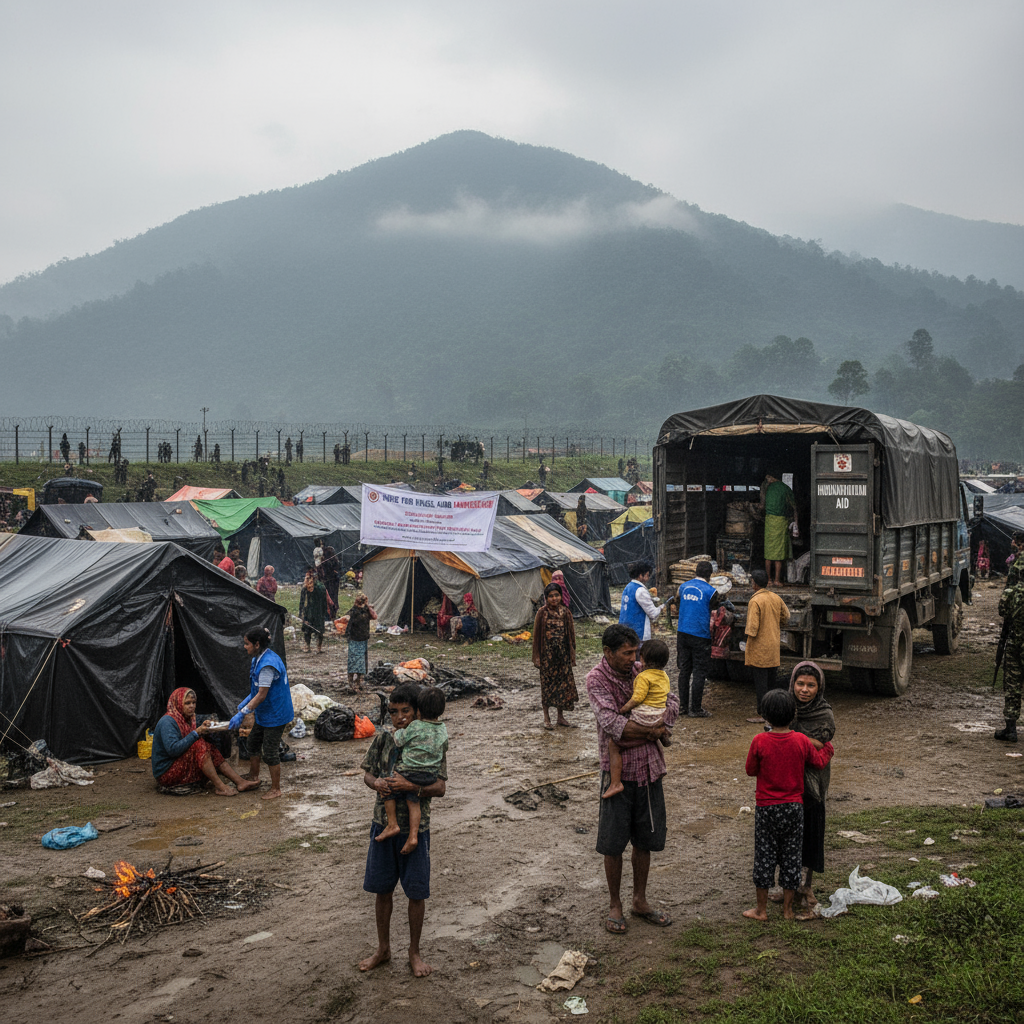
Spillover of ethnic Chin and Rohingya refugees has created law and order issues, resource strain, and local resentment in India’s border states. The humanitarian dimension adds complexity to security-focused policies.
Refugee Management Approach:
- Biometric registration with focus on eventual repatriation
- Humanitarian assistance while managing local sensitivities
- Security screening to prevent infiltration by hostile elements
- Deportation policies balancing humanitarian concerns with security imperatives
Border Management Policy Contradictions
Home Ministry’s Hard Border Approach
India’s Home Ministry has implemented restrictive border controls including planned fencing, constraints on Free Movement Regime (FMR), and biometric registration of border crossers. These measures contradict the Foreign Ministry’s connectivity goals under the Act East policy.
Restrictive Measures:
- Scrapping of Free Movement Regime that allowed area residents to travel 16 km across border
- Smart fencing under Comprehensive Integrated Border Management System (CIBMS)
- Biometric registration requirements for cross-border movement
- Enhanced surveillance and border patrol activities
Policy Contradictions:
The hard-border approach conflicts with connectivity objectives by disrupting traditional movement patterns, alienating local populations, and complicating relations with armed groups controlling Myanmar’s border areas.
Impact on Transborder Communities
Border controls disrupt lives of transborder communities who view the border as arbitrary colonial inheritance. Traditional ethnic ties and economic relationships across the border face severe constraints from security-focused policies.
Community Impacts:
- Separation of families and traditional communities
- Disruption of customary trade and economic activities
- Loss of traditional grazing and agricultural lands
- Cultural disconnection from ancestral territories
The China Factor: Strategic Competition Intensifies
Chinese Influence Expansion in Myanmar
China’s Belt and Road Initiative has transformed its engagement with Myanmar through comprehensive infrastructure development and strategic investments. The China-Myanmar Economic Corridor (CMEC) represents Beijing’s systematic approach to securing influence in Southeast Asia.
Key Chinese Projects:
- Kyaukpyu deep-sea port in Rakhine State providing China direct access to Bay of Bengal
- China-Myanmar oil and gas pipelines bypassing Malacca Strait for energy security
- High-speed rail connections linking Chinese territory with Myanmar’s coast
- Industrial parks and special economic zones creating economic dependencies
Strategic Implications for India:
Chinese infrastructure creates potential military applications while reducing Myanmar’s economic dependence on traditional partners like India. The Kyaukpyu port particularly threatens Indian influence in the Bay of Bengal.
Post-Coup Chinese Advantages
Western sanctions following the 2021 coup have pushed Myanmar deeper into China’s embrace. While India struggles with balancing values and interests, China’s pragmatic diplomacy allows it to preserve and expand influence regardless of Myanmar’s domestic politics.
Chinese Strategic Benefits:
- Enhanced access to Myanmar’s military leadership
- Reduced competition from Western countries and international institutions
- Opportunity to accelerate BRI projects with fewer constraints
- Leverage over Myanmar’s economy through exclusive partnerships
Regional Dynamics: Differentiated State Impacts
Manipur: Security-Centric Challenges
Manipur faces the most severe impact from Myanmar’s conflict, with ethnic violence being exploited by insurgent groups. The state requires a security-centric approach emphasizing tighter border controls, intelligence-sharing, and curbing arms/drug trafficking.
Specific Challenges:
- Arms smuggling from Myanmar’s conflict zones
- Insurgent group revival exploiting political instability
- Ethnic tensions spilling across borders
- Drug trafficking through established networks
Mizoram: Humanitarian Focus
Mizoram’s traditional receptivity to Chin refugees due to ethnic kinship requires policies integrating humanitarian aid with community resilience-building. The state’s approach emphasizes cultural connections and community support over strict security measures.
Approach Elements:
- Humanitarian assistance for legitimate asylum seekers
- Community-based integration programs
- Cultural and linguistic connections with Chin populations
- Economic opportunities for refugee communities
Nagaland: Diplomatic Engagement
Nagaland’s focus on diplomatic engagement and cross-border ethnic integration reflects ongoing ceasefire negotiations with NSCN factions and traditional ties with Myanmar’s Naga communities.
Engagement Strategy:
- Cultural exchanges and traditional festivals
- Trade promotion through border markets
- Conflict resolution mechanisms for cross-border disputes
- Integration of peace processes in both countries
Policy Challenges and Governance Perspectives
Balancing Competing Imperatives
India faces fundamental dilemmas in balancing realpolitik (strategic interests) with idealpolitik (democratic values). The Myanmar crisis exemplifies contemporary challenges in neighborhood diplomacy where strategic necessities often conflict with normative preferences.
Key Dilemmas:
- Maintaining trust with military while pressuring for democratic restoration
- Supporting pro-democracy forces without compromising strategic relationships
- Managing border security while facilitating connectivity
- Balancing humanitarian concerns with domestic political pressures
Credibility and Effectiveness Challenges
Limited support for pro-democracy forces and restrictive refugee policies may weaken India’s regional credibility. Meanwhile, China’s pragmatic diplomacy allows it to preserve influence while India faces credibility challenges from inconsistent policies.
Credibility Risks:
- Perceived abandonment of democratic values for strategic convenience
- Inadequate humanitarian response to refugee crises
- Inconsistent messaging on human rights and democracy
- Limited effectiveness in influencing Myanmar’s trajectory
Institutional Coordination Problems
Incompatibility between Home Ministry’s hard-border approach and Foreign Ministry’s connectivity goals reflects broader institutional coordination challenges in Indian governance.
Coordination Issues:
- Competing departmental priorities creating policy contradictions
- Lack of integrated approach to complex challenges
- Limited inter-ministerial consultation on policy implementation
- Inadequate mechanism for resolving institutional conflicts
Integrated Security and Connectivity Approach
Address legitimate security concerns without disrupting transborder communities’ lives through smart solutions that balance security with connectivity objectives.
Recommended Measures:
- Avoid physical barriers that compromise connectivity objectives
- Strengthen border infrastructure and surveillance without restricting informal trade
- Continue joint counter-insurgency operations while engaging with armed groups
- Develop technology-enabled solutions for border monitoring
Differentiated Diplomatic Engagement
Adopt differentiated approaches for each border state based on distinct challenges while broadening engagement with wider range of constituencies in Myanmar beyond military.
State-Specific Strategies:
- Security-focused approach for Manipur’s challenges
- Humanitarian-oriented policies for Mizoram’s refugee situation
- Diplomatic engagement emphasis for Nagaland’s cross-border ties
- Economic development focus for Arunachal Pradesh’s border areas
Multilateral Framework Utilization
Work through ASEAN, Japan, and multilateral frameworks to promote stability and governance reforms while supporting inclusive development benefiting Myanmar’s local communities.
Multilateral Engagement:
- ASEAN diplomatic initiatives on Myanmar crisis resolution
- Japan partnership on infrastructure development and humanitarian assistance
- UN framework utilization for refugee protection and humanitarian access
- Regional cooperation on counter-narcotics and security issues
Economic and Development Strategy
Increase cross-border informal trade and aid to areas under opposition control while accelerating completion of Kaladan Project and other connectivity initiatives.
Economic Priorities:
- Trade connections to Southeast Asia depending on stable armed group relations
- Energy sector investment diversifying India’s resource sources
- Infrastructure development supporting local communities
- Value chain integration creating economic incentives for stability
Humanitarian and Cultural Diplomacy
Provide generous support for refugees while managing local sensitivities and leveraging Buddhist diplomacy to build goodwill with Buddhist-majority Myanmar.
Cultural Engagement:
- Buddhist diplomatic initiatives and religious exchanges
- Educational cooperation and scholarship programs
- Cultural festivals and people-to-people connections
- Media cooperation and information sharing
Strategic Balance and Future Outlook
Values-Based Policy Evolution
Shift to values-based policy promoting democracy without abandoning strategic engagement while offering alternatives to Chinese dominance through inclusive, sustainable development models.
Balance Elements:
- Support for democratic processes without direct interference
- Humanitarian assistance emphasizing human dignity and rights
- Economic cooperation promoting inclusive growth and opportunity
- Diplomatic engagement supporting national reconciliation
Adaptive Policy Framework
Maintain fluid relations adapting to ground realities while preserving core interests in border security, regional connectivity, and strategic autonomy.
Adaptive Elements:
- Flexible engagement with multiple power centers in Myanmar
- Contingency planning for various scenarios including partition or federalization
- Risk management strategies for project implementation in unstable areas
- Alternative route development reducing single-point dependencies
Conclusion: Navigating the Myanmar Maze
Myanmar’s crisis presents both profound challenges and strategic opportunities for India’s neighborhood diplomacy and regional influence. The February 2021 military coup has transformed a strategic asset into a complex policy challenge requiring nuanced understanding of competing interests, shifting alliances, and evolving ground realities.
The numbers tell the story of complexity: a 1,643-kilometer shared border where opposition forces now control most periphery areas, the Kaladan project’s ₹1,000 crore investment facing implementation delays due to civil conflict, and Operation Sunrise’s successful targeting of insurgent camps demonstrating cooperation potential despite political instability.
India’s dual-track policy of engaging both military regime and opposition forces while implementing restrictive border measures reflects the inherent contradictions in managing a fragmented neighbor. The tension between Home Ministry’s hard-border approach and Foreign Ministry’s connectivity goals exemplifies broader governance challenges in coordinating complex policies across institutional boundaries.
The China factor adds urgency to India’s strategic recalibration: Beijing’s Belt and Road Initiative through the China-Myanmar Economic Corridor and Kyaukpyu port provides Chinese access to the Bay of Bengal while Western sanctions following the coup push Myanmar deeper into Chinese embrace. India’s challenge lies in competing effectively with China’s pragmatic approach while maintaining democratic credentials and humanitarian concerns.
For UPSC aspirants and governance professionals, Myanmar represents a critical case study in contemporary diplomacy where traditional state-to-state relations must adapt to realities of fragmented authority, non-state actors, and competing legitimacies. The intersection of border security, regional connectivity, great power competition, and humanitarian concerns requires sophisticated understanding of how domestic developments in neighboring countries can reshape regional dynamics.
Success in managing India-Myanmar relations will depend on developing fine-tuned policies that reconcile security imperatives with humanitarian responsibilities, connectivity goals with border management, and realpolitik with democratic values. The completion of the Kaladan project by 2027 offers potential for enhanced connectivity, but realizing this potential requires sustained engagement with multiple stakeholders in a fragmented political landscape.
The ultimate test for Indian diplomacy lies in helping Myanmar find stability while protecting Indian interests and values. This requires moving beyond simple bilateral frameworks to embrace complex, multi-level engagement that recognizes the new realities of power distribution in post-coup Myanmar while working toward long-term solutions that serve both countries’ interests.






+ There are no comments
Add yours