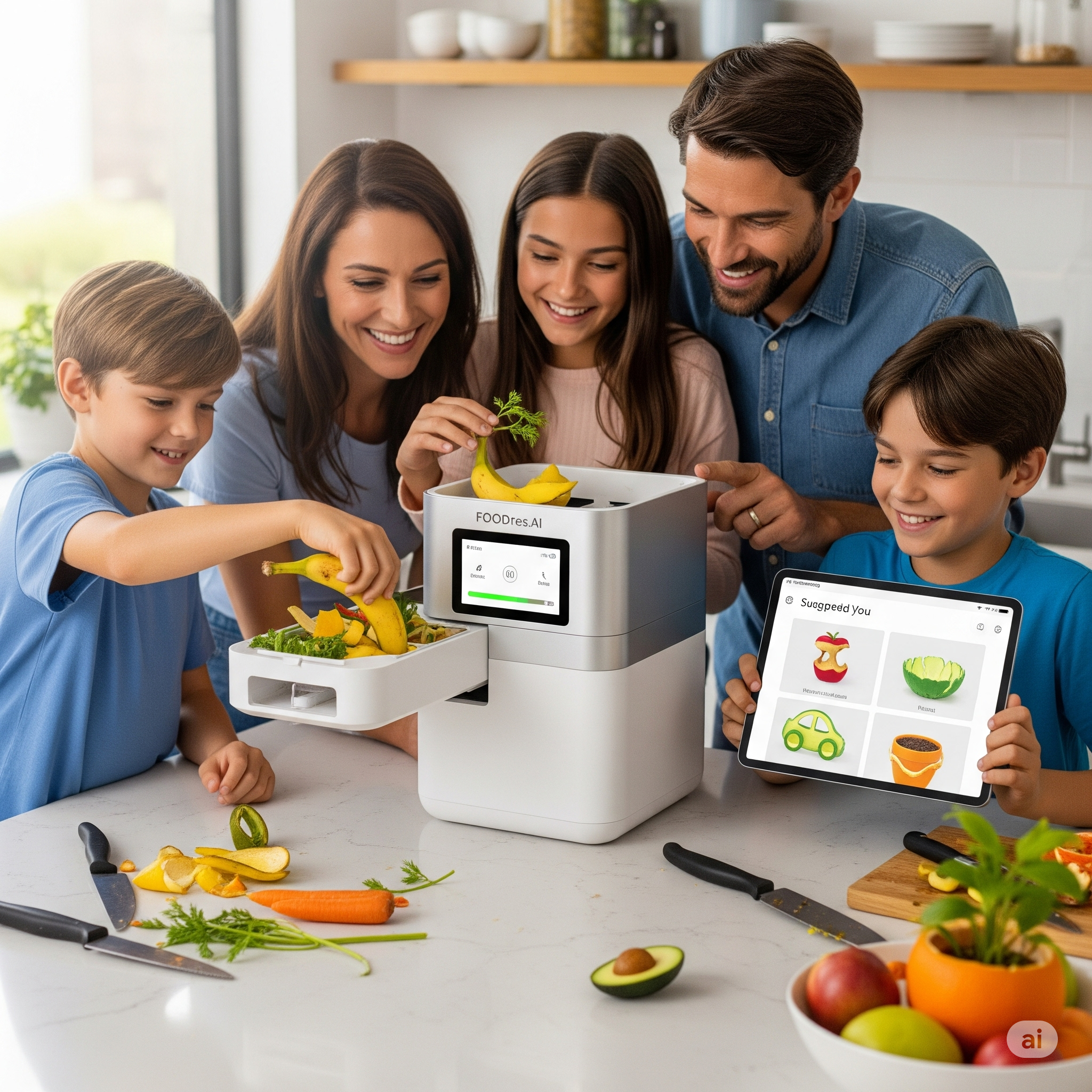
Imagine finishing your morning coffee, glancing at the pile of banana peels, eggshells, and coffee grounds in your kitchen, and turning it—all of it—into a custom-designed mug or coaster, right on your countertop. No landfills, no compost bins. This isn’t science fiction; it’s the world-changing promise of the FOODres.AI Printer—an AI-powered desktop 3D printer from MIT, set to redefine sustainability in our homes and cities.
The Kitchen Revolution: Waste in, Useful Objects Out
Food waste is a silent environmental crisis. Globally, a third of all food produced ends up as waste, fueling methane emissions and wasting precious resources. Traditional composting, while important, isn’t always feasible for urban households—and hardly addresses the full spectrum of disposable packaging and single-use products we consume every day.
Enter the FOODres.AI Printer from MIT. This compact device is designed to empower everyday people to be circular economy pioneers, transforming waste into useful, beautiful, durable objects, all guided by smart, intuitive AI. birucao
How Does the FOODres.AI Printer Work?
At its core, the FOODres.AI ecosystem combines computer vision, additive manufacturing, and bioplastics science into a household-ready system:
- Step 1: Snap a Photo of Your Waste
Using the companion app, users simply photograph their food scraps—banana peels, coffee grounds, onion skins, you name it. - Step 2: AI-Powered Waste Recognition
The app uses advanced AI to instantly identify the types and quantities of materials available, then suggests “recipes”—formulations of bioplastic paste best suited to your scraps. - Step 3: Mixing with Natural Additives
The food scraps are blended with non-toxic, biodegradable binders and plasticizers (think natural starches or plant-based glues) to formulate a printable, eco-friendly paste. - Step 4: 3D Printing Any Custom Object
The FOODres.AI Printer extrudes the paste into prepared designs—mugs, bowls, utensils, coasters, planters—selected via the app or even customized by the user.
The beauty of the system is its seamless integration. No expertise needed—just kitchen leftovers and a sense of curiosity.
Why AI and 3D Printing are a Circular Economy Game-Changer
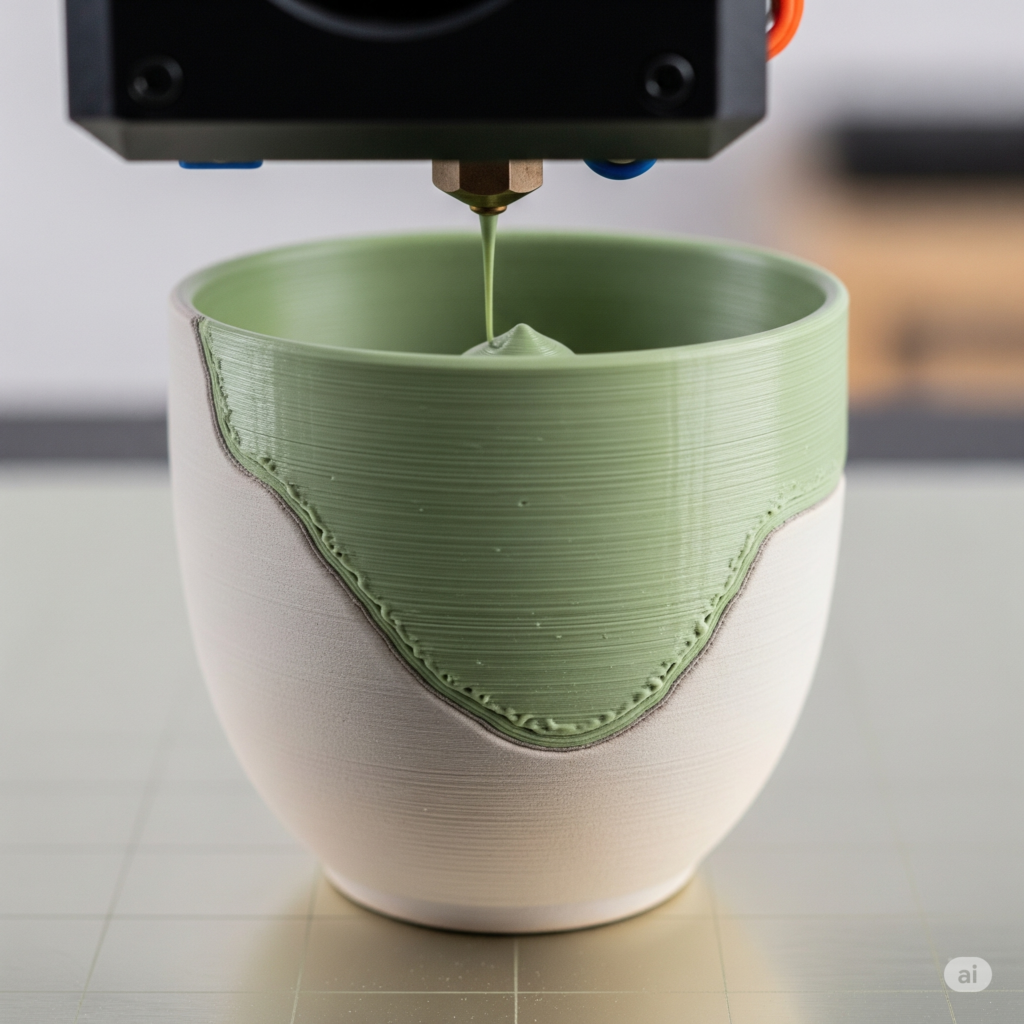
For years, circular economy advocates have dreamed of ways to keep resources looping locally—minimizing waste, maximizing reuse. The FOODres.AI Printer represents a radical leap for three reasons:
- 1. Every Home Becomes a Mini Recycling Center
No need to ship waste to distant plants or rely on complex sorting systems. You create, process, and upcycle at the source. - 2. Personalized, On-Demand Product Creation
Unlike most recycling, which produces generic materials, 3D printing allows consumers to make exactly what they need—reducing overproduction and material wastage. - 3. AI Makes It Foolproof
By identifying waste types and suggesting optimal printing recipes/objects, the companion app bridges the gap between raw scraps and useful goods, removing barriers to adoption.
This fusion of AI-driven resource recognition and desktop manufacturing could shrink household waste footprints—and inspire a new mindset about value and materials.
Inside the Food Waste-to-Bioplastic Process
What makes this possible at all? Bioplastics—polymers derived from organic feedstocks—are at the heart of the FOODres.AI innovation. Here’s how the process works in detail:
- Food Scrap Selection:
Eggshells (a calcium source), banana peels (rich in starch and fiber), and coffee grounds (natural reinforcement and color) are ideal candidates. - Additives & Binders:
Common kitchen-friendly agents (potato starch, vinegar, plant-based glycerin, natural gums) make the mixture printable and strong, tailored for each recipe by AI recommendation. - Paste Extrusion:
Unlike industrial plastic filaments, the printer extrudes a thick, clay-like paste—layer by layer, forming solid objects that dry to a ceramic-like finish, or remain biodegradable as needed. - Customization:
The user picks or personalizes designs—from spoons to succulent pots—turning “waste” into one-of-a-kind daily essentials. - End-of-Life:
If the final product breaks or wears out, it too can be shredded, remixed, and re-printed—a true closed loop.
Real-World Applications: What Can You Actually Print?
MIT’s pilot and prototype tests have shown a remarkable range of utility:
- Mugs, cups, and bowls — solid enough for safe, reusable home use.
- Coasters and trivets — with natural insulation properties from food fibers.
- Utensils and spatulas — strong, washable, and biodegradable.
- Plant pots and seedling starters — no waste, plant them straight into soil.
- Organizer trays, fridge magnets, kitchen gadgets — limited only by your design imagination.
This diversity doesn’t just save waste—it cuts down on new plastic purchases and could inspire user communities to share open-source printable object designs nationwide.
Cambridge and Beyond: Pilot Programs and Urban Impact
MIT researchers aren’t stopping at lab demonstrations. Their pilot project in Cambridge aims to equip thousands of households with FOODres.AI Printers, tracking how the devices change waste habits, save money, and foster neighborhood-based circular economies.
- Goals include:
- Diverting tons of household food waste from landfill/incinerators.
- Creating locally valued, zero-emissions, useful objects.
- Fostering local design-and-print communities for sharing ideas and recipes.
- Inspiring schools, restaurants, and municipal kitchens to follow.
If successful, the model could scale to cities everywhere—tailored to local food cultures and recycling challenges.
The Future of DIY Sustainable Manufacturing
The implications of this technology are profound:
- Decentralized, personalized recycling—every kitchen a tiny, responsive factory.
- Educational opportunities—children and adults learn material science, coding, and sustainable design first-hand.
- Reduced logistics and emissions—less trucking of waste, no central recycling bottlenecks.
- End of “single-use” culture—replace, remake, or re-invent objects when you want, not just when you buy.
In a future rocked by resource pressures, local manufacturing and AI-guided upcycling could build resilience as well as reduce environmental harm.
Final Thought:
The FOODres.AI Printer offers a glimpse of a world where nothing—and no one—is wasted. Where waste is just tomorrow’s resource, and everyone becomes a maker of their own sustainable future. Are you ready to join the circular kitchen revolution?




+ There are no comments
Add yours