The Coming Labor Crisis: Why the World Needs Help
By 2030, the global economy is expected to suffer a staggering $10 trillion in GDP losses due to labor shortages. A combination of aging populations, declining birth rates, and a shrinking working-age demographic is creating a workforce gap that traditional recruitment cannot fill. Countries like Japan, Germany, Italy, and South Korea are already experiencing sharp declines in labor availability.
But a wave of AI innovation may offer a scalable solution—through humanoid robots.
What Are Humanoid Robots?
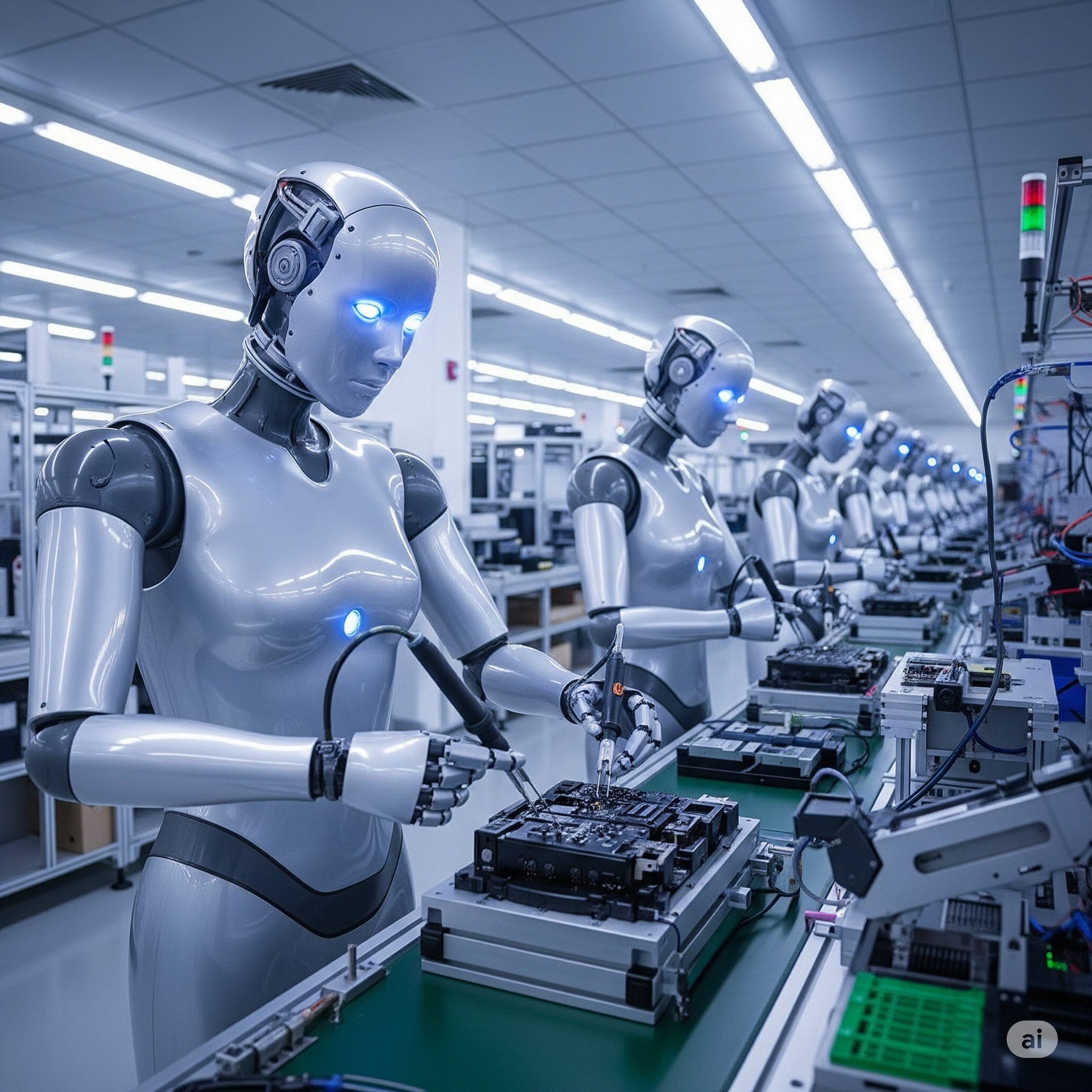
Humanoid robots are machines designed to mimic the human body and perform physical and cognitive tasks typically done by humans. These robots are equipped with advanced AI, sensory inputs, and mechanical dexterity, enabling them to operate in dynamic environments—whether that’s assembling electronics, delivering food, or assisting the elderly.
Tesla’s Optimus, Figure AI’s walking humanoid, and Sanctuary AI’s general-purpose robots are just a few notable examples making global headlines. The vision? A robotic assistant for every workplace, capable of filling in where human workers are lacking.
The Economic Math Behind Automation
A recent Morgan Stanley report states that mass deployment of humanoid robots could begin within this decade, with one billion robots expected to be operational by 2050. Their impact isn’t just futuristic—it’s economically urgent.
“Without intervention, labor shortages could erase $10 trillion from global GDP by 2030,” says the report.
In highly labor-dependent industries—healthcare, elder care, manufacturing, agriculture—robots could fill critical gaps, allowing economies to maintain productivity and avoid collapse.
Countries Most in Need of Humanoid Labor
- Japan: With over 29% of the population above 65, Japan is aggressively pursuing robotic caregivers and service robots.
- Germany: Europe’s largest economy is facing a demographic cliff and investing heavily in industrial automation.
- South Korea: Already a leader in robotics density, it’s expanding into humanoids for logistics and caregiving.
- China: Facing a declining birth rate, it’s pouring billions into AI to future-proof its workforce.
- USA: Nursing shortages and warehouse labor gaps have led to private sector demand for robotic labor.
Humanoids in the Workplace: Early Use Cases
- Hospitals & Elder Care: Robots helping with patient lifting, medicine delivery, companionship.
- Retail & Logistics: Picking, packing, shelf-stocking, and customer service roles.
- Manufacturing: Precision assembly, welding, and quality checks.
- Agriculture: Harvesting crops, weeding, and livestock monitoring.
- Disaster Response: Search and rescue operations where human entry is risky.
Ethical and Practical Challenges
While the upside is promising, deploying humanoids at scale brings new dilemmas:
- Job Displacement: Which human jobs will vanish first?
- Bias in AI Algorithms: Do robots treat everyone fairly?
- Safety & Security: Can they be hacked? Will they malfunction?
- Cost: Can emerging economies afford them?
“The goal is not to replace humans, but to support them in aging and shrinking societies,” says an executive from Figure AI.
Policy, Investment, and Innovation
Governments, private investors, and multilateral bodies are beginning to support humanoid robotics via:
- Funding and subsidies for robotics startups
- Tax incentives for businesses that adopt labor-supportive automation
- New education programs focused on human-robot collaboration
ETF initiatives like the Humanoid Robotics ETF (HUMN) are fueling investor interest, showing that Wall Street sees serious promise in this new workforce frontier.
India’s Position in the Humanoid Race
While India has a young population today, its future demographic shift is inevitable. Investing in AI and robotics early can help prepare for:
- Medical workforce shortages
- Demand for elderly care
- High-risk jobs in mining, sanitation, and construction
Indian startups like Asimov Robotics and RoboVR are already exploring humanoid applications in education and logistics.
Conclusion: Humanoids Aren’t Coming—They’re Here
The labor crisis isn’t a future problem—it’s a current one. With AI-powered humanoid robots stepping out of science fiction into real workplaces, the global economy may just find its savior. The key lies in careful integration, ethical foresight, and inclusive planning.
Whether working beside us, lifting the elderly, or exploring disaster zones, humanoids are no longer futuristic novelties. They’re becoming essential members of tomorrow’s labor force.








+ There are no comments
Add yours