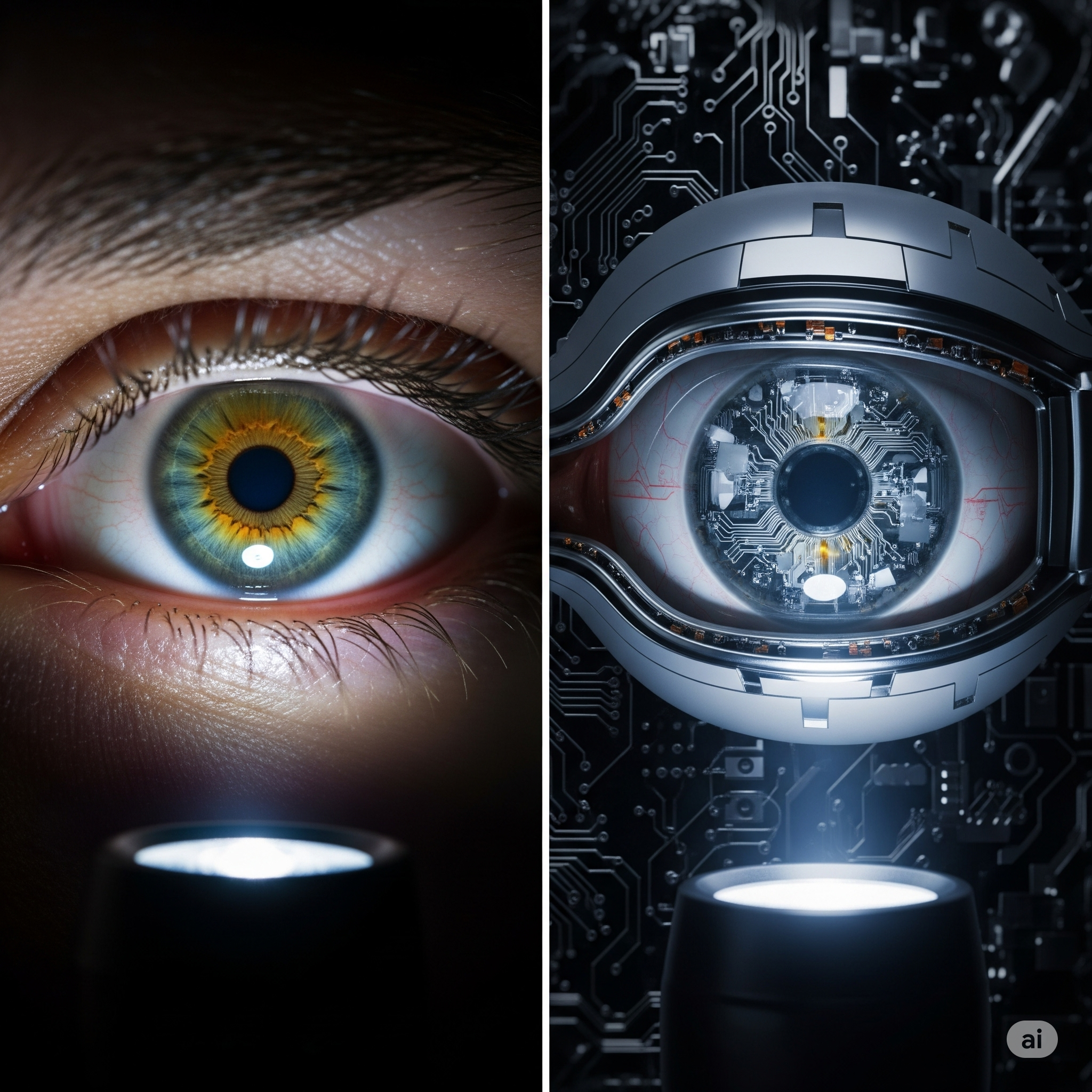
The Future of Vision: Robotic Eyes That See Like Humans
As robotics and AI advance at a rapid pace, researchers have taken a major step toward developing machines that can “see” as efficiently and adaptively as humans. A new study shows that robotic eyes inspired by the biological design of human vision can react to lighting changes faster than conventional sensors—setting the stage for the next generation of smart machines.
This development has immense implications, not only for robots navigating complex environments but also for fields like medical diagnostics, autonomous vehicles, security systems, and space exploration.
Why Human Vision Is Hard to Replicate
The human eye is an incredible machine. Our retinas can instantly adjust to different lighting conditions—from bright sunshine to dim candlelight—by activating different types of photoreceptor cells. Most digital vision systems, however, struggle with such transitions. They either overexpose or underexpose images when lighting changes too quickly.
That’s what makes this latest breakthrough so exciting. Scientists have developed a robotic eye that mimics not just the structure but also the function of human eyes in extreme lighting environments.
The Science Behind the Innovation
The robotic eyes are designed with artificial retinas made from flexible materials that combine sensors and AI. These retinas detect changes in brightness and contrast, then transmit the data to processors modeled after human neural pathways. Here’s what makes them special:
- Bio-Inspired Retinal Structure: Mimics the cones and rods in human eyes.
- High-Speed Light Adaptation: Capable of adjusting within milliseconds.
- Neural-Inspired Data Processing: Reduces visual lag in dynamic environments.
- Energy Efficient: Uses much less power than current vision sensors.
Researchers claim these robotic eyes can detect changes in brightness up to 1,000 times faster than the best conventional sensors today.
Applications Across Industries
This tech isn’t just a cool lab experiment—it could change the way machines operate in the real world.
1. Autonomous Vehicles
Self-driving cars require rapid response to sudden changes in lighting, such as entering tunnels or driving through bright intersections. These robotic eyes could improve their reaction time and safety.
2. Healthcare and Medical Imaging
In surgeries or diagnostic machines, precision is key. Human-vision-mimicking cameras could aid doctors in better identifying anomalies, especially in varied lighting environments.
3. Surveillance Systems
Security cameras often operate under fluctuating light conditions. Robotic eyes can maintain image clarity in low light or during abrupt transitions like flashlights or explosions.
4. Space and Underwater Exploration
Harsh, changing environments like deep oceans or space can now be better navigated using sensors that don’t get confused by lighting extremes.
5. Wearable Technology
Imagine AR/VR devices or smart glasses that can respond instantly to ambient light, providing uninterrupted user experience.
Implications for Robotics and AI
This innovation is a critical building block for developing true “general purpose” robots that can operate in any environment—indoors, outdoors, in bright light, or darkness. Pairing these robotic eyes with machine learning could allow robots to:
- Better detect human gestures and objects
- Operate in disaster zones
- Perform nighttime rescues
- Improve vision-based authentication and interaction
Challenges and Next Steps
Despite its promise, the technology is still in its early stages. Challenges include:
- Scalability: Manufacturing cost-effective versions of these sensors.
- Integration: Combining with other robotic systems for practical deployment.
- Durability: Ensuring they function long-term under extreme conditions.
But as bio-inspired robotics continues to grow, breakthroughs like this show that science fiction is fast becoming reality.
Conclusion: Seeing the Future Clearly
From the lab bench to the real world, robotic eyes that mimic human vision mark a significant leap forward. Their ability to adapt instantly to lighting changes could redefine machine perception—and with it, revolutionize multiple sectors from healthcare to mobility.
As this tech matures, the question isn’t whether robots will see better, but how soon they’ll start seeing like us.



+ There are no comments
Add yours