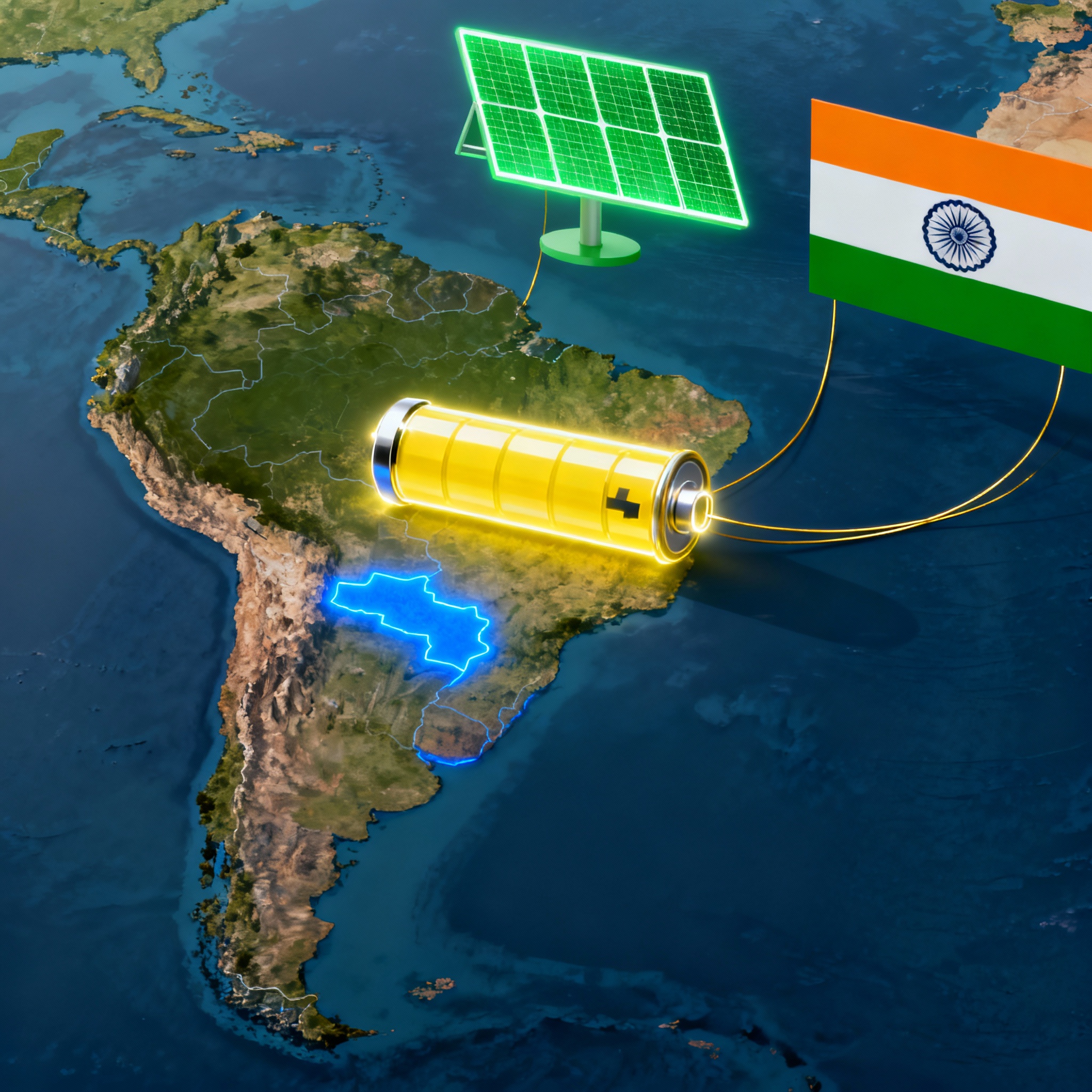
Key Highlights
✅ Lithium Triangle Dominance: Chile, Argentina, and Bolivia collectively hold 53% of world’s lithium reserves, with Chile’s Salar de Atacama featuring 1800 ppm concentration—world’s most efficient source
✅ Trade Surge: India-Latin America trade crossed $50 billion with target of $100 billion by 2027-28, driven by critical minerals, renewable energy, and agricultural products
✅ Strategic Agreements: February 2025 MoU between MECL and Argentina’s Catamarca for lithium exploration; January 2024 KABIL $24 million pact for five lithium blocks covering 15,703 hectares
✅ Energy Transition Scale: India targeting 500 GW renewable energy by 2030 and net-zero by 2070 requiring massive critical mineral supplies—lithium demand could sextuple by 2040 under IEA scenarios
✅ Geopolitical Diversification: India joined Minerals Security Partnership (MSP) in June 2023 (first non-G7 member) reducing China dependency controlling 90% rare earth processing and 60% REE production
The Race Against Time
Imagine India’s clean energy ambitions hitting a wall—not from lack of technology or will, but from something as mundane as not having enough lithium. No lithium means no batteries. No batteries means no electric vehicles, no grid-scale energy storage, no renewable energy transition. The dream of 500 GW renewable capacity by 2030 collapses. The net-zero 2070 pledge becomes empty rhetoric.
This nightmare scenario drives India’s unprecedented pivot toward Latin America—specifically the Lithium Triangle where Chile, Argentina, and Bolivia sit atop 53% of the world’s lithium reserves. It’s a partnership born from strategic necessity, geopolitical realignment, and the simple fact that India cannot achieve its clean energy goals without securing critical mineral supplies from beyond its borders. grandthornton
In February 2025, India’s Union Minister for Coal and Mines Shri G. Kishan Reddy signed a Memorandum of Understanding with Governor Raúl Alejandro Jalil of Catamarca, Argentina, paving the way for deeper collaboration in lithium exploration. Just a month earlier in January 2024, Khanij Bidesh India Limited (KABIL)—India’s state-owned critical minerals venture—inked a $24 million lithium exploration pact with Argentina’s CAMYEN for five blocks in Catamarca province. Lithium Exploration pib.gov
These aren’t isolated deals. They represent India’s systematic campaign to diversify critical mineral supply chains away from China, which controls 90% of rare earth processing capacity despite India holding 6% of global reserves—making it the fifth-largest holder yet import-dependent.
This India-Latin America energy partnership exemplifies critical themes: energy security, mineral diplomacy, South-South cooperation, economic diversification, and geopolitical realignments in an emerging multipolar world order.
Critical Minerals: The New Oil
Why “Critical” Matters
Minerals earn “critical” designation due to economic importance coupled with supply-side vulnerabilities—concentrated production, long lead times from exploration to commercial output (15-20 years), and geological constraints.
Key Critical Minerals for Clean Energy:
Lithium: Lithium-ion batteries for EVs, grid-scale Battery Energy Storage Systems (BESS), portable electronics
Cobalt: Battery cathodes, superalloys for jet engines
Nickel: Battery anodes, stainless steel
Copper: Electrical wiring, EV charging infrastructure, wind turbines, solar inverters
Rare Earth Elements (REEs): Permanent magnets in wind turbines and EV motors (neodymium, dysprosium), catalysts, electronics
Graphite: Battery anodes, nuclear reactors
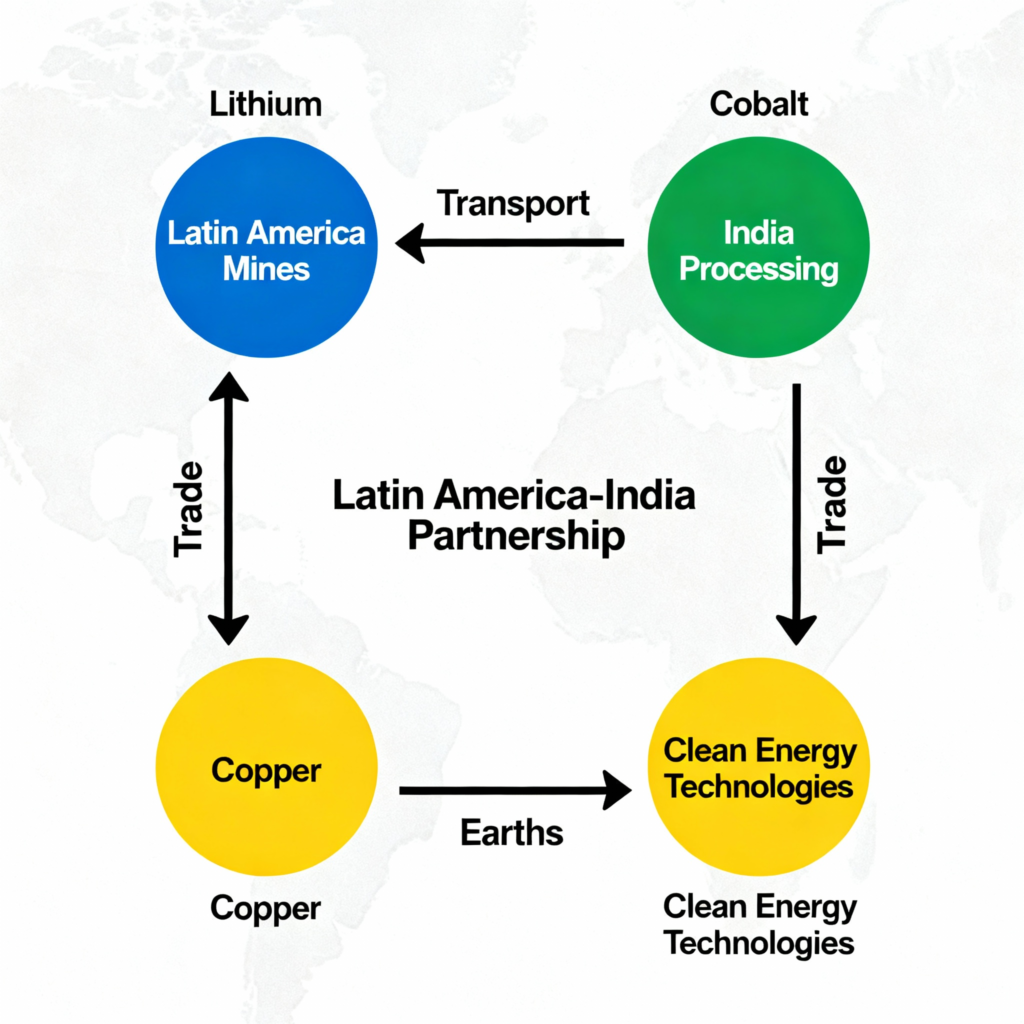
India’s Vulnerability
India’s critical mineral import dependence creates supply insecurity and price volatility:
Lithium: Nearly 100% import-dependent; domestic reserves discovered in Jammu & Kashmir in 2023 still under assessment
Cobalt: 100% import-dependent
Nickel: 100% import-dependent
Rare Earth Elements: Despite holding 6% of global reserves, India relies on imports—China controls 60% of REE production and 85% of processing capacity
Copper: Domestic production insufficient; imports fill gaps
Geopolitical Risk: China’s strategic export restrictions for political leverage—2010 REE embargo on Japan during territorial disputes, 2023 germanium and gallium export controls, 2024 antimony restrictions
Surging Demand
India’s clean energy transition will drive exponential mineral demand:
EV Market: Expected to grow at 49% CAGR from 2023 to 2030; battery-powered vehicles highly mineral-intensive (lithium-ion batteries contain lithium, cobalt, nickel, graphite, copper) csep
Battery Storage: India’s battery storage market valued at $2.8 billion in 2023, anticipated to surge with renewable energy adoption requiring grid stability
Solar & Wind: 500 GW renewable target by 2030 requiring massive copper (wiring, inverters), silicon (solar cells), rare earths (wind turbine magnets), silver (solar contacts)
IEA Projection: Energy sector’s critical mineral demand could sextuple by 2040 under net-zero scenarios—creating unprecedented supply pressures
Latin America: The Critical Minerals Powerhouse
The Lithium Triangle: 53% of Global Reserves
The Lithium Triangle—encompassing Argentina, Bolivia, and Chile—represents the epicenter of global lithium supply: geopoliticalfutures
Chile:
- Reserves: 9.3 million tons (world’s largest)
- Resources: Among top three globally
- Production: 140,000 tons/year (world’s second-largest producer after Australia)
- Star Asset: Salar de Atacama salt flat with 1800 ppm lithium concentration—world’s most efficient brine source
Argentina:
- Reserves: 22 million tons (world’s second-largest)
- Resources: Second-largest globally
- Production: 33,000 tons/year (fourth globally)
- Growth: 85 lithium projects at various stages in Catamarca, Jujuy, Salta provinces—seven operations currently active
Bolivia:
- Reserves: 23 million tons (world’s largest)
- Resources: Largest globally, primarily in Salar de Uyuni—world’s largest salt flat
- Production: Minimal 600 tons/year; vast untapped potential due to investment and infrastructure challenges
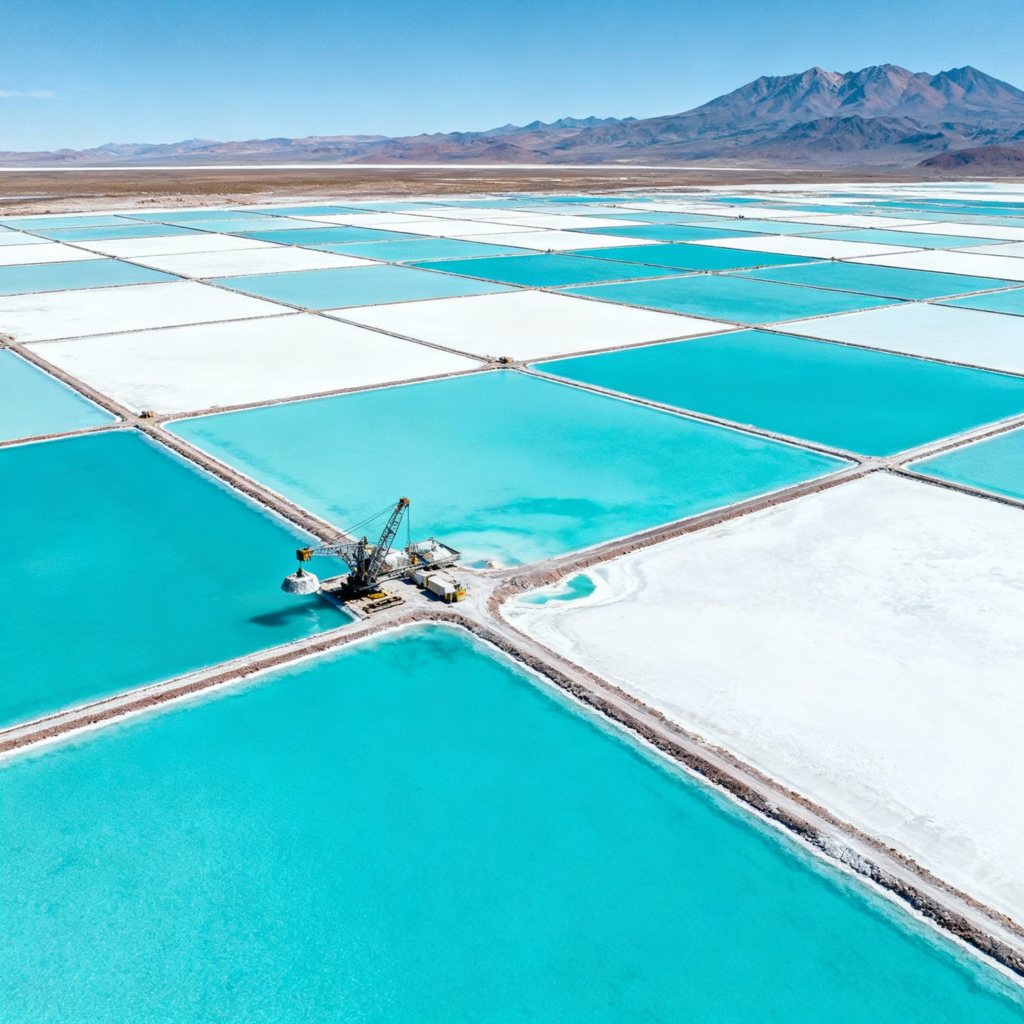
Collective Dominance: The Lithium Triangle’s 53% global reserve share makes it indispensable for any nation pursuing electrification at scale.
Beyond Lithium: Copper and More
Chile:
- Copper: World’s largest producer—critical for electrical infrastructure, EV charging networks, renewable energy transmission stratnewsglobal
Peru:
Brazil:
- Niobium: Dominant global supplier (superalloys, steel manufacturing)
- Graphite: Battery anode material
- Rare Earths: Growing exploration
Strategic Significance: Regional diversity reduces single-country dependencies while offering complementary mineral portfolios addressing multiple clean energy technology needs.
India-Latin America Partnerships: From Aspiration to Action
Argentina: The Lithium Gateway
January 2024 KABIL-CAMYEN Agreement:
Khanij Bidesh India Limited (KABIL)—a joint venture of NALCO, Hindustan Copper Ltd, and Mineral Exploration and Consultancy Ltd—signed a $24 million (₹200 crore) exploration pact with Argentina’s state-owned CAMYEN (Catamarca Minera y Energética Sociedad del Estado).
Five Lithium Brine Blocks:
- Cortadera-I
- Cortadera-VII
- Cortadera-VIII
- Cateo-2022-01810132
- Cortadera-VI
Total Area: 15,703 hectares in Fiambala area, Catamarca province
Rights Granted: Exploration and exclusivity rights; upon lithium discovery, exploitation rights for commercial production
Investment: ₹211 crore ($25.7 million) over five years for exploration-stage activities
Milestone: India’s first-ever overseas lithium exploration and mining project by a government company
February 2025 MECL-Catamarca MoU:
Building on KABIL’s foundation, Mineral Exploration and Consultancy Limited (MECL) signed an MoU with Catamarca Provincial Government for expanded lithium exploration cooperation.
PM Modi’s Engagement: June 2025 visit to Argentina deepening strategic ties; focus on lithium extraction, renewable energy, agricultural products (soy, sunflower oil)
Trade Growth: India-Argentina bilateral trade reached $5.2 billion in 2024, expected to increase over 50% in 2025
Chile: FTA Negotiations for Copper and Lithium
Comprehensive Economic Partnership Agreement (CEPA):
First Round: May 26-30, 2025, in New Delhi
Second Round: Completed
Third Round: Scheduled for October 27, 2025
Terms of Reference Signed: May 8, 2025, by Chilean Ambassador Juan Angulo and India’s Joint Secretary Vimal Anand
Strategic Rationale:
Chile holds world’s largest lithium reserves (9.3 million tons) and is the second-largest producer; also world’s largest copper producer
India’s transition to clean energy and electric mobility requires stable lithium and copper supplies
Scope Beyond Minerals:
- Digital services
- MSME support
- Investment promotion
- Agricultural products
- Space exploration cooperation
Existing Foundation: Builds on Preferential Trade Agreement (PTA) originally signed 2006, expanded 2017
Bilateral Trade: Currently $2.7 billion (2023-24); expected substantial jump post-CEPA
Ambassador’s Comment: “There is strong trust between our companies. Indian businesses are exploring opportunities in Chile’s mining sector, especially in agro-tech, lithium processing, and manufacturing”
Peru: Mining Delegation and FTA Consideration
High-Level Visit: September 2025 delegation from India’s Ministry of Mines visited Peru exploring lithium, copper, rare earth imports
FTA Under Consideration: Aiming for preferential exploration rights and stable pricing
Current Indian Investments: Five Indian companies invested $61 million in Peruvian mining sector
Trade Status: Peru among India’s top-five Latin American trading partners; currently imports gold from Peru
Copper Potential: Peru’s top-five global copper producer status aligns with India’s infrastructure needs
Brazil: Energy and IBSA Troika
Trade Scale: India’s largest Latin American export partner
Hydrocarbon Imports: February 2025 deal between Petrobras and Bharat Petroleum for 6 million barrels annually (2025-2026), targeting expansion to 24 million barrels/year
Green Hydrogen Cooperation: Brazil’s renewable energy potential (hydropower, solar, wind) complementing India’s hydrogen technology
IBSA Troika: India-Brazil-South Africa forum providing diplomatic continuity for Global South priorities in multilateral platforms
Biofuel Alliance: Collaboration on ethanol-powered vehicles and sustainable fuels
Mexico: Technology and Trade
Trade Rank: India’s second-largest Latin American trading partner after Brazil
Cooperation Areas: Pharmaceuticals, IT services, digital infrastructure, automotive components
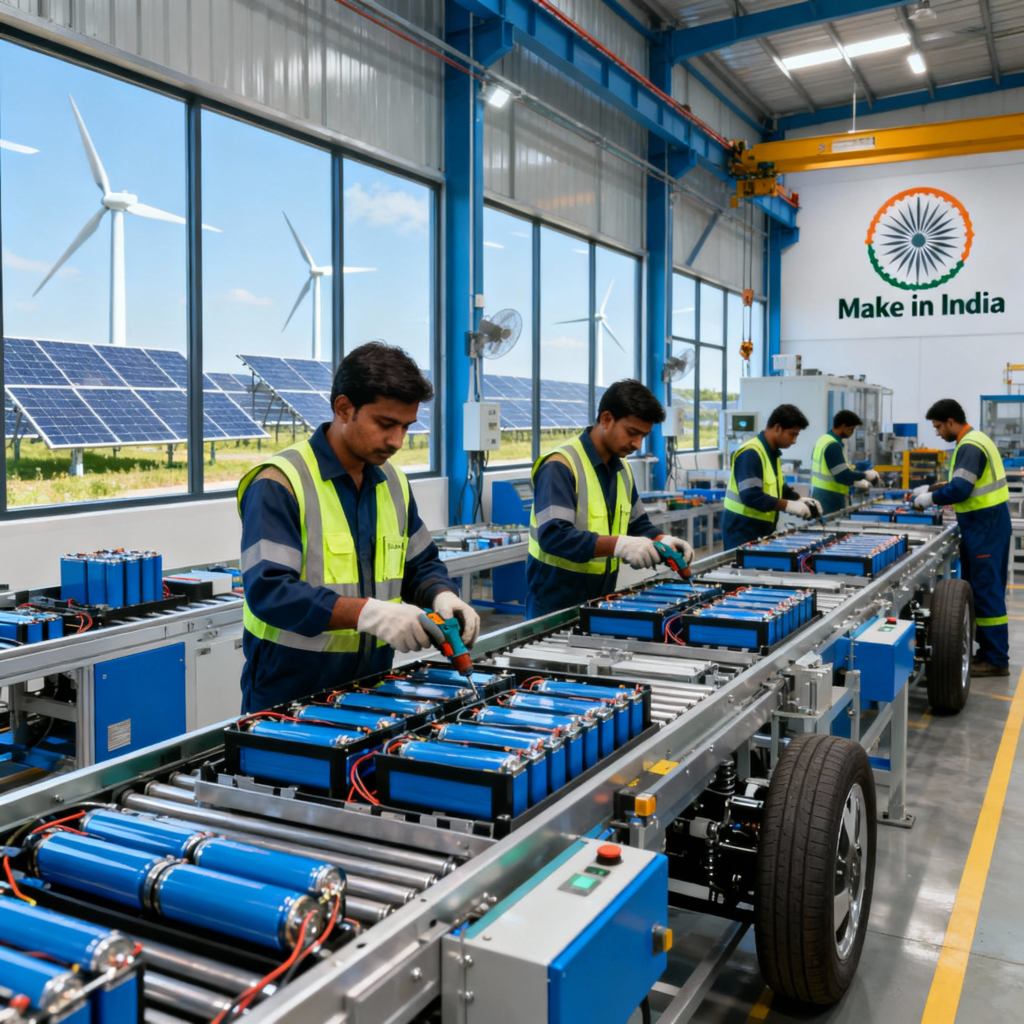
Strategic Drivers: Why Now?
De-Risking from China
Global Shift: Worldwide movement away from concentrated Chinese supply chains following COVID-19 disruptions, geopolitical tensions, and export restrictions
China’s Grip:
- 90% of rare earth processing capacity
- 60% of REE production
- 85% of lithium refining
- 80% of cobalt refining
Weaponization Risk: China’s history of export restrictions for strategic purposes (2010 Japan REE embargo, 2023 germanium/gallium controls, 2024 antimony restrictions) demonstrates vulnerability of single-source dependencies
India-US Cooperation: 2024 bilateral MoU on critical minerals; India joining Minerals Security Partnership (MSP) in June 2023—first non-G7 member
Latin America Alternative: Offers geographically diversified, politically stable alternative reducing China dependency
US-Latin America Tensions Create Space
Trade Disputes: US imposing 50% tariff on Brazilian steel and trade friction with other Latin American nations creating openness to alternative partners
BRICS Expansion: Argentina and Bolivia considering BRICS membership seeking new alliances beyond traditional US-European orbit
India’s Non-Alignment: Strategic autonomy policy allows India to engage Latin America without triggering Western concerns while offering alternative to Chinese Belt and Road Initiative
Economic Complementarities
Energy Security:
- India importing hydrocarbons from Venezuela, Mexico, Colombia, Brazil
- Diversifying away from West Asia oil dependency
- Biofuel Alliance cooperation on ethanol, biodiesel
Food Security:
- Latin America’s agricultural surplus (soybeans, sunflower oil, sugar) complementing India’s food processing sector
- Argentina supplies over 50% of India’s vegetable oil imports
Technology Transfer:
- India’s IT, pharmaceuticals, renewable energy technology meeting Latin American development needs
- Joint ventures in battery manufacturing, solar installations
South-South Cooperation
Shared Perspectives: Common Global South stance on climate justice (developed nations’ historical emissions responsibility), poverty eradication, debt restructuring, equitable development pathways
G20 Platform: India’s 2023 G20 presidency amplified developing country voices; Brazil’s 2024-2025 presidency continuing momentum
Multilateral Coordination: Non-Aligned Movement (NAM), G77, BRICS providing forums for coordinated positions on trade, climate, development finance
India’s Critical Minerals Strategy: Policy Framework
Critical Minerals Mission (2024)
Objective: Establish overseas mining projects targeting lithium, cobalt, nickel securing
Current Focus: Most projects in Argentina, Chile, Bolivia—Lithium Triangle priority
Khanij Bidesh India Ltd (KABIL)
Establishment: 2019 joint venture of three central PSUs—NALCO, Hindustan Copper Ltd, Mineral Exploration and Consultancy Ltd
Mission: Identify, acquire, explore, develop, mine, process overseas strategic minerals for Indian industries
Active Projects:
- Argentina: Five lithium blocks (Catamarca province)
- Australia: MoU with Critical Mineral Office for lithium and cobalt assets
- Chile: NDA with state-owned ENAMI for brine-type lithium blocks; submitted expression of interest for lithium exploration/processing projects
Minerals Security Partnership (MSP)
Membership: India joined June 2023—first non-G7 member; 14 countries plus EU (Australia, Canada, Estonia, Finland, France, Germany, India, Italy, Japan, Norway, South Korea, Sweden, UK, US, European Union)
Launch: US-led initiative June 2022 at Prospectors and Developers Association of Canada convention
Objective: Ensure critical minerals produced, processed, recycled in manner supporting countries’ economic development from geological endowments while adhering to high Environmental, Social, Governance (ESG) standards
Minerals Security Finance Network (MSFN): September 2024 India joined MSFN—MSP’s financing arm uniting Development Finance Institutions (DFIs) and Export Credit Agencies (ECAs) to fund critical mineral projects globally
Project Pipeline: MSP exploring ~150 projects including critical minerals/metals cooperation forum, battery materials development, minerals processing facilities in South America
International Partnerships
India-Australia Partnership: $5.8 million Critical Minerals Investment Partnership (three years) developing resilient supply chains
Quad Cooperation: India, US, Japan, Australia collaborating on mineral security; India hosting upcoming Quad summit formalizing strategies
Intergovernmental Forum Membership: Supporting responsible mining governance balancing environmental protection and community rights
Challenges: The Gaps Between Ambition and Reality
Processing Bottleneck
Raw Ore Richness, Processing Poverty: Latin America possesses abundant raw lithium, copper, rare earths but limited refining capacity
China’s Refining Dominance: Controlling 85-90% of critical mineral processing globally—raw material extraction alone insufficient for supply chain security
Value Addition Need: Joint processing facilities in source countries essential; technology transfer agreements critical
Long Lead Times: 15-20 years from exploration to commercial production—immediate supply constraints persist despite reserve discoveries
Environmental and Social Justice
Water Stress: Lithium extraction consuming 500,000 liters of water per ton of lithium in arid Atacama region—impacting indigenous communities and local ecosystems
EU Batteries Regulation (2023): Mandating due diligence for social/environmental risks throughout supply chain—compliance necessary for European market access
Justice Gaps: Distributive (unequal benefit sharing), procedural (limited community participation), recognition (indigenous rights) justice deficits in Lithium Triangle mining
Amazon Deforestation Risk: Mining expansion potentially threatening world’s largest rainforest; balancing economic development with conservation imperative
Resource Nationalism: Mexico’s 2023 lithium nationalization; Chile’s National Lithium Strategy increasing state control—signaling regional trend toward sovereign resource management
Geopolitical Competition
Chinese Entrenchment: China’s established presence in Latin American mining through Belt and Road Initiative investments, state-owned enterprise acquisitions, concessional financing creating dependencies
Price Competition: Chinese firms offering competitive terms, rapid project execution, less stringent ESG requirements
Political Influence: Economic leverage translating into diplomatic alignment—challenge for India’s late entry
Political Instability: Frequent government changes in Latin America affecting policy continuity; regulatory uncertainties deterring long-term investments
Economic and Technical Barriers
Limited Trade Volume: Despite potential, India-Latin America trade relatively modest compared to China-LAC ($450+ billion) or US-LAC ties
Geographic Distance: Limited direct shipping routes, sparse air connectivity constraining commerce; no direct India-Chile/Argentina container shipping services
Capital Intensity: Mining projects requiring hundreds of millions to billions in investment—strain on Indian companies competing with Western majors and Chinese SOEs
Technology Gaps: Indian firms facing technological disadvantages in advanced mining, processing, battery manufacturing relative to established players
Circular Economy Imperative
Finite Primary Extraction: Over-reliance on mining unsustainable long-term; battery recycling, urban mining (recovering minerals from e-waste) critical for lithium circular economy
Global Coordination Needed: Circular economy infrastructure, standards, cross-border material flows requiring international cooperation “akin to pandemic response”
Way Forward: Strategic Recommendations
1. Expedite FTA Negotiations
Action: Fast-track Chile and Peru FTAs in shortest timeframe; preferential trade agreements with MERCOSUR bloc (Brazil, Argentina, Uruguay, Paraguay)
Tariff Reductions: Critical minerals, clean energy technologies, engineering goods
Dedicated Chapters: First-ever critical minerals chapters in FTAs ensuring long-term supply security
2. Establish Joint Processing Facilities
India-Latin America Battery Plants: Manufacturing facilities in source countries with Indian technical/financial participation capturing downstream value addition
Lithium Refining: Joint ventures ensuring India doesn’t merely import raw ore but participates in entire value chain
Technology Transfer: Two-way exchange—India’s renewable energy tech for Latin America’s mineral processing expertise
3. Strengthen Institutional Mechanisms
Elevate India-LAC Conclave: From industry-driven to ministerial/summit level; sectoral working groups on energy, minerals, agriculture
Regular High-Level Visits: Maintaining momentum beyond episodic engagements; PM, ministers, chief ministers visiting Latin America
Diplomatic Presence: Expanding embassy/consulate footprint; commercial attaches in mining-rich provinces (Catamarca, Atacama, Salta)
4. Diversify Geographic and Mineral Sources
Beyond Argentina-Chile: Expand to Bolivia (21 million ton lithium reserves largely untapped), Brazil (niobium, graphite, REE), Peru (copper, REE)
Multi-Country Sourcing: Reducing single-source risks through portfolio diversification
Rare Earth Focus: Brazil’s REE potential receiving insufficient attention despite India’s REE import vulnerability
5. Build Resilient Supply Chains
Domestic Capacity: Boost India’s lithium processing, rare earth separation, battery manufacturing reducing dependence on imports
Strategic Reserves: 20-year planning horizon for critical mineral stockpiling; joint India-partner country storage facilities
Traceability Systems: Blockchain-based supply chain tracking ensuring ESG compliance; inspired by EU Battery Passport requirements
6. Sustainability Integration
Responsible Mining Support: Capacity-building programs for environmental management in partner countries; knowledge-sharing on best practices
Community Benefit-Sharing: Ensuring indigenous and local communities benefit from resource extraction through employment, royalties, infrastructure development
Circular Economy Development: Battery recycling infrastructure in India; Extended Producer Responsibility (EPR) frameworks mandating manufacturer take-back schemes
7. Leverage Multilateral Platforms
Quad and MSP Coordination: Pool resources, share intelligence through Minerals Security Partnership; joint investments reducing individual country burdens
BRICS Expansion: Use Argentina and Bolivia’s BRICS interest for mineral cooperation; New Development Bank financing projects
International Solar Alliance (ISA): Expand beyond solar to integrated clean energy solutions incorporating mineral security
8. Financial and Technological Innovation
Green Hydrogen Collaboration: Latin America’s renewable energy potential (solar, wind, hydro) combined with India’s technology creating synergies
Development Finance Mobilization: Multilateral Development Banks, BRICS New Development Bank, Indian development assistance (Lines of Credit) supporting mineral infrastructure
Academic MoUs: Research collaborations, technology incubators for clean energy innovations, workforce development programs
Broader Implications: India’s Energy Security and Global Role
Energy Transition Acceleration
Secure critical mineral supplies removing bottleneck for renewable capacity additions—enabling India to meet 500 GW by 2030, net-zero by 2070 targets credibly
EV and BESS deployment scaling up—transforming transportation and grid infrastructure
Solar, wind, battery storage ecosystem becoming globally competitive with secure input supplies
Economic Diversification
Reducing West Asia Oil Dependency: Renewable energy transition lessening reliance on 85% imported oil—enhancing energy independence
Manufacturing Competitiveness: Stable critical mineral supplies enabling Make in India in clean energy technologies—solar panels, EVs, batteries
Export Potential: India becoming global hub for renewable technology exports leveraging secured mineral inputs
Geopolitical Positioning
Strategic Autonomy: Diversified supply chains freeing India from single-country dependencies (China) or regional vulnerabilities (West Asia instability)
Global South Leadership: India-Latin America partnership demonstrating South-South cooperation model—alternative to North-led development paradigms
Multi-Alignment: Balancing US-China competition through partnerships transcending bloc politics—Minerals Security Partnership (US-led) while engaging BRICS (China-member)
Climate Leadership
Meeting Nationally Determined Contributions (NDC) under Paris Agreement credibly with secured clean energy inputs
Demonstrating sustainable development model for developing countries—economic growth without carbon-intensive pathways
Contributing to global 1.5°C warming limit through accelerated renewable deployment
Conclusion: From Transactional to Transformational
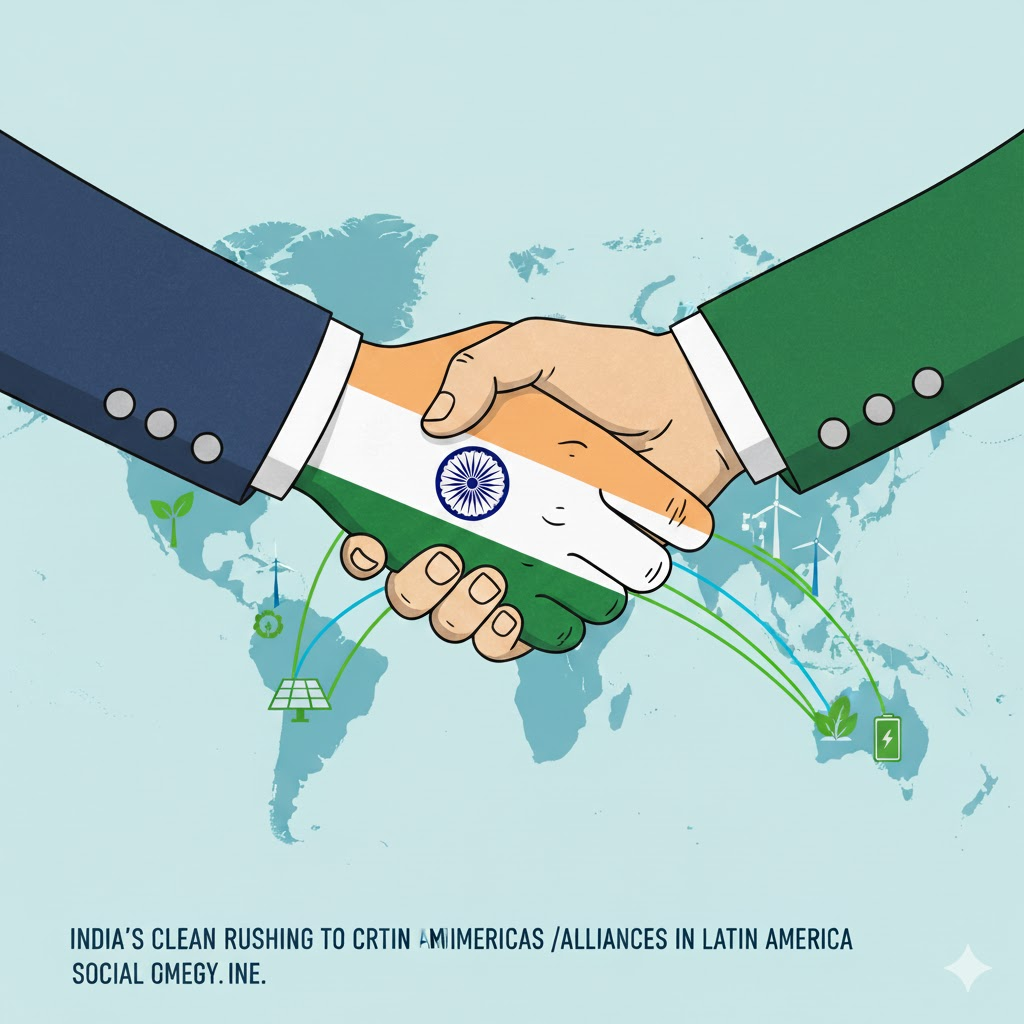
Latin America’s emergence as India’s critical minerals partner represents more than $50 billion trade or access to 53% of world’s lithium. It signifies a fundamental realignment in global energy geopolitics where South-South cooperation transcends rhetoric to reshape supply chains determining which nations lead the clean energy transition.
The numbers validate urgency: India’s 500 GW renewable target by 2030 and net-zero by 2070 require mineral supplies that could sextuple by 2040. Current 100% lithium import dependence and vulnerability to China’s 90% rare earth processing control create unacceptable strategic risk.
Strategic partnerships materializing—KABIL’s $24 million Argentina lithium pact, Chile FTA negotiations, Peru high-level mining delegation, Petrobras-Bharat Petroleum oil deal—demonstrate India’s systematic approach.
Yet challenges persist. Processing bottlenecks (Latin America rich in ore, poor in refining), environmental justice concerns (water stress in Atacama, Amazon deforestation risks), Chinese competition (established Belt and Road presence), political instability (frequent government changes), limited trade volumes (geographic distance, connectivity gaps) threaten to constrain partnership potential.
Policy imperatives are clear: Expedite FTAs, establish joint processing facilities, diversify geographic/mineral sources, build strategic reserves, ensure sustainability compliance, leverage multilateral platforms (MSP, Quad, BRICS), accelerate circular economy (battery recycling).
This partnership exemplifies critical concepts across papers—GS3 (economy, energy security, environment), GS2 (international relations, governance, social justice), GS1 (geography, resources). Understand critical minerals as 21st-century strategic resources analogous to 20th-century oil—nations securing supply chains today determine tomorrow’s economic and geopolitical power.
India-Latin America partnership isn’t merely mineral sourcing—it’s strategic partnership combining India’s technological prowess, financial capacity, and market scale with Latin America’s geological endowments, renewable energy potential, and shared Global South development vision.
The ultimate vision: India as clean energy superpower with diversified global supply chains, strategic autonomy free from single-country dependencies, climate leadership demonstrating sustainable development pathways for emerging economies, and geopolitical influence shaping multipolar world order.
As the World Resources Institute emphasizes: Securing critical minerals isn’t optional but imperative for maintaining India’s clean energy leadership position. Latin America’s role in powering India’s clean energy goals transcends transactional trade—it represents a strategic partnership reshaping 21st-century energy geopolitics and the South-South cooperation paradigm.
The race is on. India’s clean energy future—and Latin America’s industrialization aspirations—depend on translating today’s agreements into tomorrow’s operational supply chains. Time will tell if this $50 billion bet pays the $500 GW dividend.



+ There are no comments
Add yours