
Key Highlights
- E-invoicing mandatory for ₹10+ crore businesses from April 2025 with 30-day upload deadline and 2FA authentication transforming supply chain transparency
- UPI integration drives cashless revolution with 16.58 billion monthly transactions and ₹139 lakh crore annual value supporting MSME digital adoption
- AI and blockchain prevent fraud through automated detection systems that identified ₹35,000 crore fake ITC claims and enable tamper-proof transaction records
- Supply chain efficiency gains include 30-40% reduction in transit delays, automated compliance, and real-time inventory tracking across value chains
- Federal digital governance success through Articles 246A and 279A enabling 1.51 crore taxpayer registration and seamless Centre-State revenue reconciliation
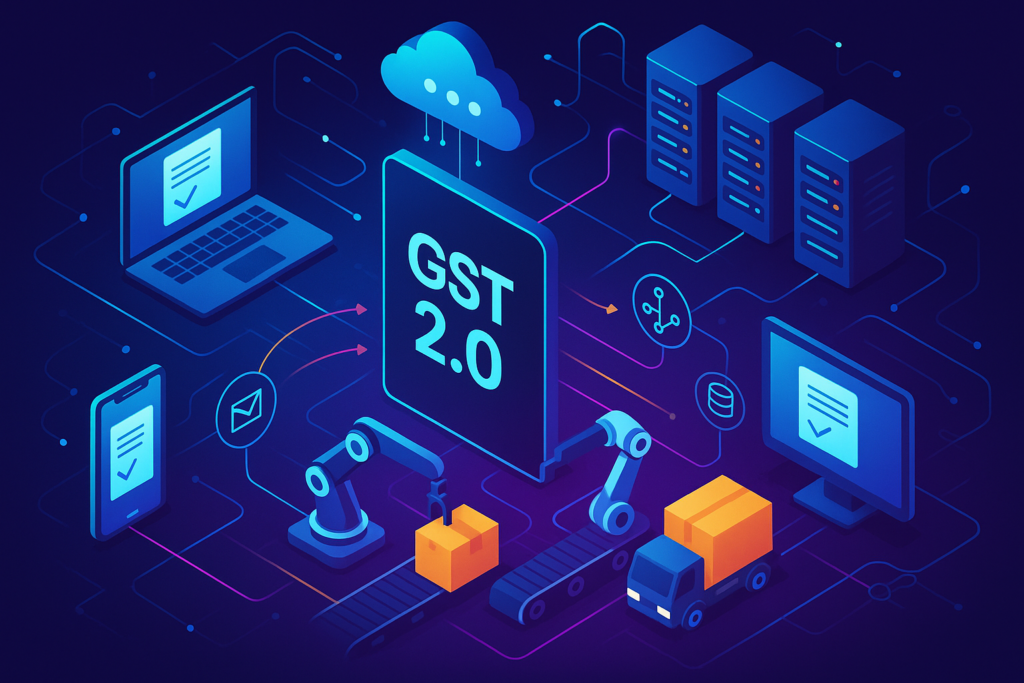
The evolution of India’s Goods and Services Tax (GST) into GST 2.0 represents more than a tax reform – it embodies a comprehensive supply chain revolution that is fundamentally reshaping how businesses operate, transact, and comply with tax obligations. With e-invoicing now mandatory for businesses with ₹10 crore+ turnover from April 2025 and Two-Factor Authentication (2FA) compulsory for all taxpayers, GST 2.0 is driving unprecedented digitization of supply chains while accelerating India’s transition to a cashless economy. This transformation aligns seamlessly with Digital India’s vision, creating a transparent, efficient, and inclusive economic ecosystem that supports the nation’s journey toward a $5 trillion economy.
Constitutional and Federal Architecture Enabling Digital Transformation
The constitutional foundation of GST 2.0 rests on Articles 246A and 279A of the Indian Constitution, which have enabled the creation of a unified digital tax ecosystem across the federation. This framework has successfully balanced Centre-State fiscal autonomy while promoting cooperative federalism through technology-mediated coordination.
Federal Digital Infrastructure:
- Article 246A: Concurrent legislative powers enabling uniform digital tax standards
- Article 279A: GST Council as digital governance pioneer with 54 successful meetings
- Real-time revenue reconciliation reducing Centre-State disputes
- Unified technology platform serving 1.51 crore registered taxpayers
The GST Council’s consensus-based decision-making has successfully navigated complex federal interests while implementing technology-driven reforms that serve both Central and State revenue interests through enhanced compliance and reduced evasion.
Revolutionary Supply Chain Transformation Through Digital Integration
E-Invoicing: The Backbone of Digital Supply Chains
The e-invoicing system under GST 2.0 has transformed supply chain operations by creating real-time, transparent transaction ecosystems. The system processes invoices through the Invoice Registration Portal (IRP), generating Invoice Reference Numbers (IRN) and QR codes for authentication.
E-Invoicing Implementation Scale:
- Mandatory threshold: Reduced from ₹20 crore to ₹10 crore turnover (April 2025)
- 30-day upload deadline enforced for enhanced compliance monitoring
- Integration with ERP systems enabling seamless supply chain automation
- Real-time data sharing across GST and e-way bill portals
Supply Chain Benefits:
- Automated invoice matching eliminates manual reconciliation delays
- Faster goods movement through integrated e-way bill generation
- Real-time inventory tracking enabling just-in-time supply chain optimization
- Reduced paperwork and processing costs across the value chain
Digital Logistics Revolution
The integration of e-invoicing with e-way bills has created a comprehensive digital logistics ecosystem that tracks goods movement from origin to destination:
Logistics Efficiency Gains:
- Automated compliance reducing transit delays by 30-40%
- Real-time tracking capabilities for supply chain visibility
- Reduced documentation requirements at interstate checkpoints
- Enhanced security through digital verification systems
Studies indicate that logistics companies utilizing GST 2.0’s digital infrastructure report faster billing cycles, quicker payments, and improved cash flow – critical advantages in high-volume transaction environments.
Input Tax Credit (ITC) Automation and Value Chain Transparency
GST 2.0’s automated ITC flow has eliminated cascading tax effects while ensuring transparency across supply chains:
ITC Process Automation:
- Real-time credit availability upon invoice authentication
- Automated matching between supplier and buyer invoices
- Fraud prevention through digital verification systems
- Seamless credit flow across multiple supply chain tiers
The system has successfully identified and blocked over ₹35,000 crore in fake ITC claims, demonstrating its effectiveness in preventing revenue leakage while ensuring legitimate businesses receive their rightful credits.
Accelerating India’s Cashless Economy Revolution
UPI Integration and Digital Payment Ecosystem

The integration of GST 2.0 with India’s Unified Payments Interface (UPI) has created a powerful synergy driving the nation’s cashless transformation. UPI’s remarkable growth from 285 thousand to 16.58 billion monthly transactions demonstrates the platform’s success in democratizing digital payments.
UPI Performance Statistics (2024):
- 78.97 billion transactions in H1 2024 (52% YoY growth)
- ₹139 lakh crore transaction value with 168% CAGR over five years
- Average ticket size: ₹1,478, highlighting micro-transaction adoption
- 631 bank participation ensuring universal accessibility
MSME Empowerment Through Digital Payments:
- QR code integration enabling small vendors to accept digital payments cost-effectively
- Simplified compliance through integrated GST-UPI systems
- Enhanced credit access as digital transaction records enable cash-flow based lending
- Financial inclusion bringing informal businesses into formal banking systems
Digital Payment Infrastructure Supporting GST Compliance
The convergence of GST 2.0 with digital payment systems has created comprehensive business ecosystems:
Payment-Tax Integration Benefits:
- Automatic tax calculation during digital transaction processing
- Real-time compliance monitoring through payment data analysis
- Reduced cash handling improving business operational efficiency
- Enhanced transparency through digital transaction trails
Small businesses report significant advantages from this integration, with street vendors and Kirana stores now accepting digital payments seamlessly while maintaining GST compliance through automated systems.
Enhancing Transparency Through Advanced Technology
AI-Driven Analytics and Fraud Detection

GST 2.0 employs sophisticated AI algorithms and machine learning systems to detect fraudulent activities and enhance compliance monitoring:
AI Applications in GST:
- ADVAIT and BIFA systems: Government’s Business Intelligence & Fraud Analytics platforms
- Anomaly detection algorithms: Identify suspicious transaction patterns automatically
- Predictive risk assessment: Flag high-risk taxpayers for detailed scrutiny
- Automated reconciliation: Process thousands of invoices in minutes
Fraud Detection Success:
Recent implementations have enabled tax authorities to identify and cancel thousands of fraudulent GST registrations while detecting complex schemes like circular trading and fake invoice generation.
Blockchain Technology for Tamper-Proof Records
The integration of blockchain technology in GST 2.0 creates immutable transaction records and enhanced security:
Blockchain Applications:
- Tamper-proof invoice ledgers preventing manipulation
- Smart contracts for automated compliance verification
- Decentralized validation reducing single points of failure
- Cross-border transaction security for international trade
Research demonstrates that blockchain-based invoicing systems enable authorities to track business transactions in real-time and prevent fake invoice generation – addressing a major source of tax evasion.
Global Benchmarking and Best Practices Integration
GST 2.0 incorporates international best practices from advanced digital tax systems worldwide:
Global Digital Tax Models:
- European Union VAT: Real-time reporting and automated compliance verification
- Singapore GST digitization: API-based filing and electronic validation systems
- Estonia’s X-Road: Blockchain-based government services integration
These international experiences have informed GST 2.0’s design, ensuring India’s system meets global standards while addressing local economic realities and federal governance requirements.
Economic Impact and Growth Implications
Trade Competitiveness and Ease of Doing Business
GST 2.0’s digital infrastructure significantly enhances India’s trade competitiveness:
Business Environment Improvements:
- Reduced compliance costs through automated processes
- Faster refund processing from 60+ days to 7-10 days
- Enhanced predictability in tax administration
- Improved investor confidence through transparent governance
The World Bank and OECD have recognized GST as one of the world’s most ambitious indirect tax reforms, positioning India as a leader in digital tax administration.
Economic Formalization and Revenue Enhancement
Formalization Impact:
- 1.51 crore active registrations bringing businesses into formal economy
- Enhanced revenue collection through reduced evasion
- Broader tax base encompassing previously informal businesses
- Improved fiscal health for both Centre and State governments
Socio-Economic Impact: Inclusion and Challenges
MSME Empowerment and Digital Inclusion
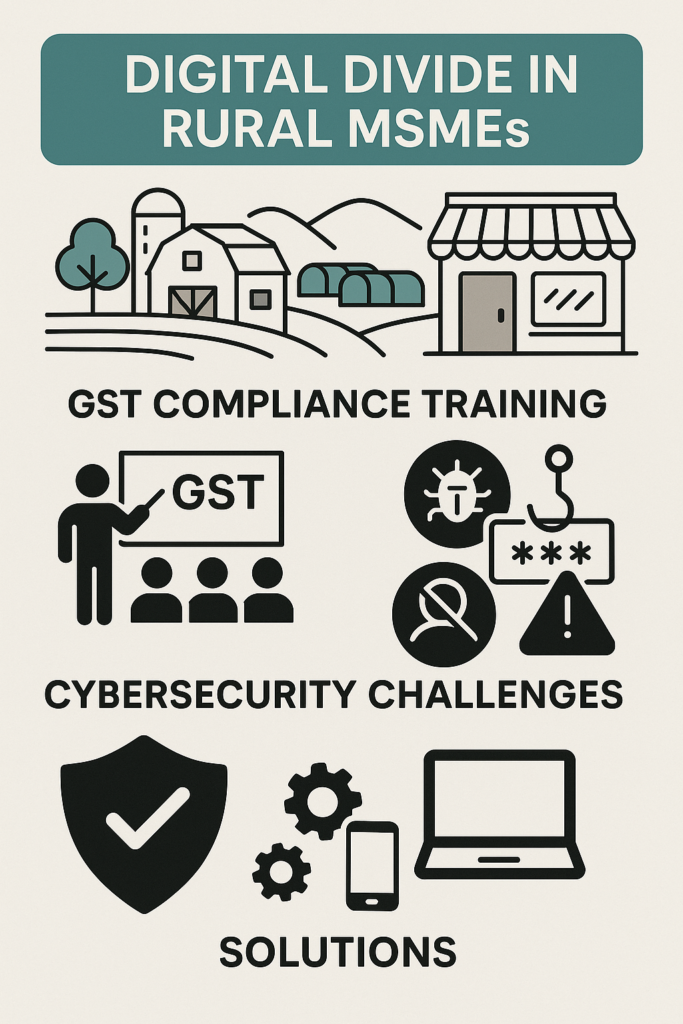
GST 2.0 specifically addresses Micro, Small, and Medium Enterprise needs through technology-enabled simplifications:
MSME Benefits:
- Simplified compliance procedures reducing burden by 40%
- Mobile-friendly interfaces enabling remote operations
- Automated calculations minimizing errors and penalties
- Digital literacy support through government training programs
Addressing Digital Divide Challenges
Implementation Challenges:
- Digital literacy gaps among rural and small businesses
- Internet connectivity issues limiting system access
- Cybersecurity concerns regarding sensitive financial data
- Technical integration complexities for existing ERP systems
Mitigation Strategies:
- Multi-language support for broader accessibility
- Offline-to-online transition assistance through community centers
- Enhanced cybersecurity measures including multi-factor authentication
- Simplified mobile applications requiring minimal technical expertise
Technology Infrastructure and Future Roadmap
Next-Generation Digital Integration
Advanced Technology Features:
- Machine Learning algorithms for predictive compliance assessment
- Natural Language Processing for multilingual taxpayer assistance
- Internet of Things (IoT) integration for real-time supply chain monitoring
- 5G connectivity ensuring seamless digital operations across geographic locations
Policy Evolution and Continuous Improvement
Ongoing Enhancements:
- Real-time policy adjustments based on AI-powered economic data analysis
- Integrated government services connecting GST with other digital platforms
- International coordination for cross-border digital taxation
- Continuous training programs for digital literacy enhancement
Building Inclusive Digital Economy
Financial Inclusion Through Technology
GST 2.0’s integration with digital payment systems has dramatically enhanced financial inclusion:
Inclusion Mechanisms:
- Small vendor empowerment through QR code payments
- Cash-flow based lending enabled by digital transaction records
- Formal banking system integration for previously excluded businesses
- Credit history building through consistent digital compliance
Sustainable Economic Growth
Growth Enablers:
- Reduced transaction costs through automation
- Enhanced business confidence via predictable tax administration
- Improved resource allocation through transparent data systems
- Innovation ecosystem development in fintech and compliance technology sectors
Way Forward: Building Comprehensive Digital Governance
The success of GST 2.0 in transforming supply chains, promoting cashless transactions, and ensuring taxation transparency positions India as a global leader in digital governance. The system demonstrates how constitutional federalism can successfully integrate with cutting-edge technology to create inclusive, efficient, and transparent governance systems.
Future Priorities:
- Enhanced digital literacy programs for rural and small business communities
- Robust cybersecurity frameworks protecting sensitive taxpayer data
- Continuous technology upgrades maintaining global competitiveness
- Inclusive digitization strategies ensuring no business is left behind
As India progresses toward its $5 trillion economy target, GST 2.0 serves as a cornerstone of digital transformation that balances technological advancement with social inclusion, federal cooperation with business efficiency, and transparency with ease of compliance. The system’s success in creating a seamless digital ecosystem provides a blueprint for other developing nations seeking to modernize their tax administration while maintaining democratic governance and inclusive growth.
The transformation from fragmented supply chains to integrated digital ecosystems showcases India’s capacity for large-scale systemic change while preserving constitutional principles and federal balance. As GST 2.0 continues evolving, it will remain central to India’s digital governance revolution, enabling the nation to achieve its economic aspirations while strengthening democratic institutions and promoting equitable development through technology-enabled transformation.









+ There are no comments
Add yours