
Key Highlights
- October 28, 2025: President Droupadi Murmu calls “digital arrest” the “most dreaded threat to citizens today” while addressing IPS probationers—term “impossible to understand 10 years ago”
- Supreme Court intervention (October 27, 2025): Bench of Justices Surya Kant and Joymalya Bagchi issued notices to all states/UTs, considering CBI probe after Ambala couple lost ₹1.05 crore to fake court orders
- Alarming scale: 92,323 digital arrest cases reported in 2024 with ₹2,140.99 crore losses (up from 91 cases in 2022); likely vastly under-reported due to victim embarrassment
- Cross-border operations: Solicitor General Tushar Mehta informed SC that scams originate from Myanmar, Thailand, Cambodia—complicating investigations, requiring international cooperation
- Technology transformation: India among largest AI user-bases; President urges IPS officers be “several steps ahead” of criminals leveraging AI voice cloning, deepfakes, fake video backgrounds
When Law Enforcement Becomes the Threat
On Monday, October 28, 2025, at Rashtrapati Bhavan, President Droupadi Murmu issued a stark warning to India’s newest IPS probationers: “Digital arrest has become one of the most dreaded threats to citizens today.”
Her words carried particular weight coming just two days after the Supreme Court took suo motu cognizance of the crisis—issuing notices to all states and Union Territories while considering a nationwide CBI probe into what Justices Surya Kant and Joymalya Bagchi called crimes with “pan-India nature and magnitude”.
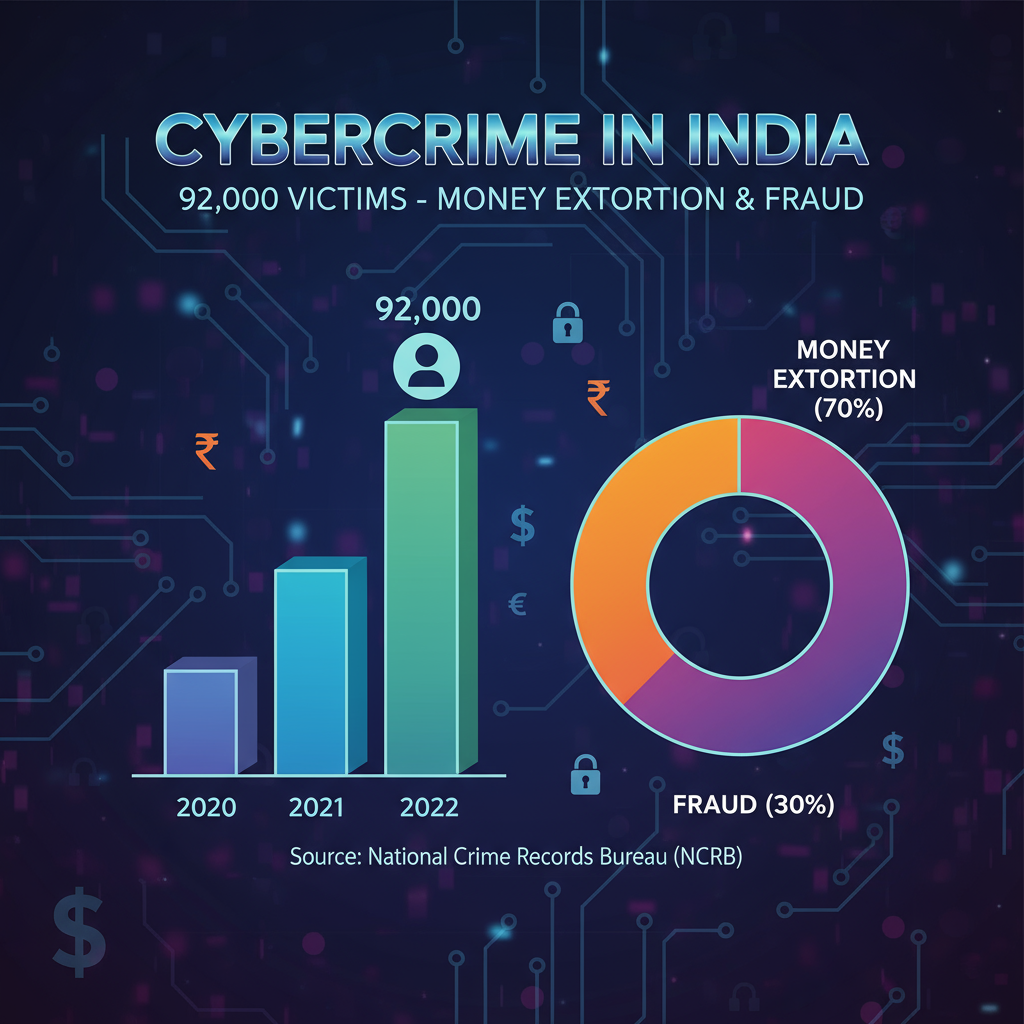
The numbers are staggering: Over 92,323 Indians fell victim to digital arrest scams in 2024 alone, losing ₹2,140.99 crore—a nearly 1,000-fold increase from just 91 cases in 2022. And these are only reported cases; experts believe actual numbers are far higher as victims fear embarrassment.
What makes “digital arrest” particularly insidious is its weaponization of citizen trust in law enforcement. As President Murmu noted, “Just about 10 years ago, the expression ‘digital arrest’ would have been impossible to understand. Today, it is one of the most dreaded threats.”
This represents a critical case study in how technology reshapes crime, policing, and citizen security—requiring urgent legal, institutional, and technological responses.
Understanding ‘Digital Arrest’: The Scam Anatomy
What It Is
“Digital arrest” has no basis in Indian law or the Indian Penal Code. It’s a fabricated concept—virtual confinement through psychological manipulation, fear, and intimidation. dailypioneer
Modus Operandi: Six-Step Trap
1. Initial Contact:
- Phone calls, emails, texts using fake government logos, official-sounding numbers
- Impersonating CBI, ED, Narcotics Bureau, customs officials, even judges
2. Fear Tactics:
- Victims told “arrest warrant issued” against them
- Allegations: Money laundering, drug trafficking, customs violations, Aadhaar misuse
- Creating panic, urgency preventing rational thinking
3. Video Calls and Fake Setup:
- Fraudsters conducting video calls with fake police station backgrounds
- AI-generated voice calls, doctored video calls enhancing legitimacy
- Keeping victims on continuous surveillance mimicking real interrogation
4. Isolation:
- Victims instructed to keep camera, microphone on continuously
- Barred from contacting family, friends, lawyers—creating digital captivity
- Hours-long “virtual custody” exhausting victim’s resistance
5. Payment Extraction:
- Money demanded as “refundable security deposit,” “investigation fund,” “fine”
- Threats of arrest, bank account freezing, asset seizure if non-compliant
- Immediate transfers via UPI, cryptocurrency, wire transfers
6. Disappearance:
- Once money received, fraudsters vanishing without trace
- Victims realizing scam only after extortion completed
Case Example: Anjali’s ₹58.5 Million Nightmare
A Gurugram woman named Anjali lost ₹58.5 million ($663,390) over five days in September 2024 after scammers posing as customs officials claimed she sent drugs to Beijing. Monitored via Skype, threatened with harm to her son, she liquidated assets under extreme psychological pressure. “My mind stopped working,” she recalled. bbc
Scale of Crisis: India’s Growing Nightmare
Statistical Landscape
- 92,323 digital arrest cases reported
- ₹2,140.99 crore (approximately $257 million) lost
- 123,672 total cyber fraud cases with ₹19,888.42 crore total losses (up from ₹921.59 crore in 2023)
- Karnataka: 641 cases, ₹109 crore lost (highest)
- Maharashtra: ₹58 crore in single October 2025 scam (7 arrested)
- Uttar Pradesh: Substantial cases
- Hyderabad: Significant financial impact
Trend Analysis:
- 91 cases (2022) → Over 90,000 (2024): Nearly 1,000-fold increase
- Cases nearly tripling between 2022-2024
- 14.41 lakh calls to national cybercrime helpline (1930) in 2024
Victim Profile
Demographics: Educated professionals, senior citizens, middle-class families
Psychological Impact: Trauma, depression, erosion of trust in institutions
Geographic Origin: Scams originating from Myanmar, Thailand, Cambodia—complicating investigations
Warning: Broader Context

Technology Reshaping Policing:
- “Just about 10 years ago, the expression ‘digital arrest’ would have been impossible to understand. Today, it is one of the most dreaded threats to citizens.”
Police as Support, Not Fear:
- People, especially marginalized, should view police as source of support, not fearsome entity
- “Colonial powers built policing systems based on fear, distrust in colonies like India”
- Transformation from Indian Police (IP) to Indian Police Service (IPS) reflecting “serving, not ruling”
Law and Order for Economic Growth:
- “Law and order is necessary pre-condition for attracting investment”
- Effective policing as important as economic incentives
AI and Future Policing:
- India has “one of largest, fastest-growing AI user-bases”
- “You have to be several steps ahead in adopting new technologies, including AI, compared to those who use these technologies with wrongful intent”
Future-Ready Force:
Previous Warnings
November 2024 (Parliament Joint Sitting):
- Digital fraud, cybercrime, deepfakes posing challenges to social, economic, national security
- India achieving Tier-1 status in Global Cybersecurity Index
December 2024 (Human Rights Day):
- Cyber crimes, climate change as “new threats” to human rights
- Cyber bullying, deepfakes, privacy concerns, misinformation complicating rights discourse
- AI as “non-human but intelligent agent” potentially violating rights
Supreme Court Intervention: Judicial Alarm

October 27, 2025 Order
Bench: Justices Surya Kant and Joymalya Bagchi
Trigger: Suo motu cognizance of Ambala couple case—seniors duped of ₹1.05 crore (September 3-16, 2025) using forged court orders
Pan-India Magnitude:
- “Criminals may be operating across India… or even from across the border”
- “Pan-India nature and magnitude” requiring uniform investigation
CBI Probe Contemplated:
- “We are inclined to entrust the matter to CBI”
- Asking if CBI has sufficient resources, cyber experts to handle nationwide cases
Notice to All States/UTs:
- Directing submission of details of FIRs registered, cases pending investigation
- Return date: November 3, 2025
Cross-Border Dimension:
- Solicitor General Tushar Mehta informing: “Offences originating from offshore locations like Myanmar and Thailand”
- CBI directed to prepare comprehensive plan for transnational investigation
Judicial Trust Concern:
- “Fabrication of judicial orders bearing forged signatures of judges strikes at very foundation of public trust in judicial system”
- “Direct assault on institution’s dignity”
Legal Framework and Government Response
Existing Laws
Information Technology Act, 2000:
- Section 66D (impersonation), Section 66C (identity theft) applicable
- Challenge: Act dating to pre-smartphone era; technology advancement creating inefficiencies
- Section 384 (extortion), 419 (cheating by personation), 420 (cheating)
Bharatiya Nyaya Sanhita, 2023:
- Comprehensive framework supporting digital arrest prevention
Government Initiatives
Union Budget 2025-26:
Public-Private Collaboration:
- Telecom providers blocking 4,000 Skype IDs, WhatsApp accounts tied to frauds
- Banks implementing verification protocols
Awareness Campaigns:
- “Cyber Jagrukta Diwas” programs
- Full-page advertisements, PM messages warning citizens
- “No authority conducts digital arrest” central message
National Cyber Crime Reporting Portal:
Challenges in Combating Digital Arrests
1. Technological Sophistication
AI-Powered Frauds:
- AI-generated voice cloning mimicking officials convincingly
- Deepfake videos creating realistic fake police stations, courtrooms
- Europol Report 2022: AI-based tools automating, scaling scams making detection harder
Anonymity and Encryption:
- Dark web operations, cryptocurrency transactions obscuring trails
- VPNs, proxy servers masking locations
2. Jurisdictional Complexities
Cross-Border Operations:
- Scam centers in Myanmar, Thailand, Cambodia beyond Indian jurisdiction
- Lack of extradition treaties, mutual legal assistance agreements
Inter-State Coordination:
- 28 states, 8 UTs with varying cyber capabilities
- Fragmented investigation approaches; lack of centralized database
3. Legal and Regulatory Gaps
IT Act Inadequacies:
- 2000 Act outdated for AI-driven crimes, deepfakes, sophisticated impersonation
- No specific provisions for “digital arrest” concept
Slow Judicial Process:
- Cyber forensics, evidence collection complex, time-consuming
- Low conviction rates discouraging victims from reporting
4. Law Enforcement Capacity Constraints
Skill Deficits:
- Most police personnel lacking cyber investigation training
- Rapid technology evolution outpacing police skill upgradation
Resource Limitations:
- Cyber cells understaffed; dedicated cyber police stations insufficient
- Forensic labs, cyber experts in short supply
5. Victim Psychology
Fear-Based Manipulation:
- Victims panicking under threat believing immediate compliance necessary
- Psychological isolation preventing rational decision-making
Low Cyber Literacy:
- Many citizens unaware that no authority conducts “digital arrest”
- Trusting official-looking setups, logos, uniforms
- Rural, elderly, less-educated particularly vulnerable
6. Reporting and Stigma
- Victims fearing social judgment, embarrassment—under-reporting
- Lack of confidence in law enforcement’s ability to recover money
Policy Recommendations: Comprehensive Response
1. Strengthening Legal Framework
Urgent Reforms:
- Update IT Act 2000 addressing AI-driven crimes, deepfakes, digital impersonation
- Specific provisions for “digital arrest” scams; enhanced penalties
- Data protection regulations enforcing transparency, accountability
Algorithmic Accountability:
- Guidelines for AI systems preventing misuse
- Transparency requirements for AI-generated content
2. Institutional Capacity Building
Cyber Police Expansion:
- Dedicated cyber police stations in every district
- Indian Cyber Crime Coordination Centre (I4C) strengthening with more personnel, resources
Training Programs:
- Mandatory cyber investigation training for all IPS, state police officers
- Regular upskilling on emerging technologies (AI, blockchain, IoT forensics)
CBI Cyber Wing:
- SC-mandated CBI probe requiring dedicated cyber units
- Inter-state coordination mechanism for uniform investigations
3. Technological Countermeasures
AI-Powered Detection:
- Machine learning algorithms detecting fraudulent calls, messages in real-time
- Telecom providers deploying AI to flag suspicious numbers
Caller ID Authentication:
- Mandatory verification for calls claiming official origin
- “TrueCaller”-like systems integrated with government databases
Blockchain for Verification:
- Blockchain-based identity verification preventing impersonation
- Immutable audit trails for official communications
4. Public Awareness and Education
Mass Campaigns:
- “No Authority Conducts Digital Arrest” as central message
- Television, radio, social media, print campaigns in multiple languages
School/College Curriculum:
- Cyber safety, digital literacy as mandatory subjects
- Practical training on recognizing scams
Vulnerable Groups:
- Targeted programs for elderly, rural populations, low-literacy groups
- Community policing models involving local leaders
5. International Cooperation
Bilateral Agreements:
- Extradition treaties, mutual legal assistance with Myanmar, Thailand, Cambodia
- Joint task forces tackling cross-border cybercrime
INTERPOL Coordination:
- Enhanced cooperation through I-24/7 secure police communications network
6. Victim Support Mechanisms
Reporting Infrastructure:
- National Cyber Crime Reporting Portal streamlining
- 1930 helpline with multilingual support, 24×7 availability
Fast-Track Recovery:
- Immediate account freezing mechanisms; ₹782 crore budget enabling quicker action
- Victim compensation funds for those unable to recover money
Psychological Counseling:
Way Forward
Short-Term (1-2 years)
- CBI establishing dedicated digital arrest investigation unit as per SC direction
- Launch nationwide awareness campaign: “Digital Arrest is Fraud”
- Telecom providers implementing AI-based fraud call detection
- Update IT Act incorporating digital arrest provisions
Medium-Term (3-5 years)
- Train 50,000 police personnel in cyber investigation
- Achieve 50% reduction in digital arrest incidents through prevention, enforcement
- Establish cyber police stations in 500+ districts
- International cooperation agreements with 10+ countries hosting scam operations
Long-Term (5-10 years)
- Universal cyber literacy; zero tolerance for digital arrest scams
- AI-powered policing infrastructure proactive rather than reactive
- India as global leader in cybercrime prevention, cybersecurity
- Trust in digital institutions fully restored through transparent, effective governance
Conclusion: Technology’s Double Edge
President Murmu’s October 28, 2025 warning—“digital arrest as most dreaded threat”—reflects crisis urgency. What was “impossible to understand decade ago” now victimizes 92,323 Indians losing ₹2,141 crore in 2024 alone.
The Supreme Court’s October 27 intervention—issuing notices to all states, considering CBI probe—signals judicial alarm at scams’ “pan-India magnitude” originating from Myanmar, Thailand.
Technology paradox is stark: India among largest AI user-bases offering innovation opportunities, yet criminals leveraging same technologies—AI voice cloning, deepfakes, fake video backgrounds—staying “several steps ahead” of law enforcement.
Challenges persist: Cross-border jurisdictions, IT Act 2000 inadequacies, capacity constraints, victim psychology, reporting stigma. Yet solutions exist: Legal reforms, institutional capacity building, AI-powered countermeasures, mass awareness, international cooperation, victim support.
President’s call for police as “support, not fear” particularly resonates—colonial legacy of fear-based policing ironically enabling scams’ believability. Decolonizing policing—transforming IP to IPS reflecting “serving, not ruling”—becomes cybersecurity imperative.
Digital arrest represents intersection of technology, governance, law enforcement, citizen security, ethics. As President emphasized, future-ready police force critical for Viksit Bharat—requiring IPS officers embracing technology while protecting citizens from its weaponization.
SC’s November 3 hearing will determine CBI probe scope, resource allocation, interstate coordination mechanisms—potentially watershed moment for India’s cybercrime response.
Ultimate vision: Technology-empowered, citizen-centric, transparent policing ensuring digital India remains secure, trustworthy space for all 140 crore Indians. “No authority conducts digital arrest” must become universal knowledge through sustained awareness, enforcement, institutional trust-building.









+ There are no comments
Add yours