Key Highlights
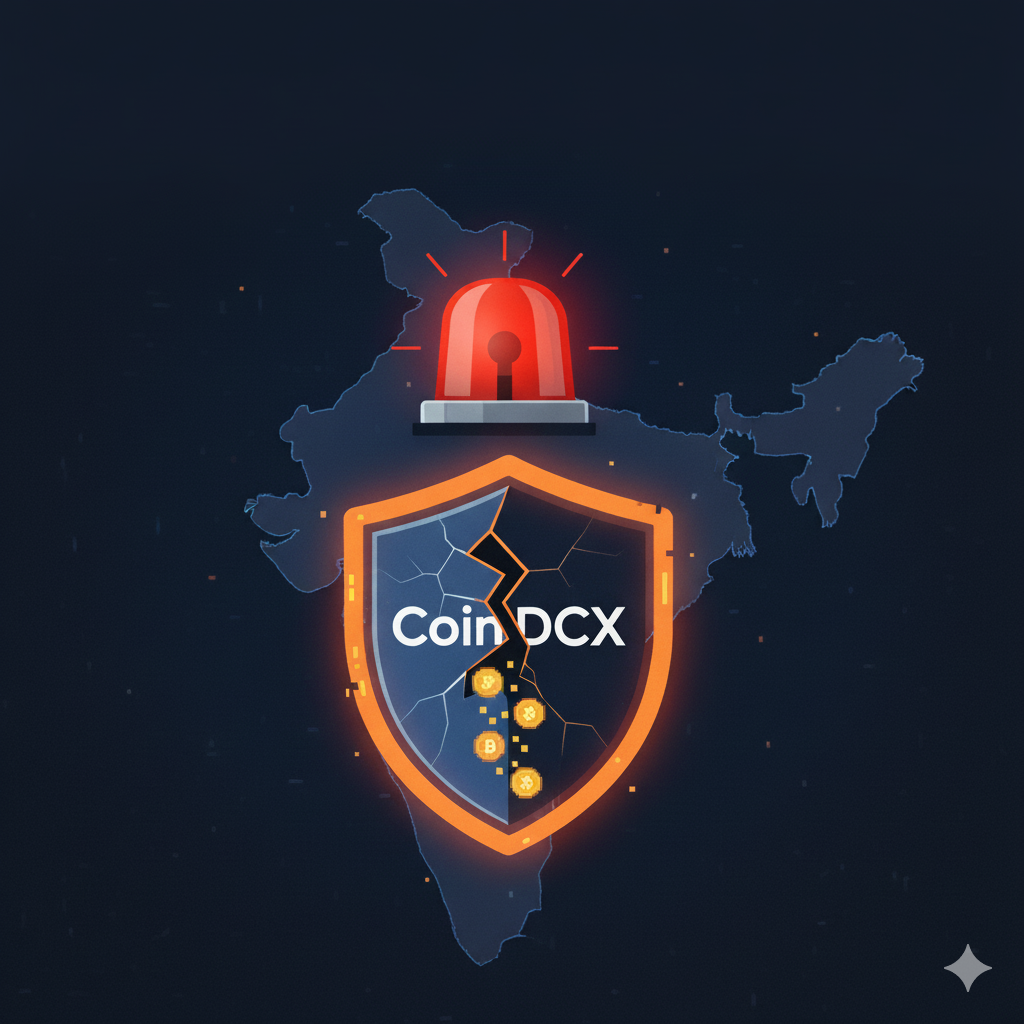
- CoinDCX lost $44 million (₹378 crore) on July 19, 2025, in a sophisticated cyberattack exploiting CVE-2025-20281, a critical Cisco ISE vulnerability
- Customers unaffected — losses absorbed from company treasury reserves, but the incident raises serious questions about custodial security and regulatory oversight
- India’s crypto paradox — 30% tax and 1% TDS levied on gains, yet no dedicated regulatory framework exists to protect millions of investors
- Madras High Court precedent — cryptocurrency recognized as property under Indian law in the landmark WazirX case, granting users legal recourse
- Global context — Cross-chain bridge hacks cost $3.1 billion in 2025, with DeFi protocols accounting for 80% of crypto thefts
The Anatomy of a $44 Million Heist

How the Attack Unfolded
On July 19, 2025, India woke up to its second-largest cryptocurrency breach in under a year. CoinDCX, commanding the country’s biggest crypto exchange footprint with 1.6 crore users, became the latest victim of increasingly sophisticated cybercrime targeting the digital asset ecosystem. coincodex
The attackers didn’t go after customer wallets directly—they targeted an internal operational account used exclusively for liquidity provisioning on a partner exchange. This strategic choice demonstrated deep operational knowledge and revealed a fundamental weakness in how exchanges manage segregated funds.
The Technical Exploitation Chain
Security firm FireCompass later identified the attack vector: CVE-2025-20281, a critical vulnerability (CVSS score 10.0) in Cisco Identity Services Engine (ISE) integrated with CoinDCX’s third-party payment gateway. This flaw allowed unauthenticated attackers to execute arbitrary code as root—essentially gaining complete system control without any credentials.
The attack sequence was methodical:
- July 19, 2025, early hours: Attackers sent crafted POST requests with SQL injection payloads (
' OR '1'='1) bypassing input validation sonicwall - Cobalt Strike deployment: Malware extracted API keys and session tokens from Redis caches
- Credential weaponization: Stolen credentials initiated unauthorized ERC-20 token transfers via Ethereum smart contracts
- Persistence mechanism: Scheduled task (
coin_transfer_cron) running every 5 minutes via crontab ensured continued data exfiltration - Fund movement: Approximately $44M USDT routed through Solana-Ethereum bridges to obscure the trail
The stolen assets were consolidated into 4,443 ETH ($15.7M) and 155,830 SOL ($27.6M), then transferred to Tornado Cash, the cryptocurrency mixer that has become the preferred laundering tool for cybercriminals. moneylaunderingnews
The AI-Powered Attack Dimension
What made this breach particularly concerning was the suspected use of AI-driven fuzzing tools to generate optimized API payloads. The attackers exploited CoinDCX’s lack of AI-based behavioral analytics for transaction monitoring—a gap that allowed the sophisticated attack to proceed undetected initially.
The attacker address was funded with 1 ETH from Tornado Cash, demonstrating the circular economy of crypto crime. Meanwhile, 10,000 user accounts were compromised with data exfiltrated to a command-and-control (C2) domain (coinxfer[.]top) over port 443.
CoinDCX’s Response: Transparency Under Fire
Swift Containment, Delayed Disclosure
CoinDCX discovered the breach on July 19 and isolated the affected account immediately. By July 20, authorities were notified and customers informed via official blog post. Yet, the crypto community raised eyebrows—blockchain sleuth ZachXBT flagged suspicious activity 17 hours before CoinDCX’s public disclosure.
“Y’all built this exchange on the narrative of ‘being transparent with the community,’ yet it took over 18 hours to disclose the hack of more than $44 million,” one frustrated user commented.
CEO’s Acknowledgment
Sumit Gupta, CoinDCX co-founder and CEO, addressed users candidly: “While this breach was limited to one internal operational account—and no customer funds were impacted—we take this incident with the utmost seriousness. This is a stark reminder of the evolving threats facing the crypto ecosystem, not just in India but globally”.
The company committed to absorbing the entire $44 million loss from treasury reserves, maintaining that customer funds remained “100% safe and fully accessible”. Trading and rupee withdrawals continued without interruption.
CoinDCX also announced collaboration with CERT-In, partner exchanges, and global analytics partners to track wallet activity and pursue recovery.
Echoes of WazirX: India’s Recurring Crypto Crisis
The $234 Million Precedent
Just a year earlier, in July 2024, WazirX—another major Indian exchange—suffered a devastating $234.9 million hack attributed to North Korea’s Lazarus Group. Unlike CoinDCX, WazirX froze user assets and proposed a controversial “socialized loss” scheme to distribute the damage across all users. crystalintelligence
The Madras High Court intervened, describing the plan as akin to “a group insurance of a self-help group” with no contractual basis. In a landmark October 2025 ruling in Rhutikumari v. Zanmai Labs Pvt Ltd, Justice N. Anand Venkatesh declared: “Cryptocurrency is property capable of being enjoyed, possessed, and held in trust”. barandbench
This precedent-setting judgment established that:
- Cryptocurrencies qualify as property under Indian law, not mere code
- Users have ownership rights over their digital assets, not exchanges
- Indian courts have jurisdiction even if arbitration is seated abroad, provided assets are operated from India
- Exchanges act as custodians with fiduciary duties toward user assets
Comparative Crisis Management
Both incidents exposed India’s custodial vulnerability crisis and the absence of clear regulatory accountability.
India’s Crypto Regulatory Paradox: Tax Without Protection
The Legal Limbo
As of 2025, cryptocurrencies occupy a peculiar legal space in India:
What’s Legal:
- Buying, selling, trading, and holding cryptocurrencies
- Investing in crypto as digital assets
- Trading on FIU-IND registered exchanges
What’s NOT:
- Recognition as legal tender
- Using crypto for payment of goods/services
- Operating unregistered exchanges
The Taxation Framework: 30% + 1% TDS
The 2022 Union Budget introduced Section 115BBH, imposing a flat 30% tax (plus 4% cess and applicable surcharge) on all crypto gains, effective April 1, 2022. This rate—India’s highest income tax bracket—applies uniformly regardless of holding period or taxpayer category. cryptact
Additionally, Section 194S mandates 1% Tax Deducted at Source (TDS) on crypto transfers exceeding ₹50,000 (₹10,000 in certain cases) from July 1, 2022.
The Paradox: India heavily taxes crypto gains yet provides no statutory investor protections comparable to securities markets.
Key restrictions under Section 115BBH:
- No deductions except cost of acquisition (no exchange fees, gas fees, mining costs)
- No loss set-off against other crypto gains or income
- No carry-forward of losses to future years
- Same rate for short-term and long-term holdings
Fragmented Regulatory Oversight
Multiple agencies claim partial jurisdiction, yet no single body regulates cryptocurrency:
- Reserve Bank of India (RBI): Traditionally skeptical; maintains caution post-2020 Supreme Court ruling overturning 2018 banking ban
- Securities Exchange Board of India (SEBI): Proposed primary regulator under pending bill; currently has no formal authority
- Financial Intelligence Unit (FIU-IND): Enforces AML/KYC under PMLA 2023 amendments; requires registration of Virtual Digital Asset (VDA) service providers
- CERT-In: Mandates cybersecurity compliance, including 6-hour breach reporting, 180-day log retention, and KYC for crypto exchanges under 2022 Directions
Pending Legislation: The Waiting Game
Parliament has been working on the Cryptocurrency and Regulation of Official Digital Currency Bill since 2021. The current draft proposes:
- SEBI as primary regulator for cryptocurrencies (Bitcoin, Ethereum, Solana)
- NFTs remaining unregulated
- Framework balancing innovation with investor protection
However, two previous bills (2019 and 2021) lapsed without enactment, leaving the industry in extended uncertainty.
Investor Rights in the Regulatory Vacuum
General Legal Protections
Despite the absence of crypto-specific legislation, investors aren’t entirely defenseless:
Information Technology Act, 2000:
- Section 43: Unauthorized access to computer systems
- Section 66: Hacking and data breaches
- Section 43A: Civil liability for platforms failing to maintain “reasonable security practices”
Indian Penal Code / Bharatiya Nyaya Sanhita:
CERT-In Directions (2022):
- Mandatory 6-hour breach reporting
- 180-day log retention in Indian jurisdiction
- KYC/financial record retention for 5 years by VDA service providers
Prevention of Money Laundering Act (PMLA), 2002:
- 2023 amendments extended PMLA to Virtual Digital Assets
- Strict due diligence, recordkeeping, and suspicious transaction reporting mandatory
The Madras High Court Game-Changer
The Rhutikumari judgment (October 2025) provided crucial clarity:
Cryptocurrency as Property:
- Recognized as “property capable of being enjoyed, possessed, and held in trust”
- Not tangible property nor currency, but possesses essential property characteristics
- Users are proprietors, not mere account holders
Jurisdictional Assertion:
- Indian courts can grant interim relief even if arbitration seated abroad, provided assets operated from India
- Protects Indian investors from being left without remedy due to foreign corporate structures
Custodial Accountability:
- Exchanges act as trustees/custodians with fiduciary duties
- “Absence of crypto-specific regulations cannot be defence for poor governance or failure to safeguard digital assets”
- Custodial platforms expected to maintain high cyber hygiene standards; may be held accountable for operational negligence
The Global Crypto Hack Epidemic
Record-Breaking Losses in 2025
The CoinDCX breach is part of a catastrophic global trend:
- H1 2025 total losses: $3.1 billion across crypto ecosystem (DeFi + CEX), already surpassing most previous annual totals
- Cross-chain bridge hacks: $2 billion stolen in 13 distinct attacks
- DeFi dominance: 80% of stolen funds came from DeFi protocols
- Attack sophistication: Average cross-chain bridge hack is 11x larger than non-bridge hacks
Major 2025 Exploits
The Tornado Cash Pipeline
Tornado Cash has emerged as the preferred laundering infrastructure for crypto criminals:
- $7.6 billion processed since August 2019
- $1.54 billion in confirmed proceeds from crime
- 18% of funds from sanctioned entities (primarily Lazarus Group)
- Used to launder proceeds from Ronin Bridge ($620M), Harmony Bridge ($96M), and Nomad Heist ($7.8M)
In August 2022, the U.S. Treasury’s OFAC sanctioned Tornado Cash, adding 38 cryptocurrency addresses to the Specially Designated Nationals (SDN) List. Despite this, the decentralized nature of the smart contract mixer makes enforcement challenging.
The Lazarus Group: North Korea’s Crypto ATM
North Korea’s state-sponsored Lazarus Group has become the most prolific cryptocurrency theft operation globally:
Recent Major Heists:
- Bybit (Feb 2025): $1.5 billion—largest crypto theft in history
- WazirX (July 2024): $235 million
- Ronin Bridge (March 2022): $620 million
- DMM Bitcoin (2024): $305 million
Estimated Total: Over $3.4 billion stolen since 2007, potentially up to $2 billion in 2025 alone. These funds reportedly finance North Korea’s nuclear and ballistic missile programs.
The Security Crisis: Why Crypto Gets Hacked
Exchange-Level Vulnerabilities
API Exploitation:
- CVE-2025-20281 demonstrated catastrophic risks from third-party integrations
- Insufficient input validation allowing SQL injection and command execution
- Unauthenticated remote code execution with root privileges
Custodial Model Risks:
- Centralized custody creates “honeypots” attracting sophisticated attackers
- Hot wallet compromises enable rapid, large-scale theft
- Multi-signature wallet exploits (WazirX case) bypass supposed security controls
Monitoring Gaps:
- Absence of AI-based behavioral analytics enabling undetected anomalous transactions
- Delayed breach detection allowing attackers extended dwell time
Blockchain-Specific Threats
Smart Contract Vulnerabilities:
- Input validation bugs account for ~34.6% of protocol exploits
- Flash-loan oracle manipulation enabling complex DeFi attacks
- Immutability paradox: deployed contracts unfixable for blockchain’s entire life
Cross-Chain Bridge Weaknesses:
- Security flaws in interoperability protocols facilitating $2 billion in losses
- Compounded risk when protocols span multiple blockchains
- Wormhole ($325M), Ronin ($620M), and Orbit Chain ($80M) exemplify catastrophic failures
DeFi Composability Risks:
- Complex smart contract interactions creating unforeseen attack surfaces
- Over 6.2 million new smart contracts deployed Q1 2025, expanding vulnerability landscape
- Governance and upgrade mechanism weaknesses enabling protocol takeovers
The Human Factor
Social Engineering:
- Lazarus Group’s fake Zoom calls tricking employees into revealing credentials
- Phishing attacks targeting exchange staff and users
- DNS hijacking redirecting users to malicious websites (Curve Finance case)
Operational Security Failures:
- Compromised employee work laptops (CoinDCX incident)
- Weak multi-factor authentication implementations
- Inadequate segregation between operational and customer funds
Policy Imperatives: Building India’s Crypto Governance Framework
1. Comprehensive Regulatory Legislation
Fast-Track the Pending Bill:
- Enact Cryptocurrency Regulation Bill establishing SEBI as primary regulator
- Clear definitions: VDAs, custodial vs. non-custodial, utility vs. security tokens
- Investor protection provisions: insurance requirements, dispute resolution mechanisms, compensation funds
Balance Innovation and Protection:
- Avoid blanket bans that discourage technological innovation while addressing systemic risks
- Regulatory sandboxes for testing new models safely
- Risk-based regulation tailored to different crypto activities
2. Mandatory Cybersecurity Standards
Expand CERT-In Directions:
- Real-time breach reporting with detailed incident analysis
- Quarterly mandatory security audits and penetration testing
- AI-based behavioral analytics for transaction monitoring
Custody Security Requirements:
- Multi-signature wallets with geographically distributed signers
- Cold storage requirements for majority of customer funds (95%+ threshold)
- Proof-of-reserves audits ensuring 1:1 backing
- Segregation of customer funds from operational accounts (CoinDCX lesson)
Third-Party Risk Management:
- Stringent vetting of API integrations and payment gateways
- Regular vulnerability assessments of all connected systems
- Supply chain security protocols
Smart Contract Security:
- Mandatory third-party audits before deployment
- Bug bounty programs incentivizing responsible disclosure
- Formal verification for high-value contracts
3. Investor Protection Mechanisms
Mandatory Insurance:
- Cyber insurance covering customer funds proportional to exchange volume
- Industry-wide compensation fund (SEBI investor protection model)
Transparency Obligations:
- Real-time disclosure of security incidents (CoinDCX’s 1-day disclosure as minimum benchmark)
- Quarterly financial health and security audit reports published publicly
- Monthly proof-of-reserves attestations
Custody Standards Enforcement:
- Based on Madras HC precedent: fiduciary duty to protect user property
- Prohibition on arbitrary freezing or reallocation of user assets
- Legal liability for operational negligence causing losses
4. AML/KYC Enforcement
Strengthen PMLA Compliance:
- VDA reporting entities’ strict enforcement under 2023 amendments
- Automated transaction monitoring flagging suspicious patterns
- Integration with global financial intelligence networks
Address Mixing Services:
- Restrictions on Tornado Cash-like services facilitating money laundering
- Enhanced due diligence for transactions involving mixers
- International cooperation tracking illicit fund flows
5. Institutional Capacity Building
Specialized Cyber Units:
- CERT-In establishing dedicated crypto incident response teams
- Training law enforcement in blockchain forensics and on-chain analysis
- International collaboration with agencies tracking cross-border crypto crime
Judicial Capacity:
- Crypto-specific courts/benches expediting dispute resolution
- Building on Madras HC precedent recognizing crypto as property
- Judicial training on blockchain technology and digital asset concepts
6. Technology-Driven Solutions
Blockchain for Transparency:
- Immutable audit trails tracking fund movements
- Public proof-of-reserves leveraging blockchain transparency
- Smart contracts automating compliance checks
AI for Threat Detection:
- Machine learning identifying anomalous transaction patterns
- Predictive analytics preventing attacks proactively
- Real-time risk scoring for transactions and addresses
7. International Cooperation
Cross-Border Coordination:
- Bilateral agreements with jurisdictions hosting major crypto operations
- Participation in global crypto governance initiatives (FATF, FSB)
- Information sharing on threat actors like Lazarus Group
Extradition and Asset Recovery:
- Mechanisms recovering stolen funds routed abroad
- Cooperation with blockchain analysis firms (Elliptic, Chainalysis, TRM Labs)
- Freezing and seizure powers for crypto wallets linked to crime
8. Public Awareness and Education
Investor Education Campaigns:
- Risks of centralized exchanges vs. self-custody
- Recognizing phishing, fake apps, and Ponzi schemes
- Safe practices: hardware wallets, multi-factor authentication, address verification
Mandatory Risk Disclosures:
- Exchanges required to provide clear, upfront risk warnings
- Disclosure of insurance coverage, security measures, and past incidents
Industry Best Practices:
- Guidelines on self-custody for large holdings
- Biometric security and transaction confirmation protocols
- Regular security awareness training for exchange employees
Immediate, Short-Term, and Long-Term Roadmap
Immediate Actions (2025-26)
✅ Pass comprehensive Cryptocurrency Regulation Bill in winter session 2025
✅ SEBI establish dedicated VDA regulation department
✅ CERT-In issue updated cybersecurity directions specifically for crypto platforms
✅ Mandate industry-wide security audit for all registered exchanges
✅ Implement CoinDCX’s 24-hour disclosure standard as minimum requirement
Short-Term Goals (2026-28)
📊 Implement mandatory cyber insurance for custodial platforms
📊 Establish Crypto Investor Protection Fund
📊 Create specialized crypto dispute resolution mechanism building on Madras HC precedent
📊 Achieve 100% PMLA compliance among VDA service providers with quarterly audits
📊 Launch public awareness campaign on crypto security and scam recognition
Medium-Term Objectives (2028-30)
🎯 Zero-tolerance enforcement against unregistered exchanges operating in India
🎯 Deploy AI-powered national crypto transaction monitoring system
🎯 International asset recovery agreements with 20+ jurisdictions
🎯 Position India as responsible crypto governance leader in Global South
🎯 Blockchain-based proof-of-reserves standard for all exchanges
Long-Term Vision (2030-47)
🚀 Conclusive regulatory clarity balancing innovation, protection, and security
🚀 Indian crypto ecosystem trusted by 100+ million users with robust consumer protections
🚀 Global benchmark for emerging market crypto regulation
🚀 Integration with traditional finance through regulatory convergence
🚀 India’s Digital Rupee (CBDC) complementing regulated private crypto sector
Broader Implications for Viksit Bharat
Digital Economy Foundations
With 16 million CoinDCX users and millions more across other platforms, India has achieved mass cryptocurrency adoption. For the Viksit Bharat (Developed India) 2047 vision to include a robust digital economy, crypto governance is no longer optional—it’s essential.
Fintech Leadership
India’s UPI success story demonstrated how proper regulation can enable technological innovation at scale. The crypto sector requires similar regulatory certainty to attract global investment while protecting domestic users.
Financial Inclusion
Cryptocurrency potentially offers banking services to India’s unbanked population. However, without regulation ensuring accessibility and preventing exclusion through prohibitive compliance costs, this potential remains unrealized.
National Security
Unregulated crypto enables terror financing, money laundering, and sanctions evasion (as demonstrated by Lazarus Group). Robust AML/KYC compliance isn’t just financial policy—it’s critical for India’s national security.
Conclusion: India’s Defining Moment

The CoinDCX breach—$44 million vanishing through CVE-2025-20281, Cobalt Strike, and Tornado Cash—crystallizes India’s cryptocurrency governance crisis. While customer funds were spared this time through corporate treasury absorption, the incident raises existential questions about systemic vulnerabilities.
India faces a stark paradox: levy the highest tax rates (30% + 1% TDS) on crypto gains while providing no dedicated investor protections. Sixteen million CoinDCX users, and countless more across Indian exchanges, operate in a regulatory vacuum where property rights depend on judicial precedent rather than statutory clarity.
The Madras High Court’s landmark recognition of cryptocurrency as property—”capable of being enjoyed, possessed, and held in trust”—provides crucial legal footing. Yet, without comprehensive legislation, investors remain vulnerable to fraud, cyberattacks, and exchange insolvencies.
The global context is alarming: $3.1 billion in cross-chain bridge hacks, Lazarus Group’s $1.5 billion Bybit heist, and systematic exploitation of smart contract vulnerabilities demonstrate that this isn’t India’s problem alone—it’s a planetary challenge requiring coordinated response.
Cryptocurrency governance represents the intersection of cybersecurity, financial regulation, technology ethics, investor protection, and national security—a multidisciplinary policy challenge defining 21st-century governance.
CEO Sumit Gupta’s acknowledgment rings prophetic: “This is a stark reminder of the evolving threats facing the crypto ecosystem, not just in India but globally”. Custodial platforms now face heightened accountability expectations—”expected to maintain high standards of cyber hygiene; may be held accountable for operational negligence even if customer funds unaffected”.
The WazirX precedent demonstrated customer recovery challenges when exchanges fail, with frozen assets and “socialized loss” schemes threatening individual property rights. CoinDCX’s treasury absorption model offers an alternative approach, but relying on corporate goodwill isn’t sustainable policy.
AI emerges as a double-edged sword: attackers deploy fuzzing tools optimizing exploits while defenders lack sophisticated behavioral analytics. The technological sophistication gap demands urgent attention.
India’s mass crypto adoption—16 million CoinDCX users representing just one exchange—demands urgent governance. The taxonomy of threats (API vulnerabilities, smart contract exploits, cross-chain bridge hacks, mixing services, AI-augmented attacks) requires comprehensive, technologically sophisticated regulatory responses.
The international dimension—Tornado Cash, Solana-Ethereum bridges, C2 domains—highlights the borderless nature of crypto crime necessitating global cooperation.
For Viksit Bharat’s vision, a trusted digital economy requires crypto clarity. Fintech leadership demands innovation-protection balance. The ultimate policy goal: comprehensive framework balancing innovation, investor protection, cybersecurity, AML/KYC compliance, and financial stability.
As legal experts warn: “Absence of crypto-specific regulations cannot be defence for poor governance or failure to safeguard digital assets”. This accountability standard, combined with fiduciary duty recognition, elevates custodial responsibilities beyond technical compliance to legal obligation.
CoinDCX’s transparency (1-day disclosure) sets a positive precedent contrasting with delayed or hidden breaches elsewhere. Yet the 17-hour gap before public acknowledgment—while blockchain analysts flagged suspicious activity—demonstrates that even industry leaders struggle with disclosure timing.
The defining lesson: Technology alone is insufficient. Governance, regulation, accountability, judicial clarity, international cooperation, and public awareness form the essential ecosystem for securing India’s crypto future.
As the $44 million breach demonstrates with brutal clarity: without comprehensive regulatory architecture, India’s 16 million cryptocurrency users—and millions more entering the market—remain exposed to sophisticated cyber threats that no single exchange, however well-intentioned, can defend against alone.










+ There are no comments
Add yours