
Key Highlights
- India’s mental health crisis: 70-92% treatment gap affecting millions; only 0.75 psychiatrists per 100,000 people vs. WHO recommendation of 3, with 164,033 suicide deaths (2021)
- Tele MANAS national helpline crossed 18.13 lakh calls (as of Feb 2025), averaging 3,500 daily calls, with 53 cells across 36 states/UTs providing 24×7 AI-triaged mental health support in 20 languages
- MindNotes from NIMHANS: Free multi-module app developed with Microsoft India; 190-participant study showed improved help-seeking inclination; contains Self-Discovery, Breaking Barriers, Self-Help, Crisis Coping modules
- Affordability revolution: Some AI solutions like “Never Alone” (AIIMS) cost ₹0.70/student/day with 24×7 screening, DSM-based diagnostics, accessible via WhatsApp/QR codes—dramatically lower than traditional therapy costs
- Regulatory vacuum: India lacks centralized mental health app framework; 369 apps identified but only 27 meeting criteria; average quality score 3.45/5; no clear guidelines despite Digital Personal Data Protection Act 2023
A Nation in Crisis Turns to AI
On World Mental Health Day 2024, India’s Tele MANAS mental health helpline marked a sobering milestone: Over 18 lakh calls from citizens desperately seeking help—14% for disturbed sleep, 14% for sadness, 11% for stress, 9% for anxiety. This wasn’t celebration—it was confirmation of a mental health emergency gripping 1.38 billion people. pib.gov
The numbers tell a devastating story: 70-92% treatment gap across psychiatric disorders means millions suffering without care. India has less than 9,000 psychiatrists for its massive population—translating to 0.75 per 100,000 people when WHO recommends 3 per 100,000. Add just 898 clinical psychologists against a need of 20,250, and the picture becomes catastrophic.
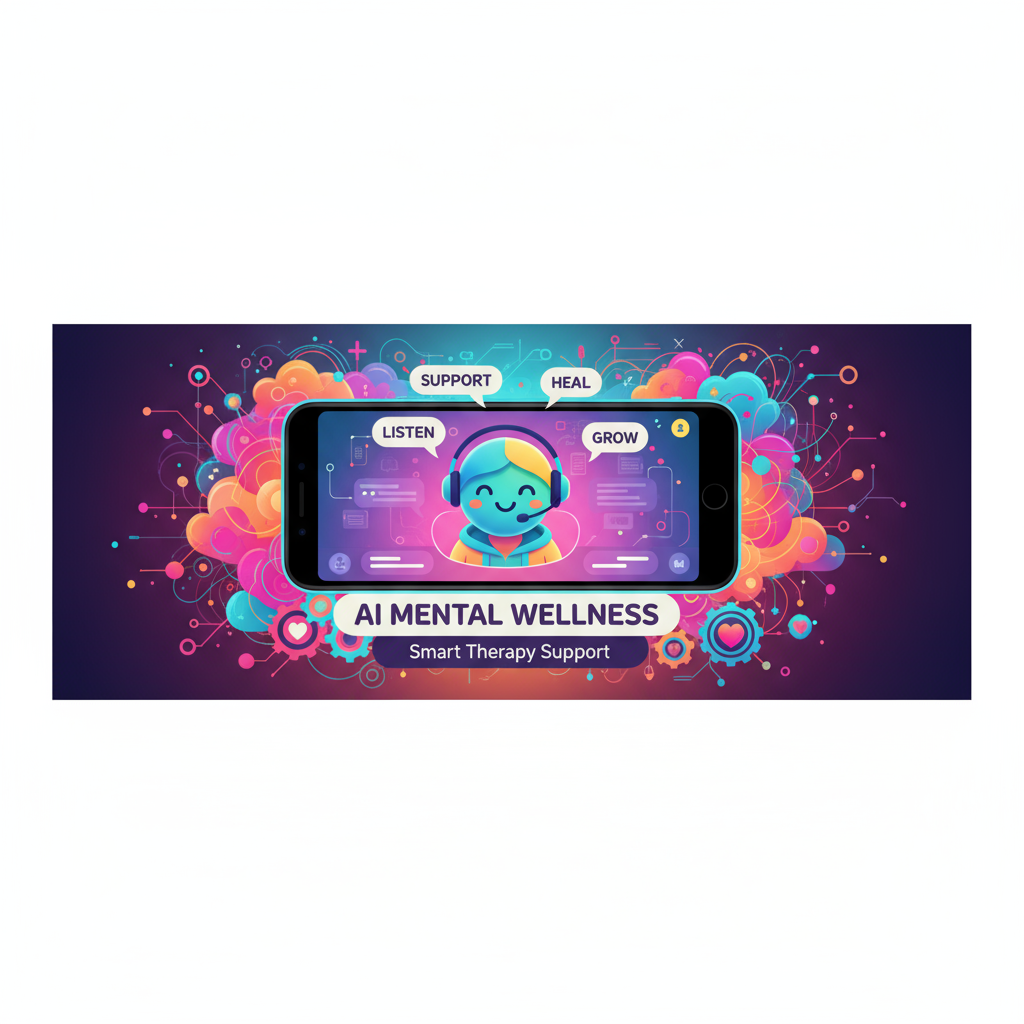
Enter Artificial Intelligence—not as science fiction but as survival strategy. From NIMHANS’ MindNotes app (free, multi-module, evidence-based) to Tele MANAS’ AI-triaged helpline (18+ lakh calls handled) to affordable solutions costing ₹0.70/student/day, technology promises to bridge India’s massive care chasm. mindnotes.nimhans
But is AI the answer or a dangerous shortcut? Understanding this socio-technical challenge is critical—it touches healthcare governance, digital ethics, social justice, data privacy, and SDG 3 (Good Health and Well-being).
India’s Mental Health Challenge: The Context

Statistical Landscape
The Crisis by Numbers:
- Treatment gap: 70-92% across psychiatric disorders; up to 95% in some regions
- Professional shortage:
- 0.75 psychiatrists per 100,000 (WHO norm: 3 per 100,000) pmc.ncbi.nlm.nih.gov
- 0.03 psychologists per 100,000
- 0.05 mental health nurses per 100,000
- Burden: 10.6% current prevalence of mental disorders; 13.7% lifetime prevalence
- Suicide toll: 164,033 deaths (2021)—one of leading causes of death
- Economic impact: $1 trillion losses by 2030 if unaddressed (WHO estimate)
Adolescent Crisis:
- 20% increase in suicides post-pandemic correlated with screen time, social pressures
- 1% population with high suicide risk
Barriers to Accessing Care
Stigma and Discrimination:
- Cultural taboos, fear of judgment discouraging help-seeking
- 80% respondents never heard of schizophrenia or bipolar disorder (National Mental Health Survey)
- Mental illness attributed to supernatural causes, spiritual failing
Structural Barriers:
- Geographic inequality: Professionals concentrated in urban areas; rural underserved
- Affordability: Cost of professional consultation prohibitive for low-income groups
- Accessibility: Limited availability, long waiting times
As one study notes: “India has become the hub for global mental health epidemic” yet devotes only 0.06% of health budget to mental health.
AI-Powered Mental Health Solutions

1. National Tele MANAS Program
Landmark Initiative:
Launched October 10, 2022 (World Mental Health Day), Tele Mental Health Assistance and Networking Across States (Tele MANAS) represents India’s most ambitious digital mental health intervention.
Scale and Reach:
- 53 Tele MANAS cells across 36 states/UTs
- 18.13 lakh calls handled (as of February 2025); averaging 3,500 calls daily
- Growth trajectory: From 12,000 calls (Dec 2022) to 90,000+ (May 2024)
- 20 languages based on state preferences
- Toll-free numbers: 14416 or 1-800-891-4416
AI-Powered Features:
- AI-based triaging routing calls to appropriate counselors based on severity indiamentalhealth
- October 2024: Launched mobile app and video consultation services
- Video consultations: Allowing mental health professionals to conduct thorough assessments; initially in Karnataka, J&K, Tamil Nadu with national expansion planned
Funding:
Call Profile:
- Top complaints: Disturbed sleep (14%), sadness (14%), stress (11%), anxiety (9%)
- Less than 3% suicide-related cases
- Demographics: 56% male, 72% aged 18-45

2. MindNotes from NIMHANS
Indigenous Innovation:
Developed by National Institute of Mental Health and Neurosciences (NIMHANS), Bengaluru in collaboration with IIIT-Bengaluru and funding from Microsoft Research India.
Core Modules:
- Self-Discovery: Illustrated cases, quizzes, standardized questionnaires (PHQ-9, GAD-7) for objective assessment
- Breaking Barriers: Identifying and overcoming obstacles to seeking professional help
- Self-Help: Strategies for managing emotions, coping with distress
- Coping with Crisis: Immediate support during acute distress
- Professional Connect: Facilitating connection to mental health services
- Little Acts: (Recent addition) Promoting well-being through small daily actions
Evidence Base:
Preliminary study (190 participants):
- Significantly increased inclination to seek professional help post-engagement
- Predicted by extent of app exploration over and above severity of distress
- Utility in improving help-seeking among those with self-reported depression/anxiety concerns
Accessibility:
Design Philosophy:
“Serving as a bridge between self-awareness, self-help and professional help”—not replacing therapists but facilitating pathways to care.
3. Other AI Interventions
MITHRA (Multiuser Interactive Health Response Application):
- Targeting depression in rural women
- Audiovisual format, local language options, socioculturally relevant content
Never Alone (AIIMS Delhi/Bhubaneswar/IHBAS):
- WhatsApp/QR-code accessible; 24×7 screening, counseling
- ₹0.70/student/day—revolutionary affordability
- DSM-based diagnostics
ELEVATE:
- Virtual companion for students (IIT/NEET/JEE aspirants)
- Gemini AI API; NLP, sentiment analysis, motivational support, customized study plans
SAHAY:
- First-of-kind suicide prevention framework
- Multimodal data (social media, EHR, wearables)
- Culturally adaptive, multilingual
- Integrated with Tele MANAS
Advantages of AI Mental Health Interventions
Scalability and Reach:
- Addressing massive treatment gap with limited professional workforce
- Serving underserved populations: rural areas, low-income groups, stigmatized communities
Accessibility and Affordability:
- 24×7 availability overcoming time constraints
- Cost-effective: Never Alone at ₹0.70/student/day vs. traditional therapy (₹500-₹3000/session)
- No geographic limitations; accessible via smartphones
Reducing Stigma:
- Anonymity, privacy encouraging help-seeking without fear of judgment
- Confidential platform for vulnerable adolescents, women
Personalization:
- AI tailoring interventions to individual needs, preferences, cultural contexts
- Adaptive responses based on user behavior, sentiment
Early Intervention:
- Screening, monitoring enabling detection before crises escalate
- Real-time alerts for high-risk situations
Supporting Professionals:
- Automating preliminary assessments, documentation freeing therapists for complex cases
- Extending professionals’ reach through AI-augmented care
Challenges and Concerns: The Dark Side

Quality and Efficacy Issues
Unregulated Market:
- 369 apps identified, only 27 meeting criteria; average quality score 3.45/5
- Concerns about privacy, safety, evidence base due to market expansion without regulation
- Many apps lacking mental health professional involvement, empirical basis
Suboptimal Design:
- Readability issues: Average grade level 6.62 for in-app content, 9.93 for app store descriptions
- Monotonous UI, lack of child-friendly design hindering adoption
- Cultural irrelevance: Existing chatbots lacking personalization, localized content for Indian users
User Engagement Challenges
Low Utilization:
- High smartphone access but low mental health app usage among adolescents
- User engagement sustainability major challenge; apps downloaded but abandoned
Factors Hindering Engagement:
- Logistical barriers: Usability issues, financial constraints, stigma
- Public awareness low
- Users unsure why to use apps; lack of perceived utility
Ethical and Privacy Concerns
Data Security:
- Mental health apps handling highly sensitive data; risk of breaches
- Hacking, unauthorized monitoring, device security vulnerabilities
- Digital Personal Data Protection Act 2023 relevant but implementation pending
Informed Consent:
- Complexity in obtaining consent for AI processing of mental health data
- Users often unaware of data usage, sharing practices
Algorithmic Bias:
- LLMs trained on datasets including biased, harmful internet content
- Black box algorithms failing to detect distress signals, inappropriate responses
- Cultural biases: Apps developed in high-income settings not suited for Indian socio-cultural context
Safety Risks
Inadequate Crisis Response:
- Chatbots without human oversight posing “unacceptable risks”
- Failure to detect, escalate high-risk situations (suicide ideation)
Isolation Paradox:
- Users reporting increased isolation post-AI interaction
- Replacing human connection with algorithmic responses exacerbating loneliness
Dependency Concerns:
- Overdependence on bots; users avoiding human therapists
- Missing severe mental disorders requiring in-person clinical assessment
Regulatory Gaps
Absence of Centralized Framework:
- India lacking dedicated regulation for mental health apps
- Existing laws fragmented (MHCA 2017, IT Act 2000, TPG 2020); no specific MHA guidelines
Medical Device Classification Ambiguity:
- Medical Device Rules 2017, CDSCO framework unclear on MHA classification
- Majority of apps not requiring device approval; slipping through regulatory cracks
Accountability Vacuum:
- If AI malfunction causes harm, unclear who’s liable: Developer, healthcare provider, or user
- No mechanism holding software developers accountable for technology glitches
Socio-Economic Barriers
Digital Divide:
- 40% SC/ST, 36% women, 60% rural lacking meaningful internet access
- Low-income groups unable to afford smartphones, data plans
Language and Literacy:
- Preference for text over voice but limited language support
- Low digital literacy hindering app usage
Regulatory Landscape
India’s Fragmented Framework
Applicable Laws:
- Mental Healthcare Act 2017: Section 18 ensuring right to access mental healthcare including remote/telemedicine; vague on online delivery
- Telemedicine Practice Guidelines 2020: Addressing informed consent, e-prescriptions, data security for telepsychiatry
- IT Act 2000, Section 43A: Mandating reasonable security practices for sensitive personal data
- Digital Personal Data Protection Act 2023: Governing digital data protection relevant to mental health sector
- National Medical Commission Code of Medical Ethics: Applicable to medical professionals using digital tools
Critical Gaps:
- No centralized regulatory body for mental health apps
- Guidelines lacking for app authentication, quality standards, evidence-based content verification
- Oversight mechanisms absent for non-medical-device classified apps
Policy Recommendations: Building Responsible Ecosystem
1. Establishing Regulatory Framework
Centralized Regulatory Body:
- Designate agency (under CDSCO, Ministry of Health) overseeing mental health apps
- Clear guidelines, authentication standards for app developers
Tiered Regulation:
- Tier 1 (Wellness apps): Self-certification with basic privacy, safety standards
- Tier 2 (Screening, psychoeducation): Moderate oversight; evidence-based content verification
- Tier 3 (Clinical interventions): Rigorous medical device regulation; clinical trials, professional involvement mandatory
2. Ensuring Data Privacy and Security
DPDP Act Implementation:
- Enforce Digital Personal Data Protection Act 2023 for mental health apps
- Sensitive data requiring explicit consent, purpose limitation, data minimization
Security Mandates:
- End-to-end encryption, secure storage, regular audits
- Penalties for breaches proportionate to harm
3. Addressing Ethical Concerns
Human Oversight:
- Mandatory human-in-the-loop for high-risk scenarios (suicide ideation)
- Escalation protocols connecting users to crisis helplines, professionals
Bias Mitigation:
- Training datasets diverse, culturally representative
- Regular audits detecting, correcting algorithmic biases
4. Enhancing Quality and Efficacy
Evidence-Based Development:
- Encourage randomized controlled trials validating app effectiveness
- Third-party evaluations preventing developer bias
Professional Involvement:
- Mental health experts involved in app design, content creation
- Clinical psychologists, psychiatrists reviewing algorithms, responses
5. Promoting Accessibility and Inclusivity
Bridging Digital Divide:
- Subsidized smartphones, data plans for BPL families
- Offline functionality for low-connectivity areas
Cultural Localization:
- Multi-lingual support covering 22 scheduled languages
- Culturally relevant content, scenarios reflecting Indian sociocultural context
Way Forward
Short-Term (1-2 years)
- Establish mental health app regulatory task force under Ministry of Health
- Draft tiered regulatory guidelines for consultation
- Implement DPDP Act enforcement for mental health apps
- Launch national awareness campaign on digital mental health tools
Medium-Term (3-5 years)
- Operationalize centralized regulatory body with authentication mechanisms
- Achieve 50% penetration of quality-certified apps among smartphone users
- Scale Tele MANAS integrating with AI-based risk assessment tools (SAHAY model)
- Train 10,000+ mental health professionals in digital tool utilization
Long-Term (5-10 years)
- Position India as leader in responsible, culturally-sensitive AI mental health innovation
- Reduce treatment gap from 70-92% to <50% through technology-enabled interventions
- Achieve equitable access: Urban-rural, gender, socio-economic parity
- Export Indian models (SAHAY, MindNotes) to Global South addressing similar challenges
Conclusion: Promise Meets Peril
India’s mental health crisis—70-92% treatment gap, 0.75 psychiatrists per 100,000, 164,033 suicide deaths—demands scalable solutions. AI offers hope: Tele MANAS crossing 18 lakh calls, MindNotes showing improved help-seeking, affordable solutions at ₹0.70/day.
Yet challenges loom: 369 apps, only 27 meeting criteria, 3.45/5 average quality, regulatory vacuum, data privacy risks, algorithmic bias, digital divide. The question isn’t whether AI can help—it’s whether India can govern it responsibly.
This represents classic socio-technical governance challenge: balancing innovation with protection, accessibility with quality, autonomy with safety. As World Mental Health Day 2025 emphasizes, technology’s transformative potential realizable only through robust regulation, ethical guardrails, human-centered design.
MindNotes demonstrates possibility: Free, evidence-based, professionally designed, improving help-seeking. Tele MANAS proves scale: 18+ lakh calls, 53 cells, 20 languages, growing daily. But without centralized regulation, DPDP Act enforcement, tiered standards, cultural sensitivity—we risk creating two-tier system: digitally empowered vs. digitally harmed.
Ultimate vision: Technology-enabled mental healthcare accessible, affordable, culturally relevant, ethically governed—bridging India’s massive treatment gap while protecting vulnerable users. Balancing innovation with responsibility—that’s the policy imperative.




+ There are no comments
Add yours