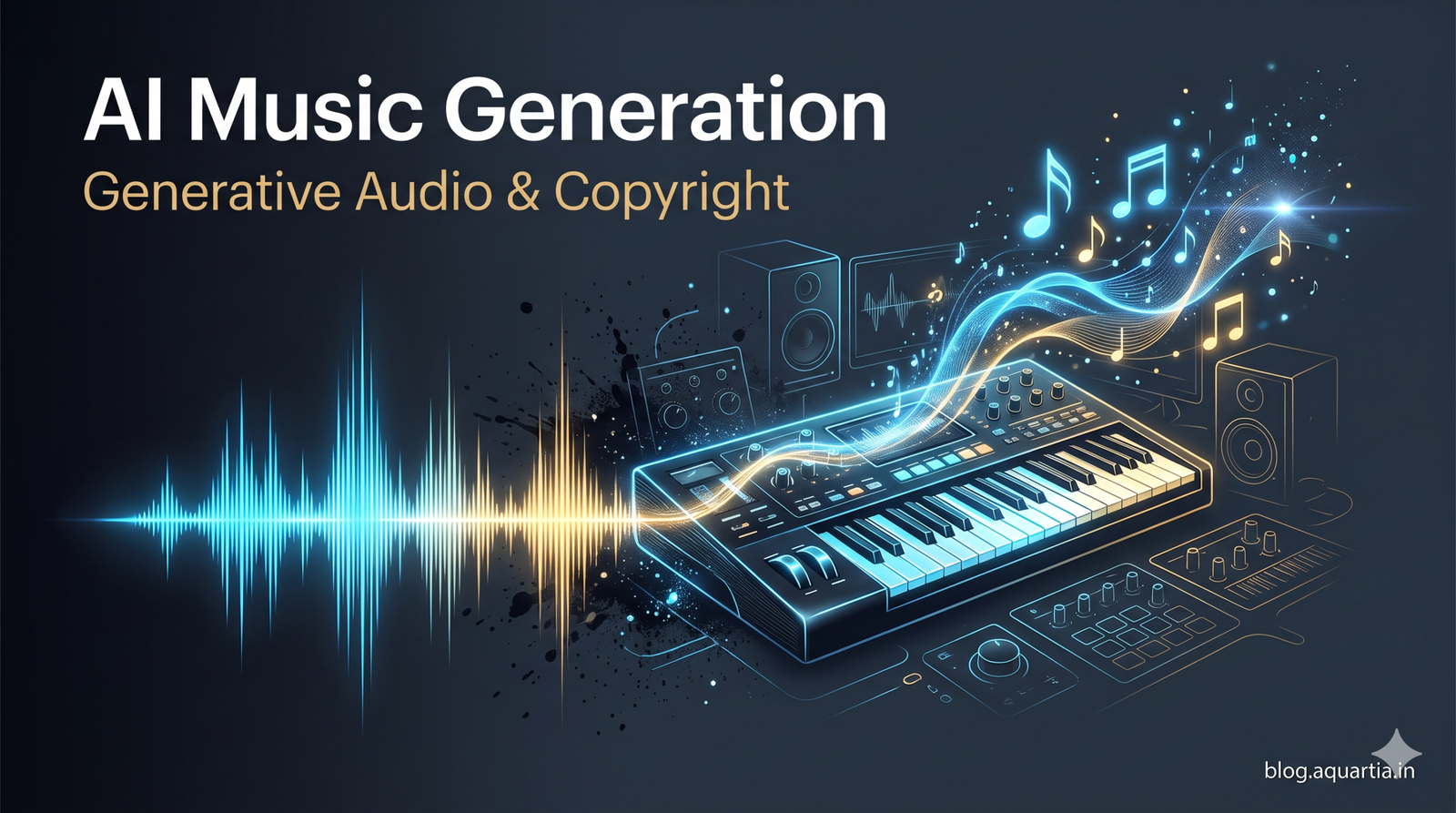
Generative audio platforms can compose full instrumentals, vocals, and stems from short text prompts in seconds. Yet for musicians, podcasters, game studios, and marketers, AI music generation copyright rules remain one of the most misunderstood areas of digital media law. Using generative audio safely requires understanding the boundary between human authorship, machine output, and commercial licensing.
What the U.S. Copyright Office Says About AI-Generated Music
In January 2025, the U.S. Copyright Office (USCO) published Part 2 of its Artificial Intelligence report focusing on copyrightability. Its core conclusion is unambiguous: copyright protection requires human authorship. Works generated wholly by an AI system—even when guided by detailed, iterative text prompts—are not eligible for U.S. copyright registration.
This human-authorship principle was further reinforced in March 2025 by the D.C. Circuit’s ruling in Thaler v. Perlmutter, as noted in legal analyses from Holland & Knight and Skadden. Importantly, using AI as an assistive tool does not disqualify a track entirely: when a human composer writes original lyrics, performs live instrumentation, or creatively arranges and edits AI stems, the human-authored contributions remain protectable if disclosed during registration.
Training Data Lawsuits and Licensed AI Models
Beyond ownership of the final track, creators must consider how an AI model was trained. In June 2024, major record labels represented by the RIAA filed copyright infringement lawsuits against Suno and Udio over alleged unauthorized training on copyrighted sound recordings. By late 2025, industry trackers noted major labels beginning to negotiate settlements and licensed AI music partnerships while litigation with other rights holders continued.
Meanwhile, Part 3 of the USCO report on generative AI training emphasized that fair-use defenses depend heavily on market harm, licensing availability, and whether expressive works are replicated.
Practical Comparison: Pure AI Prompts vs. Hybrid Human-AI Production
| Workflow Type | Copyright Protection | Commercial Use Risk | Recommended Use Case |
|---|---|---|---|
| 100% Prompt-Generated Track | None (cannot be registered) | Higher — competitors can reuse unprotectable audio | Internal prototypes, temporary scratch tracks |
| Licensed Stock / Royalty-Free AI | None for raw AI base; license-governed | Low if vendor provides indemnification | Background audio for ads, YouTube, podcasts |
| Hybrid Human Lyrics + Stems + DAW Mix | Protectable for human-authored elements | Low–Moderate (document human stems & edits) | Commercial releases, brand jingles, original scores |
5-Step Checklist to Use Generative Audio Safely
- Read Commercial License Terms: Never assume a free tier grants commercial rights; verify whether paid plans include commercial distribution and indemnification.
- Avoid Artist Name or Style Prompts: Never prompt with living artists’ names, trademarked voices, or specific copyrighted song titles.
- Keep Human Creative Control: Write your own melodies, lyrics, chord progressions, and DAW arrangements rather than shipping raw one-click outputs.
- Document Your Production Trail: Save MIDI files, DAW project timelines, vocal stems, and edit logs to prove human authorship if questioned.
- Disclose AI Elements When Required: Follow distributor policies and USCO registration rules when submitting hybrid works.
Frequently Asked Questions
Can I copyright a song I generated purely with text prompts?
Under current U.S. Copyright Office guidance, purely AI-generated audio created from text prompts lacks human authorship and cannot be registered for copyright protection.
Does paying for an AI music subscription give me copyright ownership?
A paid subscription typically grants a commercial license to use the output under the platform’s terms of service, but a private contract cannot create statutory copyright where human authorship is absent.
How can musicians protect hybrid tracks made with AI tools?
Combine human-written lyrics, live recordings, custom MIDI arrangements, and manual mixing, and keep dated DAW project files documenting every human contribution.
Explore more creative and technical AI guides in our AI Music and Artificial Intelligence sections on Aquartia Blog.




+ There are no comments
Add yours