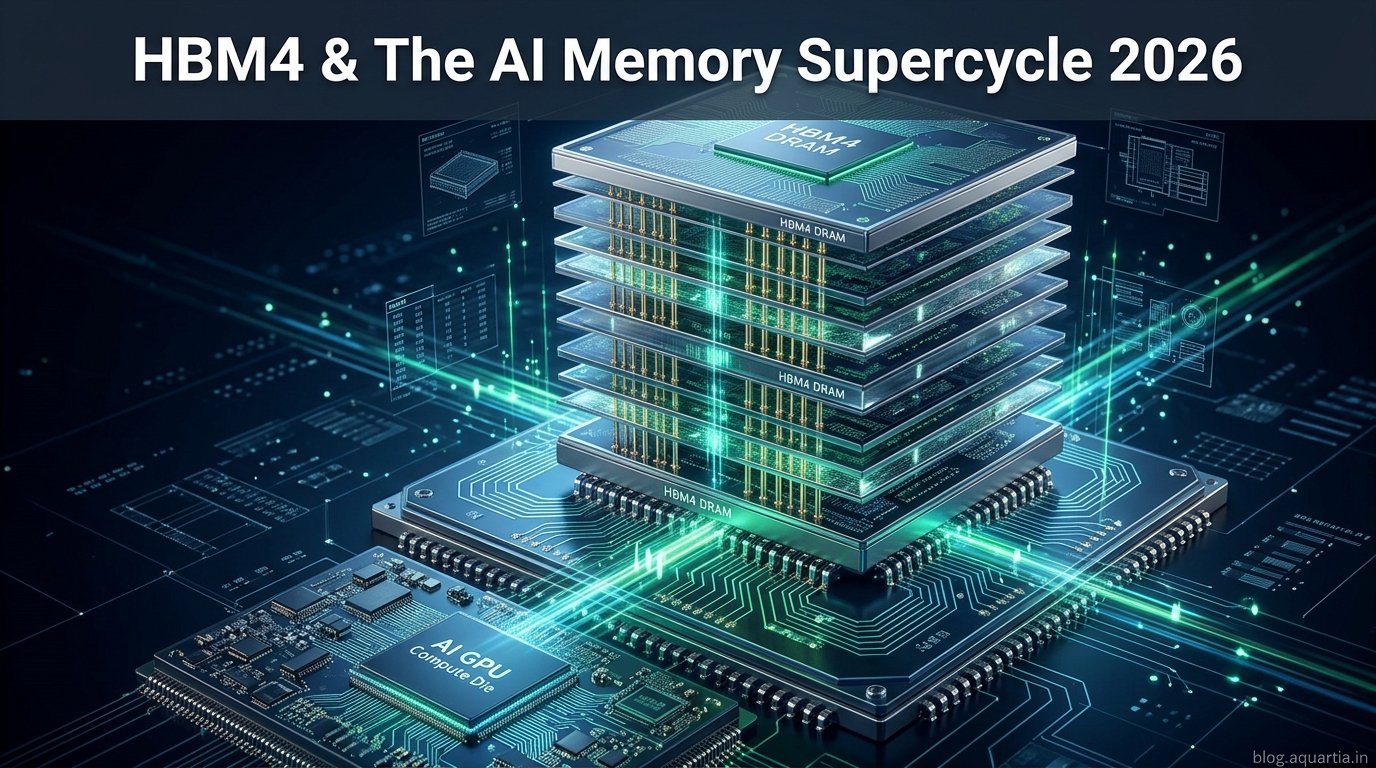
In 2026, AI processor performance is constrained less by raw arithmetic cores than by the “memory wall”—the speed and energy required to feed model weights between memory and compute (Alpinum Consulting). According to World Semiconductor Trade Statistics (WSTS) data cited by SK hynix, global semiconductor sales are projected to grow over 25% in 2026 to ~$975 billion, with Bank of America estimating the HBM market alone at $54.6 billion (+58% YoY).
HBM3E vs. HBM4 in 2026
| Metric | HBM3E (2026 Standard) | HBM4 (2026 Ramp) |
|---|---|---|
| Market Role | Mainstream AI server memory in 2026 (SK hynix) | Next-gen AI platforms (Vera Rubin, Helios) (Shattered.io) |
| Stacking & Packaging | Vertical DRAM dies via TSVs | 12-high (12H) stacks; 36GB+ per stack (Shattered.io) |
| Inference Impact | Baseline bandwidth | Up to 2.6x workload-specific inference gains reported by Micron (Shattered.io) |
Why HBM Supply Remains Tight
Each additional DRAM die in a 12-high vertical stack increases thermal and yield complexity (Shattered.io, TechInsights). As a result, SK hynix, Micron, and Samsung are investing tens of billions into new fabs across Korea, Japan, and the US (Medium / Tai Semicon).
Frequently Asked Questions
Why does HBM4 matter more than raw GPU clock speed for LLMs?
For large language model inference, moving parameters from memory to compute consumes more time and energy than the math itself (Alpinum Consulting).






+ There are no comments
Add yours