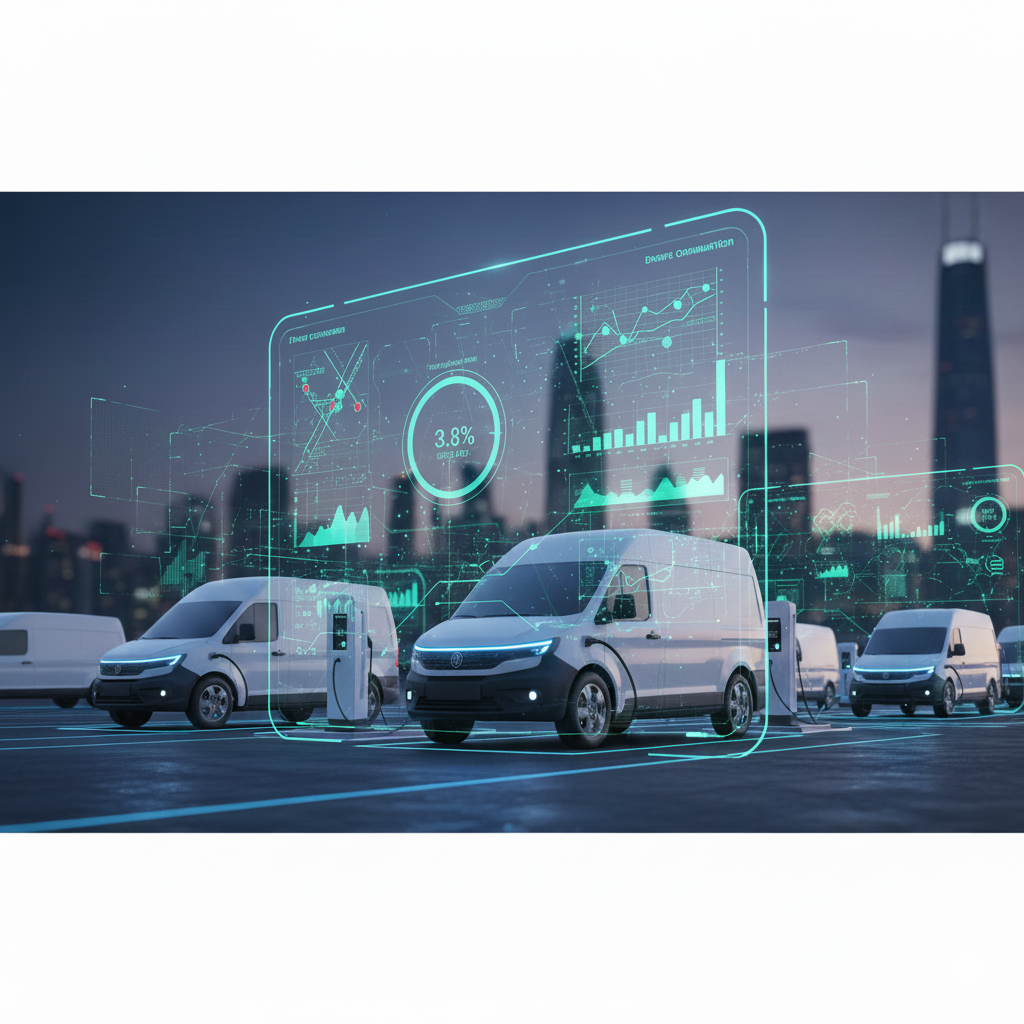
Key Highlights
- Policy Shift: Transition from FAME II to PM E-DRIVE focuses on demand incentives and charging infrastructure.
- Tech Layer: SaaS is moving from basic GPS tracking to predictive battery analytics and “Digital Twins.”
- Gig Economy: NITI Aayog projects 23.5 million gig workers by 2030, necessitating better safety and social security via tech.
- Grid Impact: Smart charging integration is critical to manage peak loads as EV penetration hits 20-30% by 2030.
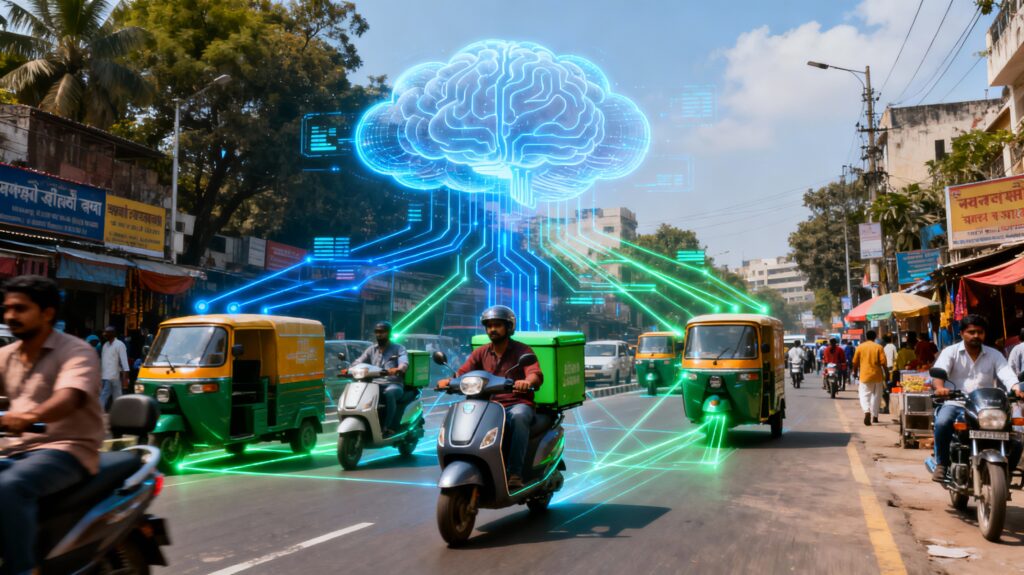
Walk down any busy street in Bengaluru or Delhi, and you’ll notice a silent change. The roar of engines is being replaced by the quiet hum of electric scooters and three-wheelers delivering your groceries and parcels. But the real revolution isn’t the battery—it’s the software controlling it.
India’s EV transition is entering a “Stage 2” maturity. We are moving beyond just buying hardware (vehicles) to managing complex software-defined ecosystems. With the government’s new PM E-DRIVE scheme replacing FAME, the focus has shifted to sustainable, data-driven mobility. For logistics companies, the vehicle is no longer just an asset; it’s a data node in a massive, intelligent network.
EV Fleet Boom and Policy Context
The adoption of EVs in India’s last-mile delivery sector is skyrocketing, driven by operational cost savings (up to 40% lower than ICE vehicles).
- The Drivers: E-commerce giants and logistics players (like Zypp, Zomato, Amazon) are electrifying fleets to meet Net Zero targets.
- Policy Push: The PM E-DRIVE scheme (Rs 10,900 Cr outlay) specifically targets public transport and commercial 3-wheelers, incentivizing the very segments that rely on fleet management. pib.gov.in
- Why It Matters: For policymakers, efficient fleets mean less congestion and better air quality (National Clean Air Programme goals). For businesses, it means survival in a low-margin industry.
What Is SaaS‑Led Smart Fleet Intelligence?
Traditional fleet management was about dots on a map—where is the truck? SaaS-led intelligence is about the health and logic of the vehicle.
- The Intelligence Layer: It acts as the “brain” over the physical “body” of the vehicle. Platforms like FleetEase.ai or Bijliride’s DAPS don’t just track location; they manage the entire lifecycle.
- New Dimensions:
- Unit Economics: Tracking profitability per km in real-time.
- Battery Health: Monitoring thermal runaway risks and degradation cycles.
- Uptime: Reducing the “idle time” of expensive assets.
Data, IoT and Predictive Analytics in EV Fleets
The modern EV is a computer on wheels. IoT sensors capture thousands of data points per minute.
- Digital Twins: SaaS platforms create a digital replica of the battery. If a specific cell is overheating in a scooter in Mumbai, the central dashboard alerts the fleet manager before it catches fire.
- Preventive vs. Reactive: Instead of fixing a breakdown, predictive algorithms analyze voltage irregularities to schedule maintenance before failure.
- Governance Angle: As fleets scale to thousands of units, manual oversight is impossible. Data standardization ensures that a Tata Ace EV and a Mahindra Treo can be managed on the same screen.
Charging Infrastructure, Grid Integration and Urban Planning
Charging is the “cornerstone” challenge. A fleet of 1,000 EVs plugging in at 6 PM can destabilize a local grid.
- Smart Charging: SaaS platforms integrate with the grid to enable Time-of-Day (ToD) charging—drawing power when rates are low and the grid is stable.
- Interoperability: The Ministry of Power is pushing for open protocols (OCPP) so that a delivery rider can use any public charger and pay via a single app wallet.
- Urban Planning: Data from these fleets helps cities identify “hotspots” where charging hubs (under PM E-DRIVE) should be built to maximize utilization.
Labour, Safety and Driver Experience
The human element is critical. NITI Aayog projects the gig workforce will hit 2.35 crore by 2029-30.
- Safety First: IoT sensors detect harsh braking, over-speeding, and fatigue. Platforms use this to gamify safe driving (e.g., “Gold Rider” badges) rather than just punishing errors.
- UPSC POV – Social Security: The Code on Social Security, 2020 envisages a welfare fund for gig workers. Smart fleet data can verify “active hours” to calculate eligibility for these benefits accurately, solving the documentation hurdle for informal workers.
Financial Layer, ESG Reporting and Business Models
Financing EVs is risky because banks struggle to value used batteries. SaaS changes this.
- Residual Value Risk: By recording every charge cycle, SaaS platforms provide a “Battery Health Certificate,” giving lenders confidence to finance second-hand EVs.
- Carbon Credits: Logistics companies can use fleet data to quantify emission savings precisely. Under the Carbon Credit Trading Scheme (CCTS), these savings can be monetized, adding a new revenue stream.
- Automated Settlements: For gig workers, platforms automate payouts based on deliveries + distance, creating trust and transparency.
Governance, Regulation and Institutional Challenges
With great data comes great responsibility.
- Data Privacy: The Digital Personal Data Protection (DPDP) Act, 2023 is crucial here. Who owns the data—the driver, the fleet operator, or the OEM? Platforms must build “consent architectures” where drivers know what is being tracked.
- Silos: Currently, energy data sits with Discoms, and mobility data sits with transport departments. Breaking these silos via the National Logistics Policy (NLP) framework is key for holistic planning.
Way Forward and Recommendations
- Standardized Data Protocols: The Ministry of Heavy Industries (MHI) should mandate API standards for all commercial EVs receiving subsidies, ensuring they can “talk” to any fleet management system.
- Integration with Gati Shakti: EV fleet data should overlay on the PM Gati Shakti master plan to identify gaps in last-mile infrastructure.
- Skilling: We need a new workforce not just of mechanics, but of “EV Data Analysts” and “IoT Technicians”—a prime area for Skill India missions.
- Data Sovereignty: Ensure that critical mobility data from foreign SaaS providers is hosted locally in India.
Conclusion
SaaS-driven fleet intelligence is turning Indian EVs from experimental pilots into a scalable, auditable mobility system. It bridges the gap between technology (the vehicle), energy (the grid), and society (the driver). For India to achieve its 2070 Net Zero goal, we don’t just need more EVs; we need smarter ones.







+ There are no comments
Add yours