Key Highlights:
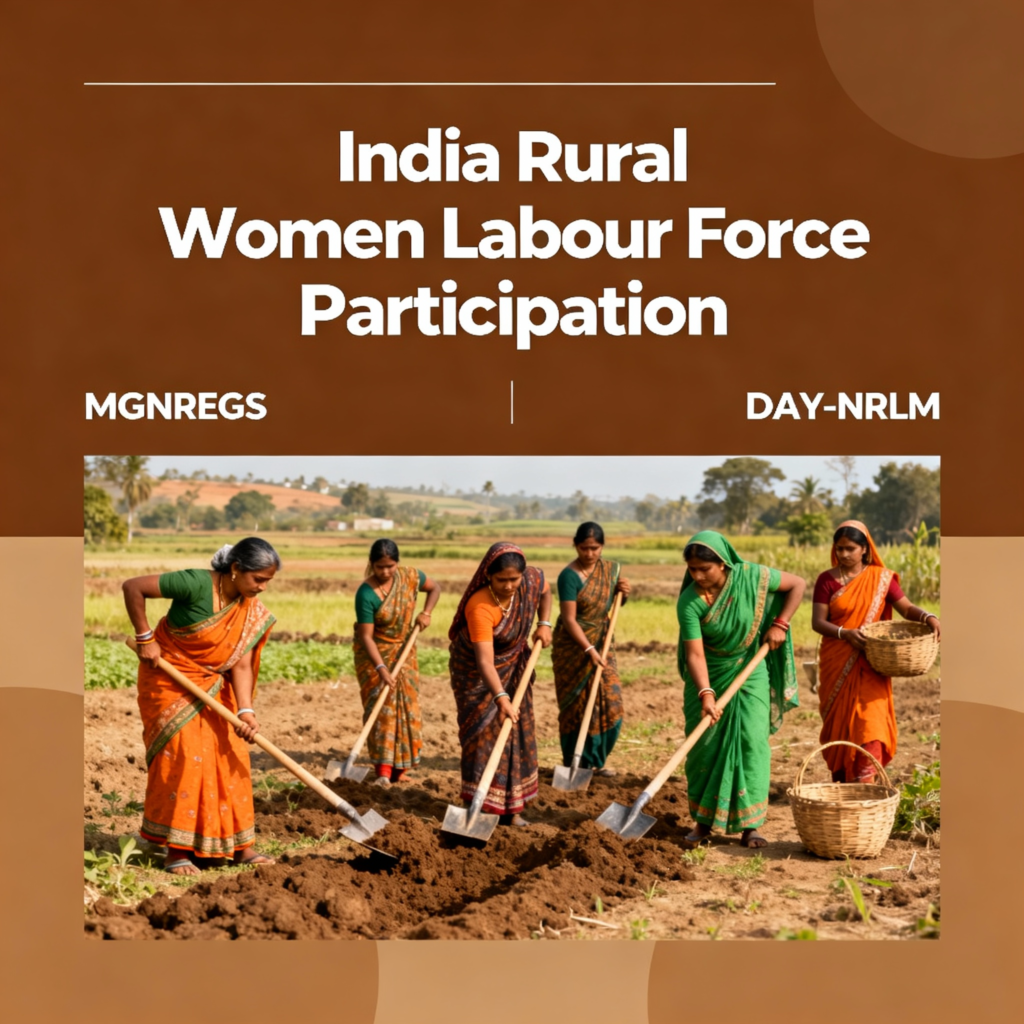
- Rural Female Labour Force Participation Rate (RFLFPR) surged 69% from 24.6% in 2017-18 to 47.6% in 2023-24 while urban FLFPR grew modestly from 20.4% to 25.4%, demonstrating unprecedented rural transformation
- DAY-NRLM expanded from 25 million women in 2014 to 100 million in 2024 organized into 8.9 million Self Help Groups with ₹8.06 lakh crore bank linkage and only 1.6% NPA rate
- MGNREGS shows 57% women participation nationally with states like Kerala (94%) and Tamil Nadu (88%) leading, while individual beneficiary schemes provide 90-day employment for asset creation
- 22% income gains reported by women under rural livelihood mission over 6-8 years through evaluation studies, with 3 lakh Community Resource Persons providing grassroots capacity building
- Contradictory research shows MNREGA reduced women’s labour force participation by 4 percentage points among rural married women, highlighting complex dynamics between guaranteed employment and workforce participation
Introduction: The Rural Revolution Unfolds
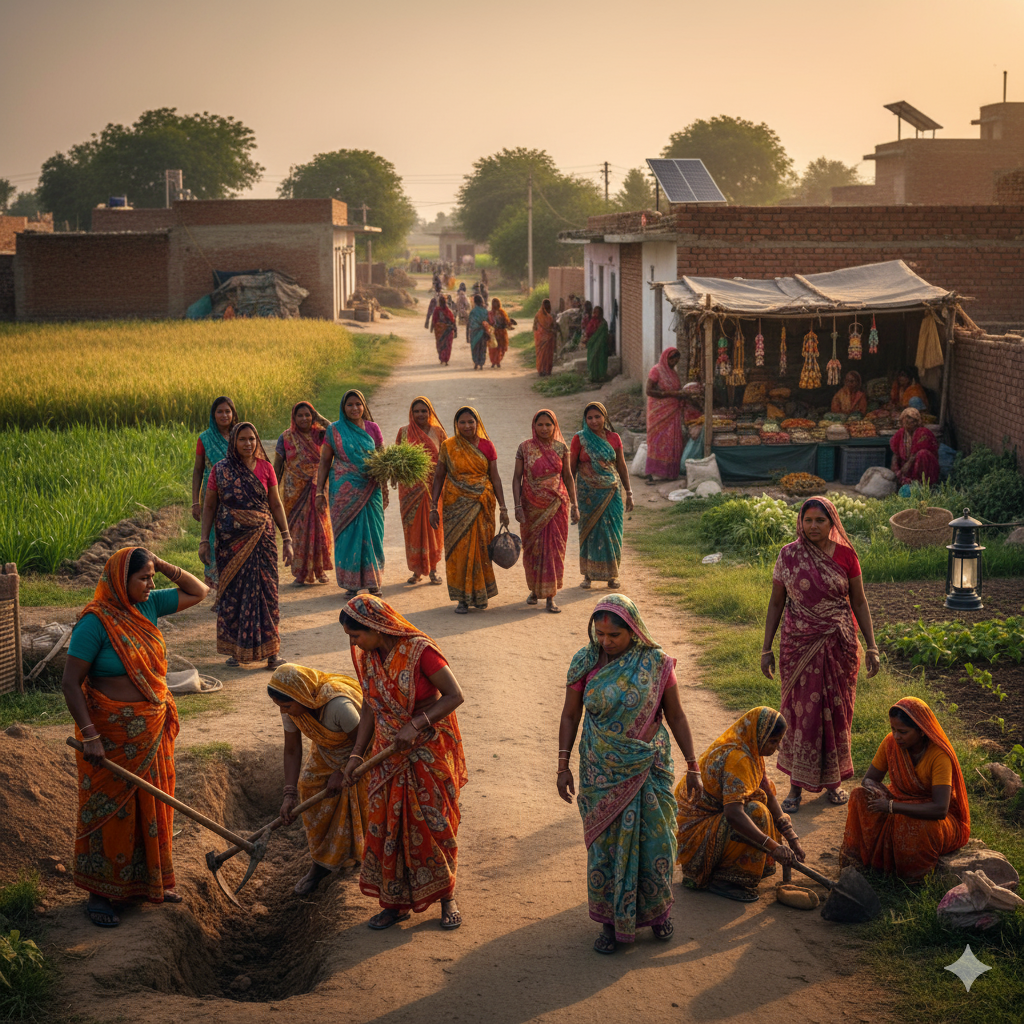
The remarkable surge in Rural Female Labour Force Participation Rate (RFLFPR) represents one of the most significant socio-economic transformations in contemporary India. From 24.6% in 2017-18 to 47.6% in 2023-24, this 69% growth has reversed decades of declining female workforce participation and positioned rural women as key drivers of agricultural transformation.
This dramatic shift occurs within the context of multi-dimensional changes in the rural-agriculture sector that are often missed in poverty-focused discussions. The central role of women farmer-led agricultural growth has become fundamental to rural transformation, challenging traditional narratives about gender roles and economic participation in agrarian societies.
Understanding these trends requires examining the complex interplay between government initiatives, particularly MGNREGS (Mahatma Gandhi National Rural Employment Guarantee Scheme) and DAY-NRLM (Deendayal Antyodaya Yojana – National Rural Livelihood Mission), and evolving rural economic structures. The expansion of DAY-NRLM from 25 million women in 2014 to 100 million in 2024 demonstrates the scale of institutional transformation underlying these participation increases.
However, this success story comes with important caveats: while numbers have increased dramatically, questions remain about the quality of employment, earnings levels, and long-term sustainability of this workforce expansion. For UPSC aspirants and policymakers, understanding both the achievements and challenges becomes crucial for designing effective rural development strategies that balance quantity with quality in women’s economic empowerment. pib
Understanding Female Labour Force Participation
Defining Female Labour Force Participation
Female Labour Force Participation Rate (FLFPR) includes women aged 15 years and above who are either working or actively seeking employment. This broad definition encompasses various forms of economic activity including formal employment, self-employment, unpaid family work, and active job search.
The distinction between rural and urban FLFPR trends reveals dramatic differences in participation patterns:
Rural vs Urban FLFPR Comparison (2017-18 to 2023-24):
- Rural: 24.6% to 47.6% (69% increase)
- Urban: 20.4% to 25.4% (25% increase)
This stark difference highlights unique rural dynamics that have facilitated women’s entry into the workforce at unprecedented rates. pib
Regional Variations and State Performance
Significant regional variations exist in FLFPR across states, reflecting diverse socio-economic conditions and policy implementation effectiveness: thedocs.worldbank
Top Performing States (2021-22):
- Himachal Pradesh: 66.1%
- Sikkim: 57.8%
- Chhattisgarh: 51.6%
- Nagaland: 51.5%
- Meghalaya: 50.2%
Lower Performing States:
- Bihar: 10.2%
- Haryana: 19.1%
- Goa: 20.7%
- Manipur: 23.4%
- Punjab: 24.0%
These variations reflect complex interactions between cultural norms, economic opportunities, infrastructure development, and policy implementation effectiveness across different geographical and social contexts.
Key Trends and Data Analysis: UPSC Perspective
Phase-wise Evolution of RFLFPR Growth
The increase in RFLFPR can be analyzed through distinct phases that reveal different drivers of workforce expansion: thedocs.worldbank
Phase One (2018-19 to 2019-20): Measurement Improvements
The initial increase was driven by improved measurement of “unpaid helpers” on family farms. Statistical refinements in data collection methodologies began capturing women’s contributions that were previously underreported or invisible in official labor statistics.
Phase Two (2021-22 to 2022-23): Own-Account Workers Expansion
Significant rise in “own-account workers” including farming, livestock, dairy, and poultry activities. This phase reflected actual increases in women’s economic participation rather than merely statistical corrections.
Demographic and Social Patterns
Age and Life-Cycle Factors:
Female LFPR follows a bell-shaped curve, peaking at 30-40 years compared to consistently high male LFPR (100%) from 30-50 years. This pattern reflects the impact of reproductive responsibilities and household duties on women’s workforce participation.
Marriage Impact on Participation:
Marriage significantly reduces female LFPR, particularly in urban areas where social norms may discourage married women from seeking employment outside the home. Rural areas show relatively smaller marriage-related declines, possibly due to agricultural work being more compatible with household responsibilities.
Nature of Employment: Quality Concerns
Employment growth has been concentrated in specific sectors:
Agricultural Focus:
- Farming activities increased from 20.6% (Jan-Apr 2019) to 26.5% (Sep-Dec 2024)
- No significant rise in regular salaried employment or women as employers
- Growth concentrated in agriculture and allied activities rather than diversified sectors
This concentration raises important questions about employment quality, earnings potential, and long-term career progression for women entering the workforce.
Role of MGNREGS in Female Workforce Participation
Legal Framework and Implementation Design
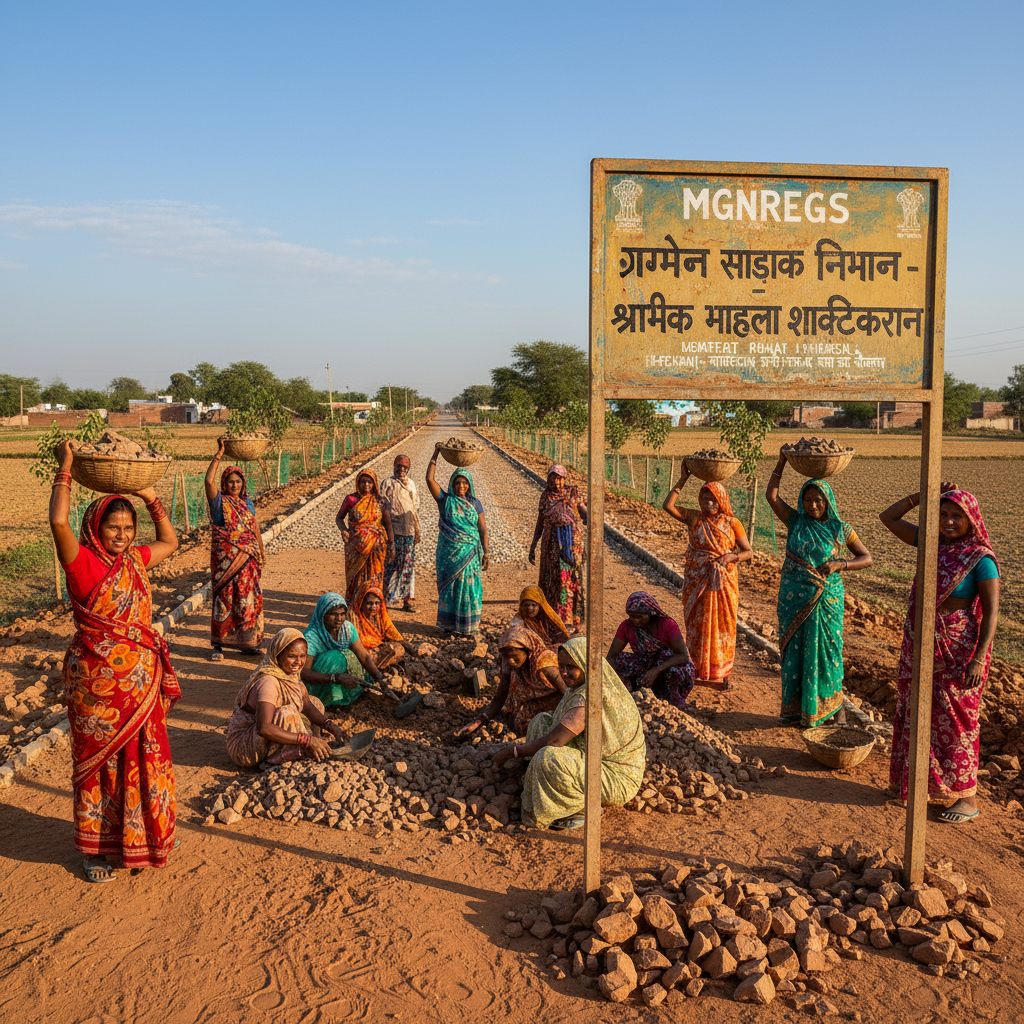
The Mahatma Gandhi National Rural Employment Guarantee Act provides 100 days guaranteed wage employment with specific provisions for women’s participation:
Key Design Features:
- Mandatory reservation: At least 33% workforce must be women
- Equal wages for men and women
- Work within 5 km of residence or transport allowance
- Childcare facilities at worksites with 5+ women workers
Actual Performance Exceeding Mandates:
54-57% of job-days between 2012-2021 went to women, significantly exceeding the legal requirement of 33% participation.
Policy Shift in 2014: Agriculture-Centric Approach
A critical policy shift in 2014 mandated spending at least 60% of MGNREGS funds in agriculture and allied activities. This strategic reorientation transformed MGNREGS from primarily infrastructure-focused to agriculture and livelihood-supporting program.
Individual Beneficiary Schemes under this new framework include:
- 90-day support for house construction
- Animal sheds for marginal and small farmers
- Irrigation wells and farm ponds
- Mango orchards in rainfed tribal areas
- Water conservation structures
These schemes facilitate livelihood diversification by creating productive assets that enable subsequent agricultural activities and income generation opportunities.
Impact Mechanisms on Women’s Participation
Lower-than-market wage rates under MGNREGS have led to higher female participation than male participation. This differential impact occurs because women often have fewer alternative employment opportunities, making MGNREGS relatively more attractive for female workers.
Asset Creation Benefits:
Infrastructure and productive assets created through individual beneficiary schemes enable women to engage in subsequent agricultural and allied activities. Water conservation structures, irrigation facilities, and animal sheds provide the foundation for diversified livelihood strategies.
Economic Independence and Self-Respect:
Monetized income through MGNREGS participation enhances women’s economic independence and social status within households and communities, creating multiplier effects on overall empowerment.
Contradictory Research Evidence
Important research by García (2025) presents contrasting findings about MNREGA’s impact on women’s workforce participation. The study shows that MNREGA reduced women’s labour force participation by 4 percentage points among rural married women. ideasforindia
Key Findings from Critical Research:
- Shift from other employment types to MNREGA rather than net increase in workforce participation
- Households choosing to rely on guaranteed male earnings, with women serving as “insurance workers”
- MNREGA explaining up to 30% of nationwide decline in rural FLFP during the study period
This contradictory evidence highlights the complexity of analyzing employment guarantee programs’ impacts and the importance of distinguishing between program participation and overall workforce participation.
Role of DAY-NRLM: Institutional Architecture for Empowerment
Scale and Organizational Structure
DAY-NRLM represents one of the world’s largest women’s empowerment initiatives, with institutional architecture that mobilizes social capital for economic transformation:
Massive Scale Achievement:
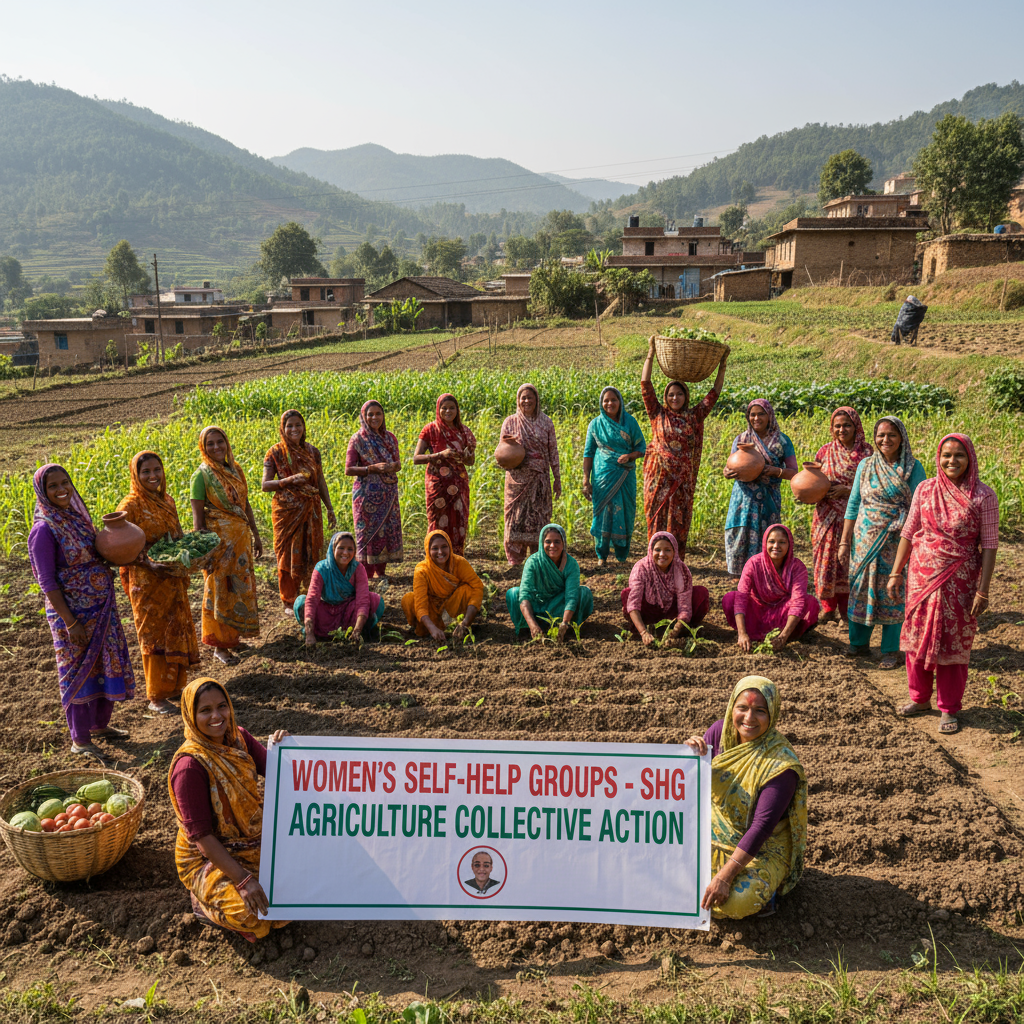
- 97-100 million women members organized into 8.9 million Self-Help Groups
- Bank linkage of ₹8.06-8.58 lakh crore with NPA rate of only 1.6%
- Over 3 lakh Community Resource Persons providing grassroots support
- Federation structure at village, Gram Panchayat, and block levels
Operating Principles (“Pancha Sutras”):
- Regular meetings ensuring consistent group interaction
- Savings mobilization building financial discipline
- Internal lending creating credit access
- Loan recoveries maintaining group financial health
- Proper bookkeeping ensuring transparency and accountability
Financial Inclusion and Credit Transformation
Over 50 million women have been credit-linked under DAY-NRLM, representing unprecedented financial inclusion for rural women. Access to formal financial systems has transformed household economics by enabling women to gain control over financial decisions.
Post-retirement of debts, borrowings expanded into fruits and vegetable cultivation, large-scale animal resource rearing, and other income-generating activities. This progression from basic credit to productive investments demonstrates the maturation of women’s collectives over time.
Capacity Building Through Community Resource Persons
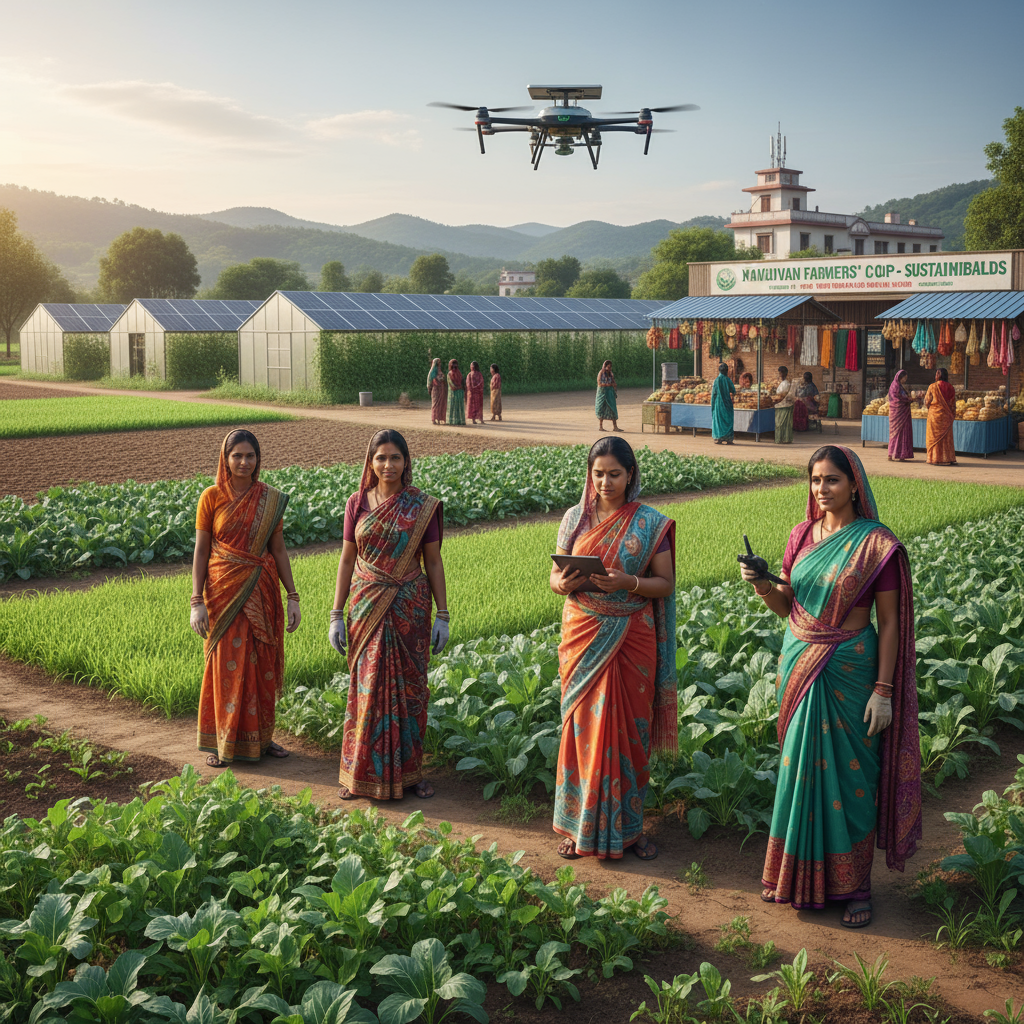
Training specialized Community Resource Persons from local women has created sustainable extension systems:
Specialized CRP Categories:
- Krishi Sakhi (agriculture specialists)
- Pashu Sakhi (animal husbandry experts)
- Van Sakhi (forest produce specialists)
Large-scale involvement of credible civil society organizations like PRADAN has ensured quality in capacity building and appropriate agricultural practices extension at the grassroots level.
Mahila Kisan Sashaktikaran Pariyojana (MKSP)
MKSP (2011) was the first exclusive programme for women farmers under NRLM. The program focused on sustainable agriculture using bio-fertilizers and bio-pesticides while promoting diversification into fruits, vegetables, and animal resources.
MKSP laid the foundation for women-led livelihood diversification at scale by recognizing women as farmers and providing appropriate technical support for sustainable agricultural practices.
Livelihood Diversification and Agricultural Growth
Sectoral Focus and Transformation
Livelihood diversification under DAY-NRLM and MGNREGS has concentrated on specific sectors with high potential for women’s participation:
Rainfed Areas Development:
Fruits and vegetable cultivation replacing traditional crops in water-stressed regions. This shift enables higher value per unit area while utilizing women’s traditional knowledge of crop management.
Animal Husbandry Modernization:
Modern practices in dairy, poultry, and livestock rearing leveraging women’s traditional roles while introducing scientific methods and market linkages.
Non-Timber Forest Products (NTFP):
Collection and value addition of forest-based products providing livelihood opportunities for tribal and forest-fringe communities while promoting conservation.
Income and Consumption Impact
Evaluation studies indicate 22% gain in incomes of women under rural livelihood mission over 6-8 years. This substantial income increase represents the maturation period required for women’s collectives to develop capabilities and market linkages.
Consumption Pattern Changes:
Bridging of gap in Monthly Per Capita Consumption Expenditure (MPCE) between program participants and non-participants. Higher per capita consumption expenditure is directly linked to training quality and social capital of women’s collectives.
Market Integration and Technology
Network of rural roads under PM Gram Sadak Yojana has facilitated produce marketing by connecting remote production areas to urban markets. Technology-enabled marketing platforms and increasing urban demand for fresh vegetables, milk, and meat have driven better market integration for women producers.
Challenges and Critical Gaps: Governance Perspective
Quality of Employment Concerns
Despite larger numbers, most women make only paltry sums of money. The increase has not been accompanied by higher earnings, regular wage employment, or access to well-remunerated jobs with benefits.
Employment Quality Indicators:
- Concentration in low-productivity, survivalist activities
- Limited progression to higher-value economic opportunities
- Absence of social security benefits in most employment forms
- Seasonal and irregular income patterns
Education and Skills Deficit
Lack of secondary education completion compromises women’s ability to seek higher-order economic activity. Absence of modern vocational skills limits economic opportunities and represents a critical weak link in movement up the skilling ladder.
Educational Barriers:
- High dropout rates at secondary level
- Limited access to technical and vocational training
- Skills training not aligned with market demands
- Language barriers in accessing training programs
Land Rights and Asset Ownership
Denial of agricultural land ownership rights to women prevents fragmentation of holdings but also limits women’s economic security. Recognition of women as farmers itself is a recent development, with agricultural statistics historically underrepresenting women’s contributions.
Asset Ownership Challenges:
- Joint land titles remain rare despite policy provisions
- Inheritance patterns often exclude women from land ownership
- Access to institutional credit limited without land collateral
- Government schemes often require land ownership for eligibility
Accountability in Decentralization
Ill-consequences of decentralization without accountability create implementation challenges. Need for well-thought-through community action rather than one-size-fits-all approaches becomes crucial for program effectiveness.
Socio-Economic and Empowerment Dimensions
Economic Independence and Decision-Making
Monetized income increases consumption choices and reduces financial dependence on male family members. 56% of women respondents report increased income levels after scheme implementation.
Enhanced Decision-Making Power:
- 55.8% women participating in family economic decision-making
- Increased attendance and voice in Gram Sabha meetings
- Enhanced interactions with government officials, banks, and post offices
Social Empowerment Beyond Economics
Beyond economic benefits, enhanced women’s agency in community affairs creates multiplier effects. Federation structures create platforms for collective action on health, education, sanitation, and other community issues.
Social Capital Building:
Sustainable community institutions built through SHG networks create lasting social change that extends beyond individual economic benefits to community-wide transformation.
Policy Recommendations for Enhanced Impact
Education and Skill Development Priorities
Prioritize secondary education completion for rural women while integrating modern vocational skills training aligned with market demands. Integration of education-skills continuum in rural development strategy becomes essential for sustained impact.
Skill Development Framework:
- Basic literacy programs linked to functional skills
- Digital literacy for accessing online markets
- Financial literacy for managing enterprises
- Technical skills in agriculture and allied sectors
Land Rights and Asset Security
Revisit policies that deny agricultural land ownership to women. Facilitate joint land titles to strengthen women’s economic security without compromising agricultural productivity.
Asset Building Strategy:
- Promote joint land ownership through policy incentives
- Access to productive assets through government schemes
- Asset financing through women’s collectives
- Insurance coverage for assets created through women’s enterprises
Quality Employment Creation
Move beyond survivalist activities to higher-value economic opportunities. Promote regular wage employment and entrepreneurship while strengthening linkages with formal sector for better-remunerated jobs.
Employment Quality Enhancement:
- Skill-based employment in rural manufacturing
- Service sector opportunities in rural areas
- Value addition in agricultural processing
- Technology-enabled enterprises using digital platforms
Institutional Strengthening and Sustainability
Continue expansion and deepening of SHG networks while enhancing capacity of CRPs and community institutions. Strengthen monitoring and accountability mechanisms to ensure program effectiveness.
Sustainability Measures:
- Professional management of women’s collectives
- Graduation pathways from basic to advanced enterprises
- Market linkage facilitation through technology platforms
- Regular impact assessment and course correction
Lessons for Broader Development Strategy
Women-Led Growth Model Recognition
Bottom-up approach of community collectives represents the steadiest way to progress. Recognition of economic potential of women-led growth with decentralized community action offers valuable lessons for planners to prioritize women and youth collectives building on social capital.
Scaling Successful Models
Not following collective approach in setting up manufacturing or services sectors represents missed opportunities. Need for inclusive India impetus requires quality employment through women and youth collectives while addressing human development as the critical weak link in faster movement up the skilling ladder.
Transformation Despite Constraints
Successful agricultural growth despite over 80% farm holdings being small or marginal demonstrates the viability of smallholder agriculture with appropriate support systems.
Conclusion: Balancing Quantity with Quality in Women’s Empowerment
The remarkable 69% surge in Rural Female Labour Force Participation Rate from 24.6% to 47.6% represents one of India’s most significant socio-economic achievements in recent decades. The expansion of DAY-NRLM from 25 million to 100 million women and MGNREGS’ 57% female participation demonstrate the transformative potential of well-designed government programs in promoting women’s economic participation.
However, this success story comes with important caveats that policymakers must address. While numbers have increased dramatically, research indicates that most women make only paltry sums of money and the increase has not been accompanied by higher earnings or access to well-remunerated jobs. Contradictory evidence showing MNREGA reduced women’s labour force participation by 4 percentage points highlights the complexity of program impacts and the need for nuanced analysis.
The quality versus quantity dilemma emerges as the central challenge: how to transform increased workforce participation into meaningful economic empowerment that provides decent livelihoods and sustainable income growth. Education and skills deficits, limited land ownership rights, and concentration in low-productivity activities remain critical barriers to qualitative improvement in women’s employment.
For UPSC aspirants and governance professionals, this transformation offers crucial lessons about balancing quantitative achievements with qualitative outcomes in development programming. The institutional architecture of Self-Help Groups, Community Resource Persons, and federated structures demonstrates how social capital mobilization can create sustainable platforms for economic empowerment.
The path forward requires addressing structural constraints through enhanced education access, skill development programs, land rights reforms, and market linkage improvements. Success depends on complementary investments in infrastructure, technology, and human development that enable women to move beyond survival-level activities to productive, well-remunerated employment.
The model offers valuable insights for designing inclusive growth strategies that prioritize women’s agency, collective action, and community-led development. However, achieving true empowerment requires moving beyond participation metrics to focus on income enhancement, skill development, and sustainable livelihood creation that transforms lives rather than merely counting participants.







+ There are no comments
Add yours