The Need for Smarter Waste Management
Urban India produces over 60 million tonnes of municipal solid waste annually, and nearly 50% of it is organic—from kitchen scraps to garden clippings. Yet much of it ends up in landfills, emitting methane and worsening the climate crisis. The solution? Composting. But not the old-school, guesswork-heavy way.
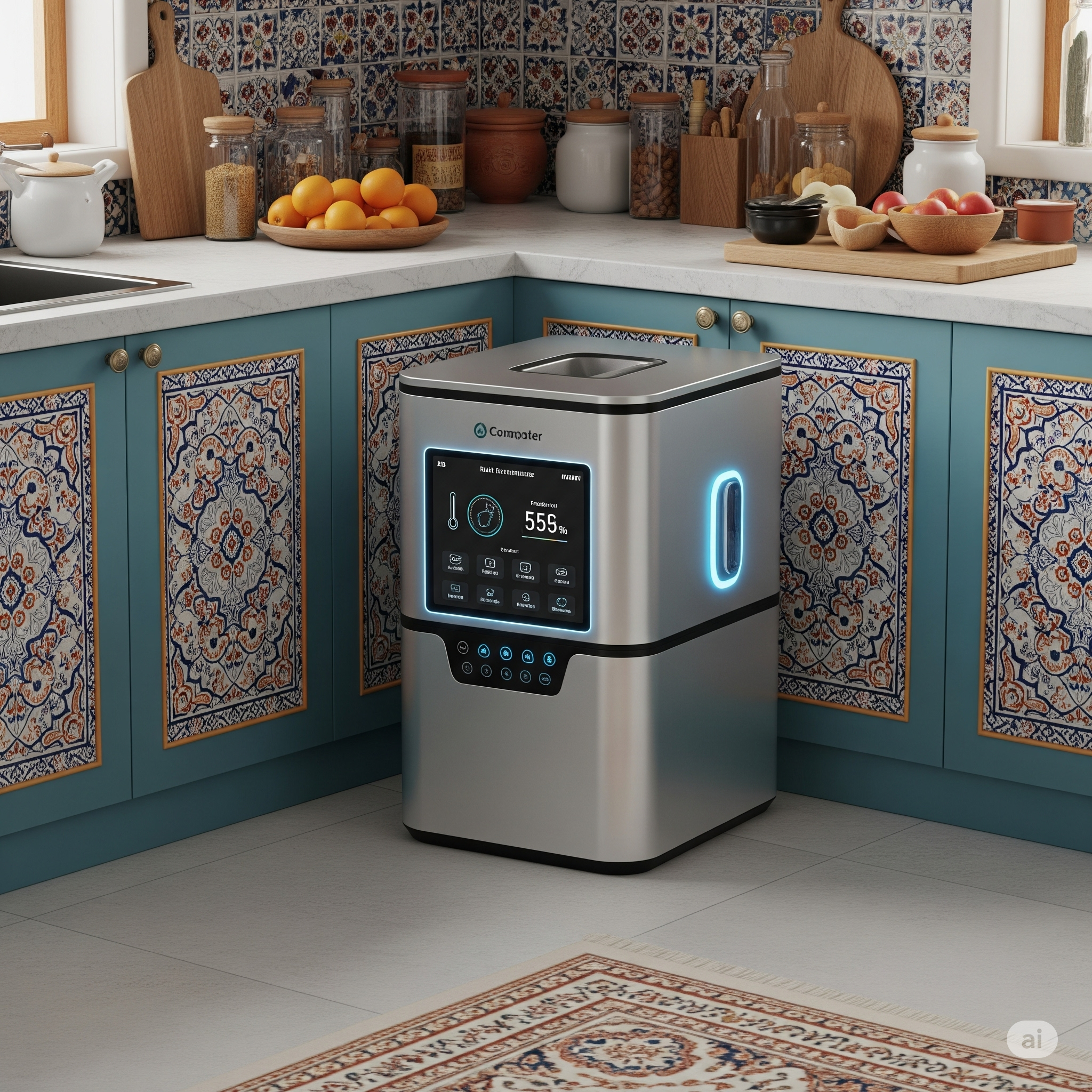
Enter: Smart IoT Composters—a new wave of composting bins that bring automation, data, and real-time monitoring to one of the most ancient sustainability practices.
These tech-enabled devices are not just about reducing waste—they’re about optimizing how we handle organic matter, right from your kitchen bin to a fully matured compost pile.
🤖 What is a Smart IoT Composter?
A Smart IoT Composter is a waste bin integrated with sensors, Wi-Fi or Bluetooth connectivity, and real-time data tracking tools that monitor:
- Moisture content
- Temperature
- Gas levels (CO₂, methane)
- Composting progress (via AI algorithms)
- Fill levels and required actions (add browns, aerate, or drain)
Some even offer mobile apps or dashboards to alert users when adjustments are needed—making composting not just easier but data-driven and fail-proof.
🛠️ How It Works: From Scraps to Soil
Step-by-Step Process:
- Input: You add kitchen waste—vegetable peels, fruit scraps, tea leaves.
- Monitoring: Sensors track temperature, moisture, and gas emissions.
- Recommendation Engine: The system suggests when to:
- Add dry matter (browns)
- Stir the compost
- Add bio-inoculants or microbes
- Automated Aeration: Some models have motors to rotate or stir contents.
- Drying & Deodorizing: Filters reduce odor; heaters speed up decomposition.
- Output: Compost is ready in 20–30 days—dark, crumbly, and nutrient-rich.
📊 The Technology Behind Smart Composting
| Component | Function |
|---|---|
| 🌡️ Temperature Sensor | Ensures microbial activity is optimal (45–60°C) |
| 💧 Moisture Sensor | Prevents excess wetness or dryness |
| 🧪 Gas Sensors | Tracks CO₂ or CH₄ for compost health |
| 🔄 Stirring Mechanism | Ensures aeration and uniform decomposition |
| 📱 Mobile App | Sends alerts, compost stats, maintenance reminders |
Bonus: Some models use machine learning to optimize compost cycles based on regional climate and waste type.
🌍 Why Smart Composters Matter for Urban India
🚮 1. Solving the Wet Waste Crisis
In India, unsegregated wet waste is the biggest challenge for municipal bodies. Smart bins decentralize this burden by handling waste at the source.
🧠 2. Zero-Waste Homes Made Possible
With smart monitoring, even beginners can avoid failed compost attempts—no more stinky bins or maggot infestations.
🏢 3. Ideal for Apartments and Societies
Compact smart composters can serve individual homes or be scaled for residential complexes, cafes, and offices.
🌿 4. Soil Regeneration + Climate Action
Every 1 kg of composted waste avoids methane emissions equivalent to 1.9 kg of CO₂—direct climate impact.
🏆 Top Smart Composters Available in 2025 (India & Global)
| Brand/Model | Features | Price Range |
|---|---|---|
| SmartBin Mini (India) | App alerts, 15L capacity, odor control | ₹12,000–₹15,000 |
| RUR GreenGold Aaga | Semi-automatic, great for societies | ₹18,000–₹25,000 |
| Lomi (Global) | Fully automatic, converts waste in 24 hrs | ₹35,000+ |
| Bokashi Smart | Uses IoT + Bokashi microbes | ₹10,000+ |
| EcoRich Magic Bin | Touchscreen UI, ideal for cafes | ₹40,000+ |
📌 Note: Prices vary by capacity, automation level, and tech features.
📱 Real-Life Use Case: From Wet Waste to Community Compost
In Bangalore’s HSR Layout, a residents’ society of 90 flats adopted IoT composters in 2023. Within 3 months:
- Wet waste reduced by 70%
- Saved ₹40,000/month in garbage pickup fees
- Grew organic herbs and vegetables using compost
“The app tells us when to stir or stop adding waste—super simple. Our kids love monitoring the compost stats too!” – Society resident
✅ Benefits at a Glance
| Benefit | Description |
|---|---|
| 💡 Smart Monitoring | Reduce manual errors and guesswork |
| 🕐 Time Efficiency | Faster composting cycles |
| 🛑 Odor Control | Alerts prevent rotting or imbalance |
| 🌱 Soil Health | High-quality compost supports organic gardens |
| 📉 Cost Saving | Reduce garbage fees, buy less fertilizer |
| 📶 Data Insights | Great for schools, labs, and community engagement |
🔍 Challenges to Watch For
- Initial Cost – Smart composters are more expensive than traditional ones, though long-term savings often offset this.
- Power Dependency – Most models need electricity for sensors or motors.
- Learning Curve – Though simplified, some models still need regular monitoring via app.
⚡ Pro Tip: Combine IoT composters with rainwater harvesting and kitchen gardening for a circular home ecosystem.
🔁 Alternatives & Add-ons
- Smart Moisture Meters: Add to existing composters
- Wi-Fi Soil Probes: For garden + compost use
- DIY Arduino Composters: Open-source guides available for makers
- Integration with Smart Home Systems: Use Alexa/Google for reminders
🌿 Future of Composting: What’s Next?
The composting of 2025 is not just a chore—it’s part of the Internet of Things ecosystem. Future models may include:
- AI-based compost quality scoring
- Carbon offset tracking
- Smart contracts for community compost rewards
- Blockchain-backed waste traceability
🧠 Final Thoughts: Compost Smarter, Not Harder
In the face of rising urban waste, smart IoT composters offer a scalable, sustainable, and tech-savvy solution. Whether you’re a conscious citizen, a parent teaching kids about ecology, or a housing society admin—it’s time to turn kitchen waste into climate-positive black gold.
“When we give our scraps to sensors, we get back smarter soil—and a healthier planet.”









+ There are no comments
Add yours