Key Highlights
- IndiaAI Mission surpassed targets with 38,000 GPUs deployed (vs. initial 10,000 target) at subsidized rates of just ₹65 per hour, democratizing AI access across startups, academia, and researchers with demand projected to reach 100,000 GPUs within 3-5 years
- National Quantum Mission’s ₹6,003 crore initiative targets 50–1,000 qubit systems, 2,000 km quantum-secure networks, and precision sensing, establishing hub-and-spoke R&D infrastructure at IISc, IITs, and C-DOT with 152 researchers across 43 institutions across 17 states
- Bharat 6G Alliance now comprises 80+ member organizations collaborating with global partners (6G-IA Europe, Next G Alliance USA) to co-design standards and position India as a design center rather than a mere implementer by 2030
- ONDC scaled to 20.4 crore cumulative transactions by March 2025 with 7.6 lakh sellers/service providers, projecting $250–300B GMV by 2030 as open-network commerce democratizes market access for MSMEs
- ANRF’s ₹1 lakh crore corpus for R&D with graded compliance under DPDP Act creates a coordinated ecosystem balancing innovation speed with privacy safeguards, specifically designed to crowd-in private capital via matching funds and de-risked translational research
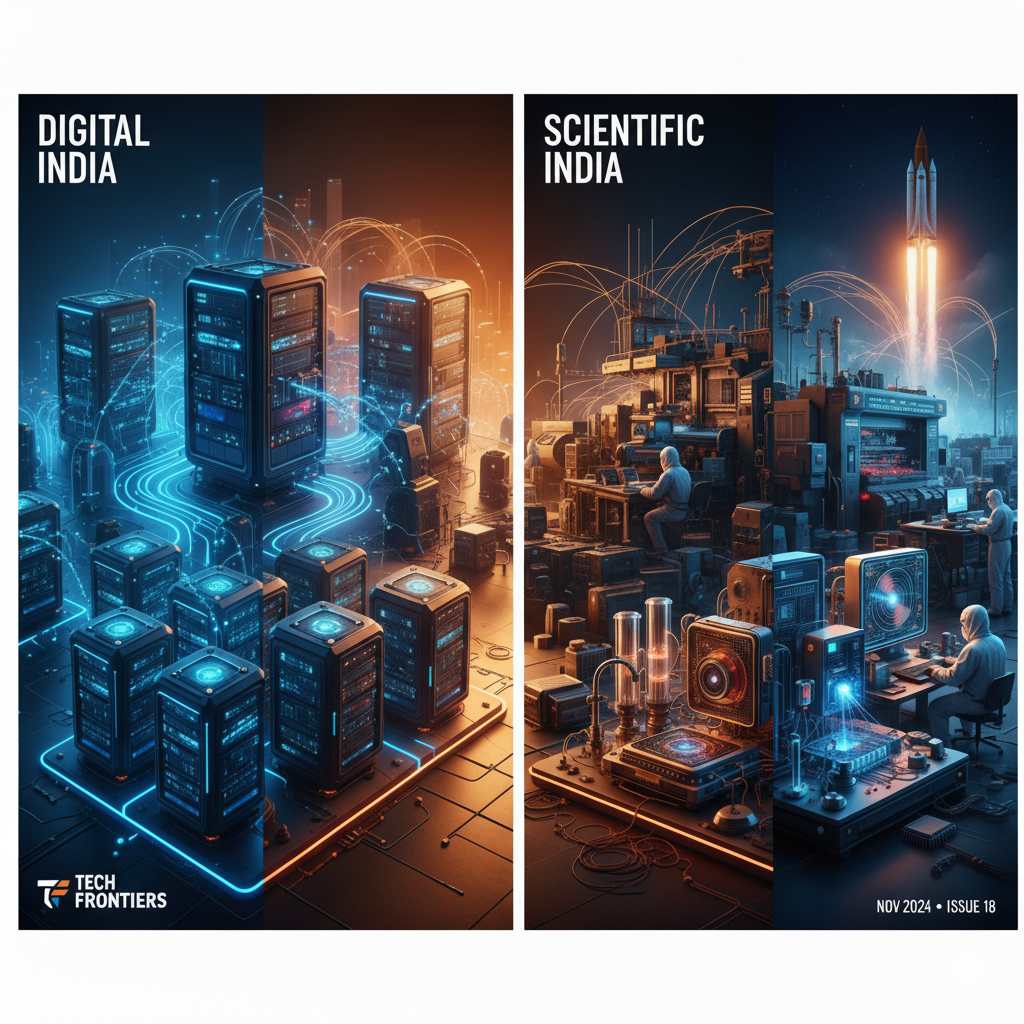
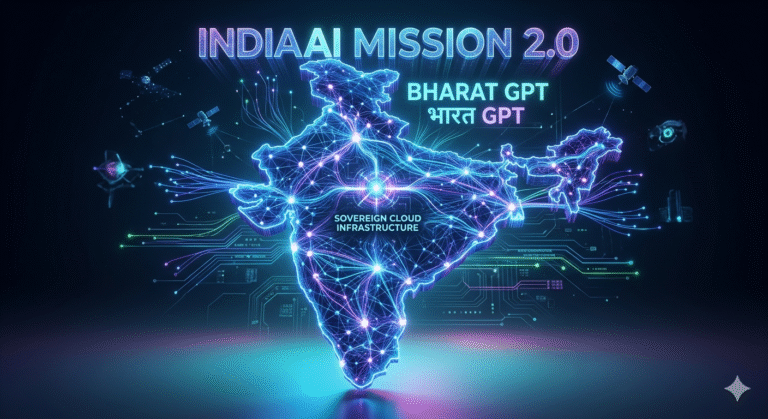
As India pivots toward becoming a global science and technology powerhouse, the government has unleashed an ambitious multi-pronged innovation strategy anchored by flagship missions, liberalized FDI policies, and reformed research governance. The IndiaAI Mission’s ₹10,300 crore investment with 38,000 GPUs, the National Quantum Mission’s ₹6,003 crore framework, and Bharat 6G’s global standard-setting ambitions signal a decisive shift: India is not merely adopting frontier technologies—it’s aiming to become a co-creator and exporter of them. pib.gov
By 2030-31, this interconnected ecosystem spanning AI compute, quantum technologies, next-gen connectivity, semiconductors, space commercialization, and digital public infrastructure could contribute an estimated $1.2 trillion to India’s GDP and capture 10% of global 6G patents. What makes this moment extraordinary is the simultaneous policy reform across research governance (ANRF), data protection (DPDP Act), and market rails (ONDC)—creating an enabling environment for both public R&D and private-sector scale-up that few nations have attempted comprehensively.
The Strategic Inflection Point: Why 2024-2030 Matters
For three decades, India positioned itself as a consumer of technology—importing semiconductors, outsourcing software services, and adopting foreign AI and telecom standards. This model delivered growth but created technological dependencies and limited value capture. The current policy pivot marks a departure: India is betting that indigenous innovation, supported by world-class infrastructure, can leapfrog traditional pathways.
The logic is sound. India has:
- 900 million digital citizens and a burgeoning tech workforce capable of both consumption and innovation
- Strong academic institutions (IITs, IISc) with world-class researchers that historically lacked adequate funding and industry collaboration mechanisms
- Capital and entrepreneur appetite for deep-tech ventures, as evidenced by $40 billion in global deep-tech VC funding in 2023, with India capturing an increasing share
- Domestic talent costs 60-70% lower than Silicon Valley, enabling profitable commercialization of R&D
Yet the risks are acute: China’s dominance in semiconductors and quantum, the U.S. and Europe’s first-mover advantages in 6G standards, and India’s historical difficulty in scaling hardware manufacturing. Success hinges on execution excellence across seven interconnected pillars—each requiring different policy levers, institutional reforms, and private-sector participation.
Democratizing AI Through Compute and Data Access

The IndiaAI Mission, approved in March 2024 with ₹10,371.92 crore outlay over five years, represents India’s boldest bet on inclusive AI-led growth. Rather than leaving AI compute to private cloud providers (where costs run $2.50–3 per GPU hour globally), the government has built a public AI compute commons offering 38,000 GPUs at subsidized ₹65/hour rates.
The Compute Strategy:
The mission deployed GPUs across multiple nodes—Delhi, Bangalore, Pune, Hyderabad—accessible to startups, researchers, government agencies, and educational institutions via a simple registration model. This addresses India’s critical infrastructure gap: a researcher at IIT Bombay or a startup in Tier-2 cities previously faced either prohibitive cloud costs or no access. Now, they can prototype LLMs, train computer-vision models, and validate AI hypotheses at a fraction of global costs.
Micron’s infrastructure partnerships and co-location models in data centers are laying groundwork for this at scale. As the IndiaAI CEO noted, “100,000 GPUs are needed in the coming years,” with government and private investment both mobilizing to meet demand—each 1,000-GPU block requiring Rs 500–800 crore in capex.
The Datasets Imperative:
Equally critical: AIKosh, the national AI datasets platform, now hosts 3,000+ datasets and 243 AI models, enabling developers to skip data-collection bottlenecks and accelerate time-to-market for applications. This addresses a persistent friction: India-specific datasets for healthcare diagnostics (detecting dengue from retinal scans), agricultural pest prediction, and rural voice AI are scarce—and necessary for localized AI solutions.
Seven Pillars of IndiaAI:
- IndiaAI Compute: 38,000 GPUs at subsidized rates
- Application Development Initiative: 30+ India-specific applications approved in healthcare, agriculture, cybersecurity, assistive learning
- AIKosh Datasets Platform: 3,000+ datasets, 243 models
- Indigenous Foundation Models: Developing Indian LLMs with regional language support
- FutureSkills: Talent pipelines to address skill gaps in AI engineering and data science
- Startup Financing: Risk capital for AI startups via government-backed funds
- Safe & Trusted AI: Governance frameworks balancing innovation with responsible AI safeguards
By end-2025, the initiative aims to onboard 30+ transformative applications—think farmer-facing crop yield prediction tools, health workers using AI triage for maternal health, and schools deploying AI-enabled literacy instruction in local languages.
Quantum Supremacy—Building India’s First Quantum Internet Backbone

The National Quantum Mission (NQM), approved in April 2023 at ₹6,003.65 crore (2023-31), targets a quantum-enabled India by 2031. Unlike AI’s steady adoption curve, quantum computing represents a genuine discontinuity—algorithms that are intractable classically (drug discovery, battery chemistry, cryptanalysis, optimization) become feasible. India is positioning itself not as a passive technology adopter but as a native builder.
Four Technical Pillars:
1. Quantum Computing (50–1,000 qubits by 2031)
Intermediate-scale quantum computers (NISQ era: 50-1,000 qubits) will be developed across multiple qubit platforms—superconducting qubits, photonic systems, and trapped-ion architectures—at IISc Bangalore (computing hub), IIT Madras/C-DOT (communications), IIT Bombay (sensing/metrology), and IIT Delhi (materials/devices). This distributed approach hedges bets: if one platform stalls, others advance.
2. Quantum Communications (2,000 km QKD networks)
India is developing satellite-based and terrestrial quantum key distribution (QKD) networks spanning 2,000 km—sufficient to link Delhi to Mumbai via quantum-secure channels. Unlike classical encryption (vulnerable to future quantum computers), QKD uses quantum physics to guarantee eavesdropping detection. First-stage terrestrial QKD between cities is expected by 2027-28.
3. Quantum Sensing & Metrology
High-sensitivity magnetometers (detecting brain signals for EEG, or mineral deposits for geo-exploration) and atomic clocks (precision timing for GPS-independent navigation) are being developed. Applications span medical diagnostics, resource exploration, and autonomous systems—sectors where India has adjacent expertise.
4. Quantum Materials & Devices
Superconductors, topological materials, and novel semiconductor structures—the physical substrates enabling quantum devices—are being synthesized and characterized at IIT Delhi and partner institutes. Localizing device supply chains insulates India from export controls (critical for quantum crypto).
Hub-and-Spoke Model with Industry Participation:
The NQM employs a “thematic hubs” structure: a coordinating institution (e.g., IISc for computing) leads R&D, with distributed teams across universities and national labs contributing specialized expertise. Crucially, ANRF funding mechanisms now incentivize industry partnerships—for quantum simulators serving pharma, or precision sensors for telecom towers.
With 152 researchers across 43 institutions in 17 states, NQM is deliberately decentralized to build distributed quantum talent and reduce brain drain to the U.S. and China.
6G Co-Creation—Designing Tomorrow’s Wireless Standards
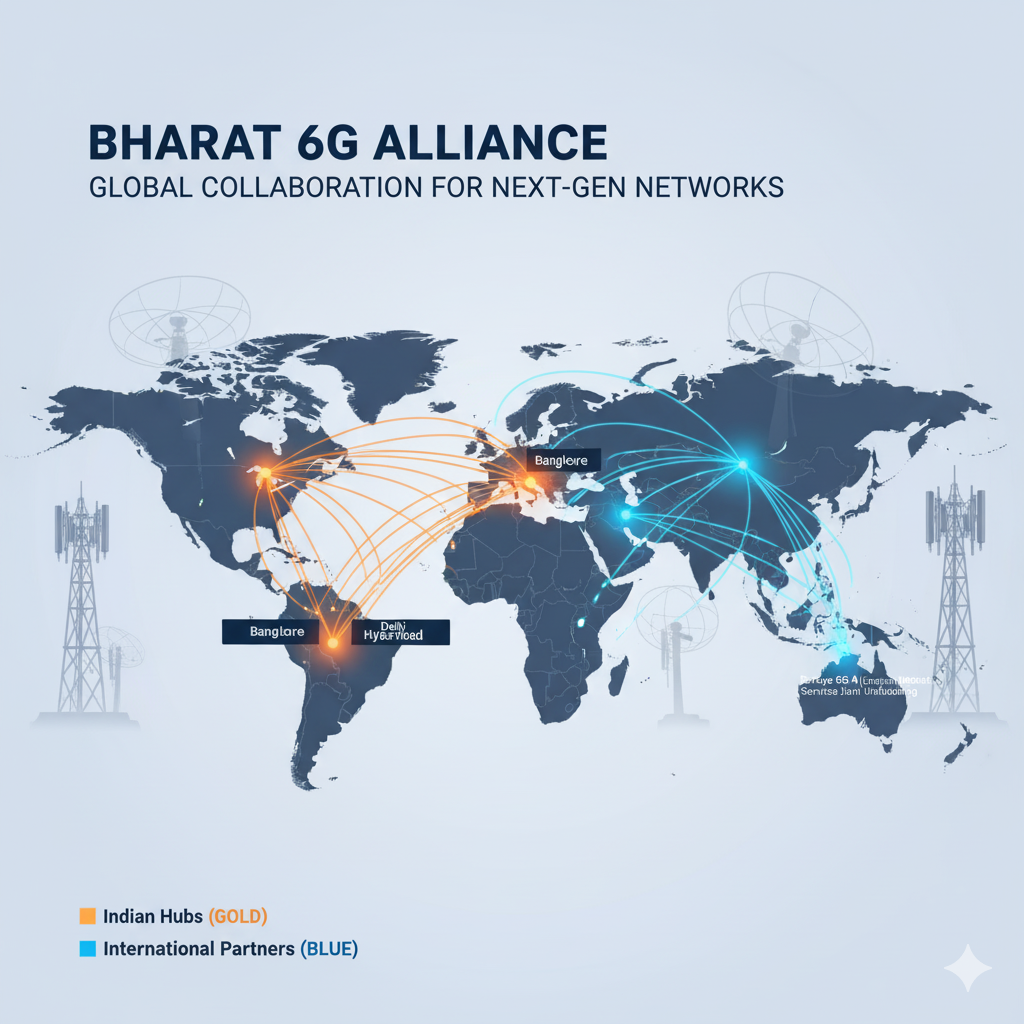
While 5G is still rolling out globally, India is audaciously betting on leadership in 6G standards-setting—the next inflection (2030-2040). The Bharat 6G Vision (launched March 2023) and its operational arm, the Bharat 6G Alliance (B6GA), position India not as a technology follower but as a co-designer of global 6G architecture.
Why 6G Leadership Matters:
Standards-setting bodies (3GPP, ITU) decide which technologies become mandatory—and which nations capture licensing royalties and manufacturing advantages. If India co-authors 6G standards (as it’s doing with 5G standardization through TSDSI), Indian telecom equipment makers (Nokia India, Ericsson, Sankhya Systems) gain compliance-from-the-start advantages versus retrofitting foreign-designed standards.
Bharat 6G Roadmap (2022–2031):
The initiative is structured into three phases:
Phase 1 (2022-26): R&D & Experimentation
Developing indigenous 6G prototypes with focus on:
- Native AI integration: 6G networks will embed AI inference, not bolt it on (unlike 5G)
- ISAC (Integrated Sensing and Communication): A single antenna transmits wireless signals AND senses objects—dual-use capability for autonomous vehicles and industrial IoT
- Non-Terrestrial Networks (NTN): Seamless integration of satellites and HAPs (high-altitude platforms) into cellular networks
Phase 2 (2026-29): Field Trials & Standards Input
Testbeds in Bangalore, Pune, and Delhi will validate indigenous 6G tech stacks. Results feed into 3GPP and ITU standardization bodies, influencing global 6G specs.
Phase 3 (2029-31): Commercial Rollout & Export Readiness
6G-capable equipment from Indian vendors will be globally competitive, and Indian spectrum allocations will favor indigenous tech (as done with 4G spectrum pricing).
Bharat 6G Alliance: 80+ Members Collaborating
The B6GA convenes telecom operators (Jio, Airtel, BSNL), academia (IIT Bombay, Delhi), startups (Sankhya, Aarna Networks), and global partners (6G-IA Europe, Next G Alliance USA, 6G Forum South Korea). Seven working groups focus on:
- Spectrum & standardization
- Technology development
- Sustainability & green 6G
- Applications & use cases
- Supply chain resilience
Economic impact: 6G is projected to add $1.2 trillion to global GDP by 2035, with India targeting at least 10% of global 6G patents.
Semiconductor Self-Reliance—From OSAT to Fab Ecosystem
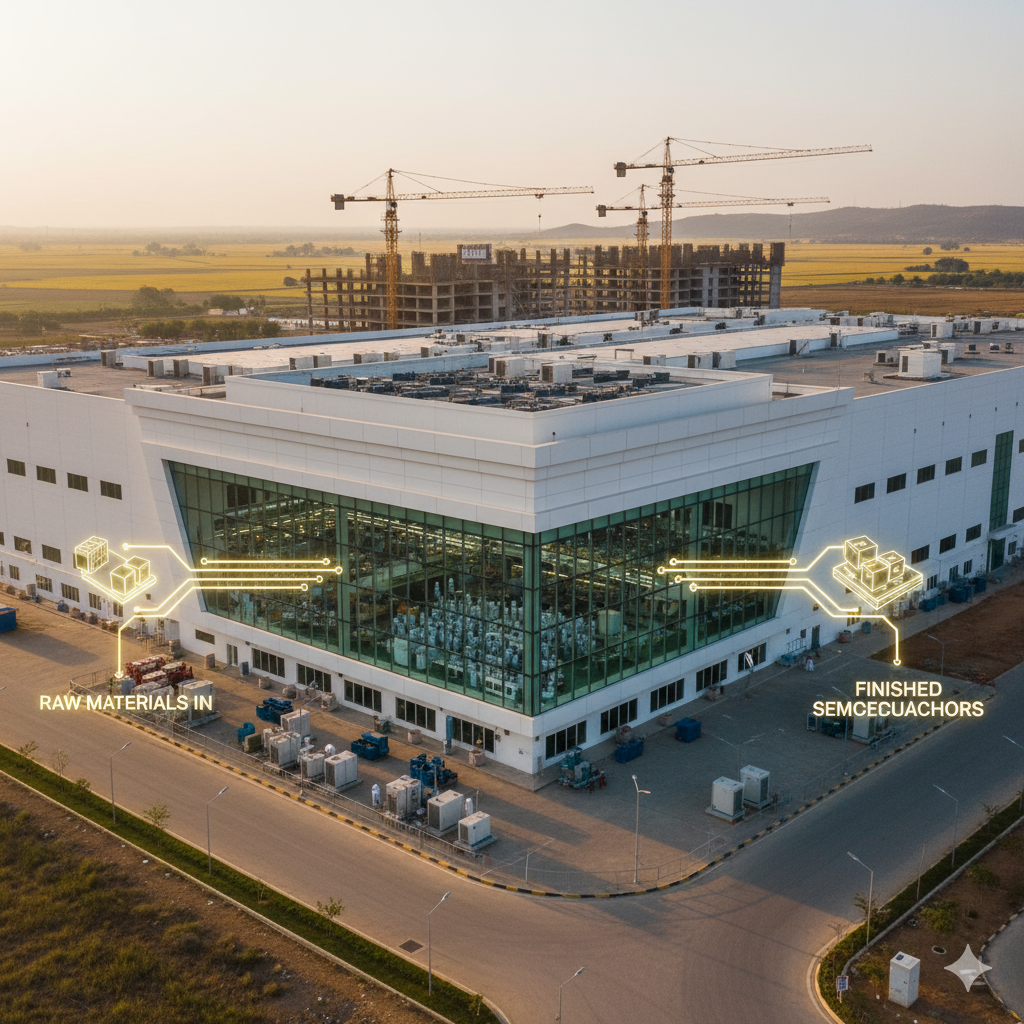
India’s semiconductor ambition is grounded in hardware realism: chips are capital-intensive (Fabs cost $10-20 billion), geopolitically sensitive (Taiwan’s dominance creates supply-chain vulnerability), and strategically vital (defense, communications, AI). The government’s India Semiconductor Mission took effect mid-2023, and Micron’s Sanand plant exemplifies the phased strategy: start with OSAT (assembly, testing, packaging), then graduate to fab (wafer fabrication).
Micron’s Sanand ATMP Project (₹22,516 crore):
Micron Semiconductor’s Gujarat plant—coming online December 2025/January 2026—represents India’s entry into memory (DRAM, NAND) assembly and packaging. Key parameters:
- Investment: ₹22,516 crore (approximately $2.75 billion)
- Capacity: 1,352 million units per year of DRAM and NAND components
- Employment: ~20,000 direct and indirect jobs
- Technology: Flip-chip and wirebond packaging for mobile, laptop, server, and automotive applications
- Supply chain: ~30 ancillary suppliers (chemical, substrate, equipment manufacturers) setting up in Gujarat to feed Micron
The economics work: Micron gains access to India’s cost-competitive labor and government fiscal support (50% capex grant). India gains operational expertise, technology transfer, and integration into Micron’s global supply chains—critical for future fab opportunities.
Broader Semiconductor Roadmap:
Beyond Micron, the ISM pipeline includes:
| Project | Type | Investment | Capacity | Location | Employment |
|---|---|---|---|---|---|
| Tata Semiconductor (Taiwan PSMC tech) | Fab | ₹91,526 crore | 50,000 WSPM | Dholera, Gujarat | ~20,000 |
| Tata Semiconductor Assembly | OSAT | ₹27,120 crore | 15,600 MN units/year | Morigaon, Assam | ~26,000 |
| CG Power & Industrial | OSAT | ₹7,584 crore | 4,044 MN units/year | Sanand, Gujarat | ~5,000 |
| Kaynes Semicon | ATMP | ₹3,307 crore | 2,310 MN units/year | Sanand, Gujarat | ~2,000 |
| India Chip (HCL-Foxconn JV) | Advanced Packaging | ₹3,706 crore | 432 MN units/year | Uttar Pradesh | ~4,000 |
Total capex commitment: ~₹165,000 crore; total employment: ~80,000+ jobs by 2030.
Strategic Value:
This ecosystem move-up is intentional: OSAT teaches supply-chain management and quality protocols; subsequent fabs will leverage this foundation. Unlike China (which built scale rapidly but relied on imported fab designs), India is deliberately climbing the value chain—integrating international partners (PSMC, Foxconn, Renesas) while building indigenous absorptive capacity.
Space Liberalization—Private Sector Participation and FDI
India’s space economy historically was ISRO-dominated. The Indian Space Policy 2023 and FDI reforms (February 2024) liberalize entry for private players and foreign capital—signaling a shift from monopoly to ecosystem.
FDI Liberalization Framework:
| Activity | FDI Limit | Route | Rationale |
|---|---|---|---|
| Components/systems for satellites, ground/user segments | 100% | Automatic | Attract global tech suppliers; localize sub-tier suppliers |
| Satellite manufacturing & operation | Up to 74% | Automatic; beyond 74% = govt approval | Prevent foreign control while enabling participation |
| Launch vehicles & spaceports | Up to 49% | Automatic; beyond 49% = govt approval | Strategic sensitivity; protect indigenous launch capability |
Why This Matters:
- 100% FDI in components enables firms like Lockheed Martin (satellites) or Ericsson (ground systems) to set up assembly in India—creating high-skill manufacturing jobs and ancillary supplier networks
- 74% FDI in satellite ops attracts constellation operators (e.g., companies building Earth-observation or comms satellites) to establish India manufacturing bases, leveraging cost advantages
- 49% FDI in launch vehicles prevents a single foreign entity from controlling India’s launch infrastructure while permitting partnerships (e.g., Skyroot’s international co-investors)
Complementary Infrastructure:
- IN-SPACe (Indian National Space Promotion and Authorisation Centre): A single-window clearance for private space ventures—licensing, spectrum allocation, export approvals—cutting timelines from 2 years to <6 months
- NSIL (NewSpace India Limited): ISRO’s commercial arm, now partnering with private startups on co-developed missions
- Regulatory harmonization: ISRO/IN-SPACe working with Department of Space to clarify export controls, preventing unnecessary delays
Commercial Opportunity:
India’s space economy (satellites, launch services, ground segments) is projected to grow from ~$7 billion (2023) to $20+ billion by 2030. FDI liberalization aims to capture a higher share of this growth—particularly in high-margin segments like Earth observation and satellite communications.
Market Rails: ONDC—Democratizing E-Commerce and Fintech Access
While missions address innovation supply (R&D infrastructure), ONDC (Open Network for Digital Commerce) addresses demand-side inclusivity—enabling MSMEs to participate in digital markets at near-zero friction and cost.
ONDC’s Explosive Scale:
By March 2025, ONDC had processed:
- 20.4 crore cumulative transactions
- 1.6 crore orders in March 2025 alone (monthly growth from 1 crore in June 2024)
- 7.6 lakh sellers/service providers onboarded—majority MSMEs, particularly in food, grocery, mobility, and logistics
The Model’s Innovation:
Unlike centralized e-commerce (Flipkart, Amazon), ONDC is an open network: any buyer app (Paytm, PhonePe, Meesho) connects with any seller app (GoFrugal, Mystore, Magicpin), with logistics providers (Shadowfax, XpressBees) competing transparently. Commission structure tilts to sellers (3% buyer-side vs. 18-40% on traditional platforms).
Segments & Momentum:
- Mobility: 56% of March 2025 transactions; Namma Yatri driving adoption across Bengaluru, Pune, Chennai
- Logistics: Growing rapidly as e-comm sellers adopt ONDC for faster, cheaper last-mile delivery
- Retail: Peaked at 65 lakh orders (Oct 2024), recently moderated to 45 lakh (Feb 2025)—natural consolidation as duplicative sellers exit
- Fintech: 5,000+ personal loan applications monthly via ONDC credit module
2030 Projections:
Industry analysts project ONDC GMV reaching $250–300 billion by 2030—achieving platform-scale without owning inventory or logistics, purely via network orchestration.
Data Protection & Regulatory Alignment:
Critical to ONDC’s growth: the DPDP Act’s compliance framework must remain startup-friendly. The rules (notified January 2025) include “graded responsibilities”—smaller merchants face lower compliance burden than “Significant Data Fiduciaries” (Facebook, Amazon-scale platforms). This tiering prevents ONDC from becoming a regulatory barrier to MSME participation.
Research Governance: ANRF’s Role in Crowding-In Private R&D
The Anusandhan National Research Foundation (ANRF), operationalized February 5, 2024, represents a governance overhaul. Unlike its predecessor (Science and Engineering Research Board—SERB), ANRF operates under a distinct Act of Parliament with clearer mandates for industry-academia linkages and mission-driven research.
ANRF’s Funding Architecture:
- ₹1 lakh crore corpus for R&D across natural sciences, engineering, health, agriculture, and humanities-tech interfaces
- Competitive calls: PM-led PMECRG, EV Mission, Inclusive Research, PAIR (Platform for AI Research), JC Bose fellowship—each pairing emerging investigators with top-tier institutions
- Industry co-funding mandate: At least 10-15% of project costs must be matched by private partners (industry, philanthropies), ensuring commercialization focus
Strategic Programs:
- MAHA-EV Mission: Electric vehicles R&D with OEM (Tata, Mahindra) and supplier co-funding—targeting 30% reduction in battery cost by 2030
- PAIR Programme: AI safety, interpretability, and fairness research—aligned with IndiaAI’s responsible-AI mandate
- Inclusive Research: AI for healthcare, agriculture, and climate—targeting India-specific challenges
Hub-and-Spoke Model:
ANRF funds “lead institutes” (IISc, IIT Delhi, AIIMS) as coordinating hubs, with peripheral universities contributing specialized expertise. This distributes R&D outside traditional Bangalore-Delhi corridor, building talent in Tier-2 cities.
Success Metrics:
ANRF programs are now tied to TRL (Technology Readiness Level) progression: Basic research (TRL 1-3) can be government-funded; applied research (TRL 4-6) requires >10% industry matching. This incentivizes researchers to design projects with commercialization pathways from inception.
Data Governance: DPDP Act as an Innovation Enabler
The Digital Personal Data Protection Act (DPDP), enacted August 11, 2023, operationalized January 3, 2025, establishes India’s first comprehensive data privacy framework. For innovation, its genius is graded compliance—balancing privacy rights with startup agility.
Key Provisions Affecting Innovation:
1. Graded Responsibilities
Platforms like Facebook, Instagram, YouTube (millions of users) are “Significant Data Fiduciaries” (SDFs) with higher compliance burden: consent managers (with ₹2 crore minimum net worth), breach notification within 72 hours, and Data Protection Board engagement.
Startups and MSMEs face lower compliance costs: simpler consent collection, less frequent audits, and extended timelines for building compliance infrastructure. This prevents DPDP from being a startup killer.
2. Data Portability & Cross-Border Transfer
Personal data transfers outside India require government notification of approved jurisdictions and contractual safeguards—balancing privacy with multi-national operations. For AI startups training models globally, this adds process but not prohibitive friction.
3. Consent Managers as a New Business Model
Consent managers (e.g., startups specializing in privacy infrastructure) emerged as a compliance layer. These companies—essentially data-flow auditors for fintech, healthtech, and e-commerce platforms—have become a new venture category, creating jobs and specialization.
4. Rights of Data Principals
Users can request data deletion (within 30 days), correction (within 45 days), and access—rights that startups must engineer into data architectures. This incentivizes privacy-by-design, raising security baselines across the ecosystem.
Regulatory Practicality:
The Data Protection Board of India (DPBI), notified in 2025, will handle complaints and establish precedents. Early guidance suggests a pragmatic approach: intent to comply > perfection, especially for startups demonstrating good-faith efforts.
Deep Tech as a Cross-Cutting Enabler
Underpinning all five pillars: deep technology startups—ventures building innovations in quantum, semiconductors, space, advanced materials, and bio-tech that are 5-15 year journeys with high R&D costs and uncertain returns.
The draft National Deep Tech Startup Policy (under formulation) proposes:
- IP support: Accelerated patent filing (3-6 months vs. 12-18) for deep-tech startups; government co-funding prosecution costs
- Translational R&D facilities: Shared cleanrooms (for semiconductor design), quantum computers (for algorithm dev), and manufacturing pilot lines
- Certification & standards: Government helping deep-tech startups achieve international certifications (space export licenses, semiconductor process nodes) without commercial scale
- Procurement commitments: Government as “anchor customer” for deep-tech innovations—buying first units at premium to support scale
Examples: Skyroot Aerospace (reusable launch vehicles), Atom Computing (quantum), IHP Microelectronics (semiconductors)—all deep-tech ventures benefiting from ANRF co-funding and strategic procurement intent.
The Coordination Problem: Avoiding Silos, Maximizing Spillovers
Five sophisticated missions executed in parallel invites siloing risk: IndiaAI compute prioritizes GPUs; Quantum Mission focuses on qubits; Bharat 6G targets standards—each with distinct timelines and stakeholders.
Critical coordination points:
- Shared compute infrastructure: Quantum simulators could run on IndiaAI’s GPU clusters, reducing duplication
- Talent flows: ANRF’s Advanced Research Grants should encourage cross-mission research teams (AI safety for quantum, 6G applied to satellite comms)
- Standards alignment: Bharat 6G protocols should anticipate quantum-secure encryption (post-quantum cryptography), informed by NQM’s QKD advances
- Domestic supplier ecosystem: Semiconductor suppliers serving Micron (fab consumables, packaging materials) should also support deep-tech startups in quantum sensors and space electronics
- Data access: AIKosh should ingest quantum simulation datasets and 6G testbed signal archives, enabling researchers to model next-gen use cases
Governance mechanism:
A proposed Inter-Mission Steering Council (likely within the Prime Minister’s Office) should meet quarterly to align roadmaps, flag spillover opportunities, and resolve resource conflicts before they metastasize into bureaucratic turf wars.
Opportunities:
If executed well, this ecosystem creates:
- Compute sovereignty: No longer dependent on AWS/Google for AI workloads; Indian startups train models domestically at 1/50th of Silicon Valley costs
- Standards influence: 6G, 5G evolution, and satellite-ground protocols written partly in Delhi/Bangalore, not just 3GPP plenary meetings in Europe
- Quantum security: A 2,000 km QKD backbone immunizes Indian financial systems against future quantum decryption threats
- Semiconductor resilience: A functioning OSAT-to-fab pipeline reduces Taiwan strait vulnerabilities and creates export markets
- MSME market inclusion: ONDC’s $250-300B GMV by 2030 means 500 million people—today outside e-commerce—can sell digitally without Flipkart’s 30% commission
Risks: The Hard Truths
But execution risks are severe:
- Capital intensity: Semiconductor fabs cost $10-20 billion each; space infrastructure requires continuous capex. Private capital won’t materialize without proven unit economics
- Talent scarcity: 100,000 GPUs need 5,000+ ML engineers; quantum needs physicists; 6G needs RF/telecom specialists. IITs produce ~1,000 relevant graduates yearly—orders of magnitude short
- Standards fragmentation: Bharat 6G risks becoming an India-local standard if not genuinely integrated into 3GPP/ITU processes; isolated standards lose value
- China’s lead: China’s $20 billion annual quantum spend, semiconductor vertical integration, and 6G research head-start mean India starts from behind
- Data compliance friction: Overzealous DPDP enforcement could stifle fintech and healthtech startups that depend on data-driven personalization
Mitigations:
- PPP design rigor: Government absorbs early R&D risk (TRL 1-4); private sector enters at commercial inflection (TRL 5-9)
- Talent import liberalization: Ease H1-B-equivalent visas for quantum engineers, chip designers, and 6G researchers from diaspora and allied countries
- Standards leadership: Fund Indian researchers into 3GPP, ITU, and IEEE standards committees; position India as venue for regional telecom forums
- Regional competition: Frame semiconductor/quantum/6G advances as state-level competitions (Gujarat vs. Karnataka vs. Telangana), fostering benchmarking and talent mobility
Conclusion: Innovation as a Public Good—And a Strategic Imperative
India’s innovation strategy rests on a wager: that democratizing access to compute, enabling indigenous standards-setting, building quantum-secure networks, and scaling digital public infrastructure can compress decades of catch-up into a single decade. The fiscal commitment (₹10,300 crore + ₹6,003 crore + additional space/space/DPI outlays) totals roughly $20+ billion over 5-7 years—substantial, but less than Silicon Valley’s annual VC deployment.
What distinguishes this moment is simultaneity: Five interconnected missions, reformed research governance via ANRF, privacy-by-design via DPDP, and market democratization via ONDC are being operationalized in parallel. Success means an India that designs AI, builds quantum computers, co-creates 6G standards, manufactures semiconductors, and operates space systems—no longer a consumer of others’ innovation, but a co-creator shaping humanity’s technological future.
The 2025-2030 window is decisive. Delays multiply: missing this decade’s quantum window means China’s algorithms dominate quantum-era cryptanalysis; not capturing 6G standard-setting means licensing royalties flow to other nations; semiconductor delays perpetuate Taiwan vulnerabilities. Conversely, India’s demographic dividend (world’s youngest large population), talent cost advantages, and demonstrated software engineering prowess create conditions unlikely to repeat post-2030.
The policies are in place. The missions are funded. The institutions are mobilizing. Execution—disciplined, politically insulated from partisan pressures, and ruthlessly focused on measurable outcomes—is the remaining variable.





+ There are no comments
Add yours