Key Takeaways
- Geopolitical Earthquake: The February 2026 US-Israel strikes fundamentally altered the Middle East by eliminating Iran’s top leadership.
- Energy Vulnerability Exposed: The closure of the Strait of Hormuz proves that global supply chains remain dangerously reliant on narrow maritime chokepoints.
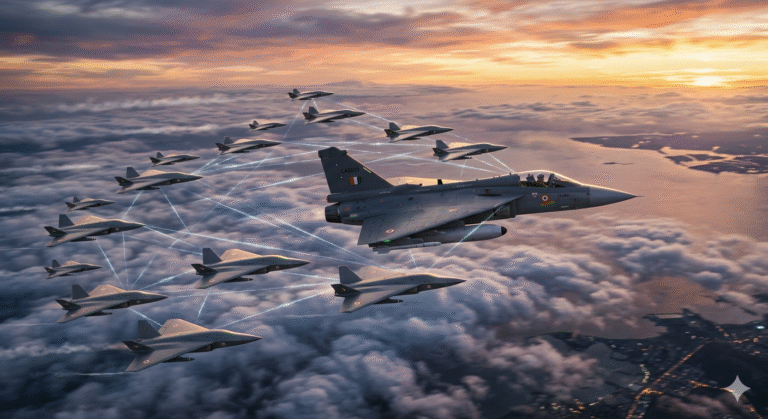
- The Rise of Drone Swarms: Operation Epic Fury’s use of LUCAS drones shows that cheap, scalable AI technology is replacing expensive, traditional munitions in modern warfare.
- India’s Balancing Act: Nations like India must meticulously navigate energy security risks while simultaneously pushing for technological sovereignty on the global stage.
The geopolitical foundation of the Middle East fractured irreversibly on February 28, 2026. A coordinated, overwhelming military campaign shattered decades of regional deterrence overnight, plunging the world into a new era of conflict.
Codenamed “Operation Epic Fury” by the United States and “Operation Roaring Lion” by Israel, this massive offensive systematically dismantled Iran’s deepest military and political infrastructures. The immediate outcome was the death of Iran’s Supreme Leader Ayatollah Ali Khamenei and a rapid escalation into a multi-front regional war.
However, understanding the(https://www.cfr.org/global-conflict-tracker/conflict/confrontation-between-united-states-and-iran) requires looking far beyond the immediate airstrikes. The conflict intricately weaves together revolutionary drone technology, severe global energy supply disruptions, and complex diplomatic realignments. From the corridors of Washington to the strategic ports of New Delhi, the ripple effects are reshaping international relations.
Why This Topic Matters Today
The implications of this confrontation stretch far past the borders of the Middle East, demanding immediate attention from global policymakers and citizens alike. Global energy markets currently face their most severe test since the 1973 oil embargo.
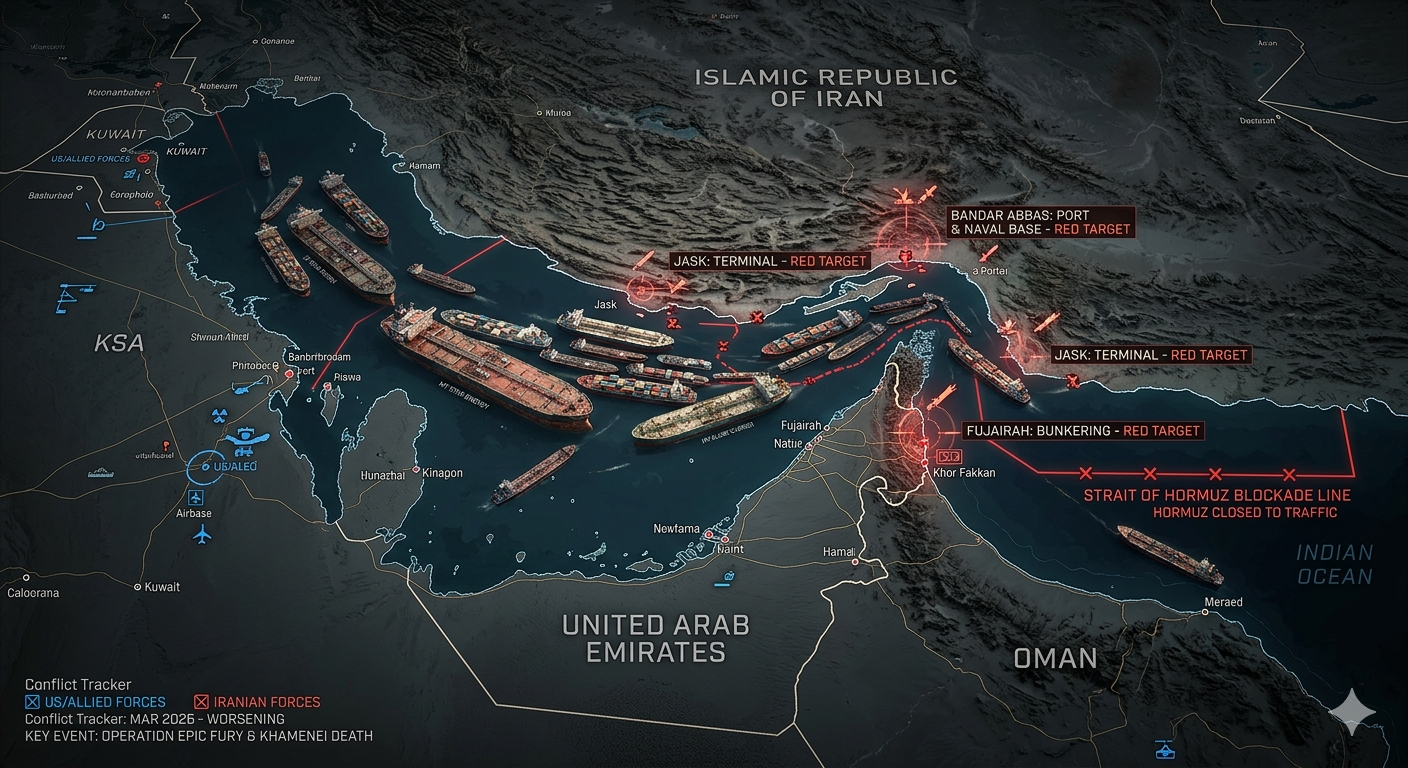
This crisis was triggered by Iran’s functional closure of the Strait of Hormuz. Over 20 million barrels of oil per day—representing roughly one-fifth of global petroleum consumption—are bottlenecked in the Persian Gulf.
The resulting economic shockwave has sent international financial markets into volatile territory, fueling a massive spike in global inflation. Furthermore, the introduction of automated, low-cost drone swarms marks a permanent shift in modern military strategy. For professionals, researchers, and civil service aspirants, grasping the multifaceted dynamics of this historic polycrisis is absolutely essential.
Key Highlights
| Core Aspect | Impact & Significance |
| Decapitation Strike | Joint US-Israel airstrikes resulted in the death of Supreme Leader Ali Khamenei, accelerating a historic leadership transition. |
| Technological Shift | The US military deployed the LUCAS kamikaze drone, an inexpensive weapon reverse-engineered from Iran’s Shahed-136. |
| Global Energy Crisis | Iran’s blockade of the Strait of Hormuz forced the IEA to orchestrate a record 400-million-barrel release from strategic reserves. |
| Leadership Succession | Mojtaba Khamenei assumed the role of Supreme Leader, signaling a hardline, militarized wartime doctrine aligned with the IRGC. |
| India’s Strategic Dilemma | The conflict directly threatens India’s energy security and the operational viability of its $120 million investment in the Chabahar Port. |
Background / Context
The hostilities of 2026 are the violent culmination of a deteriorating relationship spanning more than seven decades. The foundation of modern mistrust dates back to the 1953 CIA-backed coup that overthrew Iranian Prime Minister Mohammad Mosaddegh.
The 1979 Iranian Revolution officially severed diplomatic ties, transforming the nations into bitter adversaries. Decades of proxy conflicts, strict economic sanctions, and disputes over Iran’s nuclear enrichment capabilities firmly entrenched this animosity.
The geopolitical temperature reached a boiling point during the “Twelve-Day War” in June 2025. Israel and the United States launched strikes targeting highly fortified Iranian nuclear facilities.
While that brief conflict resulted in a fragile, temporary ceasefire negotiated on June 24, 2025, the structural issues remained completely unresolved. Continued Iranian support for regional militant groups, the advancement of its ballistic missile program, and the ultimate breakdown of nuclear negotiations in Geneva in mid-February 2026 set the stage for a massive confrontation.
Did You Know? The United States and Iran have not maintained formal diplomatic relations since April 1980. Currently, Pakistan serves as Iran’s protecting power in the US, while Switzerland represents US interests in Tehran. wikipedia
Core Explanation
What is Operation Epic Fury?
Operation Epic Fury commenced in the early hours of February 28, 2026. Authorized by the US President, the campaign aimed to systematically dismantle Iran’s command and control facilities, air defense networks, and missile production sites.
The primary objective was explicitly framed around permanently preventing Iran from acquiring a nuclear weapon, crippling its proxy terror networks, and destroying its naval capabilities.
How the Campaign Works
The operation utilized an overwhelming concentration of multi-domain firepower. B-2 stealth bombers, fifth-generation fighter jets, and naval cruise missiles saturated Iranian airspace within the first 12 hours.
The strategic shockwave occurred when precision munitions successfully targeted a highly secure leadership compound in Tehran. This decapitation strike killed Ali Khamenei, along with several top military officials, immediately altering the political fabric of the Islamic Republic.
Key Components and Stakeholders
The conflict involves a complex web of actors. On one side, the US and Israel drive the offensive military operations.
On the other side, Iran relies on its vast network of regional proxies. Groups like Hezbollah in Lebanon and the Houthis in Yemen act as force multipliers, launching coordinated retaliatory strikes against US bases and allied interests across the Middle East.
Internally, the Islamic Revolutionary Guard Corps (IRGC) remains the dominant military force within Iran, working closely with the newly appointed Supreme Leader, Mojtaba Khamenei, to execute a sustained wartime defense strategy.
Conceptual Breakdown
The 2026 conflict serves as the definitive proving ground for a new era of automated warfare. Historically, the United States relied heavily on multi-million-dollar precision munitions, such as the Tomahawk cruise missile.
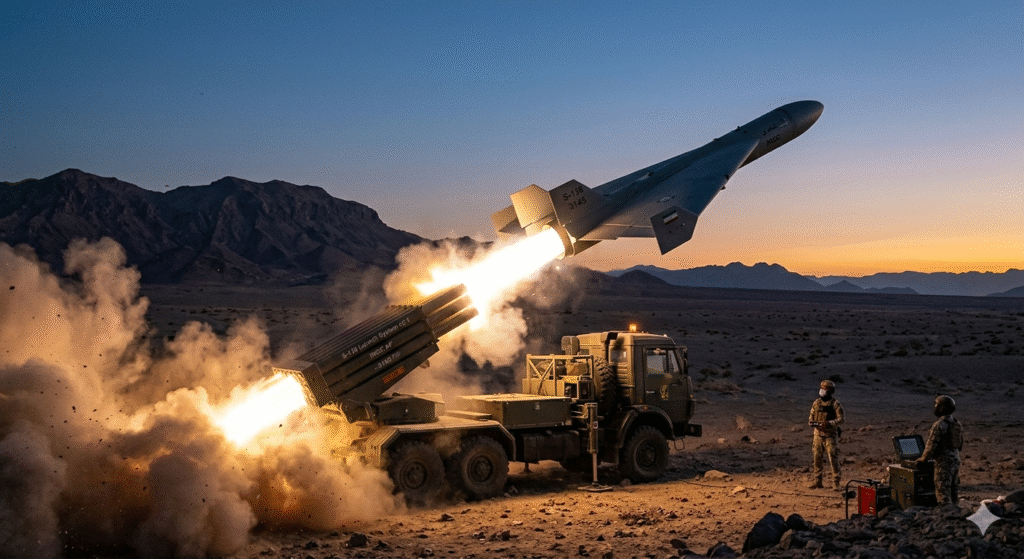
However, Operation Epic Fury introduced the Low-cost Uncrewed Combat Attack System (LUCAS). Operated by the newly established US Central Command’s Task Force Scorpion Strike, these drones represent a paradigm shift in military economics.
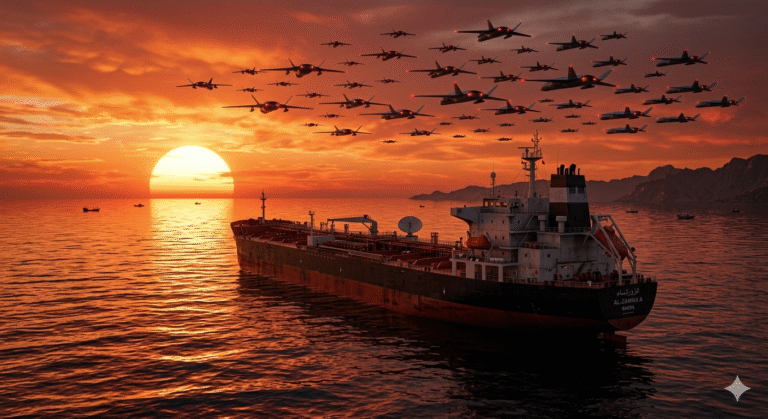
The LUCAS drone is a direct, reverse-engineered copy of Iran’s own Shahed-136 loitering munition. Priced at roughly $35,000 per unit, it allows the US military to deploy overwhelming, expendable drone swarms that saturate enemy air defenses. smgconferences
These systems feature advanced autonomous coordination capabilities. By integrating satellite internet connectivity, the drones can execute dynamic targeting while keeping human operators in the loop.
Such breakthroughs in AI technology represent a massive leap in how global powers approach asymmetric warfare. The military no longer relies solely on expensive, limited stockpiles; it now leverages scalable, low-cost intelligence.
Expert Tip: For military analysts, the true innovation of the LUCAS drone isn’t its explosive power, but its cost-to-impact ratio. Swarming cheap drones exhausts the enemy’s highly expensive surface-to-air interceptors, clearing the path for heavier strategic bombers.
Case Studies
The tactical exchanges in this war have heavily targeted critical infrastructure, producing immediate and devastating real-world consequences.
Case Study 1: The Kharg Island Strikes
In mid-March 2026, the US-led coalition launched targeted airstrikes on Kharg Island. This small coral outcrop handles approximately 90% of Iran’s total crude oil exports.
The assault severely degraded Iran’s ability to fund its wartime economy and effectively neutralized its primary energy revenue stream. The destruction of this infrastructure signals a shift toward total economic warfare.
Case Study 2: The Strait of Hormuz Blockade
In direct retaliation for the strikes on Kharg Island, Iran executed a functional blockade of the Strait of Hormuz. Tehran transformed the vital waterway into an “economic clock of war”.
By paralyzing a chokepoint that normally processes roughly 20% of global petroleum consumption, Tehran effectively weaponized global inflation. The resulting energy shock forced international markets into a panic, proving that asymmetric disruption can rival conventional military might.
Case Study 3: The Saudi East-West Pipeline
To mitigate the severe effects of the blockade, Gulf nations rapidly activated their logistical contingency plans. Saudi Arabia aggressively ramped up operations on its 1,200-kilometer East-West pipeline.
This vital infrastructure diverts crude oil away from the blockaded Persian Gulf, transporting it instead to the Red Sea port of Yanbu. However, the pipeline is capped at moving around 7 million barrels daily, covering only a fraction of the massive global shortfall.
Challenges / Risks / Criticism
The human cost of this conflict has been utterly catastrophic. Precision warfare frequently fails to prevent devastating collateral damage.
Reports indicate the widespread destruction of civilian sites, including desalination plants, hospitals, and residential areas across the region. An egregious incident involved a strike on an elementary school in Minab, reportedly resulting in the deaths of over 175 children.
Such horrific events have triggered widespread condemnation from international human rights organizations and the(https://www.ohchr.org/en/press-releases/2026/03/civilians-bear-brunt-reckless-war-middle-east-says-turk), who warn that the conflict violates international humanitarian law.
The conflict has also precipitated a massive displacement crisis. Over 4.4 million Afghan refugees currently residing in Iran find themselves particularly vulnerable. Lacking secure legal status and access to basic services, these populations face severe marginalization as they are forced into overcrowded, under-resourced camps amid the ongoing bombardment.
Global Implications
The Third Gulf War is actively reshaping international alliances and global economic policies. For the Global South, the conflict presents a complex web of economic, diplomatic, and security challenges.
India’s Strategic Pivot
The confrontation places New Delhi in a highly precarious position. India currently imports roughly 88% of its crude oil. For every $10 increase in sustained crude prices, India’s import bill surges by $13 to $15 billion, sharply widening the Current Account Deficit and threatening domestic growth.
Additionally, the conflict directly threatens the Chabahar Port in southeastern Iran. Developed with a $120 million Indian investment, this port is crucial for bypassing Pakistan to access vast Central Asian markets. Despite the escalating violence, India’s Ministry of External Affairs has reiterated its commitment to the project, utilizing US sanctions waivers valid until April 2026 to maintain a strategic foothold.
Tech-Security Alignments
As geopolitical battle lines harden in the physical world, technology serves as a new diplomatic currency. In February 2026, precisely amid the outbreak of the war, India hosted the massive AI Impact Summit, resulting in the “New Delhi Declaration”.
Endorsed by 89 nations, the summit prioritized democratic AI diffusion, robust infrastructure development, and tech-sovereignty. This alignment clearly indicates that major powers in the Global South are increasingly prioritizing technological partnerships and digital public infrastructure over traditional ideological solidarity with anti-hegemonic states like Iran. Establishing strong foundations in public good infrastructure has become a central pillar of national security.
Key Takeaways Box
- Conflict Catalyst: Operation Epic Fury launched on Feb 28, 2026, resulting in the death of Iran’s Supreme Leader and a major regional escalation.
- Economic Shock: A functional blockade of the Strait of Hormuz has temporarily frozen 20% of the world’s daily oil supply.
- New Warfare: Task Force Scorpion Strike successfully deployed reverse-engineered, low-cost AI drones in combat for the first time.
Comparison Tables
To better understand the technological and economic shifts of the war, consider the following data points.
Quick Summary Table: LUCAS Drone vs. Shahed-136
| Feature | US LUCAS Drone | Iranian Shahed-136 |
| Origin / Manufacturer | SpektreWorks (United States) | HESA (Iran) |
| Estimated Unit Cost | ~$35,000 | ~$20,000 – $50,000 |
| Operational Range | ~500 miles (800 km) | ~1,500 miles (2,500 km) |
| Explosive Payload | ~40 lbs (18 kg) | ~88 lbs (40 kg) |
| Primary Deployment | Task Force Scorpion Strike (TFSS) | IRGC / Russian Forces (Geran-2) |
| Strategic Advantage | AI swarm autonomy, Starlink integration | Mass production, proven combat record |
Data sourced from defense analysis reports assessing asymmetric aerial warfare.
Quick Summary Table: Strait of Hormuz vs. East-West Pipeline
| Route | Daily Capacity | Strategic Vulnerability | Current Status (March 2026) |
| Strait of Hormuz | ~20 Million Barrels | Highly susceptible to naval/drone blockades | Functionally closed by Iranian forces |
| East-West Pipeline (Yanbu) | ~5.5 to 7 Million Barrels | Vulnerable to Houthi/Iranian missile strikes | Operating at maximum throughput |
Data sourced from energy market analysis regarding global petroleum supply chains.
Conclusion
The ripples of Operation Epic Fury will shape the geopolitical, economic, and technological landscapes for decades to come. By fundamentally altering the rules of military engagement through the use of low-cost drones and rapid decapitation strikes, the conflict sets a dangerous precedent for future global disputes.
As international energy agencies battle market volatility and diplomats scramble for an elusive ceasefire, the world must adapt to a new era where regional instability instantly translates into a global economic crisis. The interconnected nature of modern supply chains means that a conflict in the Persian Gulf is felt immediately at gas pumps and grocery stores worldwide.
What are your thoughts on the integration of automated drone swarms in modern warfare? Share your perspectives on how the Global South should navigate this unprecedented energy crisis in the comments below.
FAQ SECTION
1. What exactly is Operation Epic Fury? Operation Epic Fury is the official Pentagon codename for the massive US-led military campaign against Iran that commenced on February 28, 2026. Coordinated tightly with Israeli forces (under Operation Roaring Lion), the campaign targeted Iranian missile infrastructure, naval assets, and senior leadership, ultimately resulting in the death of Supreme Leader Ali Khamenei.
2. How has the 2026 war impacted global oil prices and inflation? The conflict triggered a severe global energy shock after Iran functionally blocked the Strait of Hormuz, a maritime chokepoint handling 20 million barrels of oil daily. This massive supply disruption sent Brent crude prices surging past $100 a barrel, forcing the IEA to release a record 400 million barrels from strategic reserves to stabilize markets.
3. What is the LUCAS drone, and how is the US military using it? The Low-cost Uncrewed Combat Attack System (LUCAS) is a $35,000 kamikaze drone deployed by the newly formed US Task Force Scorpion Strike. Reverse-engineered directly from Iran’s Shahed-136, the LUCAS carries a 40-pound payload and features autonomous swarm coordination, allowing the US to wage inexpensive, high-volume asymmetric warfare against air defenses.
4. How is India economically affected by the US-Iran war? India is highly vulnerable due to its reliance on imported crude oil; it imports nearly 88% of its petroleum. Every $10 price hike severely impacts its current account deficit and stokes domestic inflation. Furthermore, the war threatens the operational stability of the Chabahar Port in Iran, a strategic $120 million Indian investment.
5. What is the Saudi East-West Pipeline, and can it replace the Strait of Hormuz? The East-West pipeline is a 1,200-kilometer Saudi Arabian conduit that transports crude oil from the Persian Gulf to the Red Sea port of Yanbu. It is currently being utilized at its maximum capacity of roughly 7 million barrels per day to bypass the blockaded Strait of Hormuz, though it cannot fully replace the 20 million barrels lost globally.
6. Why was the “Twelve-Day War” of 2025 important context for this conflict? The Twelve-Day War in June 2025 was a vital precursor to the current conflict. During this period, the US and Israel struck heavily fortified Iranian nuclear facilities. Though a fragile ceasefire was reached, the underlying tensions regarding Iran’s nuclear program and proxy networks remained, leading to the massive escalation in February 2026.
7. What humanitarian crises have emerged from the 2026 confrontation? The war has caused widespread civilian casualties and targeted essential infrastructure, including hospitals and schools, such as the devastating strike in Minab. It has also triggered a massive displacement crisis, severely impacting the 4.4 million Afghan refugees living in Iran who face extreme marginalization and limited access to critical aid.
8. What is the “New Delhi Declaration” on AI, and how does it relate to geopolitics? Signed in February 2026 during the India AI Impact Summit, the New Delhi Declaration is a framework endorsed by 89 countries. It promotes the democratic diffusion of AI resources and focuses on economic empowerment, highlighting how the Global South is prioritizing tech-security and digital infrastructure amid global geopolitical instability.
9. How is Iran responding to the US-Israel airstrikes strategically? Under its “mosaic defense” doctrine, Iran has heavily decentralized its military command, allowing lower-ranking commanders to launch autonomous missile and drone strikes. Iran has targeted US bases across the Middle East, disrupted global maritime shipping, and vowed to pursue a wartime doctrine of long-term regional resistance.






+ There are no comments
Add yours