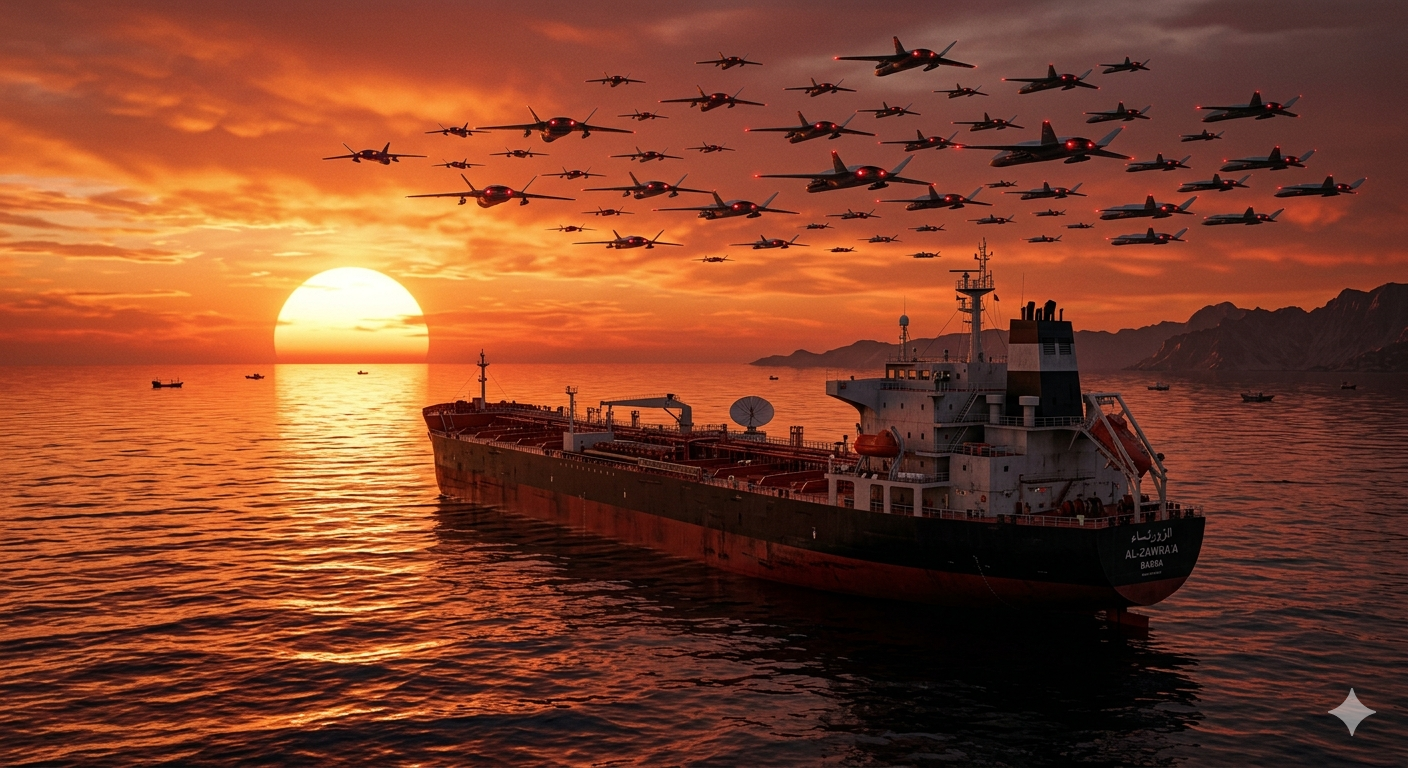
The world’s energy arteries have been severed. Are we ready for the fallout?
Key Highlights
- Operation Epic Fury: A joint US-Israeli military campaign in February 2026 that triggered the collapse of regional deterrence.
- The Hormuz Paralysis: A retaliatory blockade utilizing drone swarms and coastal missiles that trapped 21 million barrels of oil per day.
- The AI Supply Shock: Targeted attacks on Qatari LNG facilities froze global helium production, directly threatening advanced semiconductor manufacturing.
- Agricultural Contagion: Urea prices spiked above $600/MT, threatening crop yields and global food security.
- The IEA’s Historic Intervention: The release of an unprecedented 400 million barrels of strategic oil reserves to stabilize panicked markets.
- Supply Chain Evolution: A definitive global shift away from lean “Just-in-Time” logistics toward resilient “Just-in-Case” stockpiling.
The global economy operates on a razor-thin margin of peace, and in early 2026, that margin evaporated. What began as a targeted military intervention in the Middle East has rapidly metastasized into the most severe structural stress test for the global macroeconomic architecture since the 1970s oil shocks.
On February 28, 2026, a massive joint military campaign codenamed “Operation Epic Fury” shattered the geopolitical status quo. Within hours of the airstrikes, the ripple effects leaped from the battlefield straight into the barrel.
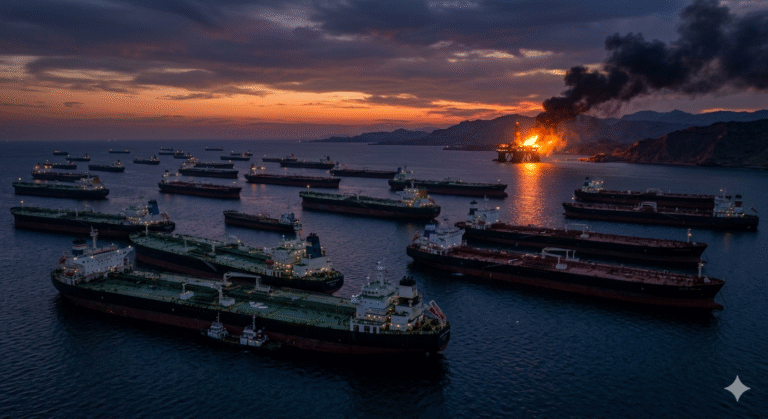
Retaliatory measures instantly paralyzed the Strait of Hormuz, causing a catastrophic 95% drop in commercial tanker traffic. This was not merely a disruption; it was a sudden, violent severing of the world’s primary energy artery.
Today, we are witnessing a synchronized disruption of raw materials, energy-intensive manufacturing, and global food production. The crisis has exposed the fragile underbelly of our modern, hyper-connected world.
From skyrocketing fuel prices to the sudden stalling of the multi-billion dollar Artificial Intelligence (AI) revolution, the fallout is absolute. This article unpacks the hidden dimensions of the 2026 fuel crisis, explaining how kinetic warfare translates into everyday economic paralysis.
Why This Topic Matters Today
You might think a conflict thousands of miles away only impacts geopolitical analysts and defense contractors. You would be wrong. The 2026 fuel crisis dictates the price of the food on your table, the fuel in your car, and the technology powering your devices.
When the Strait of Hormuz closed, Brent Crude oil did not just rise; it violently surged past $126 per barrel, an 88% increase from its pre-war baseline. Dubai Crude smashed records, reaching a staggering $166.80 per barrel.
This hydrocarbon price shock immediately bled into the technology sector. The AI boom, which requires massive, energy-intensive data centers consuming hundreds of terawatt-hours globally, is now facing a severe energy bottleneck.
Furthermore, the agricultural sector is experiencing a terrifying contagion. The blockade cut off critical petrochemical and Liquefied Natural Gas (LNG) supplies, causing global fertilizer prices for Urea and DAP to surge by up to 40%.
For nations heavily dependent on imports, like India—which imports over 85% of its crude oil—this represents an existential economic threat. Understanding this crisis is no longer optional; it is mandatory for investors, policymakers, and everyday citizens trying to navigate a fundamentally altered world.
Background / Context
To comprehend the sheer scale of this crisis, we must look at the diplomatic and strategic failures that preceded it. The 2026 Iran War was not a spontaneous event; it was the culmination of years of eroding deterrence and failed diplomacy.
Between 2023 and 2025, regional tensions in the Middle East steadily intensified. The diplomatic breaking point occurred during the 2026 Muscat nuclear talks. The United States demanded zero uranium enrichment, a condition Tehran flatly refused, leading to a complete diplomatic stalemate.
On February 27, 2026, the decision was made to shift from economic pressure to overt military action. The United States authorized “Operation Epic Fury,” running concurrently with Israel’s “Operation Roaring Lion”.
These operations involved massive airstrikes targeting Iranian leadership, military forces, and critical intelligence networks. The objective was to decisively eliminate the nuclear and ballistic missile threats in the region.
However, the retaliatory strategy proved devastatingly effective. Instead of engaging in a direct, symmetrical naval confrontation with the US Fifth Fleet, retaliatory forces deployed thousands of suicide drones and precision missiles aimed squarely at the chokepoints of the global supply chain.
This asymmetrical response perfectly weaponized global economic reliance on Middle Eastern energy, giving birth to the Ramadan War and the ensuing fuel crisis.
Core Explanation
The mechanics of this fuel crisis are complex, moving far beyond simple supply and demand. It is a cascading failure across multiple interconnected global systems.
What It Is: The Chokepoint Strategy
The crisis centers on the blockade of the Strait of Hormuz. This narrow maritime corridor is the central artery of the global economy.
Before the conflict, the Strait facilitated the daily transit of approximately 21 million barrels of crude oil, accounting for 21% of the global supply. It also handled roughly 60 million cubic meters of LNG, representing 20% to 25% of global trade.
By utilizing cost-effective drone swarms and fast-attack vessels, asymmetric forces achieved a 95% reduction in commercial tanker traffic through this vital chokepoint.
How It Works: The Contagion Effect
The blockade triggered an immediate physical backlog. With tankers unable to transit safely, crude storage in Gulf states like Saudi Arabia, Iraq, and Kuwait filled to maximum capacity within days.
This forced major producers to implement involuntary production shut-ins, removing at least 10 million barrels per day from the global market.
The contagion then spread to natural gas. Unlike crude oil, LNG carriers transport highly combustible cargo and operate under strict maritime insurance mandates. These mandates absolutely prohibit transiting through active war zones, stranding massive volumes of Qatari gas and sending European gas prices surging by 30%.
Key Components / Stakeholders
Several major players are attempting to navigate this unprecedented disruption:
- The International Energy Agency (IEA): Acting as the global crisis mitigator, coordinating historic emergency stock releases to calm the markets.
- Hyperscale Tech Companies: Giants like Google and Amazon, heavily invested in AI data centers, are suddenly facing crippling energy costs and hardware shortages.
- Import-Dependent Nations: Countries like India and Japan find themselves highly exposed, forced to rely on limited strategic reserves to keep their economies afloat.
- Global Farmers: Caught in the crossfire of the petrochemical shortage, facing exorbitant costs for essential crop nutrients.
Did You Know: The 2026 crisis exceeded the sheer volume of supply loss seen in both the 1973 Yom Kippur War and the 2022 Russian invasion of Ukraine combined.
Conceptual Breakdown
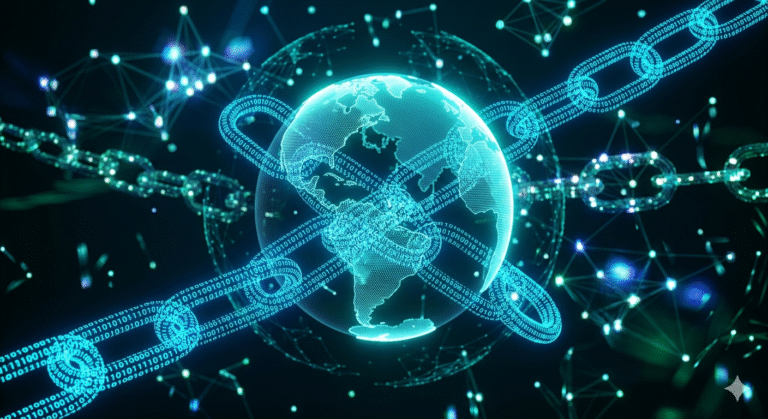
To truly understand how a localized conflict broke the global economy, we must examine the underlying philosophy of global trade: the supply chain model.
The Death of “Just-in-Time” (JIT)
For decades, the global economy thrived on the “Just-in-Time” (JIT) manufacturing model. JIT is designed to minimize holding costs by receiving goods and raw materials exactly when they are needed in the production process.
This hyper-efficient approach freed up massive amounts of corporate cash flow and kept consumer prices low. However, JIT operates on a fundamental assumption: perfect global stability.
When Operation Epic Fury disrupted maritime logistics, the JIT model collapsed entirely. Companies had deliberately kept their inventories incredibly lean, leaving them with zero buffer when the fuel and raw materials stopped arriving.
The Rise of “Just-in-Case” (JIC)
The crisis has violently forced a transition to a “Just-in-Case” (JIC) paradigm. This approach prioritizes resilience over sheer cost efficiency.
JIC requires maintaining significantly higher stock levels of raw materials, critical components, and finished goods to act as an insurance policy against supply chain failures.
While this creates strategic buffers—often referred to as “rainy day funds” for inventory—it also ties up massive amounts of capital and inherently drives up the cost of goods for the end consumer.
For a deeper dive into the geopolitical shifts accompanying this economic transition, you can explore this detailed breakdown on the(https://blog.aquartia.in/index.php/2026/03/24/fuel-crisis-war-tensions-push-prices-to-new-highs/).
Real-World Examples / Case Studies
The theoretical impacts of this crisis manifested rapidly in three distinct, real-world scenarios across energy, technology, and national security.
Case Study 1: The IEA’s 400 Million Barrel Release
Faced with a devastating supply shortfall, the 32 member countries of the International Energy Agency (IEA) convened an extraordinary meeting on March 11, 2026.
They unanimously agreed to an emergency collective action: releasing an unprecedented 400 million barrels of oil from their strategic reserves. To put this in perspective, this release was more than double the 183 million barrels unlocked during the 2022 Ukraine crisis.
The United States alone committed to drawing down 172.2 million barrels from its Strategic Petroleum Reserve. However, analysts from S&P Global Energy warned that while the release would help balance the market, it would take months for the oil to offset the 430 million-barrel reduction recorded in March alone. It is a temporary bandage on a systemic wound.
Case Study 2: AI’s Helium and Gallium Bottleneck

The AI revolution requires high-performance computing, which relies entirely on advanced semiconductors.
During the conflict, drone strikes targeted Qatar’s Ras Laffan facility—the world’s largest LNG export plant. Because industrial helium is extracted as a byproduct of LNG processing, this attack effectively froze global helium output.
Qatar supplies roughly one-third of the world’s helium, removing approximately 5.2 million cubic meters from the market each month. Without helium, semiconductor foundries face production standstills.
Coupled with skyrocketing prices for critical minerals like gallium, the U.S. Department of Defense was reportedly forced to invoke the Defense Production Act. This mandated that scarce helium and gallium be prioritized for military AI projects, effectively starving the commercial AI sector of crucial hardware.
Case Study 3: India’s Strategic Vulnerability
For India, the world’s third-largest crude oil consumer, the crisis exposed a terrifying national security vulnerability. India relies on imports for over 88% of its crude oil demand.
When the Strait of Hormuz closed, attention turned to India’s Strategic Petroleum Reserves (SPR). Government data presented in March 2026 revealed that the SPRs were only operating at 64% capacity, holding about 3.37 million metric tonnes out of a total 5.33 million metric tonnes.
At current consumption rates, this buffer would only last the nation approximately 5 to 9.5 days. This is alarmingly below the 90-day benchmark recommended for IEA members, highlighting the desperate need for expanded energy security infrastructure.
Benefits
It is difficult to find silver linings in a global macroeconomic crisis, but massive disruptions historically act as catalysts for rapid, necessary change.
- Acceleration of the Energy Transition: The staggering cost of fossil fuels has fundamentally altered the economic calculus of renewable energy. High oil prices are contributing directly to policies supporting a faster transition to solar, wind, and nuclear power in the medium term.
- Supply Chain Robustness: The painful shift to “Just-in-Case” logistics means future supply chains will be vastly more resilient to sudden shocks. Companies are finally treating supply chain security as a core strategic imperative rather than a mere cost center.
- Domestic Manufacturing Push: The crisis has validated massive domestic infrastructure initiatives. The U.S. push to build localized manufacturing capacity and power grids is accelerating, benefiting Engineering & Construction (E&C) firms.
Challenges
The immediate risks of the fuel crisis extend far beyond the gas pump, threatening the most foundational elements of human survival.
The Agricultural Contagion
The paralysis of petrochemical supply chains has severely impacted global agriculture. Natural gas is the primary feedstock for ammonia, which is essential for producing nitrogen-based fertilizers.
Following the outbreak of Operation Epic Fury, global fertilizer prices reacted instantly. Urea prices surged by 30% to 40%, jumping from approximately $350-$400 to well over $600 per metric tonne. Diammonium Phosphate (DAP) prices breached $700 per metric tonne.
In India, just weeks before the critical Kharif sowing season, farmers in states like Maharashtra reported a ₹500 jump in the price of a single 50 kg bag of DAP. High fertilizer costs inevitably lead to reduced crop yields, threatening massive global food inflation and disproportionately harming developing nations.
The Sovereign AI Divide
The energy and mineral crisis threatens to create a divided technological landscape. With critical resources prioritized for defense and national security applications through mechanisms like the Defense Production Act, consumer-facing AI innovation could stall for years.
This creates a scenario dominated by “Sovereign AI,” where only state-backed militaries possess the resources to run advanced, energy-hungry predictive models. You can read more about how secure hardware ecosystems are vital for national defense at(https://blog.aquartia.in/index.php/2026/03/20/how-india-can-secure-its-electronic-hardware-ecosystem/).
Global Implications
The geopolitical fallout of the Battlefield to Barrel crisis is rapidly reshaping international alliances and financial systems.
- Maritime Defense Escalation: In response to the blockade, the European Union was forced to extend its defensive naval mission, Operation Aspides, through February 2027 to provide escorts for commercial shipping.
- De-Dollarization and Alternative Finance: As traditional financial networks face unprecedented strain, alternative assets have surged. Gold spiked past $5,200 per ounce, and decentralized cryptocurrencies like Bitcoin rebounded as macro investors bet heavily on future central bank liquidity injections.
- The Critical Minerals Race: The crisis has highlighted that energy security is no longer just about oil. It is about controlling the supply chains for bauxite, cobalt, graphite, lithium, and gallium. The race for “Mineral Sovereignty” is replacing the traditional oil wars.
Future Trends
Looking ahead to late 2026 and beyond, the global economy must navigate a perilous transitional period.
Energy demand from data centers will face intense regulatory scrutiny. We will likely see a push toward “frugal AI” algorithms designed specifically to minimize energy consumption and maximize performance per watt.
For nations like India, the immediate outlook requires aggressive action. The government has already approved Phase-II expansions for the Strategic Petroleum Reserves in Chandikhol (Odisha) and Padur (Karnataka) to add 6.5 MMT of capacity. Accelerating these projects is critical to shielding the domestic economy from future volatile shocks.
The era of cheap, reliable, uninterrupted global shipping is effectively over. The future belongs to decentralized energy grids, hardened supply chains, and sovereign manufacturing capabilities.
Comparison Table
The Supply Chain Paradigm Shift
| Feature | Just-in-Time (JIT) | Just-in-Case (JIC) |
| Primary Goal | Minimize holding costs and maximize efficiency. | Maximize resilience and guarantee availability. |
| Inventory Levels | Extremely lean; zero buffer stock. | High; strategic stockpiles maintained. |
| Capital Tie-Up | Low capital locked in inventory. | High capital locked in “rainy day” reserves. |
| Vulnerability | Fails catastrophically during global disruptions. | Absorbs shocks and maintains operational continuity. |
| Post-2026 Status | Largely abandoned for critical components. | The new global standard for supply chain security. |
Table 1: Evolution of Supply Chain Logistics post-Operation Epic Fury
Conclusion
We have entered a new, volatile era of global economics. The transition from the battlefield to the barrel happens in milliseconds, and the assumption of uninterrupted global trade has been shattered.
The world is transitioning away from the fragile efficiency of Just-in-Time logistics toward the hardened realism of Just-in-Case stockpiling. As nations scramble to secure “Mineral Sovereignty” and expand strategic petroleum reserves, the race for self-reliance is accelerating at an unprecedented pace.
The 2026 crisis is a stark reminder: energy is not just a commodity; it is the ultimate foundation of national security, technological progress, and human survival.
How is the rising cost of fuel and food affecting your local community? Do you think nations can successfully transition to green energy fast enough to avoid the next major oil shock? Leave your thoughts in the comments below!
KEY TAKEAWAYS BOX
- The Chokepoint Vulnerability: The Strait of Hormuz blockade proved that disabling a single maritime corridor can instantly paralyze global energy, tech, and agricultural markets.
- The End of Just-in-Time: Businesses globally are hoarding inventory and shifting to Just-in-Case supply chains to survive unexpected geopolitical shocks.
- The Hidden AI Crisis: Artificial Intelligence requires immense energy and rare minerals. The 2026 crisis stalled commercial AI growth by cutting off helium supplies and diverting power to military projects.
- India’s Wake-Up Call: With Strategic Petroleum Reserves holding less than ten days of fuel, India must urgently expand its domestic storage to secure its economic sovereignty.
FAQ SECTION
1. What was Operation Epic Fury in 2026? Operation Epic Fury was a major joint military campaign launched on February 28, 2026, by the United States and Israel. It utilized massive airstrikes to target Iranian national leadership, military forces, and nuclear infrastructure, triggering severe regional retaliation and a global macroeconomic crisis.
2. Why did crude oil prices surge so dramatically in March 2026? Following Operation Epic Fury, retaliatory forces effectively closed the Strait of Hormuz using drone swarms and coastal missiles. This blockade trapped approximately 21 million barrels of oil per day, slashing commercial tanker traffic by 95% and causing Brent crude to spike past $126 per barrel.
3. What is the IEA 400 million barrel release? In response to the unprecedented supply shock, the 32 member countries of the International Energy Agency (IEA) unanimously agreed to release 400 million barrels of crude oil and refined products from their emergency strategic reserves. This remains the largest collective stock release in the organization’s history.
4. How did the 2026 fuel crisis affect the Artificial Intelligence (AI) industry? The crisis severely stalled the AI industry via two vectors. First, skyrocketing energy prices made running massive data centers prohibitively expensive. Second, attacks on Qatari LNG facilities froze global helium production, a critical element required for manufacturing advanced AI semiconductors.
5. What is the “Just-in-Case” (JIC) supply chain model? “Just-in-Case” is a resilient supply chain strategy where companies maintain large stockpiles of raw materials and finished goods as an insurance policy against global disruptions. It has rapidly replaced the ultra-lean “Just-in-Time” model, which collapsed completely during the 2026 logistics paralysis.
6. Why are fertilizer prices like Urea and DAP rising due to the war? Natural gas and petrochemicals are the primary feedstocks for agricultural fertilizers. The maritime blockade disrupted the flow of Liquefied Natural Gas (LNG) and sulfur, causing global prices for Urea to jump above $600 per metric tonne, creating an “agricultural contagion”.
7. How vulnerable is India to global oil supply shocks? India is highly vulnerable, as it imports over 85% of its crude oil requirements. During the 2026 crisis, data revealed that India’s Strategic Petroleum Reserves (SPR) were only at 64% capacity, holding enough oil to cover just 5 to 9.5 days of national demand.
8. What steps is India taking to improve its Strategic Petroleum Reserves? To mitigate future risks, the Indian government has approved Phase-II expansions of its SPR network. This includes building new commercial-cum-strategic facilities in Chandikhol, Odisha (4 million tonnes) and expanding the existing site at Padur, Karnataka (2.5 million tonnes).
9. How are engineering and construction (E&C) stocks benefiting from the crisis? E&C firms are experiencing surging revenues as governments and big tech companies scramble to build localized, resilient infrastructure. This includes domestic semiconductor factories, massive AI data centers, and secure power grids designed to operate independently of vulnerable global supply chains.
10. What was the impact of the crisis on global maritime security? The severe disruption to commercial shipping forced massive international naval intervention. The European Union formally extended its defensive naval mission, Operation Aspides, through February 2027 to provide armed escorts for cargo ships attempting to navigate through hostile regional waters.





+ There are no comments
Add yours