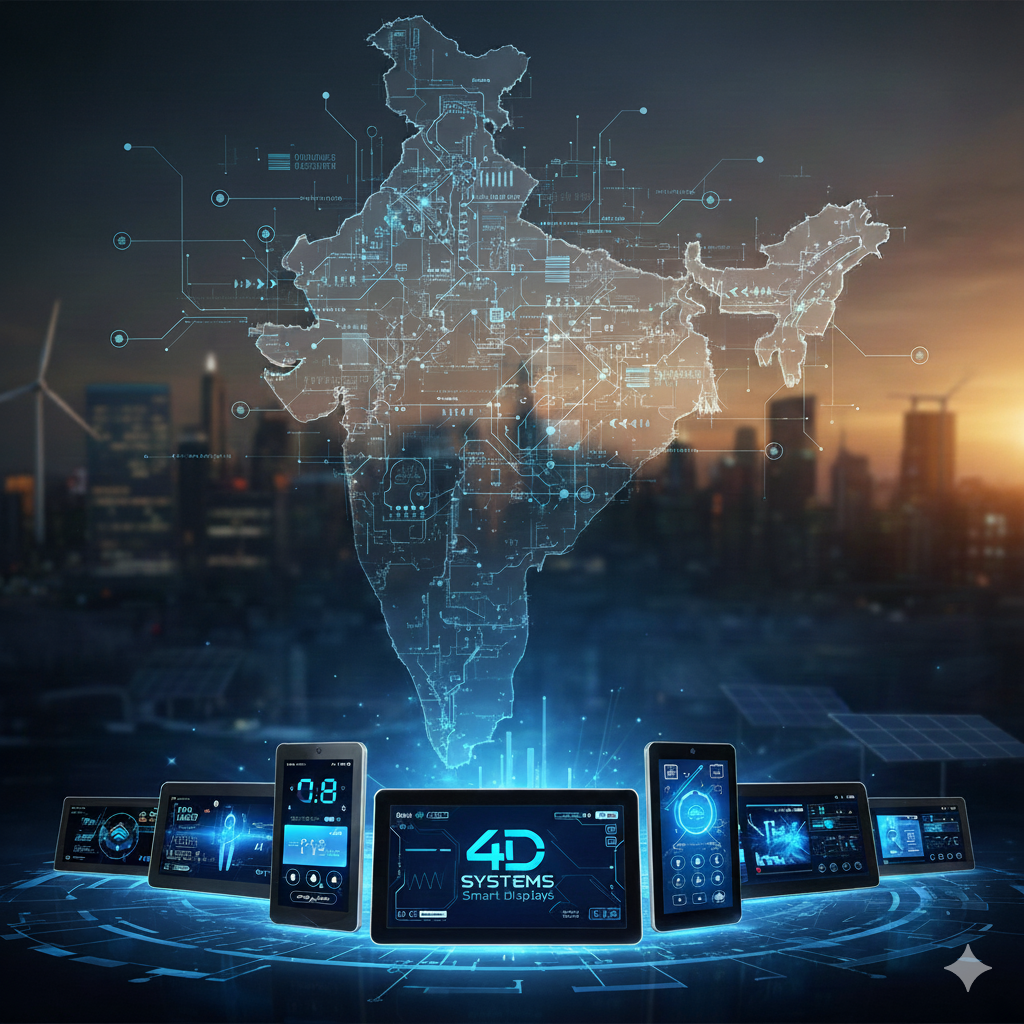
Key Highlights
- 4D Systems’ gen4-RP2350 series integrates Raspberry Pi RP2350 dual-core Cortex-M33 processors with 2.4–9.0″ displays, offering 800×480 resolution, ARM TrustZone security, and Workshop5 IDE for rapid HMI development.
- gen4-ESP32 series features ESP32-S3 microcontrollers with built-in Wi-Fi/Bluetooth, 16MB Flash, 8MB PSRAM, operating from -20°C to 65°C, ideal for IoT dashboards and industrial automation.
- 83% of Indian developers run outdated Python versions on smart displays, costing medium enterprises ~US$420,000 annually in performance inefficiencies—highlighting urgent need for upgrade governance.
- Smart display adoption in India is projected to grow 25% CAGR through 2028, driven by Digital India kiosks, smart cities, and Industry 4.0 initiatives.
- Policy imperative: India must standardize HMI modules in public tenders, integrate embedded GUI programming into engineering curricula, and mandate security-by-design for critical infrastructure applications.
The Interface Revolution Nobody’s Talking About
In India’s bustling railway stations, e-governance kiosks, smart factories, and rural health centers, a quiet revolution is underway. Behind every touch screen that guides citizens through Aadhaar enrollment, every industrial panel that monitors assembly lines, and every IoT dashboard that tracks vaccine cold chains lies a smart display—an integrated module combining display, microcontroller, and connectivity on a single compact PCB.
These aren’t just screens. They’re intelligent human-machine interfaces (HMIs) that transform complex systems into intuitive, graphical controls accessible to non-expert users. And they’re becoming the backbone of India’s digital transformation.
Australian company 4D Systems has emerged as a key player with its gen4-RP2350 and gen4-ESP32 series—smart display modules that slash development time, reduce component count, and enable rapid deployment of secure, connected interfaces. For India navigating Industry 4.0, Digital India, and the National IoT Policy, these displays offer both opportunity and strategic imperative.
This blog unpacks the technology, applications, and policy implications of smart displays for India’s digital future. resources.4dsystems
What Makes a Display “Smart”?
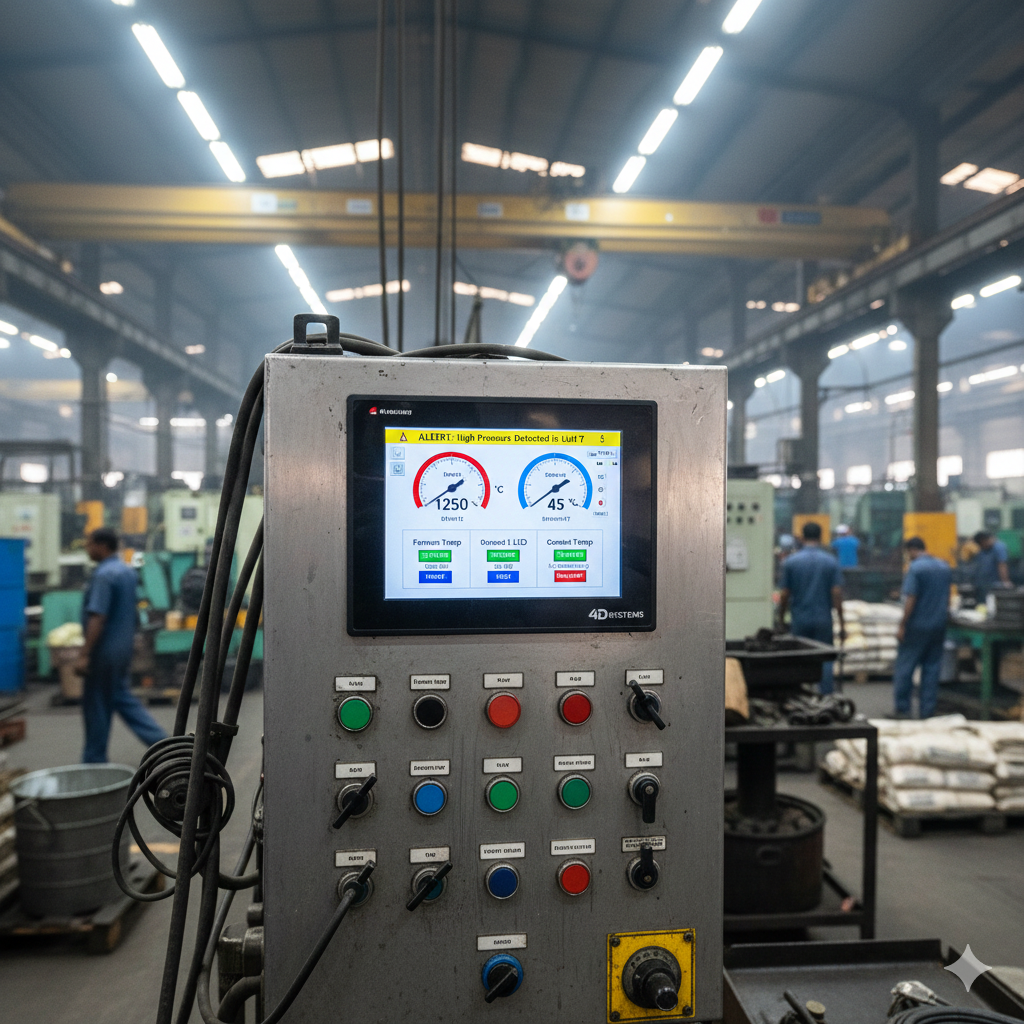
Traditional embedded systems require separate components: a display panel, a microcontroller, touch controller, memory, and connectivity modules—all wired together with complex PCBs and firmware integration.
Smart displays integrate everything onto one module:
- Display (LCD/OLED, 2.4″ to 9.0″)
- Microcontroller (RP2350 or ESP32-S3)
- Touch interface (resistive/capacitive/no-touch)
- Memory (16MB Flash, 8MB PSRAM)
- Connectivity (Wi-Fi, Bluetooth, UART, SPI, I2C)
- Development environment (Workshop4/5 IDE)
Advantages Over Discrete Designs
| Aspect | Traditional Discrete | Smart Display Module | Impact |
|---|---|---|---|
| Component count | 15–25 separate parts | 1 integrated module | 80% reduction in BOM |
| Development time | 6–12 months | 2–4 months | 67% faster time-to-market |
| Wiring complexity | High (PCB layers, signal integrity) | Low (single 30-pin FPC) | Easier assembly, lower failure |
| User experience | Clunky, inconsistent | Smooth, graphical, intuitive | Higher adoption, less training |
| Security | Fragmented (multiple vendors) | Integrated (TrustZone, secure boot) | Stronger defense posture |
For Indian OEMs and startups, this means faster prototyping, lower costs, and professional-grade interfaces without deep embedded systems expertise.
gen4-RP2350 Series—Secure, Compute-Heavy HMIs
Technical Architecture
The gen4-RP2350 series is powered by Raspberry Pi’s RP2350B microcontroller—a dual-core ARM Cortex-M33 running at 150 MHz with hardware floating-point, DSP instructions, and a comprehensive security architecture built around Arm TrustZone.
- Display sizes: 2.4″, 2.8″, 3.2″, 3.5″, 4.3″, 5.0″, 7.0″, 9.0″
- Resolution: 240×320 (2.4–3.2″) to 800×480 (4.3–9.0″)
- Memory: 16MB Quad SPI Flash + 8MB Quad SPI PSRAM
- Touch: Non-touch, resistive, capacitive, capacitive with cover lens bezel
- Brightness: Up to 600 cd/m² (suitable for outdoor/industrial use)
- Operating temp: −20°C to +65°C (industrial grade)
- Supply: 4.0V to 6.0V (single supply, reverse-polarity protected)
Security Features
ARM TrustZone enables secure and non-secure worlds, critical for critical infrastructure:
- Secure boot: Only signed firmware can run
- SHA-256 acceleration: Hardware crypto for authentication
- Isolated execution: Sensitive code runs in secure enclave
- Tamper resistance: Detects physical tampering attempts
Development Ecosystem
Workshop5 IDE (built on Raspberry Pi Pico SDK) enables:
- Drag-and-drop GUI design
- Tight integration between display logic and microcontroller code
- Single module runs entire machine terminal—no separate HMI processor needed
- Rapid prototyping: GUI changes compile and deploy in minutes
For government systems handling citizen data (Aadhaar, health records), TrustZone provides hardware-level security that software-only solutions cannot match.
gen4-ESP32 Series—IoT-Ready Smart Displays
IoT-Centric Design
The gen4-ESP32 series uses Espressif ESP32-S3R8 microcontroller, renowned for robust wireless capabilities: 4dsystems
- Built-in Wi-Fi (802.11b/g/n) and Bluetooth 5.0
- Dual-core Xtensa LX7 at 240 MHz
- 16MB Flash + 8MB Octal SPI PSRAM
- Native antenna + breakout board included
- Operating range: −20°C to +65°C (industrial)
- Supply: 4–6V
Wireless Advantages
Perfect for IoT dashboards, connected appliances, remote monitoring:
- Seamless smart home integration (supports Matter protocol)
- Real-time alerts via Wi-Fi/Bluetooth
- Low-power modes for battery-operated devices
- OTA firmware updates for maintenance
Programming Flexibility
Workshop4 IDE uses familiar Arduino environment, plus optional support for:
- LVGL (Light and Versatile Graphics Library)
- Embedded Wizard
- microPython for rapid scripting
This open ecosystem means Indian developers can leverage existing Arduino libraries and community support, reducing learning curves.
Governance and Policy Relevance
Applications in Public Service Delivery
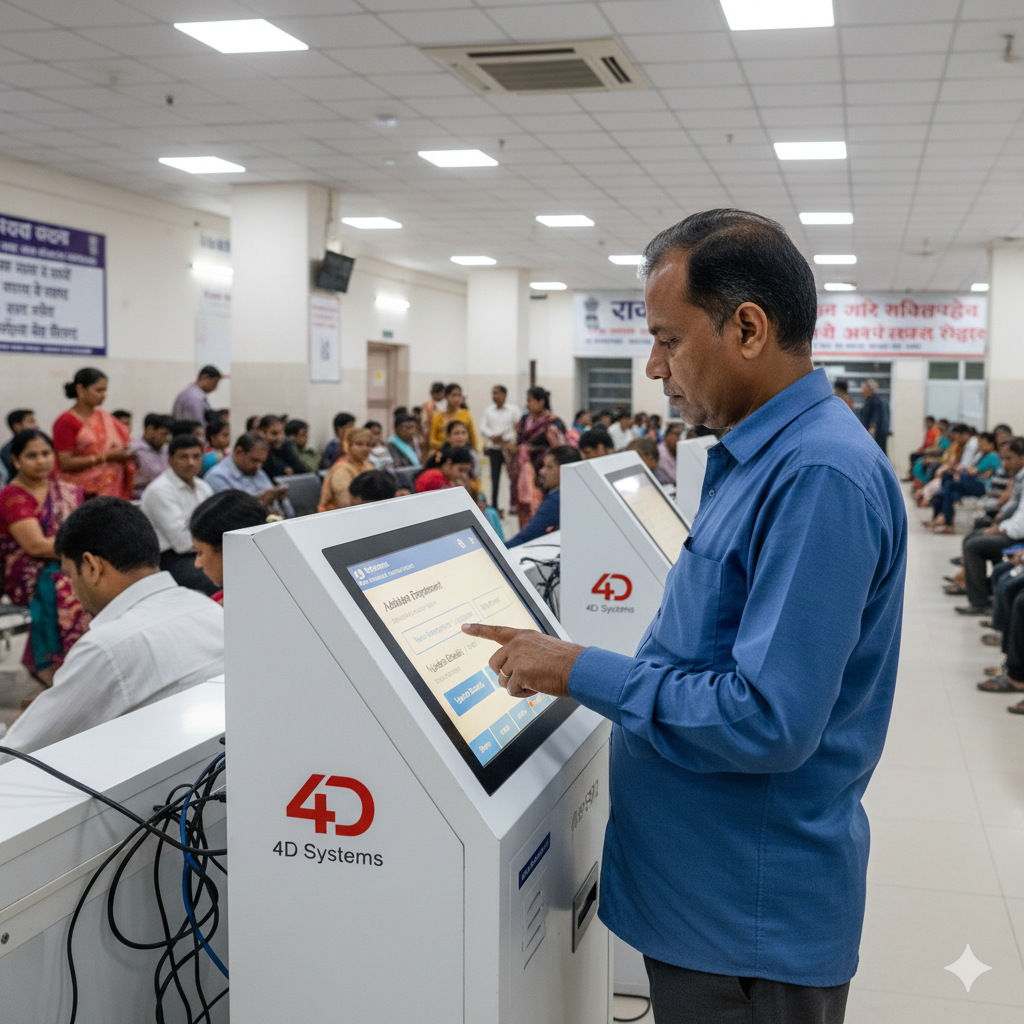
Smart displays are ideal for e-governance kiosks:
- Aadhaar enrollment centers: Touch-based data entry, biometric capture guidance
- PDS ration shops: Real-time stock displays, digitized beneficiary authentication
- Health diagnostics: Telemedicine interfaces, patient monitoring dashboards
- Citizen service centers: Bill payments, certificate applications, information access
Example: AdvanceTech India’s touchscreen kiosks deployed in government buildings enable citizens to pay bills, register details, and access services without staff intervention—reducing queues and corruption.
Industrial HMIs in Public Sector
Public sector plants, railways, energy, and urban infrastructure need robust HMIs:
- Railway control rooms: Monitor signaling, track occupancy, power systems
- Power substations: Real-time grid monitoring, fault detection
- Water treatment plants: Process control, chemical dosing, quality monitoring
- Smart cities: Traffic management, waste management, environmental sensors
The RP2350’s industrial temperature range (−20°C to +65°C) and 600 cd/m² brightness make it suitable for outdoor installations like traffic kiosks and public information displays.
Alignment with National Missions
| Mission | Smart Display Role | Impact |
|---|---|---|
| Digital India | E-governance kiosks, digital literacy centers | Citizen empowerment, service delivery |
| Smart Cities | Traffic management, waste monitoring, public Wi-Fi | Urban efficiency, livability |
| Make in India | Local manufacturing of display modules | Job creation, import substitution |
| National IoT Policy | Connected sensors, dashboards, data analytics | Digital infrastructure, innovation |
| Skill India | Training on modern HMI/IoT platforms | Workforce readiness |
Opportunities and Challenges for India
Opportunities
1. Faster Development Cycles for Indian OEMs
Modular smart displays slash prototyping time from 12 months to 3 months, enabling Indian medical device, agri-tech, and EV charging startups to compete globally.
2. Local Manufacturing Potential
Under India Semiconductor Mission (ISM) and Design Linked Incentive (DLI), domestic assembly of smart display modules could reduce import dependence and create electronics manufacturing jobs.
3. Standardization in Public Procurement
If government tenders specify standardized HMI modules (e.g., “gen4-RP2350-50T for all kiosks”), costs drop due to volume, and maintenance becomes uniform across departments.
Challenges
1. Import Dependence
Advanced microcontrollers (RP2350, ESP32) are still imported. Indigenous design capability in high-performance MCUs and display drivers remains limited.
2. Skill Gaps
Most Indian engineering graduates are trained in theoretical computer science, not embedded GUI design, real-time systems, or secure IoT deployment.
3. Interoperability and Maintainability
With multiple vendors (4D Systems, Adafruit, Waveshare), ensuring long-term software support, security patches, and cross-platform compatibility is complex.
4. Security Vulnerabilities
IoT devices are prime targets for botnets (Mirai variants). Without mandatory security audits, smart displays in critical infrastructure could become attack vectors.
Policy and Strategic Recommendations
For Government
1. Standardize HMI Modules in Public Tenders
Mandate use of certified smart display modules (e.g., “Powered by Raspberry Pi” certified) for all e-governance kiosks, reducing fragmentation and costs.
2. Support R&D and Incubators
Fund startups developing indigenous HMI platforms under ISM and DLI schemes. Provide grants for “Made in India” smart display modules.
3. Issue Security-by-Design Guidelines
MeitY should mandate:
- ARM TrustZone or equivalent for critical applications
- Secure boot and firmware signing
- Regular security audits (every 18 months)
- OTA update mechanisms for patching vulnerabilities
4. Procurement Price Preferences
Give 10–15% price preference to bidders offering locally assembled smart displays, incentivizing domestic manufacturing.
For Industry and Academia
1. Curriculum Integration
Engineering colleges must add embedded GUI programming, RP2350/ESP32 development, LVGL, and Arduino to core curricula. AICTE should accredit “IoT and HMI” specializations.
2. Industry-Academia Collaboration
Partner with 4D Systems, Raspberry Pi Foundation, and Espressif to create domain-specific labs (healthcare HMI, agri-IoT, smart grid dashboards).
3. Workforce Upskilling
NASSCOM and NSDC should launch certification programs for “Embedded HMI Developer” and “IoT Security Specialist” to address skill gaps.
Conclusion
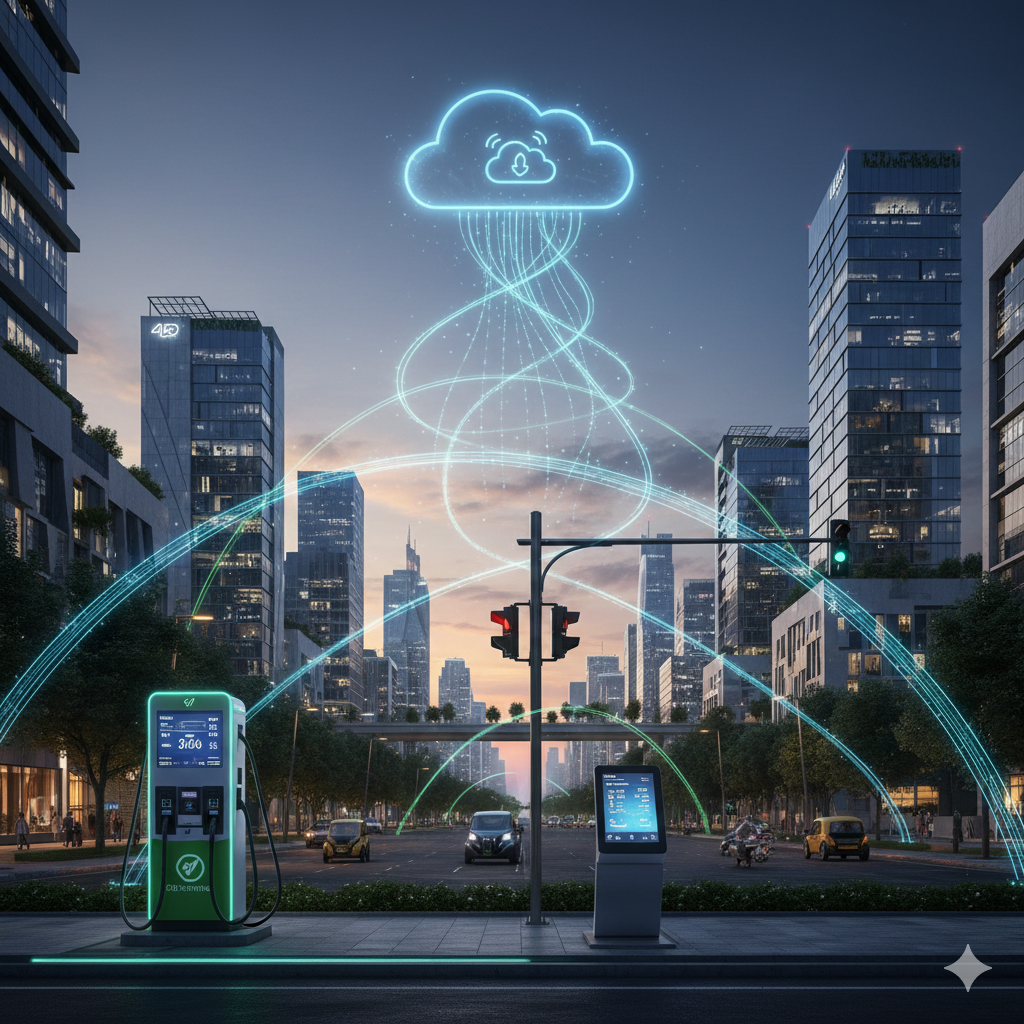
Smart displays like 4D Systems’ gen4-RP2350 and gen4-ESP32 represent more than hardware—they embody the convergence of display, compute, and connectivity that underpins Industry 4.0, e-governance, and citizen-centric digital services.
For India, the path forward is clear but requires urgent coordination:
- Policy: Standardize modules, mandate security-by-design, incentivize local manufacturing
- Education: Modernize engineering curricula for embedded GUI and IoT security
- Industry: Leverage these platforms for rapid prototyping and export-ready products
- Governance: Use smart displays to make public services accessible, efficient, and transparent
The question isn’t whether India will adopt smart displays—it’s whether we’ll adopt them strategically or haphazardly. The difference between the two will determine whether we build a resilient, inclusive digital future or create fragmented, insecure systems that require costly remediation.




+ There are no comments
Add yours