
Key Highlights
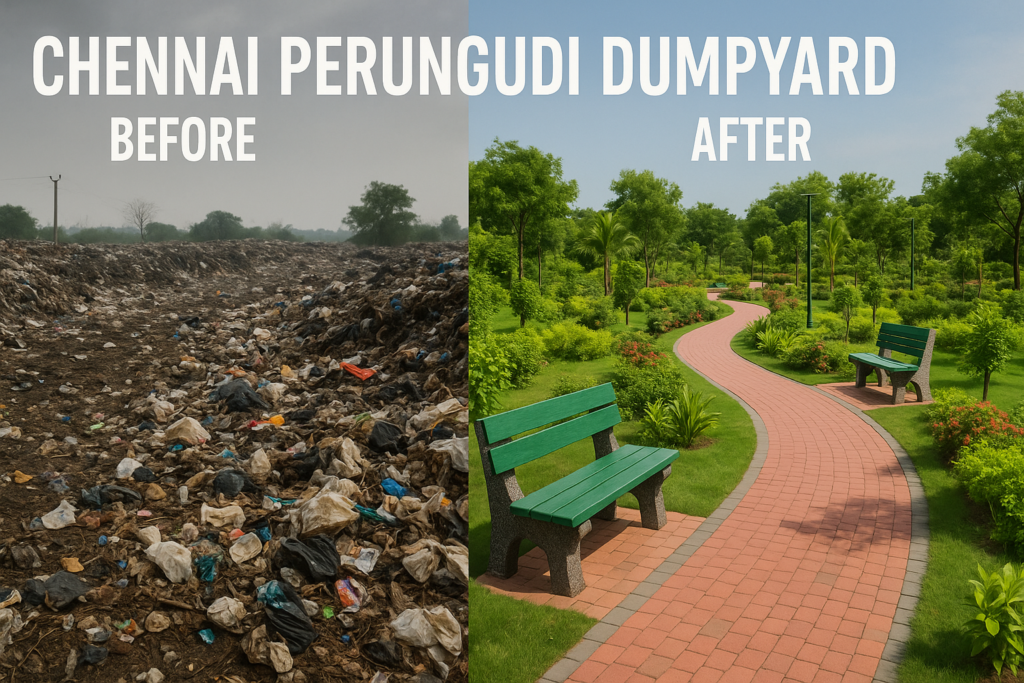
- 96 acres reclaimed from Chennai’s Perungudi dumpyard through biomining, processing 1.7 million cubic metres of 50-year-old legacy waste
- Circular economy success: Waste transformed into sofas, benches, chairs, paver blocks, and 10-20 metre stone ramps for park landscapes
- ₹641 crore biomining project by Greater Chennai Corporation has processed 18.03 lakh tonnes of garbage, with 1,500 saplings planted on reclaimed land
- Resource recovery achieved: 2,301 tonnes of steel scrap recycled into utensils, 2.18 million tonnes of stones reused in concrete, 3,454 tonnes of glass turned into bottles
- Replicable model for Indian cities struggling with legacy waste, demonstrating effective municipal intervention and sustainable urban innovation
The Perungudi Transformation Story
Chennai’s Perungudi dumpyard has undergone a remarkable metamorphosis that exemplifies the power of circular economy principles in urban waste management. What was once a 226-acre environmental burden has become a showcase of innovative biomining technology and sustainable resource recovery. onlinelibrary
The Greater Chennai Corporation (GCC) embarked on this ambitious journey in 2021, targeting the remediation of legacy waste accumulated over five decades. Through cutting-edge biomining processes, the project has successfully reclaimed 96 acres while transforming discarded materials into valuable products.
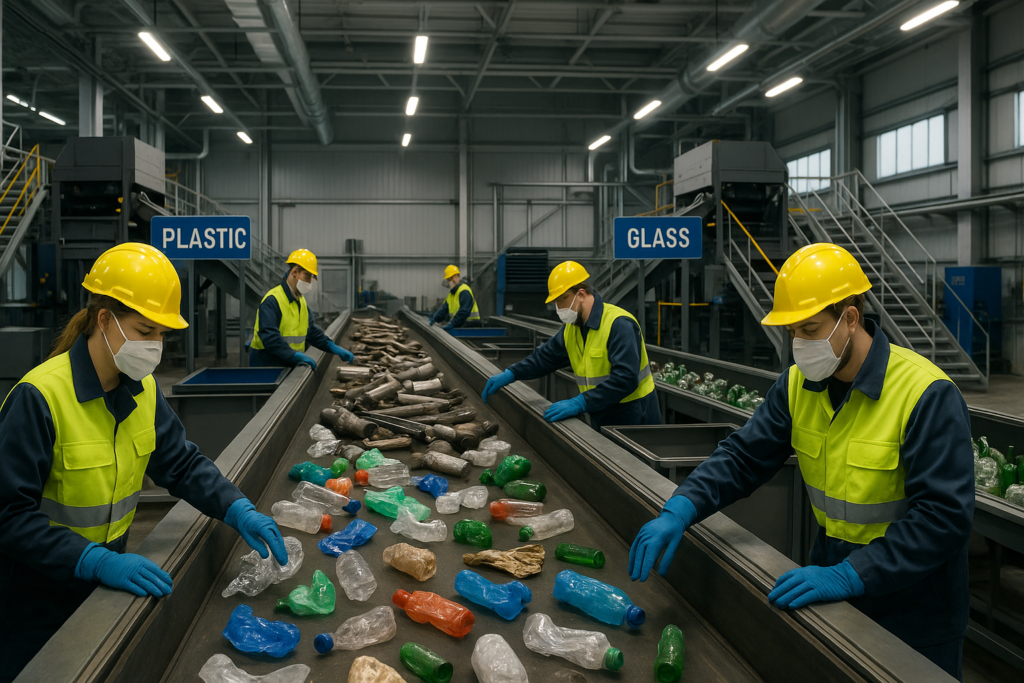
Zigma Global Environmental Solutions, the primary contractor, implemented a comprehensive approach processing approximately 1,000 tonnes of waste daily. The biomining facility employs magnetic belt separators for steel extraction, shredding systems for plastic processing, and filtration mechanisms for stone recovery.
Biomining Technology: Science Meets Sustainability
The biomining process at Perungudi represents a sophisticated approach to legacy waste management that goes far beyond traditional disposal methods. This scientific methodology involves excavation, segregation, treatment, and gainful utilization of accumulated waste materials.
Key technological components include:
Automated Segregation: Advanced conveyor systems separate materials by type, density, and size
Magnetic Separation: High-powered magnets extract ferrous metals from mixed waste streams
Shredding Systems: Industrial shredders process plastic waste into manageable fragments
Filtration Technology: Multi-stage filters separate fine soil from debris and contaminants
The process yields multiple value-added products: approximately 20% becomes refuse-derived fuel (RDF), 10% transforms into recyclable materials like paper, cloth, wood, and stones, while the remainder becomes bio-soil for agricultural applications.
Circular Economy in Action
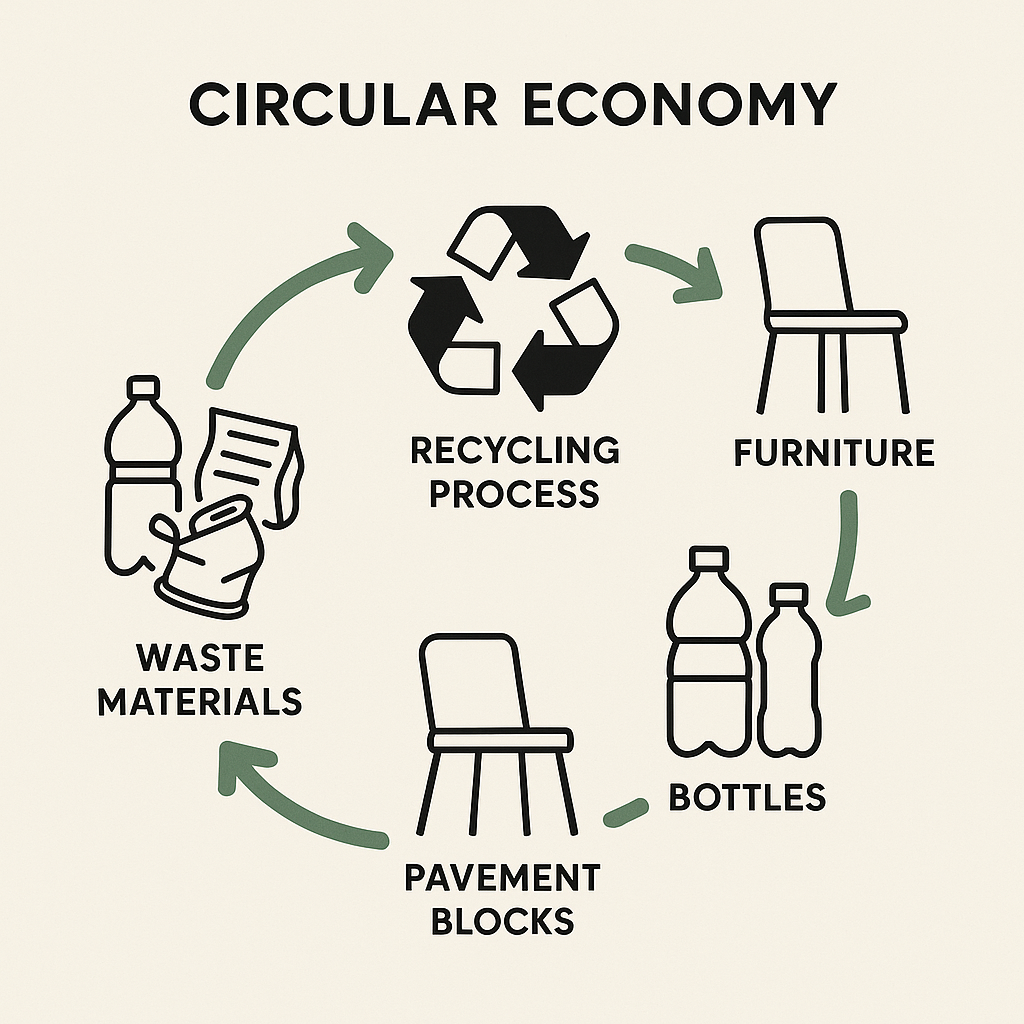
Chennai’s transformation demonstrates circular economy principles at their finest, where waste becomes a valuable resource rather than an environmental liability. The project showcases how systematic material recovery can create multiple revenue streams while addressing environmental challenges.
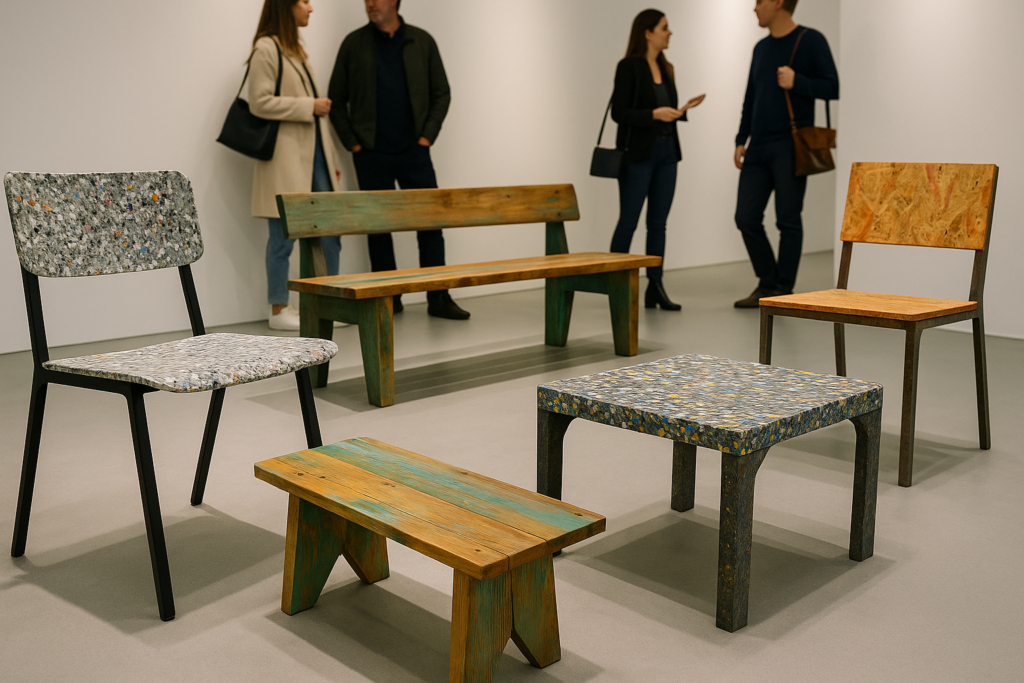
Furniture Production: Recycled plastic, steel, and wood from the dumpyard were transported to a Coimbatore facility where skilled artisans crafted sofas, benches, and chairs. These pieces maintain aesthetic appeal while carrying the powerful story of waste transformation.
Infrastructure Materials: The project produced stone ramps measuring 10-20 metres for park landscapes, paver blocks made from concrete mixed with reused plastic, and centre median blocks for urban infrastructure.
Industrial Applications: Steel scrap totaling 2,301 tonnes was processed into utensils and hardware, while 2.18 million tonnes of stones found new life in concrete structures. Even 3,454 tonnes of glass scrap were transformed into refurbished bottles ranging from 200ml to 500ml.
Environmental and Economic Impact
The Perungudi biomining project delivers substantial environmental benefits that extend far beyond waste removal. By processing 1.7 million cubic metres of legacy waste, the initiative has significantly reduced methane emissions and leachate contamination that previously threatened groundwater and soil quality.
Carbon Footprint Reduction: Biomining eliminates the need for new raw material extraction, reducing the carbon footprint associated with manufacturing. The process also prevents methane emissions from decomposing organic waste, contributing to climate change mitigation.
Land Value Enhancement: The 96 acres of reclaimed land now supports urban green spaces with 1,500 newly planted saplings and irrigation facilities installed at a cost of ₹57 lakh. This transformation increases property values and improves quality of life for surrounding communities.
Economic Viability: The project demonstrates that waste management can be financially sustainable. The ₹641 crore investment generates returns through material sales, land reclamation, and reduced disposal costs.
Municipal Innovation and Governance
The Greater Chennai Corporation’s approach to the Perungudi project exemplifies effective municipal governance in addressing legacy environmental challenges. Commissioner J Kumaragurubaran has articulated a clear vision: “Our goal is to clear all legacy waste and shut down the dump yard within five years”.
Strategic Planning: The corporation divided the 225-acre site into manageable sections, with different contractors handling specific areas. Zigma Environ successfully completed their 94-acre allocation with 14.14 lakh tonnes of waste by 2024, while WeStart Communication manages the remaining 109 acres.
Quality Control Measures: GCC implements rigorous monitoring through a project management committee that ensures biomining quality standards. Contractors must redo sections that don’t meet specifications, maintaining environmental safety and processing efficiency.
Future Infrastructure Plans: The reclaimed land will host bio-CNG plants, vermicomposting centres, and windrow composting centres, creating a comprehensive waste management ecosystem.

Replicability Across Indian Cities
Chennai’s success provides a replicable model for cities across India struggling with legacy waste challenges. The Swachh Bharat Mission 2.0 identifies 2,424 dumpsites containing over 1,000 tonnes of legacy waste nationwide, with only 470 sites currently remediated.
Delhi’s Parallel Efforts: The Municipal Corporation of Delhi has accelerated biomining timelines at Okhla, Bhalswa, and Ghazipur landfills, processing 30,000 tonnes daily and aiming for completion by December 2026. The Bhalswa site has already planted 54,000 trees on reclaimed land.
Success Stories: Indore has become a model city through successful landfill remediation, while Kollam in Kerala restored a 15.8-acre island in the ecologically sensitive Ashtamudi Lake through biomining, earning praise from the World Bank and NITI Aayog.
Technical Expertise: Companies like Zigma Global have proven their capabilities across multiple projects, having previously cleared 60,000 metric tonnes from Kumbakonam’s 6.5-acre dumpyard in just six months, reclaiming 3.5 acres for potential slum rehabilitation.
Community Impact and Social Benefits
The transformation of Perungudi has profound implications for surrounding communities who endured decades of environmental degradation. V Saravanan from the Perungudi Resident Welfare Association emphasizes: “It has been a menace for four decades, especially during summer when it often catches fire and emits toxic air”.
Health Improvements: Eliminating the toxic emissions and pest breeding grounds associated with open dumping significantly reduces respiratory ailments, skin diseases, and vector-borne illnesses in nearby neighborhoods.
Property Development: The reclaimed marshlands are being restored to allow natural plant growth, while native tree species like Marutham, Punnai, Magizham, and Pungan are being planted to restore biodiversity.
Employment Generation: The biomining project creates direct employment for equipment operators, sorters, and supervisors, while indirect employment emerges through furniture manufacturing, material transport, and maintenance services.
Challenges and Lessons Learned
Despite its success, the Perungudi project has encountered significant challenges that offer valuable lessons for future implementations. Contractor performance issues led to a two-year arbitration case with WeStart Communication, which processed only 20% of allocated waste before resolution.
Payment Mechanisms: Delayed payments from municipal corporations create cash flow challenges for contractors. The 90-180 day payment cycles require companies to maintain substantial working capital, potentially limiting MSME participation.
Quality Control: Ensuring consistent biomining standards requires continuous monitoring and technical expertise. Some contractors have bypassed guidelines to reduce costs, resulting in poor-quality bio-soil and refuse-derived fuel.
Community Engagement: Public awareness campaigns are essential for project acceptance and long-term sustainability. Residents initially opposed waste-to-energy plants and composting facilities on reclaimed land, preferring parks and green spaces.
Technology and Innovation Integration
The Perungudi project showcases how modern technology can revolutionize traditional waste management approaches. IoT-enabled sensors monitor moisture levels and decomposition rates, while automated sorting systems improve efficiency and worker safety.
Digital Monitoring: Real-time tracking systems ensure compliance with environmental standards and processing targets. GPS-enabled vehicles optimize waste transportation routes, reducing fuel consumption and emissions.
Mobile Processing Units: Zigma’s mobile MSW plants demonstrate the Make-in-India approach to waste management technology. These indigenously designed systems cost significantly less than imported alternatives while maintaining international quality standards.
Data Analytics: Comprehensive waste characterization studies inform optimal processing strategies. Understanding waste composition enables targeted material recovery and value maximization.
Policy Framework and Regulatory Support
Chennai’s success reflects the importance of supportive policy frameworks in enabling innovative waste management solutions. The Solid Waste Management Rules 2016 mandate legacy waste remediation, while state-level initiatives provide financial support and technical guidance.
Climate Action Alignment: The project aligns with Chennai’s Climate Action Plan, which identifies waste management as a crucial component of carbon neutrality goals. The city has committed to net-zero emissions by 2050 with interim targets of 1% reduction by 2030 and 40% by 2040.
World Bank Partnership: GCC’s collaboration with the World Bank on sustainable waste management brings international expertise and financial resources to support comprehensive system transformation.
Regulatory Compliance: The project demonstrates compliance with environmental clearance requirements and pollution control standards, setting benchmarks for future waste management initiatives.
Future Outlook and Scalability
The success at Perungudi positions Chennai as a global leader in urban waste management innovation. The city’s approach offers a scalable model that can be adapted to different geographic contexts, waste compositions, and economic conditions.
Expansion Plans: GCC aims to replicate this success at the 352-acre Kodungaiyur dumpyard, which contains 66 lakh cubic metres of accumulated garbage. Blue Planet Environmental Solutions has secured contracts to build the world’s largest waste processing plant at the site.
Technology Evolution: Future projects will incorporate advanced AI-powered sorting, blockchain-based tracking, and renewable energy integration to further improve efficiency and sustainability.
Knowledge Transfer: Chennai’s experience provides valuable insights for the 200+ Indian cities struggling with legacy waste challenges. The technical expertise, financial models, and governance frameworks developed here can accelerate nationwide transformation.
Conclusion
Chennai’s transformation of the Perungudi dumpyard from a 50-year environmental liability into a showcase of circular economy innovation demonstrates the immense potential of scientific waste management. The project’s success in converting 1.7 million cubic metres of legacy waste into valuable furniture, infrastructure materials, and green spaces while reclaiming 96 acres of urban land offers a replicable blueprint for cities worldwide.
The initiative proves that municipal corporations can achieve environmental restoration, economic value creation, and community benefit simultaneously through strategic planning, technology adoption, and stakeholder collaboration. As Chennai continues toward its goal of zero waste and carbon neutrality, the Perungudi model stands as a testament to the transformative power of innovative governance and circular economy principles.
The success story extends beyond waste management—it represents a paradigm shift toward sustainable urban development where challenges become opportunities for innovation and growth. Other Indian cities now have a proven pathway to address their own legacy waste challenges while creating economic value and environmental benefits for their communities.





+ There are no comments
Add yours