
Key Highlights
- China dominates 85% of global alkaline electrolyser market by 2024, controlling 60% of worldwide manufacturing capacity with aggressive pricing strategies
- Massive production scale achieved with 125,000 tonnes/year green hydrogen capacity representing 50% of global total by 2024, up 62% year-on-year
- Price disruption similar to solar with Chinese alkaline electrolysers costing 45% less than European alternatives, falling 20% annually through economies of scale
- Leading manufacturers expanding globally – LONGi, Envision, and Sungrow securing international contracts while building overseas facilities in Germany and Middle East
- Technology gaps persist in advanced PEM systems where Western companies maintain competitive advantages in high-purity hydrogen production and intermittent renewable integration
The Battle for Green Hydrogen Supremacy
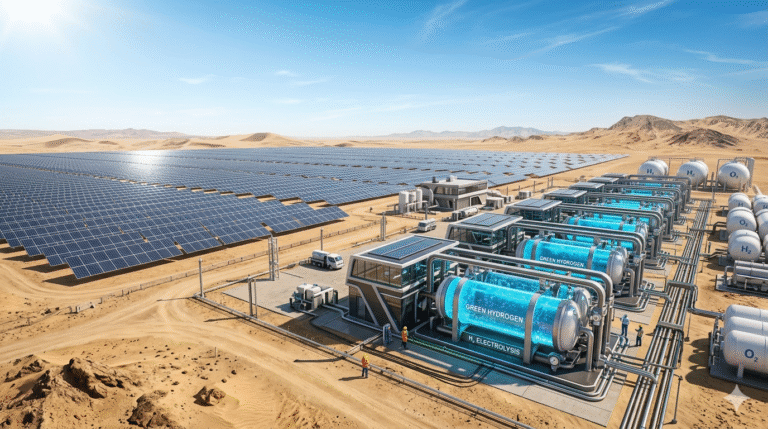
The global race for clean energy dominance has entered a new phase, with electrolysers emerging as the critical technology that could determine which nations lead the green hydrogen revolution. These sophisticated devices, which use electricity to split water into hydrogen and oxygen, occupy the same strategic position in hydrogen production that photovoltaic modules held in the solar boom—making them central to the world’s decarbonization efforts.
As governments worldwide commit to net-zero emissions and industries seek alternatives to fossil fuels, a familiar question emerges: Can China replicate its stunning solar dominance in the global electrolyser market? The early signs suggest a resounding yes, with Chinese companies already capturing 85% of the alkaline electrolyser market and leveraging the same strategies that made them solar powerhouses.

This dominance carries profound implications for global energy security, technological sovereignty, and the pace of decarbonization worldwide. With electrolysers required to scale from current capacity to potentially 4,000 GW by 2050, the companies and countries controlling this technology will shape the future of clean energy.
The Strategic Importance of Electrolysers in Green Transformation
Electrolysers as the Hydrogen Economy’s Foundation
Electrolysers function as the critical bridge between renewable energy and industrial decarbonization by converting clean electricity into storable, transportable hydrogen. Much like how photovoltaic modules democratized solar power generation, electrolysers are becoming the enabling technology for industries ranging from steel production and ammonia synthesis to long-duration energy storage and heavy transportation.
Two primary electrolyser technologies dominate the current market:
Alkaline Electrolysers (ALK):
- Mature, lower-cost technology with 40+ years of development
- Less efficient under fluctuating loads limiting renewable energy integration
- China’s primary strength with vertically integrated supply chains
- Price advantage of up to 65% compared to Western alternatives
Proton Exchange Membrane (PEM) Electrolysers:
- Higher efficiency and better compatibility with intermittent renewables
- Superior hydrogen purity (99.999%) essential for advanced applications
- Higher costs due to precious metals like platinum and iridium
- Western technological leadership with ongoing Chinese investment
Industrial Applications Driving Demand
The global hydrogen market of 97 million tonnes in 2023 demonstrates massive existing demand that green hydrogen must capture. Key industrial applications include:
Chemical Industry:
- Ammonia synthesis consuming 26% of China’s hydrogen (9.5 million tonnes)
- Methanol production accounting for 27% of domestic consumption (9.95 million tonnes)
- Refining processes utilizing 16% of hydrogen supplies (6 million tonnes)
Steel and Heavy Industry:
- Direct reduction of iron ore replacing coal-based processes
- High-temperature heat applications for industrial processes
- Clean fuel for heavy-duty transportation and shipping
China’s Strategic Electrolyser Dominance
Manufacturing Scale and Capacity Leadership
China’s electrolyser dominance stems from systematic capacity building that mirrors its solar industry strategy. By 2024, Chinese manufacturers have established at least 30 GW of production capacity, substantially exceeding international forecasts and representing 60% of global manufacturing capacity. fchea

Leading Chinese Players:
- LONGi: Transitioned from solar PV leadership to hydrogen, securing major international contracts including Sinopec’s 10,000-ton green hydrogen project
- Envision Energy: Building 2 GW electrolyser capacity in Inner Mongolia (1 GW ALK + 1 GW PEM) with global expansion plans globalhydrogenhub
- Sungrow: Leveraging renewable energy expertise for integrated electrolyser solutions
- Peric: Specialized electrolyser manufacturer with advanced alkaline technologies
Cost Advantages and Pricing Strategy
Chinese electrolysers demonstrate remarkable cost competitiveness achieved through economies of scale, supply chain integration, and government support:
Price Reductions:
- 5 MW ALK system: Cost fell to ¥6 million (~$167/kW) in 2024, down 20% from 2023
- 1 MW PEM system: Priced at ¥6 million (~$838/kW), reflecting 32% annual decline
- Export advantages: Chinese ALK electrolysers cost 25% of German equivalents while maintaining quality
Strategic Pricing Model:
- 45% total investment cost savings for European projects using Chinese ALK technology
- 30-35% export price reductions expected by 2030 as capacity expands
- 25-40% export premium covers higher quality materials and certification requirements
Integrated Supply Chain Control
China’s electrolyser success builds on vertically integrated supply chains developed over decades in related industries:
Supply Chain Advantages:
- Raw materials access: Abundant domestic nickel, steel, and industrial chemicals
- Manufacturing automation: 40+ years of chloralkali industry experience
- Quality control: Rigorous testing procedures ensuring performance and reliability
- Scale economics: GW-scale production capacity reducing unit costs
Global Competition and Market Dynamics
Western Response and Technology Differentiation
Western manufacturers recognize the existential threat posed by Chinese electrolyser dominance and are pursuing differentiation strategies focused on advanced technology and system integration:
Western Competitive Advantages:
- PEM technology leadership with superior membrane and catalyst technologies
- System integration expertise providing tailored solutions for specific applications
- Quality certifications including CE and ASME standards for international markets
- Research and development capabilities for next-generation electrolyser technologies
Strategic Responses:
- Ballard Power Systems shifting from China partnerships to $160 million Texas gigafactory
- European manufacturers seeking protection through local content requirements
- Japanese companies focusing on high-efficiency PEM systems for premium applications
Geopolitical Implications and Trade Barriers
Unlike the solar industry’s relatively uncontested Chinese dominance, electrolyser markets face significant geopolitical headwinds:
Protectionist Measures:
- European Union excluding Chinese electrolysers from upcoming auctions
- Local content requirements potentially mandating domestic production
- National security concerns treating hydrogen as strategic technology
- Supply chain security policies favoring domestic manufacturers
Strategic Considerations:
- Energy independence concerns driving domestic manufacturing support
- Technology transfer restrictions limiting Chinese access to advanced components
- Critical materials dependencies creating mutual vulnerabilities
- Standards harmonization potentially fragmenting global markets
India’s Strategic Position and Opportunities
Emerging Market Potential
India represents a significant opportunity in the global electrolyser market reconfiguration, with the potential to become a major manufacturing hub while reducing dependence on Chinese technology:
Indian Advantages:
- Large domestic market with ambitious green hydrogen targets
- Skilled workforce and established manufacturing capabilities
- Strategic partnerships with Western technology providers
- Government support through production-linked incentives
Development Priorities:
- Technology partnerships for PEM electrolyser manufacturing
- Supply chain development for critical components and materials
- Research and development capabilities in advanced electrolyser technologies
- Export competitiveness through cost-effective manufacturing
Challenges and Strategic Responses
For China: Maintaining Momentum
Despite current dominance, China faces significant challenges in sustaining electrolyser leadership:
Technology Gaps:
- PEM electrolyser technology lagging behind Western competitors
- Precious metal dependencies for advanced systems
- System integration capabilities for complex applications
- International certification requirements increasing costs
Market Access Barriers:
- Trade restrictions limiting export opportunities
- Local content requirements in key markets
- Technology transfer restrictions affecting component access
- Geopolitical tensions impacting commercial relationships
For Competing Nations: Building Alternative Capacity
Other countries must develop comprehensive strategies to compete with Chinese electrolyser dominance:
Strategic Priorities:
- Research and development investment in advanced technologies
- Manufacturing capacity building through public-private partnerships
- Supply chain development for critical materials and components
- International cooperation among democratic allies
Policy Support Measures:
- Financial incentives for domestic electrolyser manufacturing
- Procurement preferences for locally produced equipment
- Standards development ensuring quality and interoperability
- Skills development for specialized manufacturing capabilities
Future Outlook and Strategic Implications
Market Evolution Scenarios
The global electrolyser market faces several potential development paths:
Chinese Dominance Scenario:
- Continued cost reductions through scale economies and innovation
- Technology catch-up in PEM systems reducing Western advantages
- Market fragmentation as countries implement protective measures
- Innovation focus on cost reduction rather than performance optimization
Balanced Competition Scenario:
- Technology differentiation allowing multiple viable approaches
- Regional production hubs serving local and export markets
- Innovation acceleration through competitive pressure
- Supply chain diversification reducing single-country dependencies
Policy Recommendations
For Global Cooperation:
- Standards harmonization ensuring interoperability and fair competition
- Technology sharing agreements for mutual benefit
- Supply chain resilience through diversification and redundancy
- Innovation collaboration on next-generation technologies
For National Strategies:
- Domestic capacity building balanced with international cooperation
- Research and development investment in differentiated technologies
- Skilled workforce development for advanced manufacturing
- Strategic partnerships combining complementary capabilities
Conclusion: Navigating the Electrolyser Revolution
China’s rapid ascent in electrolyser manufacturing demonstrates the country’s ability to replicate its solar industry success in new clean energy sectors. With 85% market share in alkaline electrolysers and aggressive expansion plans, Chinese companies are well-positioned to dominate the multi-trillion-dollar green hydrogen economy.
However, electrolyser markets differ significantly from the solar industry’s development path. Geopolitical tensions, national security concerns, and technological differentiation opportunities create more complex competitive dynamics. Western companies’ PEM technology advantages and system integration capabilities provide potential paths for sustained competitiveness beyond pure cost competition.
For emerging economies like India, the current market reconfiguration presents unprecedented opportunities to become significant players in electrolyser manufacturing while reducing technological dependencies. Success requires comprehensive strategies combining domestic capacity building, international partnerships, and innovation investment.
The global electrolyser industry’s evolution will significantly influence the pace of decarbonization, energy security, and economic competitiveness worldwide. Nations that successfully navigate this technological transition—balancing cost competitiveness with technological sovereignty—will gain substantial advantages in the clean energy economy of the future.
The stakes extend beyond commercial success to fundamental questions about technological leadership, supply chain resilience, and the geopolitical implications of clean energy dependence. As the electrolyser revolution accelerates, the strategic choices made today will determine whether this critical technology becomes a source of international cooperation or deepening technological fragmentation.








+ There are no comments
Add yours