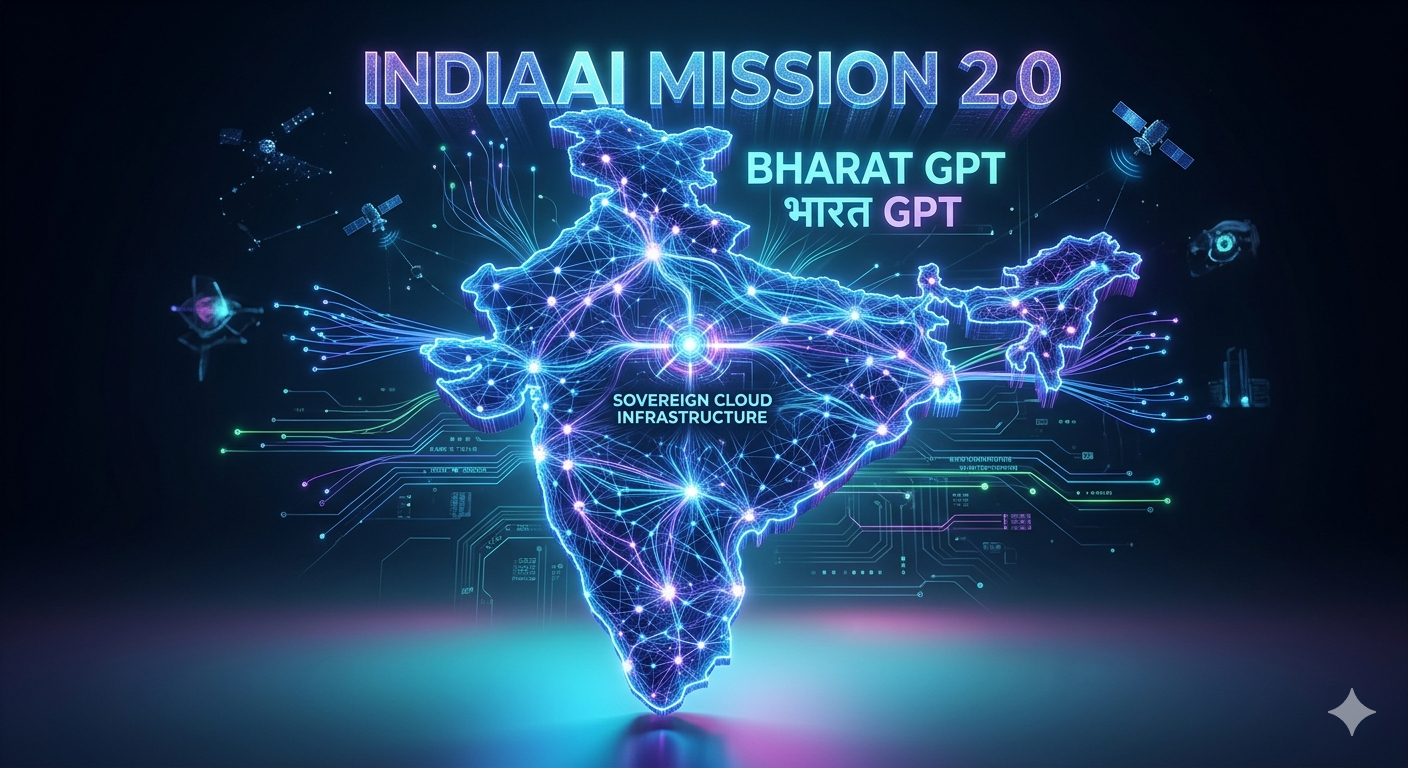
The global technological landscape in 2026 is defined by the maturation of artificial intelligence from a novel utility into a foundational layer of national infrastructure. At the center of this transformation for the Global South stands CoRover AI and its flagship foundational model, BharatGPT. As the world grapples with the limitations of Western-centric AI models—which often fail to grasp the morphological complexity of Indic scripts or the cultural nuances of the Indian consumer—BharatGPT offers a vision of “Human-Centric” intelligence. This transition is not merely about linguistic translation; it is about the “Make AI in India, Make AI work for India” mandate, which seeks to democratize high-end computation for the last mile of “Bharat”.
The relevance of this topic today is underscored by the unprecedented scale of deployment. With over 1 billion lives impacted and high-stakes integrations in entities like the Indian Army, IRCTC, and the LIC, BharatGPT has moved beyond the “pilot” phase to become a mission-critical component of India’s Digital Public Infrastructure (DPI). For researchers and knowledge-seekers, understanding the architecture of BharatGPT provides a window into how India is navigating the complexities of data sovereignty, ethical governance, and the “AI for All” philosophy championed by the NITI Aayog.
Key Highlights of the 2026 AI Landscape
| Metric | Detail |
| User Reach | 1 Billion+ users served across various platforms |
| Linguistic Support | 14+ Indian languages natively via voice; 120+ global languages |
| Economic Outlay | ₹10,371.92 crore allocated to the IndiaAI Mission |
| Performance | 99.9% accuracy with sub-500ms latency |
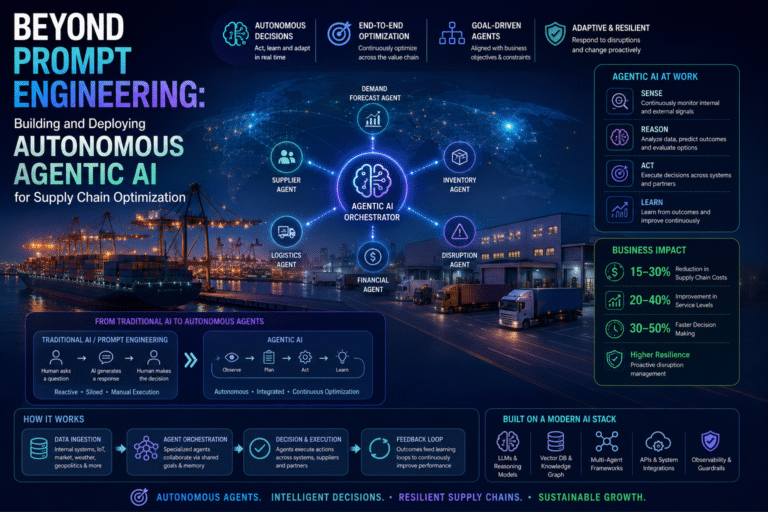
| Agentic Capability | Transition from simple Q&A to autonomous task execution |
Background and Context: The Evolution of CoRover AI
The journey toward BharatGPT began in 2016 when CoRover AI was founded with a focus on conversational intelligence that prioritized the user experience over raw algorithmic output. Early on, the founders recognized a fundamental mismatch: global models like GPT-4 or Gemini were trained on Western datasets, assuming high-bandwidth environments and English-first users. In contrast, the Indian reality involved low-resource languages, diverse dialects, and often, a lack of seamless internet connectivity.
Between 2018 and 2025, CoRover transitioned from a startup to a trusted partner for Fortune 100 companies and government agencies. The deployment of AskDISHA for the Indian Railways served as a pivotal proof of concept, demonstrating that AI could handle 150,000 queries daily with zero human intervention. By 2026, the company has secured global partnerships with Microsoft, Google, NVIDIA, and Intel, positioning itself as a leader in the “Managed Chatbot as a Service” (CaaS) space. This history is essential for understanding BharatGPT not as a sudden market entry, but as the culmination of a decade of deep integration into India’s digital fabric.
Core Explanation: What is BharatGPT?
BharatGPT is India’s first indigenous sovereign foundational Large Language Model (LLM), developed by CoRover.ai. It is built to serve as a secure, culturally grounded, and multi-modal engine that can interact via text, voice, and video. Unlike general-purpose AI that scrapes the public web indiscriminately, BharatGPT is trained on legitimate, proprietary, and curated datasets that reflect the Indian ethos.
The model is defined by its “Sovereign” nature, meaning all data processing and storage occur within Indian borders, primarily on the Google Cloud Platform (GCP) or private cloud infrastructures like those provided by Tata Communications. This ensures compliance with the Digital Personal Data Protection (DPDP) standards and safeguards national security interests.
Multi-modal and Multichannel Architecture
The versatility of BharatGPT stems from its ability to handle various input formats seamlessly.
| Interaction Type | Capability Details |
| VoiceBots | High-accuracy speech-to-text (ASR) in 14+ Indian languages |
| VideoBots | Generative AI video avatars with lip-sync capabilities across languages |
| Text-Based | Support for 120+ languages with advanced sentiment tracking |
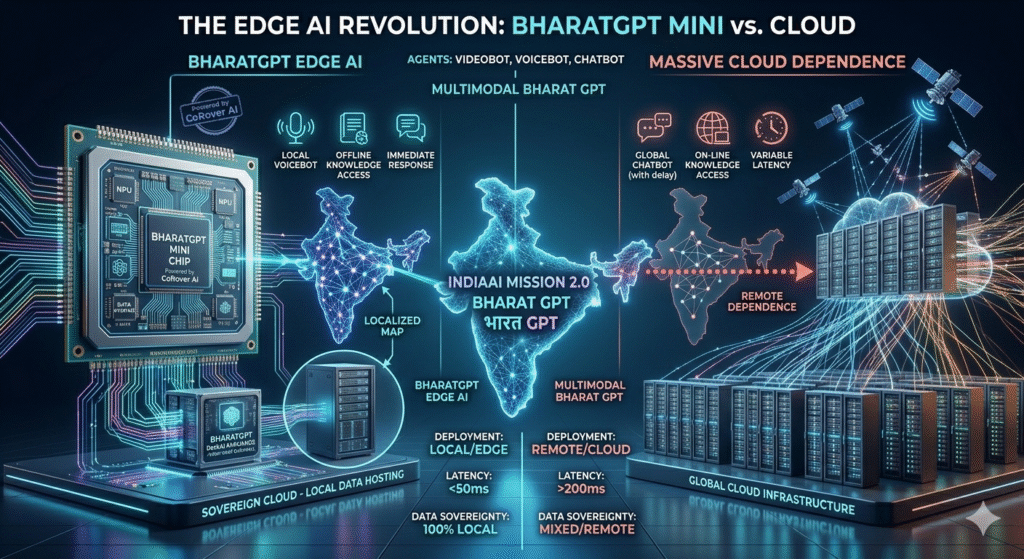
| Edge AI | “BharatGPT Mini” can run fully offline on basic devices |
Technical and Conceptual Breakdown: Inside the 175B Parameter Engine
The technical architecture of BharatGPT is a testament to the advancements in indigenous Natural Language Processing (NLP). At its core, the model utilizes a transformer architecture characterized by self-attention mechanisms that allow it to process and generate contextually relevant text.
Mathematical Foundation of Self-Attention
The model’s ability to weigh the importance of different words in a sequence is governed by the self-attention formula:
$$\text{Attention}(Q, K, V) = \text{softmax}\left( \frac{QK^\top}{\sqrt{d_k}} \right)V$$
In this equation, $Q$, $K$, and $V$ represent the query, key, and value matrices respectively, while $d_k$ is the dimension of the key vectors. This mathematical framework enables the model to maintain long-term dependencies in conversations, a feature that is critical for complex dialogue management in sectors like finance and law.
Model Parameters and Configuration
| Parameter | Value |
| Number of Layers | 48 |
| Embedding Dimension | 1600 |
| Number of Attention Heads | 20 |
| Feedforward Dimension | 6400 |
| Total Parameters | Approximately 175 Billion |
| Latency | < 312ms (Average) |
The Fine-Tuning Strategy for Indic Languages
To overcome the challenges of low-resource Indic languages, CoRover utilizes a two-phase fine-tuning approach. The first phase involves multilingual pretraining governed by a combined loss function:
$$\mathcal{L}_{\text{multi}}(\theta) = \mathcal{L}_{\text{CE}}(\theta) + \alpha \mathcal{L}_{\text{reg}}(\theta)$$
where $\mathcal{L}_{\text{CE}}$ is the cross-entropy loss over the combined dataset and $\mathcal{L}_{\text{reg}}$ serves as a regularization term. The second phase focuses on language-specific fine-tuning to capture the unique syntactic variability of dialects like Bhojpuri, Marathi, or Assamese.
Real-World Examples and Case Studies
The true measure of an AI model’s impact is its performance in production environments. BharatGPT has set a benchmark for large-scale, high-stakes deployments in India.
IRCTC: AskDISHA 2.0
As the world’s most extensive railway network, Indian Railways required a solution that could handle millions of interactions with high precision.
- Performance Metrics: AskDISHA processes 150,000 passenger queries daily with 90% accuracy.
- Operational Savings: The bot has led to a 70% reduction in queries across other channels like phone and email.
- Agentic Innovation: Version 2.0 introduced conversational ticket bookings and OTP-based authentication, allowing users to book tickets without navigating complex web interfaces.
Indian Army: Sovereign AI-ML Lab
In a move toward “Atmanirbhar Bharat” in defense, the Indian Army selected CoRover to establish a Sovereign AI-ML Lab powered by BharatGPT.
- Security: The lab is designed with “military-grade” security and privacy safeguards to ensure national data remains within a sovereign framework.
- Application: Personnel use the Agentic AI framework to create intelligent agents for task execution, strategic planning, and administrative automation.
Healthcare and Public Health Impact
The integration of BharatGPT into India’s digital health ecosystem has bridged the gap between urban specialists and rural patients.
- Telemedicine: Powered by AI-assisted clinical decision support systems, E-Sanjeevani has facilitated 449 million teleconsultations.
- Diagnostics: Initiatives like MadhuNetrAI (diabetes) and Cough Against TB demonstrate the model’s potential for early disease detection and public health surveillance.
Comparative Analysis: BharatGPT vs. Global LLMs
The competitive advantage of BharatGPT lies in its localization and efficiency rather than just raw size. While GPT-4 may excel in global general knowledge, it often falters with the linguistic intricacies and “Hinglish” (Hindi-English mix) common in India.
| Feature | BharatGPT Mini | ChatGPT (GPT-4) |
| Offline Capability | Yes (Edge devices) | No (Cloud-dependent) |
| Language Focus | 14+ Indian languages natively | Primarily English-centric |
| Data Ethics | Proprietary/Authorized data only | Internet-scraped datasets |
| Deployment Cost | 10x faster and compute-efficient | High compute/GPU requirement |
| Integration | Inbuilt Aadhaar/KYC/Payments | External plugins/APIs required |
Strategic, Policy, and Global Implications: The 2026 Roadmap
The rise of BharatGPT is inextricably linked to the IndiaAI Mission, a national initiative with a budget exceeding ₹10,300 crore. This mission represents a shift in India’s posture from being a “consumer of technology” to a “standard-setter.”
The IndiaAI Mission 2.0 and Infrastructure
By 2026, the mission has moved into its second phase, focusing on:
- GPU Clusters: Establishing a national pool of 18,000-20,000 H100-class GPUs to provide subsidized compute hours for startups and academia.
- Sovereign Data: The creation of a National AI Datasets platform to ensure high-quality training data for indigenous models.
- Global South Leadership: As the host of the India AI Impact Summit 2026, India is positioning itself as a leader in “Inclusion for Social Empowerment,” advocating for AI solutions that are affordable and culturally relevant for developing nations.
The MANAV Framework for Ethical AI
To ensure that technological progress does not come at the cost of human dignity, India has adopted the M.A.N.A.V. framework :
- Moral and Ethical Systems: AI must align with societal values.
- Accountable Governance: Clear liability for AI-driven decisions.
- National Sovereignty: Protection against foreign data colonization.
- Accessible and Inclusive: Ensuring no one is left behind due to language or literacy.
- Valid and Legitimate: Fighting deepfakes and ensuring algorithmic transparency.
Challenges, Risks, and Criticism
Despite the optimism, the path to fully integrated sovereign AI is fraught with challenges.
- Tokenization Hurdles: Indic scripts like Devanagari use complex conjunct consonants and diacritics, making tokenization more compute-intensive than English.
- Digital Divide: There is a persistent gap between urban and rural AI literacy. Initiatives like the Skill India Mission and YUVA AI are attempting to close this gap, but the scale remains daunting.
- Infrastructure Dependency: While BharatGPT is sovereign, the underlying hardware (GPUs) still largely depends on global supply chains (e.g., NVIDIA). This has led to a renewed focus on the India Semiconductor Mission (ISM) to build domestic fabs.
Future Trends and Outlook for 2026-2030
The next few years will see the convergence of several technological waves.
- Agentic Evolution: The transition from generative chatbots to “Agentic AI” will allow users to delegate entire workflows—like planning a trip, booking all transport, and managing cancellations—to a single sovereign assistant.
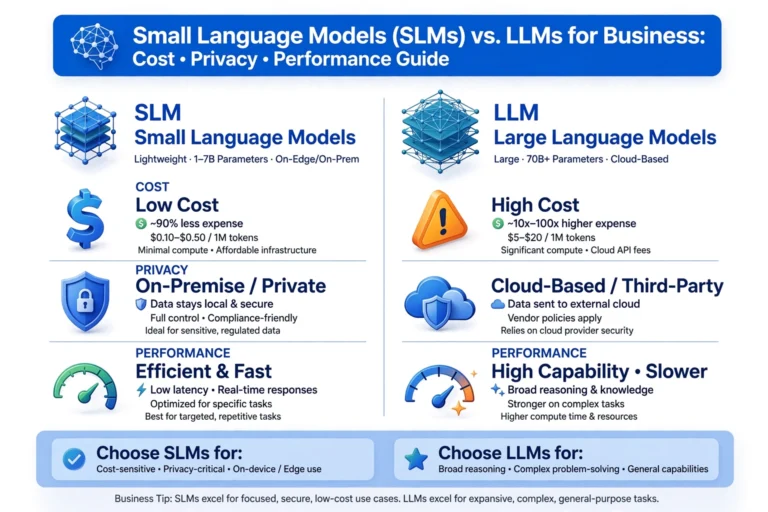
- Edge AI Dominance: Small Language Models (SLMs) will become the norm for IoT and offline devices, reducing the need for massive cloud centers and lowering the carbon footprint of AI.
- Viksit Bharat 2047: AI is viewed as the “crucial wave” that will drive India toward its goal of becoming a $30 trillion economy by 2047.
Comparison Table: BharatGPT vs. The World
| Indicator | BharatGPT | Global Frontier Models |
| Focus | Sovereign, Enterprise, Public Good | Consumer, General Intelligence |
| Trust Model | RAG-based Hallucination Control | Probabilistic Generation |
| Connectivity | Offline-First (Mini version) | Online-Only |
| Language Depth | High (Dialect-level awareness) | Medium (Broad script support) |
| Integration | Deep (UPI, Aadhaar, Bhashini) | Superficial (API-based) |
Key Takeaways Box
| Pillar | Strategic Importance |
| Sovereignty | Guarantees national autonomy over AI models and data. |
| Scale | Impacting over 1 billion lives through systemic integration. |
| Ethics | Anchored in the MANAV framework for accountable governance. |
| Innovation | Moving from Generative to Agentic AI for autonomous task execution. |
| Inclusion | Removing language barriers via Bhashini and voice-first interfaces. |
FAQ Section
1. What exactly is BharatGPT? BharatGPT is an indigenous sovereign foundational model developed by CoRover.ai. It is designed to natively understand and interact in multiple Indian languages across text, voice, and video while ensuring all data remains within India.
2. How does BharatGPT differ from ChatGPT? While ChatGPT is a general-purpose model trained on the public web, BharatGPT is a sovereign B2B model trained on curated Indian data. It supports offline deployment, integrates with Indian Digital Public Infrastructure (UPI, Aadhaar), and focuses on cultural context and linguistic accuracy for Bharat.
3. Is my data safe with BharatGPT? Yes. BharatGPT adheres to strict data sovereignty and localization rules. It is hosted on domestic cloud platforms (GCP in India or Tata Communications) and complies with the ISO 27001 and GDPR standards.
4. Can BharatGPT work without the internet? Yes. A specific version called “BharatGPT Mini” (534M parameters) is designed to run entirely offline on edge devices like smartphones and rural kiosks, which is critical for India’s low-connectivity zones.
5. What is the IndiaAI Mission? It is a government initiative with a budget of ₹10,371 crore aimed at building India’s AI ecosystem. It includes establishing GPU clusters, supporting startups, creating a national dataset platform, and fostering ethical AI governance.
6. Who can use the CoRover AI platform? The platform is used by large enterprises (Accenture, Microsoft), government bodies (IRCTC, LIC, SEBI), and defense organizations (Indian Army) to automate customer support, sales, and administrative tasks.
7. What is “Agentic AI”? Agentic AI refers to systems that can not only answer questions but also execute tasks autonomously. For example, a BharatGPT-powered agent can book a ticket, process a refund, or update a policy without human intervention.
8. What is the role of the Bhashini mission? Bhashini is the National Language Translation Mission under MeitY. BharatGPT is integrated with Bhashini to leverage its translation and voice capabilities, ensuring the model can reach citizens in their mother tongue.
9. How does BharatGPT impact healthcare in India? It powers teleconsultations, assists in early disease detection (like TB and diabetes), and integrates with the Ayushman Bharat Digital Mission (ABDM) to make healthcare more accessible and affordable.
10. Why is this important for UPSC aspirants? BharatGPT and the IndiaAI Mission are critical topics under GS III (Science, Technology, and Economy). Aspirants should understand the concepts of technological sovereignty, digital public infrastructure, and the ethical governance of AI.
Summary and Conclusion
The landscape of 2026 confirms that India has moved past the “FOMO” stage of the AI race and entered a phase of disciplined, purpose-driven innovation. CoRover AI, through its BharatGPT foundational model, has provided the architectural blueprint for how a nation can achieve technological sovereignty while remaining globally collaborative. By prioritizing “Human-Centric” and “Agentic” capabilities, BharatGPT ensures that the benefits of artificial intelligence are not confined to a high-tech elite but are accessible to every citizen across 14+ native languages.
The strategic synergy between the IndiaAI Mission, the Bhashini mission, and indigenous LLM development represents a “whole-of-government” approach to the fourth industrial revolution. As the world observes the outcomes of the India AI Impact Summit 2026, the message is clear: sovereign intelligence is the key to democratic resilience and inclusive growth in the 21st century.




+ There are no comments
Add yours