Key Highlights
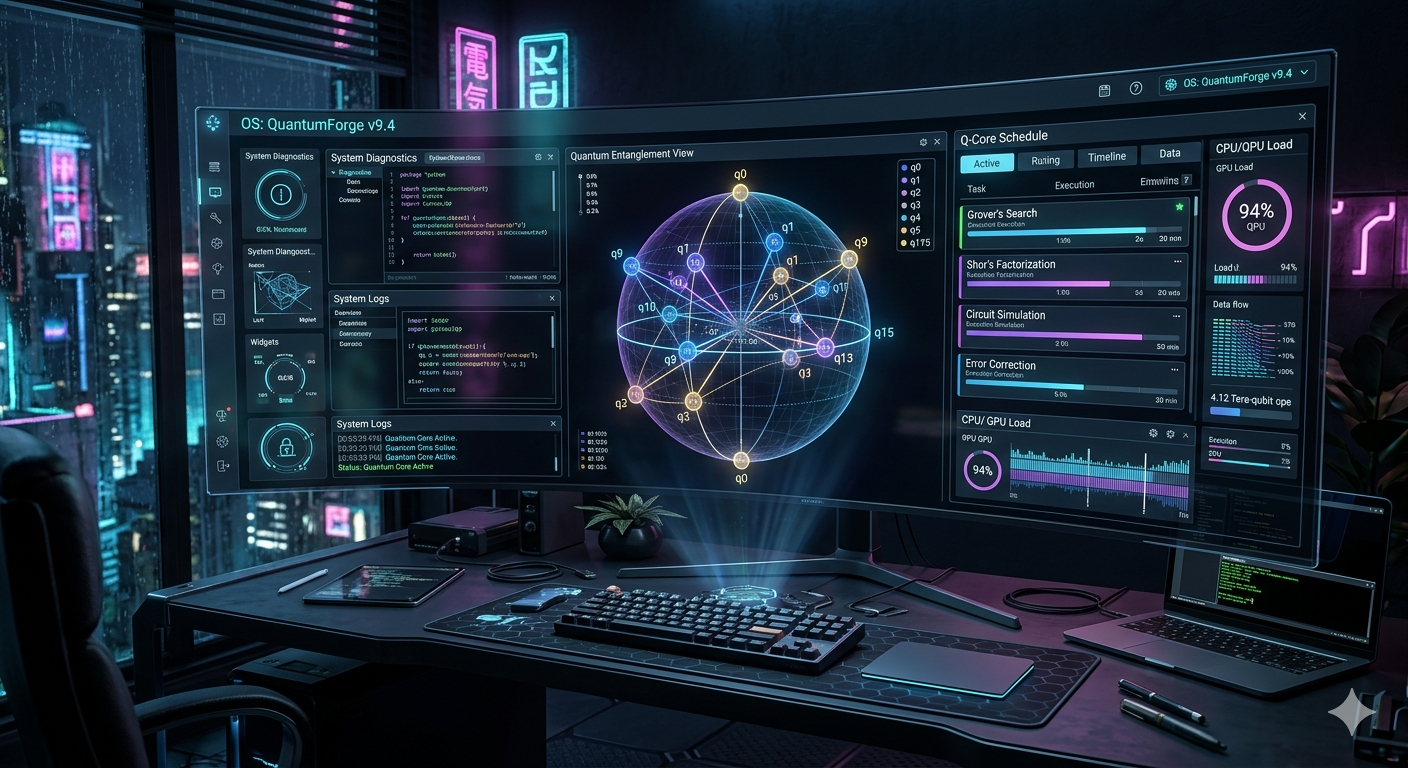
- World’s First: Origin Pilot is the first quantum operating system to be made open-source and publicly available globally.
- The “Windows” of Quantum: It acts as the foundational software layer, bridging the gap between human programmers and quantum hardware.
- Core Functions: The system efficiently manages qubits, schedules complex quantum tasks, and calibrates hardware automatically.
- Democratized Access: Unlike proprietary systems from IBM and Google, anyone can download and use it for free.
For years, the global race for quantum supremacy has been exclusively about hardware. Which nation can build the biggest machine? Which tech giant—IBM or Google—has the most powerful processors and the highest number of qubits? This hardware-centric battle has kept quantum computing locked behind closed doors, accessible only to elite researchers and massive corporations.
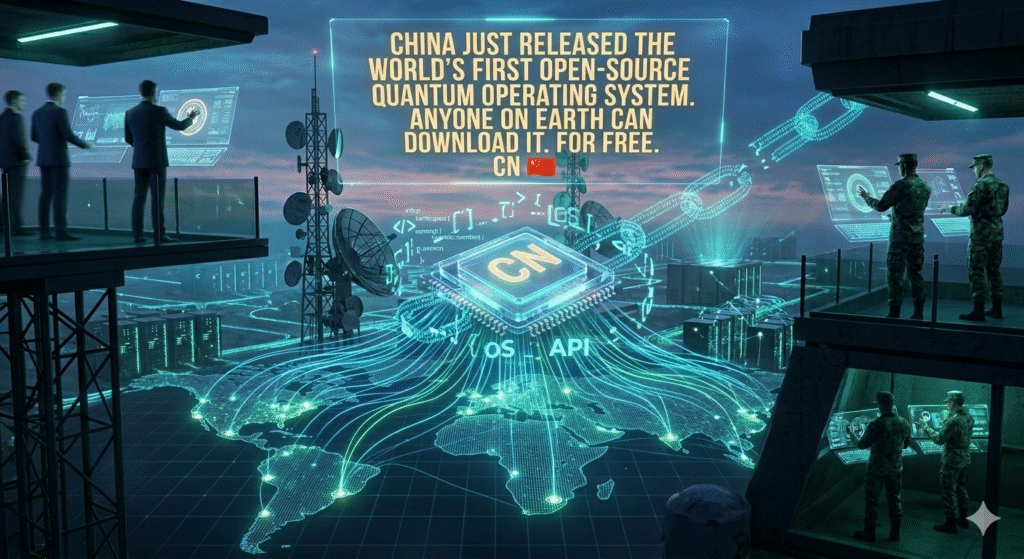
That paradigm has officially shifted. China has released “Origin Pilot,” the world’s first open-source quantum computer operating system, making it publicly downloadable for anyone on Earth, completely for free. This bold move transforms the competitive landscape from a hardware arms race into a battle for software ecosystem dominance.
Why This Topic Matters Today
The release of Origin Pilot is a watershed moment in technology. While Western tech giants like IBM and Google have undoubtedly built impressive and powerful quantum hardware, neither has made their underlying operating systems publicly downloadable. By giving away the foundational software that runs these complex machines, China is positioning itself to become the default standard for the next generation of computing.
This matters because whoever controls the operating system controls the ecosystem. Developers around the world can now experiment, build, and innovate on a Chinese framework, potentially accelerating global quantum development while shifting geopolitical technological influence.
Background / Context
To understand the magnitude of this release, we must look at the history of traditional computing. In the early days of PCs, hardware was highly fragmented until standardized operating systems like Windows and Linux created a unified platform for software developers.
Quantum computing has been stuck in its own “early PC” phase. Companies have been building incredibly sophisticated hardware, but the software required to translate algorithms into physical qubit manipulation has been proprietary and siloed. China’s decision to open-source Origin Pilot is a strategic play reminiscent of the open-source Linux movement, aiming to standardize the quantum software layer globally.
Core Explanation
What it is
Think of Origin Pilot as Windows—but for quantum computers. It is a comprehensive software platform designed to manage the underlying physical resources of a quantum machine and provide a user-friendly interface for developers to write and execute quantum programs.
How it works
Traditional computers use bits (0s and 1s), while quantum computers use qubits, which can exist in multiple states simultaneously. Origin Pilot serves as the master controller. When a developer writes a quantum algorithm, the OS translates that code into the precise microwave pulses or laser commands required to manipulate the physical qubits.
Key components
The primary stakeholders are no longer just physicists in laboratories. With this OS, independent software developers, cybersecurity researchers, and enterprise IT teams can begin testing quantum algorithms. The system acts as a traffic cop, scheduling quantum tasks to maximize efficiency and minimize the delicate error rates inherent in quantum hardware.
Technical Breakdown
Origin Pilot handles several highly complex backend operations so that developers don’t have to:
- Qubit Management: It allocates and tracks the state of individual qubits, ensuring they are optimized for specific calculations.
- Task Scheduling: Quantum processors are expensive and scarce. The OS lines up computational tasks to ensure the hardware is used with maximum efficiency, reducing idle time.
- Automatic Hardware Calibration: Qubits are notoriously unstable and sensitive to environmental changes. Origin Pilot automatically calibrates the hardware, constantly tuning the system to maintain accuracy without requiring human intervention.
Real-World Examples / Case Studies
Consider the current state of Western quantum computing. IBM and Google offer cloud access to their quantum machines, allowing researchers to run experiments. However, the exact mechanisms of how their proprietary operating systems handle qubit calibration and task scheduling remain hidden behind corporate firewalls.
In contrast, a university student in Brazil or a startup in India can now download Origin Pilot, study its source code, and simulate how a quantum operating system handles these exact processes. This level of transparency accelerates learning and allows developers to build complementary software tools much faster.
Benefits / Advantages
The open-source nature of Origin Pilot offers massive advantages for the global tech community. It dramatically lowers the barrier to entry for quantum research. By providing a free, functional OS, it allows computer science programs worldwide to teach quantum software engineering using real-world architecture.
Furthermore, open-source software traditionally benefits from crowd-sourced security and rapid iteration. Thousands of global developers can identify bugs, suggest optimizations, and build compatible applications, creating a robust ecosystem much faster than a closed, proprietary team could achieve.
Challenges
While democratizing quantum software is a leap forward, it introduces severe security challenges. Quantum computers theoretically have the power to break modern encryption. As quantum development accelerates through open-source collaboration, the urgency to protect existing digital infrastructure skyrockets.
Experts note that as AI and quantum computing advance, sectors like defense and telecommunications must rapidly adopt safeguards. One of the most at-risk sectors is cryptography, requiring immediate transition to Post-Quantum Cryptography (PQC) and Quantum Key Distribution (QKD).
Global Implications
Geopolitically, this is a masterstroke by China. By making Origin Pilot the first easily accessible quantum OS, they are encouraging the global developer community to standardize around their architecture. If global applications are built to run natively on Origin Pilot, China gains immense soft power and influence over the future of the internet and global computing standards.
Future Trends
Looking ahead, we anticipate strong growth in funding and development surrounding long-gestation technologies like quantum computing and AI-integrated defense systems. The focus will shift from simply building quantum hardware to developing quantum-safe applications. Startups and governments will invest heavily in proactive defense strategies, ensuring that high-tech security is integrated into future business environments. We will likely see Western nations rush to fund and release their own open-source quantum frameworks to prevent a Chinese monopoly on quantum software standards.
Comparison Table
| Feature | Origin Pilot | Proprietary Quantum OS (e.g. IBM/Google) |
| Accessibility | Publicly downloadable worldwide | Restricted to corporate cloud access |
| Cost | Free | Pay-per-use or subscription based |
| Source Code | Open and modifiable by developers | Closed, protected intellectual property |
| Ecosystem Goal | Rapid global adoption and standardization | Monetization and strict quality control |
| Calibration | Automated within the open-source layer | Handled internally by proprietary tech |
Conclusion
The release of Origin Pilot proves that the future of quantum computing isn’t just about building the coldest, most complex hardware—it’s about building the most accessible software ecosystem. By offering the world a free, open-source quantum operating system, China has invited millions of global developers to start writing the future on their terms. This bold strategy democratizes access to cutting-edge technology, but it also sounds an alarm for Western tech giants and global cybersecurity experts. The quantum era is no longer a distant theoretical concept locked in corporate labs; the code is out in the open, and the race to master it has officially begun.
FAQ SECTION
1. What is Origin Pilot?
Origin Pilot is the world’s first open-source operating system designed specifically for quantum computers. Developed in China, it acts as the software bridge between human programmers and complex quantum hardware, managing tasks like qubit allocation and system calibration.
2. How is Origin Pilot different from IBM or Google’s quantum tech?
While IBM and Google have built incredibly powerful quantum processors, their underlying operating systems are proprietary and closed. Origin Pilot is publicly downloadable and free for anyone on Earth to use, study, and modify.
3. Why did China make this operating system free?
By making the software open-source, China aims to accelerate global quantum research while simultaneously positioning its own architecture as the foundational standard for the future of global computing, gaining significant technological influence.
4. What does a quantum operating system actually do?
Just like Windows manages your computer’s memory and CPU, a quantum OS manages qubits. It schedules complex quantum tasks to ensure maximum efficiency and automatically calibrates the highly sensitive hardware to reduce computational errors.
5. Can anyone download Origin Pilot right now?
Yes, it is designed to be publicly downloadable. It allows developers, students, and researchers worldwide to experiment with quantum software architecture without needing physical access to a multi-million-dollar quantum machine.
6. Does this mean quantum computers are available to the public?
No, physical quantum computers are still largely restricted to advanced laboratories. However, releasing the open-source operating system allows people to write, simulate, and understand the software that will eventually run on those physical machines.
7. How does this impact global cybersecurity? As open-source software accelerates quantum development, the threat of quantum computers breaking traditional encryption grows. This necessitates an urgent global shift toward Post-Quantum Cryptography (PQC) to protect sensitive digital infrastructure.
8. What is the “Windows of Quantum”?
This phrase is an analogy used to describe Origin Pilot. Just as Microsoft Windows standardized the software layer for early personal computers, Origin Pilot seeks to provide a universal, standardized software environment for the emerging quantum computing industry.
Key Takeaways Box
- Software Over Hardware: The quantum computing race has shifted from solely building physical processors to establishing dominant software ecosystems.
- Open-Source Power: By making Origin Pilot free, China lowers the barrier to entry, inviting global developers to innovate on a Chinese-built framework.
- Automated Complexity: The OS handles the heavy lifting of quantum computing, including automated hardware calibration and efficient task scheduling.
- Security Urgency: The democratization of quantum software accelerates the timeline for when industries must adopt quantum-safe cybersecurity protocols.







+ There are no comments
Add yours