
The nature of global conflict has fundamentally shifted in the twenty-first century. Gone are the days when military supremacy was determined solely by the number of boots on the ground or the sheer tonnage of steel in a naval fleet. Today, the most decisive battles are being fought in the invisible realms of data, algorithms, and quantum networks. The era of Artificial Intelligence (AI) warfare has officially arrived, and it is reshaping the geopolitical chessboard at blinding speed.
For India, a nation sharing highly contested, volatile borders with nuclear-armed neighbours, adapting to this algorithmic arms race is not a luxury; it is a critical survival imperative. The traditional paradigms of defense procurement and legacy troop deployments are no longer sufficient to secure the nation’s vast frontiers.
Recognising this urgent reality, the Indian defence establishment is quietly but aggressively overhauling its conventional systems. By pivoting from a traditional, import-dependent armed force to an agile, data-centric military machine, India is building a sovereign, smart combat ecosystem. This ecosystem promises to drastically reduce response times, optimize resource allocation, and minimize human casualties in hostile environments.
This comprehensive report explores the depths of India’s military modernization. It details the indigenous technologies, the burgeoning deep-tech start-up ecosystem, the physical manufacturing corridors, and the strategic policies driving the nation’s readiness for the next generation of warfare.
Why This Topic Matters Today
The integration of AI into military operations represents the most significant technological leap since the dawn of the nuclear age. The ongoing conflicts in Eastern Europe and the Middle East have vividly demonstrated that autonomous drones, predictive logistics, and AI-driven targeting systems can effectively level the playing field against numerically superior forces.
For policymakers, defense professionals, and researchers—including UPSC aspirants studying national security—understanding this transition is crucial. The Indian Ministry of Defence explicitly declared 2025 as the “Year of Reforms”. This ambitious policy shift aims to integrate new domains like space, cyber, and emerging technologies deeply into the military fabric to create a technologically advanced, combat-ready force.
Simultaneously, the widening defence budget gap between India and China creates a pressing urgency. Beijing’s massive $245 billion military allocation dwarfs New Delhi’s estimated $81.7 billion budget. Because India cannot currently match China’s raw financial output, it must rely on technological asymmetric advantages. Harnessing AI is the most viable path to maintaining a credible strategic deterrence in the Indo-Pacific region.
Key Highlights
To understand the scope of India’s military AI transformation, we must look at the specific milestones achieved in recent years. The table below outlines the core pillars of this rapidly expanding ecosystem.
| Strategic Domain | Key Highlight / Milestone Achieved | Impact on National Security |
| Policy Mandate | 2025 declared the “Year of Reforms” by the MoD. | Focuses on jointness, cyber warfare, and AI integration across all branches. |
| Active Deployment | 140 AI-based smart surveillance systems active on borders. | Automates intrusion detection, reducing human error in extreme terrains. |
| Sovereign Cloud | Launch of Project Ekam, an indigenous Defence AI platform. | Protects classified military data through an air-gapped, sovereign infrastructure. |
| Start-up Ecosystem | ADITI scheme launched with a ₹750 crore outlay. | Funds hundreds of deep-tech start-ups to build military-grade AI solutions. |
| Hardware Manufacturing | UP Defence Industrial Corridor (Lucknow Node) expansion. | Attracted over ₹34,000 crore for advanced aerospace and electronic warfare manufacturing. |
Background
The seeds for India’s current military AI revolution were planted several years ago, reflecting a deliberate shift in strategic foresight. In early 2018, the Ministry of Defence constituted a multi-stakeholder task force led by N. Chandrasekaran, Chairman of Tata Sons. The mandate was clear and urgent: study the strategic implications of Artificial Intelligence in national security and design a comprehensive roadmap for its immediate integration.
The task force’s recommendations were transformative. They led directly to the creation of the Defence AI Council (DAIC) and the Defence AI Project Agency (DAIPA) in 2019. The DAIC, chaired by the Defence Minister, was established to provide top-level strategic direction and policy oversight. Meanwhile, DAIPA was tasked with operationalizing these strategies across the Army, Navy, and Air Force, ensuring that broad technological goals translated into field-ready applications.
Furthermore, the(https://www.niti.gov.in/) laid the essential groundwork for dual-use technology development, encouraging solutions that serve both military and civilian needs. Since the establishment of these foundational bodies, the defense innovation ecosystem has accelerated dramatically.
In 2022, the government published a priority list of 75 AI projects focusing on cyber security, autonomous systems, and predictive maintenance. Today, backed by a dedicated ₹100 crore annual budget specifically for military AI projects, the Indian defense landscape is moving rapidly from isolated pilot programs to mission-ready, networked deployment.
Core Explanation
What is a Smart Combat Ecosystem?
A smart combat ecosystem is a deeply integrated, highly resilient network of military assets connected through secure cloud infrastructure and governed by artificial intelligence. In this paradigm, sensors, weapons platforms, command centers, and logistics supply chains do not operate in isolation. Instead, a smart ecosystem allows a surveillance drone in the sky, a ground-based radar, and a naval vessel at sea to share and analyze real-time data continuously.
In this setup, AI acts as the central nervous system. It processes millions of data points simultaneously, identifies enemy movement patterns, and provides human commanders with actionable intelligence within seconds. This capability drastically shrinks the “sensor-to-shooter” loop, ensuring that threats are neutralized before they can materialize.
How India’s Ecosystem Works
Unlike other global powers that rely on massive, centralized data centers, India is building its military AI ecosystem differently out of strategic necessity and resource constraints. The Indian strategy is fundamentally built on three distinct pillars:
First, India is heavily prioritizing Edge Computing. Because continuous cloud connectivity is notoriously unreliable in remote, rugged regions like the high-altitude Himalayas or dense northeastern jungles, Indian start-ups are developing algorithms that run directly on edge devices. This means the cameras, drones, and wearable tech process data locally, ensuring uninterrupted operation even when cut off from central command.
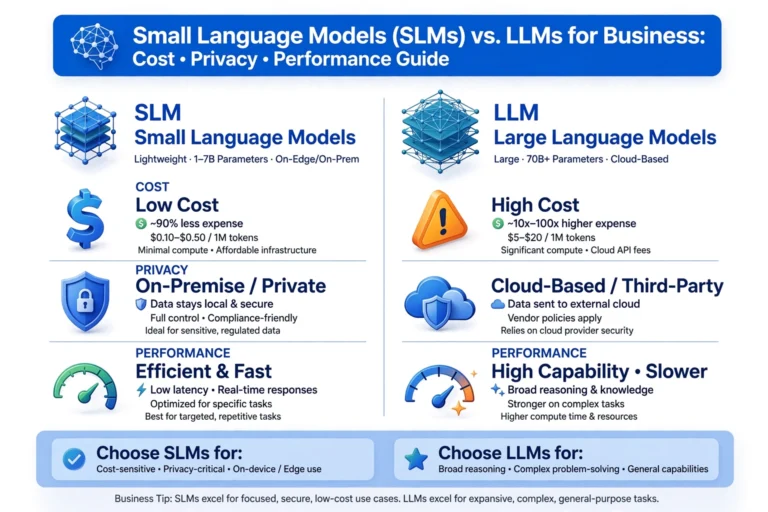
Second, there is a distinct focus on Smaller Language Models (SLMs). Rather than attempting to train massive, generalized language models that require exorbitant computing power, India is developing SLMs customized for highly specific military tasks. These focused models require less compute, operate with lower latency, and are easier to secure against cyber infiltration.
Third, India maintains an uncompromising stance on Data Sovereignty. To prevent foreign surveillance, espionage, or catastrophic infrastructure collapse during wartime, India relies exclusively on proprietary, air-gapped networks. Sensitive military data is never processed through commercial, foreign-owned APIs, ensuring that national security remains entirely in domestic hands.
Key Components and Stakeholders
The successful execution of this complex ecosystem requires unprecedented collaboration between the traditional military establishment, government research bodies, and the agile private sector.
The Centre for Artificial Intelligence and Robotics (CAIR), a premier laboratory under the(https://www.drdo.gov.in/), leads the development of mission-critical command and control systems. CAIR’s research forms the backbone of secure battlefield communication and information management.
Simultaneously, the Innovations for Defence Excellence (iDEX) initiative, functioning as the executive arm of the Defence Innovation Organization, funds tech-driven start-ups to co-create advanced defence solutions. iDEX provides crucial grants and mentorship, bridging the gap between brilliant academic concepts and rugged military hardware.
Finally, private deep-tech start-ups are the new engine of this ecosystem. Companies such as Neuralix, Inferigence Quotient, and Apollyon Dynamics are actively translating raw, fragmented military data into highly sophisticated, operational AI tools. By leveraging legacy surveillance footage and sensor data, these startups are building smarter battlefield systems faster than traditional defense contractors ever could.
Technical Breakdown
To truly appreciate the sophistication of India’s strategic approach, it is vital to examine the specific AI systems currently being integrated into the armed forces. These indigenous solutions represent a paradigm shift in how the military manages information, logistics, and personnel.
Project Ekam: Defence AI-as-a-Service
Launched in late 2025, Project Ekam stands as India’s first proprietary AI cloud platform built exclusively for the military. Developed by the deep-tech start-up Neuralix, it directly addresses the severe fragmentation of legacy military data. Project Ekam is an air-gapped system, meaning it operates entirely independently of the public internet. This architecture ensures total data sovereignty, allowing the military to process classified intelligence, satellite imagery, and sensitive logistics data without risk of external interception.
SAM-UN: Geospatial Situational Awareness
The Situational Awareness Module – Unified Network (SAM-UN) is a highly advanced geospatial intelligence tool that merges high-resolution satellite imagery with real-time battlefield data. By integrating seamlessly with smart command centres, it provides military commanders with a dynamic, multi-domain mapping of the operational theatre. Importantly, SAM-UN is a dual-use technology. It is highly effective not just for coordinating complex troop movements, but also for managing rapid responses during natural disasters.
AI Examiner and XFace
The Indian military is also heavily investing in internal optimization and base security. The AI Examiner is an automated platform designed to evaluate soldier training programs. It provides immediate, personalized feedback, streamlining educational processes and enhancing overall combat readiness. Concurrently, XFace, an advanced AI-powered facial recognition system, is utilized for strict identity verification at high-security military bases. This tool is also a critical asset in identifying targets during counter-insurgency operations.
PRAKSHEPAN: AI-Driven Climatology
In high-altitude combat zones like the Siachen Glacier, natural elements are often as deadly as enemy fire. PRAKSHEPAN is an AI-driven climatology and disaster prediction system. By continuously analyzing historical weather patterns and current atmospheric sensor readings, it accurately predicts avalanches, flash floods, and landslides. This system provides vital early warnings to both deployed troops and local civil authorities, significantly reducing environmental casualties.
Did You Know? India’s military AI budget allocation is roughly $60 million spread over five years. By contrast, the US Pentagon seeks nearly $13.4 billion, and China invests $1–2 billion annually. India is competing in this global race by out-innovating its rivals through lean start-ups, edge computing, and dual-use technologies.
Real-World Examples
Theoretical frameworks only matter when they survive contact with the real world. India has aggressively moved its AI projects from the laboratory to the front lines, yielding tangible operational results.
Case Study 1: The 140 AI Border Surveillance Systems
Border security is perhaps India’s most pressing tactical challenge, given the diverse and hostile terrains of its frontiers. To mitigate the profound risks of human error and physical fatigue in extreme weather, the Indian Army deployed 140 AI-based surveillance systems along highly volatile border sectors.
Developed under the Comprehensive Integrated Border Management System (CIBMS), these smart cameras utilize advanced computer vision algorithms. They are trained to autonomously distinguish between local wildlife, innocent civilians, and armed combatants. Operating continuously, they trigger immediate, autonomous alerts to regional command centers. This smart surveillance drastically reduces the need for dangerous manual foot patrols in hazardous zones, acting as a tireless digital sentry.
Case Study 2: The UP Defence Industrial Corridor
Advanced software requires equally advanced physical manufacturing capabilities. The Uttar Pradesh Defence Industrial Corridor (UPDIC) is rapidly serving as the hardware backbone for India’s AI and smart combat ambitions. The Lucknow node, in particular, has seen massive, rapid expansion, attracting leading defense manufacturers.
A prime example is BrahMos Aerospace. A state-of-the-art ₹300 crore facility was recently inaugurated in Lucknow to manufacture the next-generation BrahMos-NG cruise missiles. These hyper-agile, supersonic missiles rely heavily on advanced algorithmic targeting and integrated AI guidance systems to evade enemy defenses.
Similarly, Aerolloy Technologies, a subsidiary of PTC Industries, recently commissioned a multi-million-dollar Vacuum Arc Remelting (VAR) furnace in the Lucknow node. This achievement makes them one of only two companies globally capable of producing large investment castings in complex Titanium alloys. These materials are absolutely critical for manufacturing next-generation aerospace engines and autonomous drones.
For readers interested in how physical industrial hubs directly influence national defence technology strategy, the rapid rise of the UPDIC serves as a masterclass in building domestic capability to enable military autonomy.
Benefits / Advantages
The comprehensive shift toward an AI-driven combat ecosystem provides India with multiple overlapping strategic and operational advantages.
Primarily, AI acts as an unmatched force multiplier. Through autonomous logistics routing, predictive supply chains, and the deployment of AI-enabled drone swarms, a smaller number of troops can exert total domain control over a much larger geographic area. This efficiency is crucial for monitoring India’s vast and inhospitable borders.
Predictive maintenance is another massive advantage. The Indian Air Force and Army utilize machine learning algorithms to monitor the structural health of aircraft and armored vehicle components continuously. By accurately predicting mechanical failures before they occur based on historical flight data, the military ensures significantly higher mission availability and reduces costly unplanned downtime.
Furthermore, AI integration directly reduces human casualties. By delegating high-risk, dangerous tasks—such as improvised explosive device (IED) disposal, forward reconnaissance, or high-altitude logistics transport—to autonomous robotic MULEs and unmanned aerial vehicles, soldiers are kept out of the direct line of fire.
Finally, this technological push fuels dual-use economic growth. Many of the cutting-edge technologies funded by(https://idex.gov.in/) have immense civilian applications. Systems developed for military logistics, secure communications, or disaster prediction (like PRAKSHEPAN) can be commercialized, driving economic resilience and creating high-tech jobs nationwide.
Challenges
Despite the rapid and impressive advancements, the militarization of Artificial Intelligence presents profound ethical, logistical, and strategic challenges. For researchers and UPSC aspirants critically analyzing this subject, understanding these vulnerabilities is just as important as knowing the technological capabilities.
1. The Accountability Gap and the “Black Box”
When a traditional, human-operated weapon malfunctions and causes unintended civilian casualties, the military chain of command allows for clear human accountability. However, many advanced deep learning systems operate as conceptual “black boxes.” Even their original software creators cannot fully explain the exact mathematical pathway the AI took to arrive at a specific targeting decision. If a Lethal Autonomous Weapon System (LAWS) misidentifies a civilian target as an enemy combatant, determining moral, legal, and operational liability becomes incredibly complex, creating a dangerous accountability gap.
2. The Gandhian Ethical Perspective
From a philosophical and ethical standpoint, prominent scholars argue that delegating life-and-death decisions to cold algorithms fundamentally violates human dignity. The Gandhian perspective on warfare suggests that removing human empathy, hesitation, and moral judgment from conflict dehumanizes warfare entirely. It lowers the psychological threshold required to initiate violence, potentially making armed conflict more frequent and devastating.
3. Data Scarcity and Fragmentation
A significant technical bottleneck for India’s AI ambitions is data scarcity. Machine learning systems require massive, cleanly labeled datasets to train effectively. While the United States possesses over 5,000 military-grade AI data centers, India currently operates around 150. Furthermore, historical Indian military data is severely fragmented. It is stored in isolated silos, often physically archived rather than digitized, and largely unclassified for machine learning ingestion.
4. Algorithmic Bias and Cyber Vulnerability
AI systems are only as unbiased and accurate as the specific data they are trained on. Algorithmic bias in facial recognition tools, such as XFace, could lead to disastrous false positives in delicate counter-insurgency operations, resulting in the wrongful detention or targeting of innocent civilians. Additionally, a heavy reliance on networked AI makes the entire military apparatus highly susceptible to sophisticated cyberattacks. Adversaries could engage in “data poisoning,” subtly altering training data to make Indian AI systems fail during critical combat moments.
Global Implications
The global balance of geopolitical power is increasingly dictated by AI supremacy. The tri-polar rivalry between the United States, China, and India provides the necessary context for India’s aggressive military modernization.
China views Artificial Intelligence as the absolute core of its “intelligentized” warfare doctrine. Supported by a massive defense budget of $245 billion—which saw a 7.2% growth in 2025—Beijing is investing heavily in hypersonic glide vehicles, autonomous naval swarms, and advanced cyber warfare capabilities. Recent Pentagon reports indicate that China has already loaded over 100 solid-propellant ICBMs into new silos and currently boasts the world’s leading, AI-evasive hypersonic missile arsenal.
India’s broader military strategy is inherently defensive, focused heavily on credible regional deterrence rather than global power projection. Because India cannot currently match China’s financial output—India’s defense budget is roughly $81.7 billion, and total spending hovers at 1.9% of GDP against the strategically recommended 2.5%—it must leverage AI to bridge this conventional capability gap.
By developing indigenous edge-computing capabilities and secure SLMs, India is strategically insulating itself from global supply chain shocks and potential sanctions. The government’s decisive policy to ban the procurement of critical communication infrastructure from adversarial nations forces the domestic tech ecosystem to mature rapidly, fostering true “Atmanirbhar Bharat” (self-reliant India) in the defense sector.
For a deeper dive into how these macroeconomic tech policies shape regional stability, you can explore our detailed analysis on the geopolitical impacts of AI.
Future Trends
Looking ahead to the near future, the Indian Army has fast-tracked its comprehensive AI roadmap, targeting full operational deployment of over 85 advanced use cases by 2026–2027.
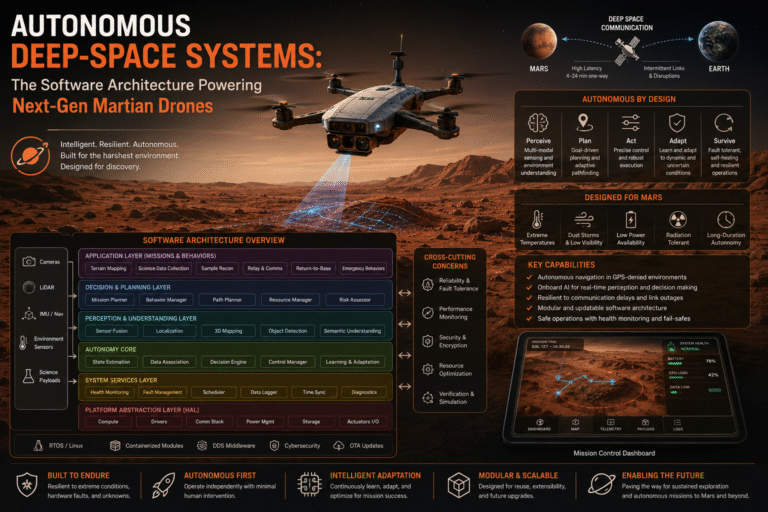
The integration of AI-enabled drone swarms for automated, high-altitude reconnaissance and offensive operations along the Line of Actual Control (LAC) is expected to become a standard operating procedure. These swarms will communicate autonomously, adapting to enemy fire without requiring human pilot intervention.
Furthermore, as global AI capabilities advance, so do the capabilities of adversaries to crack traditional encryption. To counter this, DRDO is heavily investing in free-space quantum communication. The goal is to establish hack-proof, entangled communication networks capable of surviving intense electronic warfare and AI-driven cyber-attacks.
Ultimately, the overarching goal of the 2025 reforms is the successful establishment of Integrated Theatre Commands. AI will serve as the indispensable digital glue that binds the Army, Navy, and Air Force into a singular, cohesive, and hyper-responsive fighting mechanism.
Practical Takeaways
| Key Concept | Description |
| Sovereignty is Paramount | India is actively shifting away from imported technology to proprietary, air-gapped AI systems like Project Ekam to ensure total control over classified data. |
| Asymmetric Advantage | AI acts as the ultimate equalizer. It allows India to counter massive foreign defense budgets through smart border surveillance, predictive logistics, and automated systems. |
| Dual-Use Economics | Innovations funded for defense, such as the PRAKSHEPAN disaster prediction system, possess immense potential to be commercialized for civilian safety and economic benefit. |
| Ethical Governance | As Lethal Autonomous Weapons Systems (LAWS) advance rapidly, establishing a robust ethical and legal framework to ensure meaningful human oversight is a critical, immediate priority. |
Comparison Table
To fully grasp the geopolitical and technological landscape driving this modernization, consider the following comparison of the top three global military powers:
| Strategic Metric | India | China | United States |
| Est. Defense Budget (2025/26) | ~$81.7 Billion | ~$245+ Billion | ~$900+ Billion |
| Military AI Strategy | Edge computing, customized SLMs, sovereign cloud (Project Ekam), deterrence focus. | Massive state-funded AI integration, “intelligentized warfare,” global projection. | Unmatched R&D, commercial LLM integration, vast compute power and data centers. |
| Active Military Personnel | ~5.13 Million (inc. reserves) | ~3.17 Million | ~2.12 Million |
| Primary Structural Challenge | Data fragmentation, lower budget vs GDP ratio (1.9%), reliance on hardware imports. | US semiconductor sanctions, demographic shifts, unproven combat experience. | Ethical bureaucracy, supply chain risks with commercial tech vendors. |
Note: Budget figures reflect official government estimates; true spending, particularly for China’s PLA, may be substantially higher due to opaque funding categories.
Conclusion
AI warfare is no longer a dystopian concept relegated to science fiction; it is the harsh operational reality of today’s geopolitical environment. For India, building a resilient, homegrown smart combat ecosystem is the definitive strategy to secure its volatile borders, protect its absolute sovereignty, and elevate its standing on the complex global stage.
As autonomous systems and machine learning algorithms take on greater battlefield responsibilities, the true test for the Indian defense establishment will not merely be technological mastery. The ultimate challenge will be the ethical, legal, and strategic wisdom with which these immensely powerful tools are wielded.
What are your thoughts on the rapid militarization of Artificial Intelligence? Does the extensive use of autonomous border security systems make nations genuinely safer, or does it risk unintended, catastrophic escalation? Share your insights, debate the ethics, and join the conversation in the comments below.
FAQ SECTION
Q1: What is Project Ekam in the Indian military context? Project Ekam is an indigenous, highly secure “Defence AI-as-a-Service” cloud platform inaugurated in late 2025. It is designed to host, process, and manage classified military data independently from foreign-owned commercial internet infrastructure, ensuring complete data sovereignty and security for the armed forces.
Q2: How is India using AI for border security? The Indian Army has actively deployed around 140 AI-based smart surveillance systems along sensitive border areas. These advanced systems utilize computer vision to autonomously detect human or vehicular intrusion in real-time, drastically reducing the reliance on manual foot patrols and lowering the risk of human error due to fatigue.
Q3: What makes India’s military AI strategy different from the US or China? Unlike the US and China, which rely heavily on massive computing infrastructure and generalized Large Language Models (LLMs), India focuses intensely on Edge Computing and Smaller Language Models (SLMs). This pragmatic approach is necessary due to India’s limited data center infrastructure and the operational need for systems to function in remote border regions without reliable internet connectivity.
Q4: What is the ADITI Scheme launched by the Ministry of Defence? Launched in March 2024 with a substantial outlay of ₹750 crore, the ADITI Scheme is a major sub-scheme of iDEX (Innovations for Defence Excellence). It provides significant financial grants to tech start-ups to foster rapid innovation in critical and strategic defense technologies, including AI, quantum tech, and autonomous weapons.
Q5: What are the main ethical concerns regarding AI in warfare? The primary ethical concerns revolve around the “Accountability Gap”—the extreme difficulty in assigning legal or moral blame if an autonomous weapon commits an error. There are also deep, ongoing concerns about algorithmic bias, the dehumanization of combat, and the moral implications of delegating life-and-death decisions to cold algorithms.
Q6: What is the SAM-UN system used by the Indian Army? SAM-UN (Situational Awareness Module – Unified Network) is a highly sophisticated AI-enabled geospatial mapping tool. It fuses multi-domain data and real-time satellite imagery to provide immediate battlefield awareness, assisting military commanders in both complex mission planning and rapid disaster response.
Q7: How do India and China compare in current defense spending? As of recent budget declarations, China’s defense spending sits at a staggering $245–$249 billion, while India’s allocation is approximately $81.7 billion. India currently spends roughly 1.9% of its GDP on defense, which strategic analysts strongly suggest should be increased to at least 2.5% to maintain a robust, credible deterrent against regional threats.
Q8: What role does the UP Defence Industrial Corridor play in this ecosystem? The UPDIC is a major physical manufacturing hub driving India’s defense self-reliance. The Lucknow node, for example, has attracted massive investments, including a ₹300 crore BrahMos aerospace facility and advanced aerospace material casting plants, effectively integrating cutting-edge hardware manufacturing with AI-driven software technologies.







+ There are no comments
Add yours