
Key Highlights
- 453 million internal migrants represent 37.5% of India’s population, making it one of the world’s largest migration systems
- Rural-to-rural migration dominates at 47.5%, though rural-to-urban flows show highest growth rates at 48.5%
- India leads global remittances at $129 billion (2024), supporting millions of families and contributing 3.3% to GDP
- Climate migration affects 100+ million people, with 5.4 million displaced in 2024 alone due to extreme weather events
- COVID-19 triggered reverse migration of 43.3 million workers, exposing vulnerabilities in social protection systems
Historical Context and Scale of Migration
The Foundation of Modern Migration Patterns
India’s migration history is marked by transformative events. The 1947 Partition triggered one of the world’s largest forced migrations, followed by subsequent influxes of refugees from Bangladesh (1971), Sri Lankan Tamils, and Tibetan refugees. These historical movements established patterns that continue influencing contemporary migration dynamics.
The scale of internal migration in India is staggering. Between 1991 and 2011, both male and female migration rates increased dramatically – male migration rose from 14.79% to 23.03% while female migration increased from 41.64% to 52.17%. This growth reflects India’s evolving economic structure and urbanization trajectory. migrationletters
Patterns and Streams of Internal Migration
Rural-Rural Dominance with Urban Shift
Despite popular assumptions about rural-urban migration, rural-to-rural migration remains dominant, accounting for 47.5% of total migrants in 2011, though declining from 64.2% in 1991. This stream primarily involves marriage-related movements, particularly among women.
Rural-to-urban migration, while constituting 17.4% of total migrants, shows the highest growth rate at 48.5% due to expanding urban employment opportunities. This stream is predominantly male-driven and economically motivated, with major migration corridors emerging between states.
Major Migration Corridors
The Census 2011 data reveals significant interstate migration patterns:
- Uttar Pradesh, Bihar, Rajasthan → Maharashtra
- Uttar Pradesh, Rajasthan, Odisha, Madhya Pradesh → Gujarat
- Uttar Pradesh, Bihar, Haryana, Uttarakhand → Delhi
Migrant-receiving states include Maharashtra, Gujarat, Delhi, Haryana, and West Bengal, while migrant-sending states are primarily Uttar Pradesh, Bihar, Rajasthan, Madhya Pradesh, and Uttarakhand. niua
Economic Dimensions and Remittances
India as Global Remittance Leader
India maintains its position as the world’s largest recipient of remittances, receiving $129 billion in 2024, representing 14.3% of global remittance flows. This represents an increase from $125 billion in 2023, though growth rates have moderated to 3.7% compared to 7.5% in 2023. fortuneindia
Top remittance sources include the United States, UAE, UK, Singapore, and Saudi Arabia, reflecting India’s diversified migrant population across both high-skilled OECD markets and semi-skilled Gulf countries.
Economic Impact:
- Remittances exceed foreign direct investment and combined budgets of Pakistan and Bangladesh
- Account for 3.3% of India’s GDP, highlighting the economy’s diversification
- Support current account deficits and provide crucial foreign exchange
Labor Market Contributions
Migrant workers form the backbone of multiple sectors including construction, textiles, agriculture, domestic work, and the gig economy. The 2011 Census recorded 41.4 million interstate migrant workers, with significant concentrations in urban industrial centers. pib
Climate Migration: The Emerging Challenge
Environmental Displacement Patterns
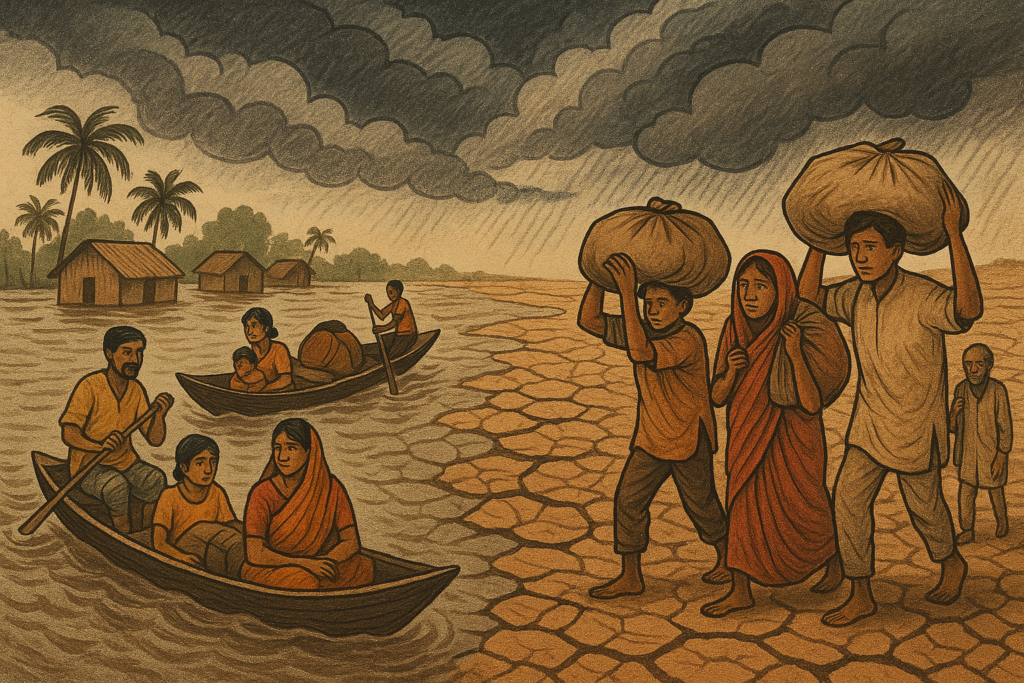
Climate-induced migration is emerging as a critical governance challenge in India. The country records the highest number of climate-related displacements among South Asian nations, with over 100 million people impacted by natural disasters like droughts and floods. iwm
Climate Migration Hotspots:
- Bundelkhand: Faced 8-9 droughts between 1998-2009, with temperatures expected to rise 2-3.5°C by 2100
- Sundarbans: Saltwater intrusion and island shrinkage forcing permanent relocation
- Coastal areas: Sea-level rise affecting paddy fields and freshwater sources
- Vidarbha-Marathwada: Extreme heat (50°C+) and erratic rainfall driving seasonal labor migration
2024 Climate Impact:
India recorded its highest disaster displacements since 2012 at 5.4 million, including 2.4 million triggered by severe monsoon floods. This represents a significant escalation in climate-induced population movements. internal-displacement
COVID-19 and Reverse Migration Crisis
The Unprecedented Exodus
The COVID-19 lockdown exposed the vulnerability of India’s migrant workers, triggering what many called the “second-largest migration since Partition”. According to World Bank estimates, over 40 million people were impacted by lockdown measures, with 50,000-60,000 migrants returning to rural areas within days. sgtnuniversity
Reverse Migration Scale:
- 43.3 million interstate migrants returned home during the first wave, with approximately 35 million constituting genuine reverse migration isec.ac
- This represented roughly 1% of India’s total population
- 77% of migrant workers expressed readiness to return to cities for work
Crisis Drivers:
- Sudden job losses and economic uncertainty
- Lack of social security and informal employment arrangements
- Panic created by unclear lockdown duration
- Absence of transportation and basic necessities
Governance Failures and Responses
The crisis revealed significant governance gaps in migration management. Migrant workers faced:
- Lack of transportation and police harassment
- Discrimination and loss of savings
- Poor sanitation in quarantine centers
- Inadequate food and healthcare access journalofsocialsciences
Legal and Institutional Framework
Constitutional Provisions
Article 19 of the Constitution guarantees freedom of movement and residence, establishing migration as a fundamental right. However, the legal framework for migrant worker protection remained underdeveloped until recent reforms.
Recent Legal Developments
Labour Code Reforms now include specific provisions for interstate migrant workers, addressing registration, welfare measures, and working conditions. The Supreme Court invoked Article 21 during COVID-19 to ensure migrant dignity and relief.
Digital Welfare Initiatives
One Nation One Ration Card (ONORC)
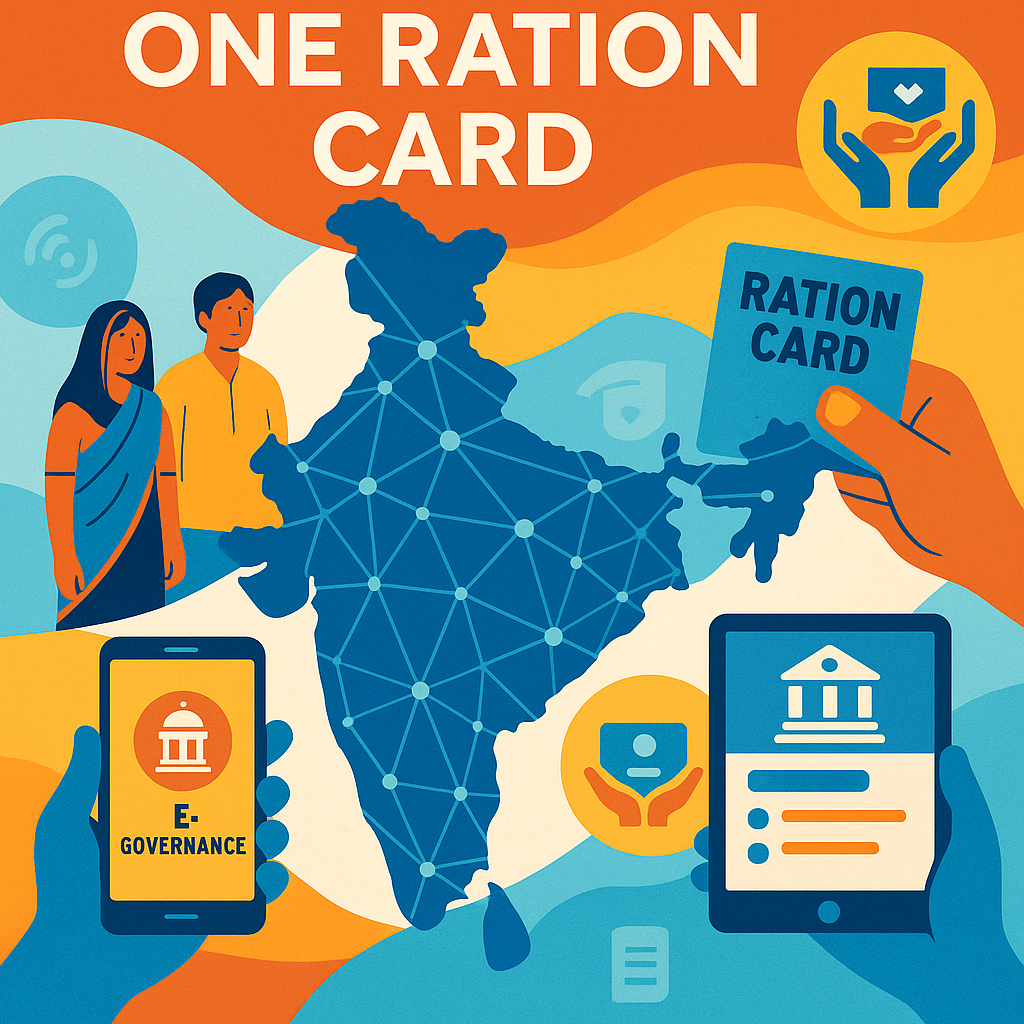
The ONORC scheme, launched in 2020, enables portability of ration cards across states, benefiting migrant workers significantly. Key achievements include: mahafood.gov
- 25 states/UTs integrated into the system
- 64,854 Maharashtra cardholders received food grains from other states
- 521,696 cardholders from other states accessed benefits in Maharashtra
- Average 10 lakh beneficiaries monthly utilize intrastate portability
e-Shram Portal Integration
The e-Shram portal has integrated 14 central government schemes, including:
- MGNREGA for rural employment guarantee
- Ayushman Bharat for healthcare access
- PM Awas Yojana for housing benefits
- Skill development programs for capacity building pib
Registration Statistics: 23.8 million workers registered under ONORC through e-Shram, demonstrating significant uptake.
Migration Issues in India: Understanding the Complex Demographic & Economic Dynamics
Migration patterns in India showing rural to urban and interstate movement flows
Migration remains one of India’s most significant socio-economic phenomena, shaping the country’s demographic landscape while presenting both opportunities and challenges. With 453 million internal migrants constituting 37.5% of the total population as per Census 2011, India witnesses unprecedented movement of people that drives economic growth while exposing governance vulnerabilities.
Historical Context and Scale of Migration
The Foundation of Modern Migration Patterns
India’s migration history is marked by transformative events. The 1947 Partition triggered one of the world’s largest forced migrations, followed by subsequent influxes of refugees from Bangladesh (1971), Sri Lankan Tamils, and Tibetan refugees. These historical movements established patterns that continue influencing contemporary migration dynamics.
The scale of internal migration in India is staggering. Between 1991 and 2011, both male and female migration rates increased dramatically – male migration rose from 14.79% to 23.03% while female migration increased from 41.64% to 52.17%. This growth reflects India’s evolving economic structure and urbanization trajectory.
Patterns and Streams of Internal Migration
Rural-Rural Dominance with Urban Shift
Despite popular assumptions about rural-urban migration, rural-to-rural migration remains dominant, accounting for 47.5% of total migrants in 2011, though declining from 64.2% in 1991. This stream primarily involves marriage-related movements, particularly among women.
Rural-to-urban migration, while constituting 17.4% of total migrants, shows the highest growth rate at 48.5% due to expanding urban employment opportunities. This stream is predominantly male-driven and economically motivated, with major migration corridors emerging between states.
Major Migration Corridors
The Census 2011 data reveals significant interstate migration patterns:
- Uttar Pradesh, Bihar, Rajasthan → Maharashtra
- Uttar Pradesh, Rajasthan, Odisha, Madhya Pradesh → Gujarat
- Uttar Pradesh, Bihar, Haryana, Uttarakhand → Delhi
Migrant-receiving states include Maharashtra, Gujarat, Delhi, Haryana, and West Bengal, while migrant-sending states are primarily Uttar Pradesh, Bihar, Rajasthan, Madhya Pradesh, and Uttarakhand.
Economic Dimensions and Remittances
India as Global Remittance Leader
India maintains its position as the world’s largest recipient of remittances, receiving $129 billion in 2024, representing 14.3% of global remittance flows. This represents an increase from $125 billion in 2023, though growth rates have moderated to 3.7% compared to 7.5% in 2023.
Top remittance sources include the United States, UAE, UK, Singapore, and Saudi Arabia, reflecting India’s diversified migrant population across both high-skilled OECD markets and semi-skilled Gulf countries.
Economic Impact:
- Remittances exceed foreign direct investment and combined budgets of Pakistan and Bangladesh
- Account for 3.3% of India’s GDP, highlighting the economy’s diversification
- Support current account deficits and provide crucial foreign exchange
Labor Market Contributions
Migrant workers form the backbone of multiple sectors including construction, textiles, agriculture, domestic work, and the gig economy. The 2011 Census recorded 41.4 million interstate migrant workers, with significant concentrations in urban industrial centers.
Climate Migration: The Emerging Challenge
Environmental Displacement Patterns
Climate-induced migration in India due to floods, droughts and environmental disasters
Climate-induced migration is emerging as a critical governance challenge in India. The country records the highest number of climate-related displacements among South Asian nations, with over 100 million people impacted by natural disasters like droughts and floods.
Climate Migration Hotspots:
- Bundelkhand: Faced 8-9 droughts between 1998-2009, with temperatures expected to rise 2-3.5°C by 2100
- Sundarbans: Saltwater intrusion and island shrinkage forcing permanent relocation
- Coastal areas: Sea-level rise affecting paddy fields and freshwater sources
- Vidarbha-Marathwada: Extreme heat (50°C+) and erratic rainfall driving seasonal labor migration
2024 Climate Impact:
India recorded its highest disaster displacements since 2012 at 5.4 million, including 2.4 million triggered by severe monsoon floods. This represents a significant escalation in climate-induced population movements.
COVID-19 and Reverse Migration Crisis
The Unprecedented Exodus
COVID-19 reverse migration showing migrant workers returning home during lockdown
The COVID-19 lockdown exposed the vulnerability of India’s migrant workers, triggering what many called the “second-largest migration since Partition”. According to World Bank estimates, over 40 million people were impacted by lockdown measures, with 50,000-60,000 migrants returning to rural areas within days.
Reverse Migration Scale:
- 43.3 million interstate migrants returned home during the first wave, with approximately 35 million constituting genuine reverse migration
- This represented roughly 1% of India’s total population
- 77% of migrant workers expressed readiness to return to cities for work
Crisis Drivers:
- Sudden job losses and economic uncertainty
- Lack of social security and informal employment arrangements
- Panic created by unclear lockdown duration
- Absence of transportation and basic necessities
Governance Failures and Responses
The crisis revealed significant governance gaps in migration management. Migrant workers faced:
- Lack of transportation and police harassment
- Discrimination and loss of savings
- Poor sanitation in quarantine centers
- Inadequate food and healthcare access
Legal and Institutional Framework
Constitutional Provisions
Article 19 of the Constitution guarantees freedom of movement and residence, establishing migration as a fundamental right. However, the legal framework for migrant worker protection remained underdeveloped until recent reforms.
Recent Legal Developments
Labour Code Reforms now include specific provisions for interstate migrant workers, addressing registration, welfare measures, and working conditions. The Supreme Court invoked Article 21 during COVID-19 to ensure migrant dignity and relief.
Digital Welfare Initiatives
One Nation One Ration Card (ONORC)
Digital welfare schemes for migrants including One Nation One Ration Card system
The ONORC scheme, launched in 2020, enables portability of ration cards across states, benefiting migrant workers significantly. Key achievements include:
- 25 states/UTs integrated into the system
- 64,854 Maharashtra cardholders received food grains from other states
- 521,696 cardholders from other states accessed benefits in Maharashtra
- Average 10 lakh beneficiaries monthly utilize intrastate portability
e-Shram Portal Integration
The e-Shram portal has integrated 14 central government schemes, including:
- MGNREGA for rural employment guarantee
- Ayushman Bharat for healthcare access
- PM Awas Yojana for housing benefits
- Skill development programs for capacity building
Registration Statistics: 23.8 million workers registered under ONORC through e-Shram, demonstrating significant uptake.
International Migration and Security Dimensions
Outward Migration Patterns
India’s diaspora of 18 million people (as of 2023) contributes significantly to global remittances. However, concerns about brain drain persist, with 1.6 million Indians renouncing citizenship since 2011, primarily seeking better opportunities abroad.
Refugee and Security Challenges
Rohingya Refugees: An estimated 79,000 Myanmar refugees, including 22,000 registered with UNHCR, face deportation threats despite persecution. The Citizenship Amendment Act (2019) excludes Muslim refugees like Rohingya while providing citizenship pathways for non-Muslim minorities. internationalaffairs
Bangladesh Migration: Illegal migration remains a contentious issue, with CAA implementation raising concerns about demographic tensions and bilateral relations.
Gender and Vulnerability Dimensions
Migration disproportionately affects women and children, who face:
- Exploitation in domestic and informal sectors
- Unsafe working conditions and poor maternal healthcare
- Educational disruption for migrant children
- Trafficking risks in vulnerable communities
Marriage Migration: Remains the primary reason for female migration (66.7%), while employment drives male migration (24%). This gender disparity reflects deep-rooted social structures and economic dependencies.
Way Forward and Policy Recommendations
Strengthening Data Systems
Regular migration surveys and comprehensive data collection are essential for evidence-based policymaking. Current census-based data, updated every decade, inadequately captures dynamic migration patterns.
Portable Welfare Architecture
Expanding digital welfare systems like ONORC and e-Shram to cover health, education, and pension benefits can significantly improve migrant worker security.
Climate Adaptation Strategies
Climate-resilient infrastructure, early warning systems, and planned relocation programs for vulnerable communities can mitigate forced displacement.
Urban Planning Integration
Cities must integrate migration considerations into planning processes, ensuring adequate housing, transportation, and service delivery for migrant populations.
International Cooperation
Safe migration policies for overseas workers and bilateral agreements on migration management can protect Indian workers globally while managing refugee influxes.
The complexity of migration issues in India demands nuanced, multi-stakeholder approaches that recognize both opportunities and challenges inherent in population mobility. As India continues its development trajectory, effective migration governance will be crucial for sustainable growth and social cohesion.
🔹 Mains Practice Questions
GS1 (Society):
Discuss the historical and contemporary patterns of migration in India and their socio-cultural impacts.
GS2 (Polity & Governance):
“The COVID-19 pandemic revealed the governance blind spot of internal migration in India.” Examine.
GS3 (Economy & Environment):
Evaluate the impact of climate change on migration patterns in India. Suggest policy measures for managing climate-induced displacement.
Essay:
Migration: A challenge to governance or an opportunity for inclusive development?







+ There are no comments
Add yours