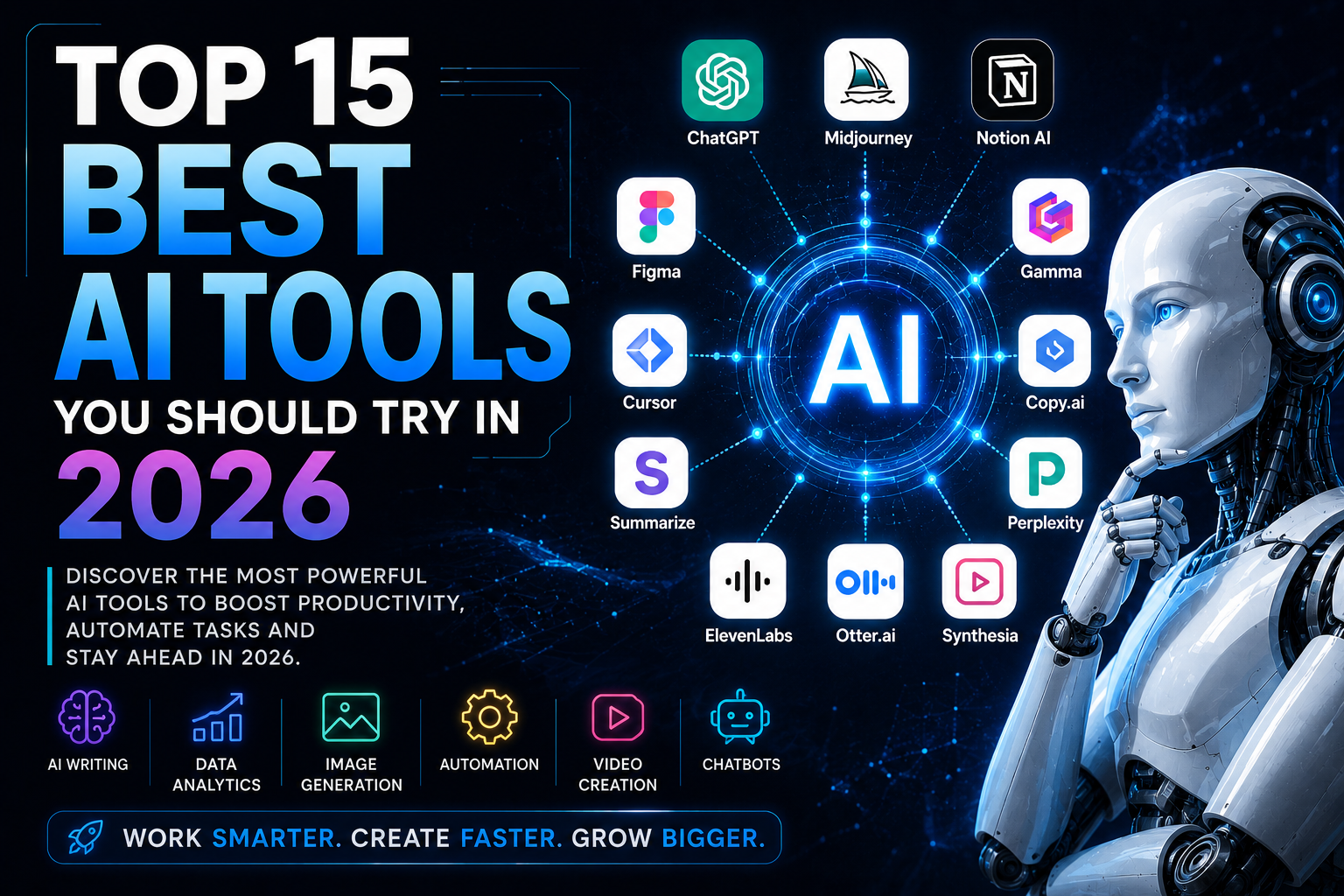
The enterprise software landscape has crossed a critical threshold. We have officially moved past the era of simple prompt engineering, where artificial intelligence operated as a passive text box waiting for basic human instructions. In 2026, the global productivity paradigm is dictated by Agentic AI—autonomous, context-aware digital entities capable of self-directed reasoning, multi-step execution, and deep integration into complex development stacks.
For creators, developers, system administrators, and business operations specialists, using the right tools is no longer just a minor shortcut; it is the core foundation of operational leverage. If your workflow still relies on copying and pasting text back and forth between isolated browser tabs, you are burning valuable execution time.
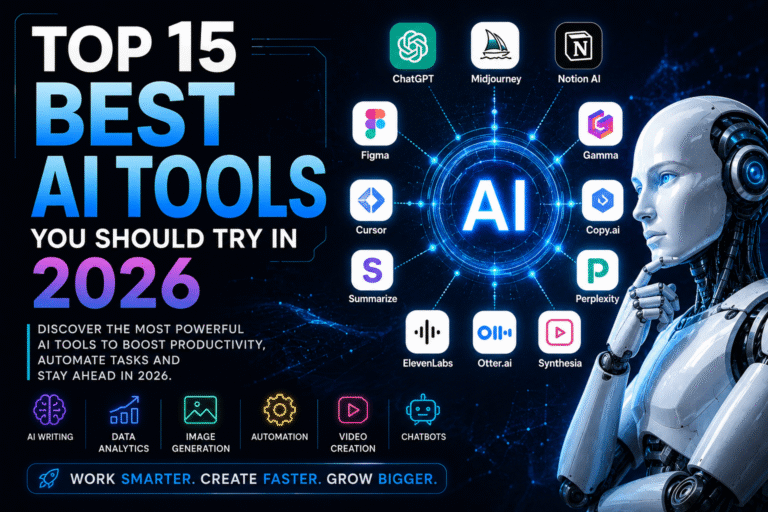
This comprehensive technical evaluation breaks down the top 15 AI tools dominating 2026, categorized by operational domain, detailing their architecture, real-world utility, and precise implementation strategies.
The 2026 AI Architecture Matrix
Before examining individual applications, the table below maps how these next-generation tools specialize across key enterprise operational layers:
| Tool Name | Core Specialization | Primary Algorithmic Mechanism | Target User Base |
|---|---|---|---|
| Cursor | AI-Native Software Dev | Project-Wide AST Parsing | Developers & Engineers |
| Manus | Autonomous Task Agent | End-to-End Browser Operation | Operations & Recruiters |
| Perplexity AI | Real-Time Deep Research | Multi-Source Web Synthesis | Researchers & Analysts |
| NotebookLM | Internal Knowledge Grounding | Retrieval-Augmented Generation | Writers & Strategy Leads |
| Wisprflow.ai | Contextual Voice-to-Text | Acoustic Semantic Processing | Executives & Creators |
| n8n | Agentic Workflow Automation | LLM-Powered Workflow Nodes | DevOps & SysAdmins |
| Claude 3.7 | Nuanced Technical Reasoning | Deep Context Window Evaluation | Technical Writers & Devs |
| Lovable | Full-Stack Full App Generation | Programmatic Code Generation | Founders & Product Leads |
| ChatGPT Pro | Advanced Multimodal Logic | Multi-Model MoE Architectures | General Managers |
| Gumloop | Visual Data Pipeline Mining | Structural Scrapy Node Piping | Data Engineers |
| Higgsfield | Cinematic Media Production | Controlled Diffusion Dynamics | Video & Brand Teams |
| NanoBanana Pro | Consistent Brand Graphic Gen | Text-to-Image Multi-Prompt Seed Control | Graphic Designers |
| Kimi Slides | Data-Dense Slide Engineering | Structured Narrative Rendering | Consultants & Management |
| Meta SAM Audio | Acoustic Source Separation | Semantic Waveform Masking | Audio & Podcast Editors |
| Granola | Deterministic Meeting Sync | Real-Time Transcription Summarization | Project Managers |
Domain 1: Next-Generation Software Development & App Generation
1. Cursor: The AI-Native IDE Changing Software Construction
Traditional code editors with basic autocomplete plugins are outdated. Cursor has become the industry-standard integrated development environment (IDE) by deeply integrating large language models into the file system layer.
[ Cursor AI Context Window ] ──► Parses Abstract Syntax Tree (AST) ──► Multi-File Code Generation
                                            │
                                            ▼                               [Real-Time Compilation]◄── Auto-Fixes Terminal Exceptions
                                            │
                                            ▼
                               Integrated Terminal Run
Unlike basic assistants that read single files, Cursor indexes your entire codebase, constructing an Abstract Syntax Tree (AST). By hitting Ctrl+K or Ctrl+L, you can execute project-wide architectural updates.
- Real-World Utility: If you modify a database schema in your backend layout, Cursor automatically tracks the dependency changes, rewriting the relevant frontend components and API endpoints concurrently to ensure type safety.
- Topical Advantage: It completely eliminates syntax debugging bottlenecks, allowing software engineers to focus purely on high-level system architecture.
2. Lovable: Full-Stack App Generation for Product Leads
For founders and product teams looking to build Minimum Viable Products (MVPs) without long development cycles, Lovable represents a massive leap forward. It moves beyond basic code generation by actively writing, testing, and deploying full-stack web applications from natural language prompts.
- How it Works: Instead of generating disconnected code blocks, Lovable provisions a complete live environment, manages state variables, hooks up database layers, and shows real-time visual previews of application updates.
- The Technical Difference: It reads the live error logs of the app it is actively building, applying self-correcting logic loops to fix bugs before handing the deployment over to the user.
Domain 2: Autonomous Task Execution & Advanced Automation
3. Manus: The Browser-Operating Autonomous Agent
The biggest shift in 2026 is the rise of browser-operating agents, and Manus leads this segment. While traditional tools require API endpoints to connect software, Manus interacts directly with user interfaces like a human operator.
[ Human Request ] ──► Open LinkedIn ──► Parse 10 Job Profiles ──► Draft Outreach

                                                                             │
                                                                             ▼
                                                                       Update CRM

                                                                             │
                                                                             ▼
[ Completed Autonomously ]- The Execution Flow: You can prompt Manus to: “Find four open job descriptions on LinkedIn, search for matching professional candidates, draft highly personalized email pitches, and log their profile data directly into our CRM.”
- The Underlying Tech: Manus launches a secure virtual browser instance, navigates web pages, interprets UI buttons, solves complex navigation flows, and executes the entire multi-step task autonomously from start to finish.
4. n8n: Node-Based Agentic Workflow Automation
For DevOps engineers and system administrators, n8n is the premier platform for building secure, node-based automation workflows that embed LLM reasoning directly into enterprise systems.
- Real-World Application: Instead of running simple, rigid if/then scripts, n8n allows you to drop AI reasoning nodes directly into data pipelines. For example, when a new customer support ticket arrives via email, an n8n workflow extracts the payload, passes it to an internal LLM to judge sentiment and technical urgency, routes it to the correct engineering team, and drafts an initial troubleshooting reply based on internal documentation.
5. Gumloop: Visual Data Pipeline Mining
Data scraping and complex ETL (Extract, Transform, Load) pipelines used to require writing custom Python scripts that broke whenever a target website updated its layout. Gumloop solves this by providing a drag-and-drop visual interface for building AI-driven data pipelines.
- Utility: It allows teams to orchestrate complex operations—like processing thousands of messy PDFs, extracting unstructured financial data, running semantic analysis, and outputting clean, structured JSON databases—in minutes instead of days.
Domain 3: Deep Research & Advanced Knowledge Grounding
6. Perplexity AI: The End of Traditional Keyword Search
Traditional search engine keyword parsing—which forces users to sift through ad-heavy SEO landing pages—is increasingly obsolete for deep research. Perplexity AI has solidifed its position as the premier research engine by providing comprehensive, synthesized answers backed by direct inline source citations.
[ Complex Technical Query ] ──► Simultaneous Multi-Source Web Scan
                                              │
                                              ▼
[ Inline Cited Fact Synthesis ] ◄── Evaluates Page Authority Factors- The Research Engine: Perplexity runs real-time parallel web queries, filters for page authority, extracts the core factual data points, and outputs a clean, organized summary. For high-intent business analysis or competitive research, it saves hours of manual compilation time.
7. NotebookLM: Google’s Internal Knowledge Grounding Hub
Data security and data hallucinations are major roadblocks for enterprise AI adoption. Google’s NotebookLM addresses this by using Retrieval-Augmented Generation (RAG) tied strictly to documents you upload.
- How it Protects Logic: When you upload proprietary source text—such as internal codebase readmes, engineering logs, architecture blueprints, or financial balance sheets—NotebookLM acts as an isolated, expert assistant. It answers questions using only the provided source files, completely preventing external hallucinations and providing exact citation links back to specific paragraphs in your documents.
Domain 4: Core Text Execution & Communication
8. Claude 3.7: The Master of Complex Technical Logic
Anthropic’s Claude 3.7 remains the preferred assistant for nuanced writing, heavy technical documentation, and long-context code evaluation.
- The Linguistic Edge: While other models often produce text that feels overly polished or distinctly robotic, Claude outputs natural, highly contextual prose. Its large context window makes it exceptional at analyzing massive reports or multi-file repositories in a single session, rendering clean, production-ready code blocks and clear technical manuals.
9. ChatGPT Pro (with Advanced Reasoning Models)
OpenAI’s ChatGPT Pro platform, powered by its latest mixture-of-experts (MoE) models, serves as a versatile general-purpose workplace dashboard.
- Ecosystem Advantage: ChatGPT Pro stands out through its robust tool integration—combining advanced visual logic, real-time web browsing, data analysis loops via an in-browser Python interpreter, and highly personalized memory capabilities across distinct chat threads.
10. Wisprflow.ai: Contextual Voice-to-Text Writing
As professionals spend more time communicating across platforms, typing speed can become a major operational bottleneck. Wisprflow.ai fixes this by upgrading standard voice transcription into an intelligent, context-aware dictation engine.
- The Operational Advantage: It doesn’t just record literal words; it interprets underlying meaning. You can speak naturally, stutter, or change your mind mid-sentence, and Wisprflow will instantly clean up the audio stream, outputting perfectly formatted emails, Slack updates, or documentation files in real time.
Domain 5: Creative Production & Visual Design
11. Higgsfield: Cinematic Video Creation for Creative Teams
Video generation models have scaled rapidly, and Higgsfield stands out by providing creative teams with granular director-level controls over cinematic generation assets.
- The Creative Control Layer: Instead of relying entirely on unpredictable text prompts, Higgsfield lets you specify precise camera movements, select lens types, define framing structures, and maintain complete character consistency across distinct generation frames. This makes it an invaluable asset for creating high-end ad creatives and social content without massive production budgets.
12. NanoBanana Pro: Consistent Brand Image Generation
One of the longest-standing limitations of image generators was their inability to maintain visual consistency across multiple assets. NanoBanana Pro solves this challenge.
- The Design Fix: By giving users control over specific generation seeds and asset parameters, it allows design teams to produce highly cohesive brand graphics, UI mockups, and product concept art that match pre-established visual guidelines across an entire campaign.
13. Meta SAM Audio: Advanced Acoustic Source Isolation
For multimedia teams and podcast producers, cleaning up noisy audio files used to require tedious manual editing. Meta SAM Audio utilizes semantic masking models to separate audio sources instantly.
- The Technical Capability: It maps the frequencies of an audio file, allowing you to isolate a single voice from heavy background crowd noise or separate an instrument track from a music clip with absolute clarity, saving hours of post-production editing.
Domain 6: Enterprise Management & Meeting Efficiency
14. Kimi Slides: Data-Dense Presentation Engineering
Most presentation assistants generate generic, visually basic slide layouts. Kimi Slides targets consulting and enterprise environments by generating data-dense, professional decks.
- Business Formatting: You supply raw business text, spreadsheets, or financial reports, and Kimi Slides translates that data into a cohesive, structured narrative—complete with clear charts, clean layout patterns, and professional formatting designed for management reviews.
15. Granola: Deterministic Meeting Productivity
Meeting note tools frequently generate walls of text that capture everything but highlight nothing. Granola takes a different, highly productive approach.
- The Workflow Integration: It runs quietly in the background during internal technical synchronization meetings or client reviews. Instead of dumping a raw transcript, it builds an organized, highly actionable summary based on your personal notes and preferences, ensuring tasks, deadlines, and technical dependencies are explicitly logged and tracked.
Comprehensive Optimization Checklist for Digital Workforces
To ensure your team successfully capitalizes on these tools without introducing operational drag, implement this five-step optimization strategy:
- Audit for Redundant Licensing: Map your current software expenditures. If you are paying for multiple individual text or image tools, evaluate if general-purpose systems like Claude Pro or ChatGPT Pro can handle those workloads natively.
- Establish RAG Boundaries: Ensure that proprietary internal code and private financial assets are only passed to systems offering dedicated data protection and isolated context grounding (like NotebookLM or private enterprise APIs).
- Optimize the Developer Pipeline: Transition development teams to native AI IDE architectures like Cursor to compress sprint timelines and accelerate feature deployment.
- Automate Structural Flows: Deploy node-based systems like n8n to handle repetitive administrative tasks, ensuring that AI agents trigger automatically based on real-world system inputs.
- Implement Consistent Quality Checks: Establish strict internal review gates for automated assets. AI tools should maximize operational output, but final system integration and deployment validation must remain human-verified.
Frequently Asked Questions (FAQ)
Q1: Will adopting these autonomous AI tools compromise our internal data privacy?
Not if you use proper data governance settings. Standard consumer tools often use public inputs to retrain future base models. However, enterprise tiers, API integrations, and specialized RAG platforms (like NotebookLM) provide strict data boundaries, ensuring your files remain completely private and isolated from external training loops.
Q2: What is the main operational difference between traditional chatbots and Agentic AI tools?
Traditional chatbots are entirely passive—they require a human to provide a prompt, copy the response, and manually paste it into another tool. Agentic AI tools (like Manus or n8n workflows) possess execution capability. They can interact directly with user interfaces, call external APIs, monitor system events, and execute complex, multi-step tasks across completely different platforms without needing a human to mediate every step.
Q3: How do static site generators utilize these tools to improve search traffic?
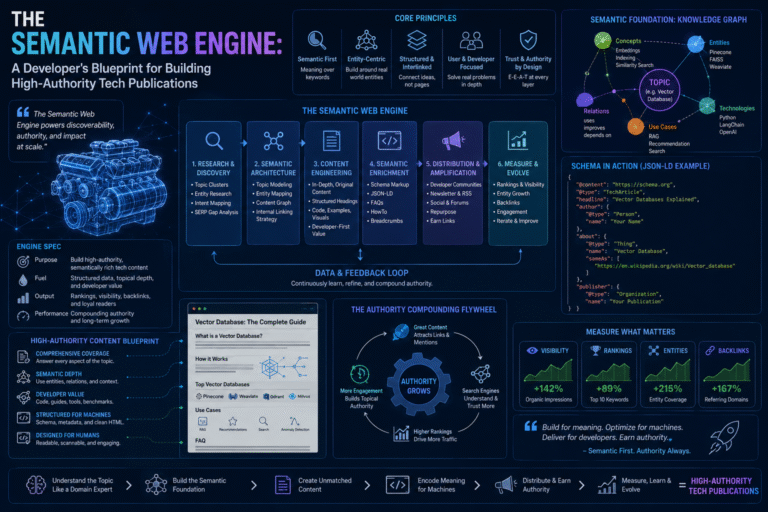
By combining advanced research engines like Perplexity with programmatic code editors like Cursor, you can build clean, highly optimized web layouts with structured JSON-LD data blocks embedded directly into the source code. This semantic depth allows search engine crawlers and AI search discovery engines to easily index your site, dramatically increasing visibility for highly specific, high-intent technical searches.
Reference Links
- OpenAI Research and Core Models: https://openai.com/
- Anthropic Claude Deployment Documentation: https://www.anthropic.com/
- Gartner Emerging Enterprise Technologies Roadmap: https://www.gartner.com/



+ There are no comments
Add yours