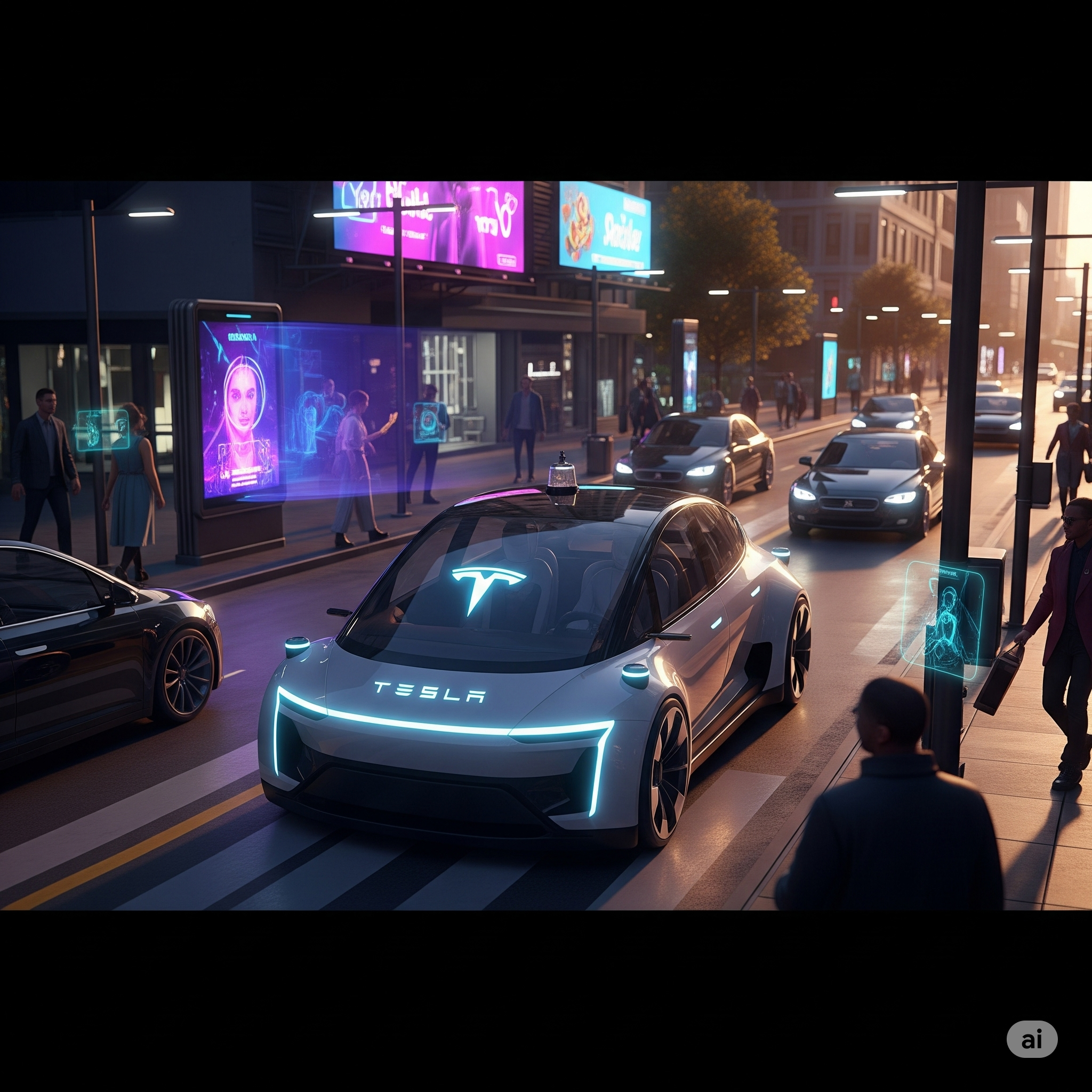
✅ Quick Summary:
- Tesla has launched autonomous robotaxis in select U.S. cities
- Powered by FSD software, Dojo AI, and camera-based navigation
- Robotaxis may disrupt Uber, car ownership, and parking economics
- Could generate $30k+ per year per car in income
- Raises questions about AI ethics, liability, and surveillance
- Tesla aims for scalable, fully autonomous urban transport networks
A New Chapter in Transportation
On what could be a landmark day in automotive and AI history, Tesla has officially rolled out its long-anticipated robotaxi service—a fully autonomous fleet powered by Tesla’s proprietary AI software, designed to operate without human intervention. While the concept of driverless taxis isn’t new, Tesla’s full-stack approach—integrating hardware, AI, real-time learning, and fleet management—could redefine urban mobility, transport economics, and even urban infrastructure planning.
But what does this rollout mean for commuters, regulators, and competitors? This article explores the technological backbone, potential disruptions, and broader economic and ethical implications of Tesla’s robotaxi debut.
1. What Are Tesla Robotaxis?
Tesla’s robotaxis are Level 4 to Level 5 autonomous vehicles, depending on local regulatory approval. These electric vehicles are designed to:
- Operate without a driver
- Navigate urban and highway environments autonomously
- Be summoned via Tesla’s app, like Uber or Ola
- Utilize Tesla’s FSD (Full Self-Driving) neural network
The robotaxis don’t just drive—they learn from millions of data points processed by Tesla’s AI engine, which continuously updates its real-time decision matrix through edge learning.
2. The Technology Behind the Robotaxis
Tesla’s robotaxi platform is powered by multiple integrated systems, each optimized for self-sufficiency and safety.
2.1 Full Self-Driving (FSD) Software
- Based on neural network training using real-world driving data
- Enables decision-making in unpredictable urban conditions
- Handles turns, stop signs, pedestrians, dynamic traffic flow
Tesla claims that its Vision-only system—cameras and AI without LiDAR—is more adaptable and scalable than sensor-heavy competitors like Waymo or Cruise.
2.2 Tesla Dojo Supercomputer
The Dojo system is Tesla’s in-house AI training platform designed to:
- Process video footage from millions of Teslas on the road
- Improve FSD decision-making via machine learning at scale
- Reduce reliance on third-party cloud services
2.3 Vehicle Hardware
Tesla robotaxis are based on the Model 3 and Model Y chassis, but with:
- No steering wheel or pedals (in some variants)
- Extra redundancy for braking and computing
- Upgraded heat/cooling systems for longer autonomous uptime
3. Deployment Locations and Regulations
Tesla is launching robotaxis in select U.S. cities with flexible regulatory frameworks—likely including:
- Austin, Texas (Tesla HQ and FSD testing hub)
- Phoenix, Arizona (already a hotspot for AV pilots)
- Miami, Florida (welcoming regulatory environment)
Each deployment includes real-time fleet monitoring, remote override capabilities, and extensive logging for incident accountability.
⚠️ Tesla still needs to navigate NHTSA, state-level DMV, and city transit approvals. Full Level 5 deployment (anywhere, anytime) is still a legal work-in-progress.
4. How Do Robotaxis Work in the Real World?
4.1 Booking the Ride
- Users request a ride via the Tesla app
- A nearby robotaxi autonomously navigates to the pickup point
- The ride experience is driverless, electric, and personalized
4.2 Inside the Robotaxi
- Minimalist cabin: no steering, no dashboard
- Voice-interaction AI (like Siri + ChatGPT)
- Real-time journey updates, estimated carbon offset, and safety options
Tesla aims to optimize comfort, speed, and environmental performance—and at a price point lower than traditional ride-hailing.
5. Market Impact: Who Should Be Worried?
5.1 Ride-Hailing Giants (Uber, Lyft)
Tesla’s robotaxis could be a major threat to existing players:
- No human drivers = lower operational cost
- Always available, 24/7
- Greater profit margins from direct-to-consumer fleet ownership
Uber and Lyft will likely respond by partnering with or acquiring autonomous tech, or lobbying for stricter regulations.
5.2 Traditional Car Buyers
The robotaxi model reduces the need for personal car ownership, especially in cities. If Tesla’s fleet proves reliable, millions may choose on-demand access over ownership, changing:
- Car insurance models
- Parking space demand
- Urban congestion management
6. Economic and Environmental Upside
6.1 Economic Efficiency
Tesla projects that a robotaxi could generate up to $30,000–$40,000 in annual revenue for owners who lend their cars to the fleet. Over time, this becomes a “robo-rental” income model.
6.2 Environmental Gains
Every robotaxi is:
- 100% electric
- Optimized for energy efficiency using Tesla’s range algorithms
- Expected to lower emissions by reducing duplicated rides
At scale, this could reduce urban CO₂ emissions by 30–40% over a decade in cities that embrace AV infrastructure.
7. Ethical & Safety Concerns
Tesla’s rollout is not without criticism. Key challenges include:
7.1 Accident Liability
- Who is responsible in a crash? The owner? Tesla?
- Will AI mistakes be judged differently than human error?
7.2 Algorithmic Bias & Decision-Making
- How does FSD prioritize between pedestrian groups or emergency maneuvers?
- Is the AI transparent enough to audit?
7.3 Privacy Risks
- Robotaxis may record footage of passengers and public spaces
- Data governance and surveillance laws need urgent clarity
These challenges must be resolved to build public trust and ensure ethical AI deployment.
8. The Road Ahead: What’s Next for Tesla’s Robotaxis?
Tesla’s next steps likely include:
- International launches in countries with AV-friendly laws (e.g., UAE, Singapore)
- Integration with public transit systems (for hybrid smart mobility)
- Continued FSD improvements using Dojo’s deep learning refinements
- Launch of Tesla Network, a decentralized robotaxi sharing platform
CEO Elon Musk envisions a world where personal car ownership becomes optional, and mobility becomes autonomous, electric, and affordable.
Conclusion: A Turning Point for Urban Transportation
Tesla’s robotaxi rollout could mark a pivotal moment in the history of transportation—akin to Ford’s Model T or the smartphone revolution. But this transition is not just technological. It’s economic, regulatory, ethical, and cultural.
If successful, robotaxis could reduce traffic, lower emissions, and democratize mobility. If rushed or mismanaged, they could raise new dangers around surveillance, job losses, and AI accountability.
What’s clear is that we are witnessing the birth of a new ecosystem—where your next ride might not just be driverless, but also data-driven, self-learning, and always watching.




+ There are no comments
Add yours